
Breaking into ServiceNow Administration: The Real-World Blueprint to Skills and Career Growth
Last updated on Aug 21, 2026

If you’ve spent any time around modern IT teams, you’ve heard about ServiceNow. Enterprise companies rely on it to automate internal operations, handle IT requests, and connect systems. But behind every active dashboard and automated workflow sits a platform administrator keeping the gears turning. Becoming a ServiceNow Administrator is one of the most practical and accessible ways to build a high-growth career in cloud technology. You don't need a computer science degree or decades of coding experience—you just need a solid grasp of low-code platform configuration, system security, and business logic.
1. What Is ServiceNow and Why Do Companies Use It?
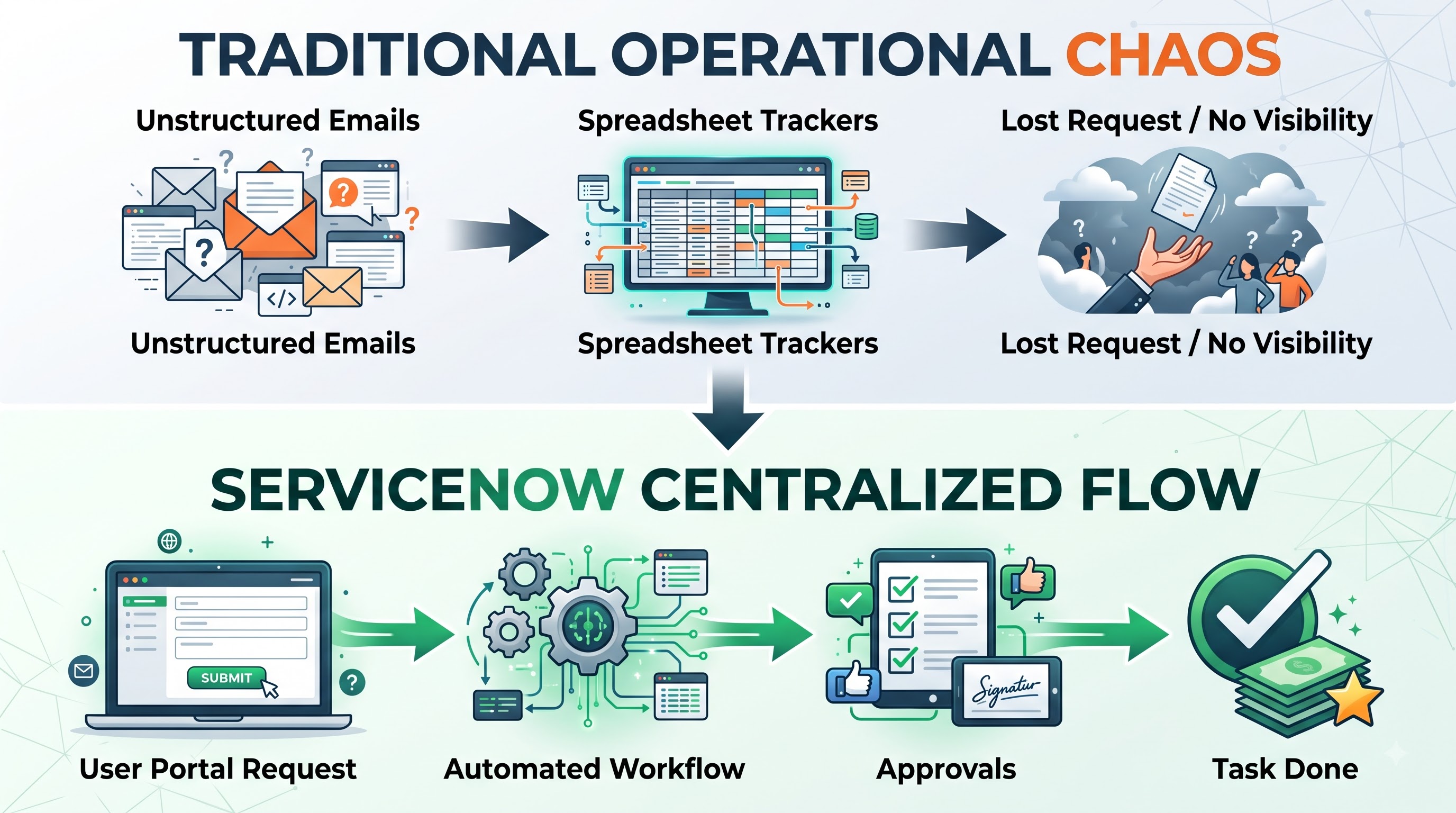
ServiceNow is an enterprise cloud platform built around workflow automation. In a typical company with thousands of employees, hundreds of routine tasks happen daily:
Replacing a cracked laptop screen
Granting a new manager access to financial tools
Onboarding a new employee through HR
Ordering server equipment for software teams
Without a centralized system, these requests get lost in messy email threads and spreadsheets. ServiceNow replaces that friction with a unified portal where requests are submitted, automatically routed for approval, and tracked to completion.
2. What a ServiceNow Admin Actually Does Daily
Administrators focus on process design, user security, and system configuration rather than writing lines of complex software code from scratch:
User Access & Roles: Assign permissions so employees see only what they need to (e.g., support techs view hardware tickets, but not sensitive payroll data).
Form & List Layouts: Create and customize simple intake forms using drag-and-drop fields.
Workflow Automation: Build automated paths using tools like Flow Designer (e.g., auto-routing mobile phone requests to managers for approval).
Dashboards & Reports: Set up visual charts showing ticket resolution times and team workloads.
Upgrades & Testing: Manage twice-annual platform updates in a sandbox environment to prevent live outages.
3. Core Technical Concepts You Must Know
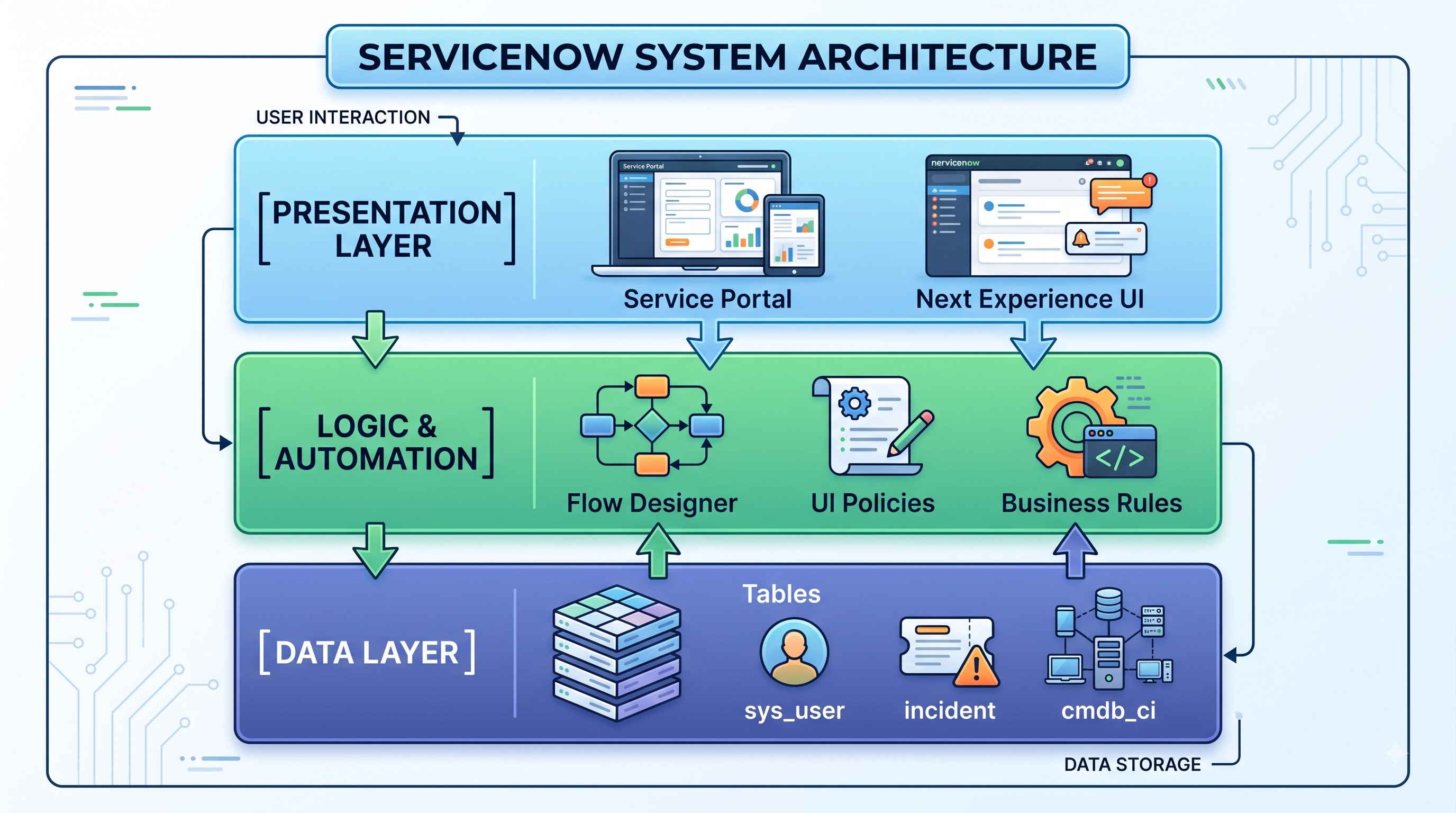
The Data Model & Tables: Everything in ServiceNow lives in relational database tables. Work tickets extend from the master Task (task) table, IT hardware lives in the Configuration Management Database (cmdb_ci), and user records sit in sys_user.
UI Policies vs. Business Rules: UI Policies manage client-side browser behavior (e.g., making a field required on-screen), while Business Rules handle server-side database logic (e.g., updating related records when saved).
Access Control Lists (ACLs): Security rules that evaluate table-level and field-level access to protect sensitive company records.
4. Structuring Your Education & Practical Learning
A structured servicenow admin course provides a guided path through core features, helping you focus on practical skills like building forms and setting up notifications.
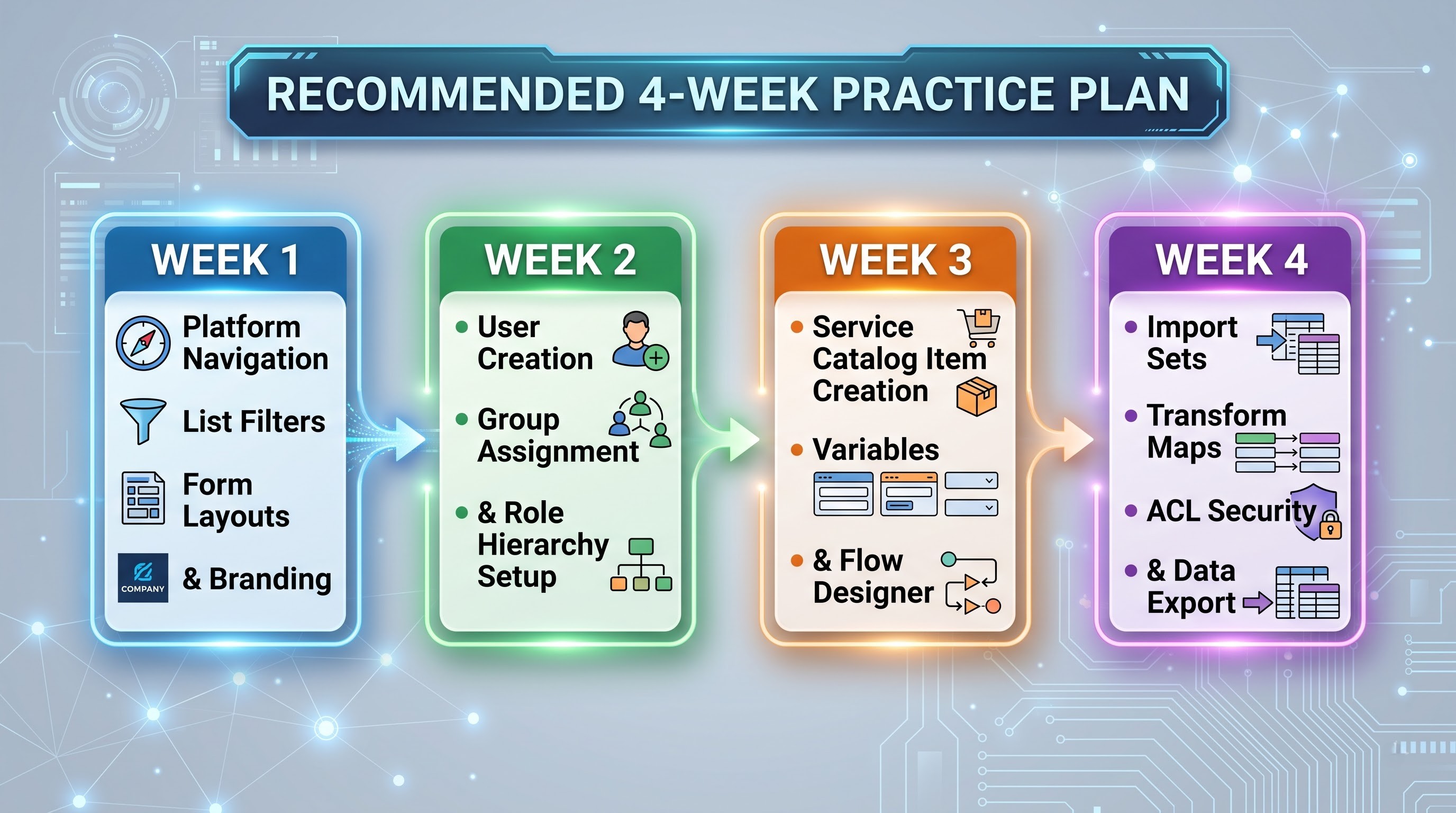
Build Your Skillset in a Free PDI
To learn risk-free, create an account on the official ServiceNow Developer Portal and request a free Personal Developer Instance (PDI). This gives you a full-featured sandbox environment with complete admin access to build, test, and break configurations.
5. Getting Certified: The CSA Exam Blueprint
Earning your servicenow administrator certification—specifically the Certified System Administrator (CSA) exam—proves your capabilities to recruiters and hiring managers.
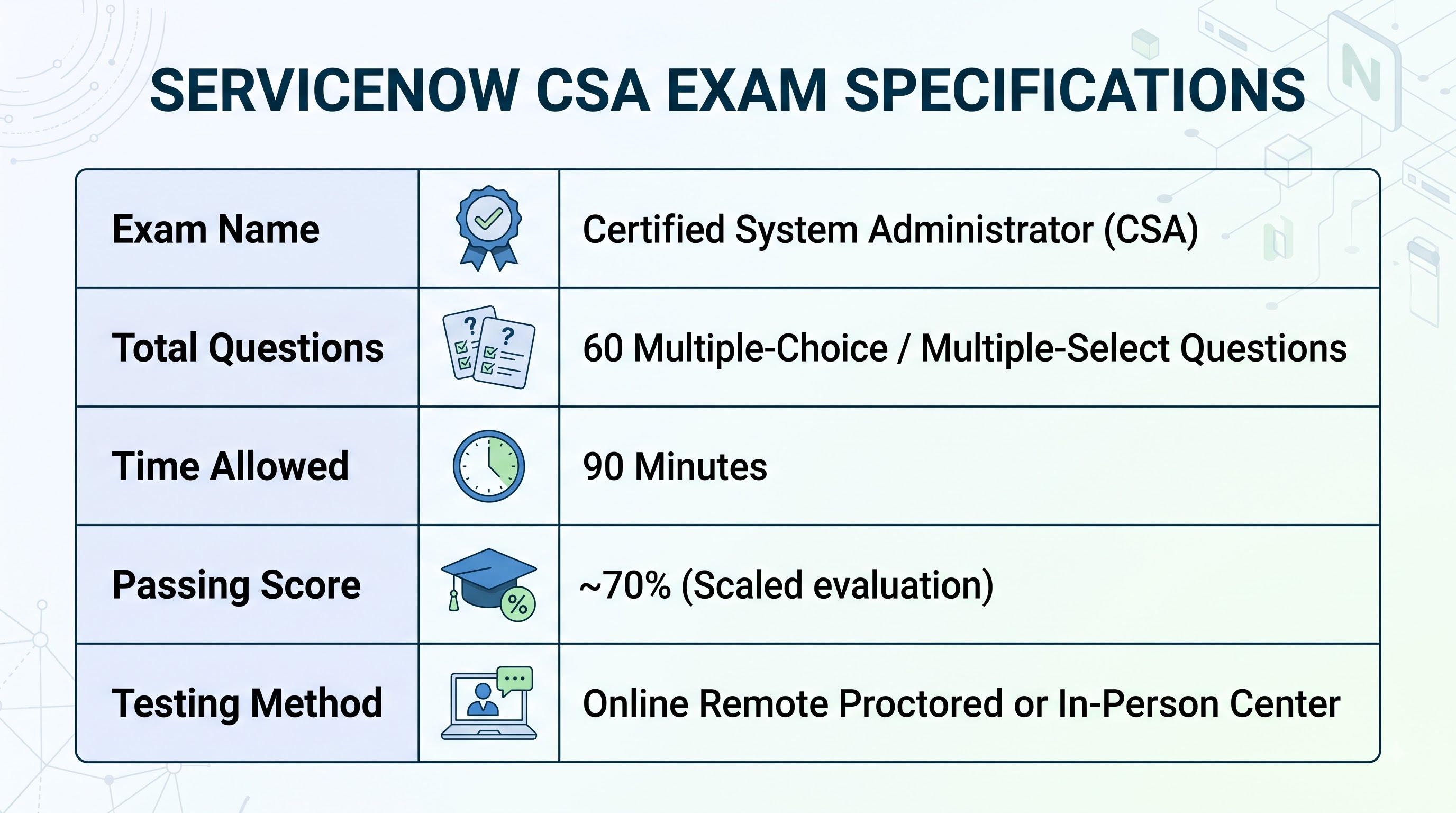
Official Topic Weights:
User Overview and Navigation (7%) covers the fundamental interface, teaching you how to move through the platform UI, navigate menus, customize personal settings, and filter list layouts effectively. Instance Configuration (10–11%) shifts toward basic backend setups, focusing on overall platform branding, setting up system properties, and activating required plugins.
Configuring Applications for Collaboration (20%) carries a heavy weight on everyday operational management. It checks your ability to manage work tasks, organize records with Visual Task Boards (VTBs), configure automated email notifications, and create visual analytics dashboards. Self-Service and Automation (20%) tests your ability to streamline user requests. You are evaluated on building Service Catalog items, configuring Knowledge Management bases, and automating business processes using tools like Flow Designer.
Database Management & Security (27–30%) is the largest section of the exam. It evaluates your mastery of table structures, data relationships, CMDB/CSDM frameworks, importing data using transform maps, and securing records through Access Control Lists (ACLs).
Data Migration and Integration (13–15%) tests platform logic and code deployment, ensuring you understand how to control browser behavior with UI Policies, manage server logic through Business Rules, and safely move configurations across environments using Update Sets.
6. Career Paths and Growth
The ServiceNow ecosystem offers a clear, lucrative career path that expands as your technical expertise deepens. It typically starts with the ServiceNow Administrator role, offering an entry-to-mid level salary between $75,000 and $110,000 per year (or ₹4–₹12 Lakhs per year in India). In this foundation tier, your primary focus revolves around setting up user permissions, managing basic intake forms, configuring UI policies, and maintaining overall platform health.
As you gain experience and specialize, you can branch into advanced technical or strategic roles. Stepping into a ServiceNow Developer position increases compensation to 105,000–145,000 per year (or ₹7–₹21 Lakhs per year in India) as you write custom JavaScript scripts, extend platform modules, and build complex automated workflows. Moving into an Implementation Specialist role commands 110,000–150,000 per year for deploying specific enterprise packages like ITSM, HR Service Delivery (HRSD), or Security Operations for new client environments. Ultimately, progressing to a Technical or Platform Architect role reaches $150,000 to over $200,000 per year, where you design end-to-end multi-system integrations, govern platform architecture, and lead large-scale corporate digital transformations
Entry-Level Admin (0–2 yrs): $75,000 – $95,000/yr (or ₹4L – ₹7L in India).
Mid-Level Admin (2–5 yrs): $95,000 – $120,000/yr as you handle broader platform health.
Senior / Specialist (5+ yrs): $130,000 – $180,000+ as you move toward development or architecture.
Build 3 Core Portfolio Projects in Your PDI
To show that you understand end-to-end platform architecture, focus on constructing three practical, interconnected solutions:
The "Employee Onboarding" Request Item: Build a custom Service Catalog item (sc_cat_item) designed for new hires. Configure custom form variables like start date, department, hardware selection, and software access. Add dynamic UI Policies that automatically reveal or hide specific fields depending on the selected job role.
The Automated Approval Flow: Open Flow Designer and construct a multi-step approval workflow triggered by your catalog submission. Set the logic to automatically route approval requests to the new hire's manager, generate downstream hardware provisioning tasks for the IT desk, and send custom email notifications once every task resolves.
An Executive Metrics Dashboard: Configure a visual reporting workspace that aggregates real-time platform data. Create interactive widgets that display open onboarding requests, average ticket fulfillment times, pending manager approvals, and asset allocation counts across departments.
Document Your Work as Case Studies
Recruiters rarely inspect personal developer instances directly, so you must bring your technical work to them. Capture clean screenshots of your custom database schemas, flow logic diagrams, and finished Service Portal forms. Compile these visual assets into short, readable case studies or LinkedIn posts structured around a business problem: define the operational issue, detail the low-code configurations you built to address it, and explain the efficiency gains your solution delivers.
Network in Community Forums
Many entry-level ServiceNow roles are filled through internal referrals rather than public job boards. Join official ServiceNow Developer Groups, participate in local user meetups, and stay active on the ServiceNow Community forums. Consistently answering beginner questions, sharing your project documentation, and seeking advice from senior administrators builds professional visibility that frequently leads to unlisted job opportunities.
Conclusion: Taking Your First Step Toward a ServiceNow Career
Building a successful career as a ServiceNow Administrator comes down to consistent, practical application. The platform's massive adoption across global enterprises continues to create steady demand for skilled professionals who understand how to configure processes, manage security, and automate everyday business workflows. Completing a structured servicenow administrator course gives you the guided roadmap needed to connect platform mechanics with real-world business scenarios. By pairing this training with hands-on experience in a free Personal Developer Instance, earning your Certified System Administrator (CSA) credential, and showcasing real portfolio projects, you can bridge the gap between learning concepts and landing your first job. The tools and resources are readily accessible—all that is left is to take that first step, dive into the platform, and start building your technical future today.