
Clearing the Integration Blockage: A Simplified Approach to API-Led Integration Using MuleSoft
Last updated on Sep 18, 2026
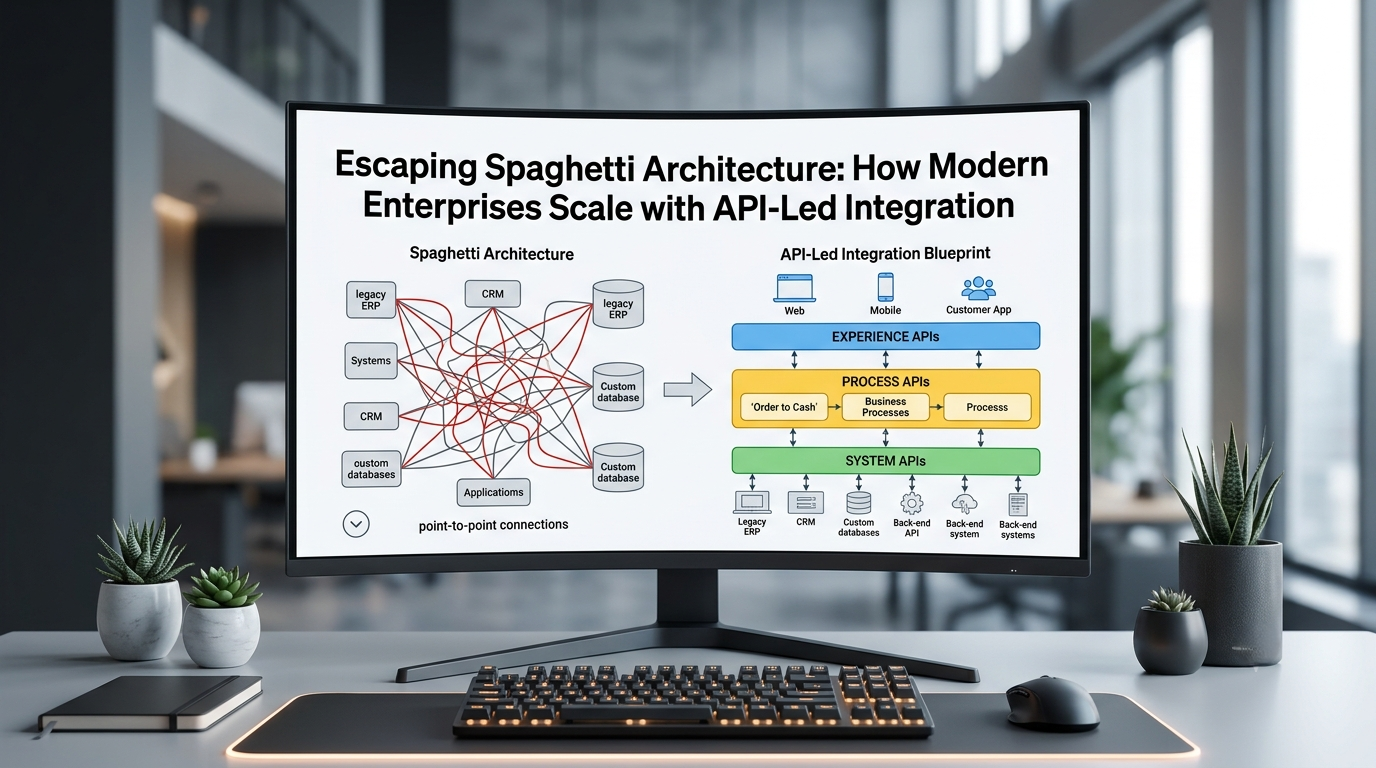
Introductory Remarks: Comprehending the Integration Issue
Today's businesses utilize numerous software applications to carry out their operations. Usually, a typical company has distinct software for tracking its customers, finance, human capital, and inventory management. All these application programs function well on their own; however, problems occur when these disparate programs need to communicate with each other.
Connecting two programs is easy when the business is small. A software engineer simply writes a script to move data from one app to the other and vice versa. But, as the business grows and uses more and more applications, the direct approach fails. Connecting one app with each of the other apps leads to a complexity of integrations.
Anytime a single system alters or changes its internal rules, many networks get wrongly disrupted. The developers generally spend their days repairing broken links instead of creating new valuable functionalities for their clients. Companies need a way to connect their applications in a more structured manner without causing unnecessary technical chaos to solve this problem.
Why Traditional Connections Fail
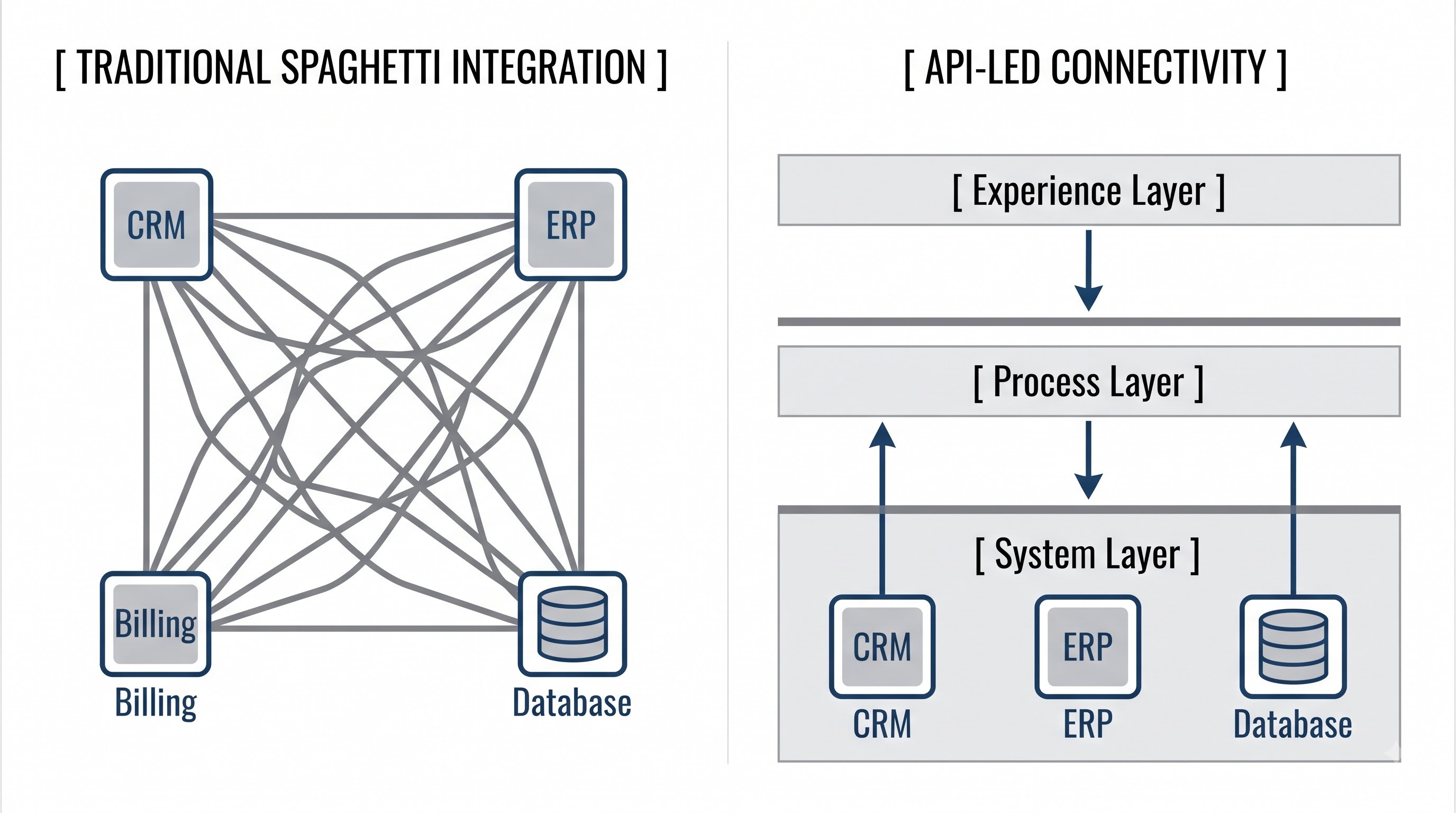
To understand the reason for traditional connections’ failures, a person needs to consider what happens once systems become too tightly interconnected. When companies connect programs directly using special scripts, each software has to understand all the peculiarities of how each system manages the data. For instance, if a client changes his address in a mobile app, this single change must be programmed differently in the billing software, shipping software, and the marketing database. This rigid arrangement results in a delicate infrastructure which experiences huge interruptions even from minor updates. When replacing an old internal database with a new cloud solution, all dependent applications require full recording and retesting. This makes engineers think twice before performing any important upgrades because it is impossible to foresee all breakdowns generated in such a process.
As systems are closely intertwined, security issues arise. Without a common entry point to manage the access, all company employee passwords and customer records are spread in dozens of separate scripts. Hence, it is very difficult to track who has access to sensitive data and prevent hacker attacks. Thus, financial consequences of managing chaotic connections are not easy to deal with. Companies spend their time and money maintaining existing connections instead of providing some new services.
The Concept of API-Led Connectivity Comprising of 3 Layers
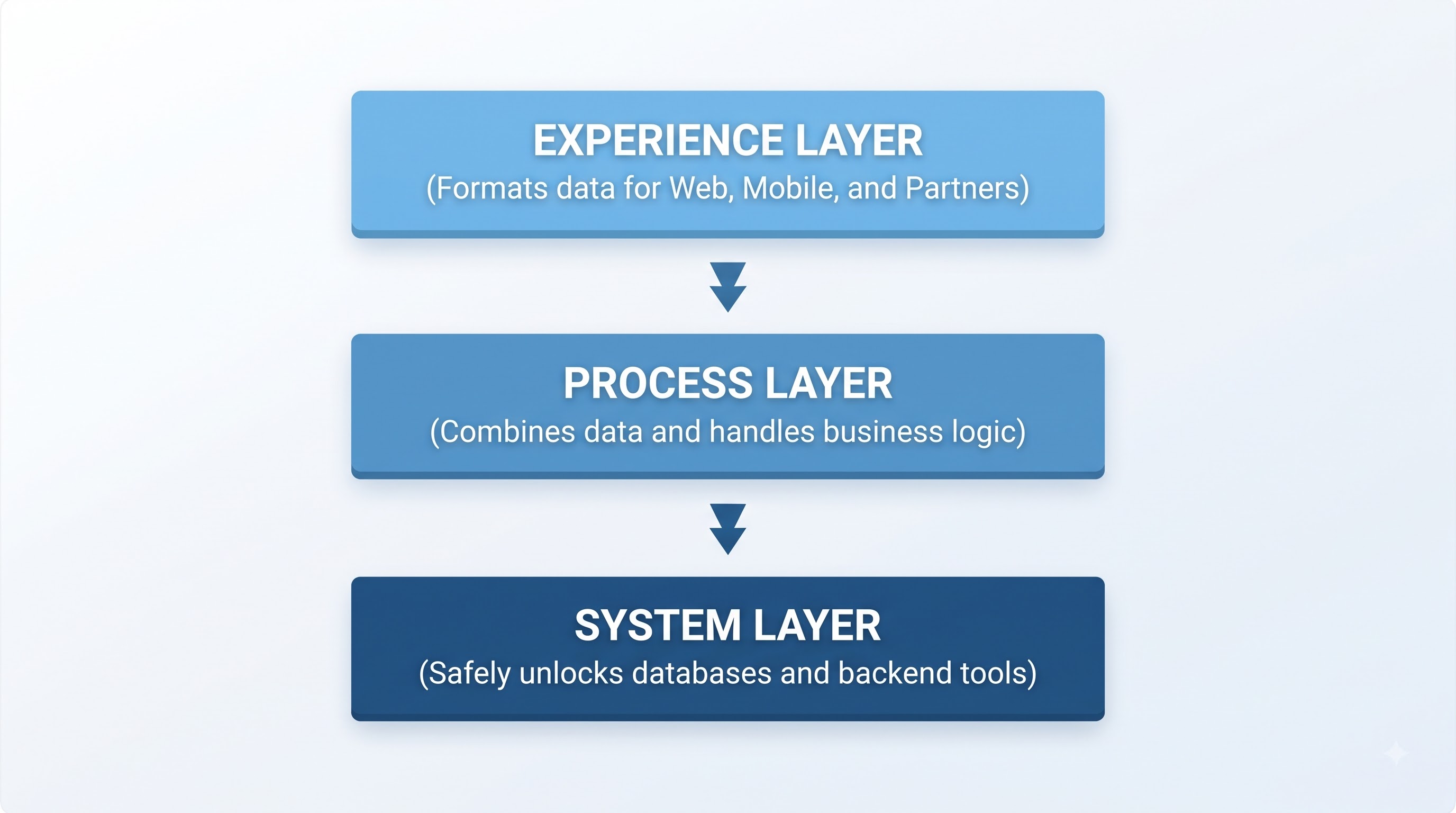
MuleSoft employs API-led connectivity in place of creating messy direct connections. The method simplifies the integration process by dividing it into 3 layers. Each of the layers performs its own task, and allows secure sharing of data across the organization.
System Layer: Exposing Your Raw Data
The System Layer comprises a solid safety barrier surrounding an enterprise's data and software. Instead of allowing external applications access to confidential data, a System API fetches the information needed in a safe manner and in a standardized form.
This layer conceals the convoluted nature of old or complicated software tools. If the software going forward is updated or substituted, the only layer that will require a change is the System API. Everything else will operate normally.
Process Layer: Fusing Business Logic
The Process Layer lies above the System Layer and performs the crucial work of bringing information from many sources together. It takes the raw data freed by the System APIs and performs operations according to certain business rules.
For instance, when a new customer orders an item, the Process Layer extracts customer data from one source, obtains information about product availability from another, and processes payment through another source. Since this business logic resides on a separate layer, any process can utilize it without having to reinvent the wheel again.
Experience Layer: Providing Customized Information
The experience layer is the very last phase in which the data gets processed and ready for end-users or specific devices. Mobile phones, desktop computers, and partner companies need different quantities of data delivered in different methods.
Instead of sending disorganized raw data to mobile phones, the "experience layer" simply reduces it to allow a better loading on smaller screens. Also, front-end developers may easily get the necessary data without understanding the underlying structure of the back end. The key element of this integration system is a powerful data conversion engine known as Data Weave. In the most typical versions of software, the converter of data may involve writing a huge number of complex lines of custom code. Data Weave makes things much easier as it enables functioning as an automatic translator between applications.
any source, be it a traditional text file, a database table, or a web payload, into the required format. It can easily process a large volume of information without causing any slowdown in the application or taking up computer memory. Gaining knowledge and experience in the use of mulesoft learning can help development teams to quickly grasp the principles of this data transformation software. When development engineers understand how to use built-in translation features, they will make effective integrations in much less time than it usually takes.
Easy Centralized Security and Governance
When it comes to connecting services in a way that allows data from a company to flow, security measures must be very straightforward. In the traditional software option, developers would need to insert security passwords, verify logged-in users, and add traffic rules into each individual application script. This generally results in the absence of security across an entire IT network.
MuleSoft resolves this issue with the help of a centralized API Gateway that has been made available for integration processes. Instead of writing custom security codes for every single task, it allows for the application of ready-made security instructions in a few simple steps. The API Gateway authenticates the users automatically and stops suspicious traffic while limiting the request of the application to the minimum level to avoid crashing of the hosting servers. Therefore, organizations get full visibility and control over who is utilizing the data being stored within an organization at any time during the day.
Automated Deployment of software and operations of teams
In the fast changing business landscape, software teams have to be agile and make sure that they update and launch new features in a hassle-free way. Manual operations bring a lot of potential risks that can cause some damage to the production process because of unexpected mistakes. Modern integration has switched to the automated software development process that has made it possible for developers to prepare their products for the end users in a timely manner. After the software engineer has finished coding, the software is being tested automatically for any errors prior to its release online.
Structured mulesoft developer training courses organized by a company ensure that all members of the team have the same standards for coding and development. Therefore, launching the app is easier and the end product is more stable and predictable.
Options for Cloud Hosting and On-Premises Hosting that are Flexible
All companies work with different levels of technology, security, and operational features, so there isn’t a single model applicable for hosting data and integration tools. Some organizations completely depend on the public cloud for greater flexibility, while other businesses are inclined to keep most of their customers’ records on their local servers due to strict regulations.
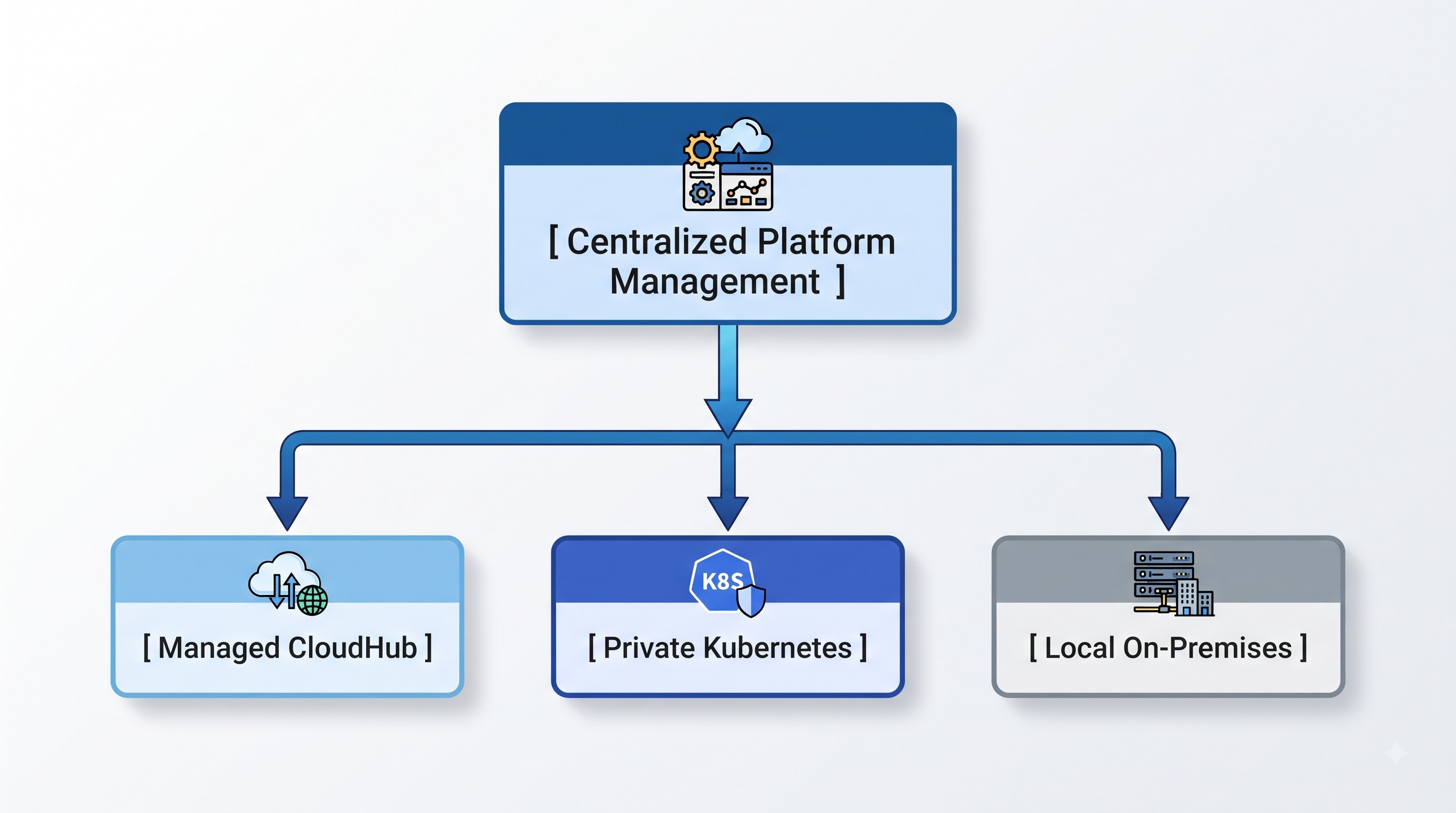
To accommodate different needs, modern integration technologies can be implemented in various environments, while still allowing centralized control:
Fully Managed Cloud (iPaaS): The service provider takes care of the server infrastructure, scalable systems, load balancing, and hardware upgrades. The result is reduced maintenance costs and faster deployment of integration apps since there is no need to set up any on-premises systems.
Private Container Environments: The integration runtime runs in the organization’s managed cloud environment (like private Kubernetes clusters). This approach provides complete control over the networking system and rules for accessing network resources, while taking advantage of modern container management.
On-Premises Hardware: The integration engine works on physical machines and/or local virtual machines in the organization’s data center. By keeping the integration engines behind the organization’s firewall, companies can securely handle highly confidential applications.
Hybrid Deployment Architects: The central management layer oversees the operations of all privately and publicly hosted runtimes at the same time. Therefore, users can create APIs on-site around the main databases, while securely exposing their public interface in the cloud.
This flexibility in hosting options provides businesses with the ability to modernize their systems on a step-by-step basis, meet all industry regulations, and alter the hosting implementation over time.
Real-World Impact of Integrations
In order to understand the benefit of an organized integration strategy, let us take two examples of how a modern omnichannel retail company operates under two very different circumstances. Many companies still use outdated data integration techniques where e-commerce web pages, physical cash registers in shops, warehouse management systems, and enterprise resource planning functions are all separate systems. In this fragmented situation, even completing a customer order requires lots of manual work to be done. Workers have to enter customers’ information over and over again, update inventory on different sheets, and send the order to different shipping companies manually. This manual way is slow and inefficient and creates serious operational problems. Due to manual errors, stock numbers may get mismatched and customers may wait longer than necessary. When a company grows, these minor manual problems lead to huge costs incurred and its brand reputation being damaged.
With the introduction of an API-led integration model, this operational structure is fully revolutionized, allowing isolated systems to transform into a connected and automated ecosystem. Instead of depending on people to seal the gaps between systems, the integration platform performs all jobs through different API levels at once. The System API level ensures secure connection with legacy inventory databases and accounting programs, while allowing access to backend activities without presenting complex system details. The Process API level is responsible for business logic as it verifies customer payment status, simultaneously launching automatic inventory drops and ordering shipping labels. Finally, the Experience API level processes and sends instantaneous updates to customers through mobile applications, web portals, and dashboards.
Instead of relying on inefficient manual data entry, the company has opted for using APIs to streamline its operations. As a result, order fulfillment processes that would usually take days to complete are now executed seamlessly within just seconds. Each department operates on the same data, making backorders a thing of the past. The customer service department can now track customer orders in real time, which helps resolve issues during the first contact with the customer. Finally, the use of structured integrated solutions allows IT teams to significantly reduce their troubleshooting workload.
Creating Sustainable Digital Capabilities Across Groups
Using new integration techniques is more than acquiring the right software; it requires a change of culture in how groups develop technologies. Instead of creating unique solutions for specific projects, groups adopt a methodology that creates reusable building blocks that can be used by the whole organization.
Delivering a proper mule software training program to technical departments provides employees with hands-on knowledge in architecture, security and data management. As the developers learn to create reusable products, their future projects can proceed quicker. A new internal team devoted to the exchange of best practices guarantees that integration tools are easy to use and accessible.
Conclusion: Advancing with Confidence
Business growth is guaranteed to be hampered by the use of disconnected, point-to-point integrations, causing significant maintenance costs and operational friction. As businesses continue to develop their digital strategy to keep pace with demand in the market, a structured framework for carrying out integration is crucial for the smooth functioning of processes, stability of operations, and accuracy of data.
The integrity gained by establishing System-, Process- and Experience-level integration layers creates order out of disorderly software connections. This approach effectively turns unstable connections into reliable components. Unified governance and centralized security protocols ensure complete protection of sensitive data, giving businesses the freedom to choose where to use integration engines—be it in the cloud, as a part of an on-premises solution, or as a hybrid one. As a result, the implementation of new integration techniques and common API policies eliminates technology limitations, making it possible to react quickly to the demands of the ever-changing market, ensure high quality customer service, and scale operations efficiently.