
Essential MongoDB Skills for Modern Enterprise Data Platforms in 2026
Last updated on Oct 6, 2026
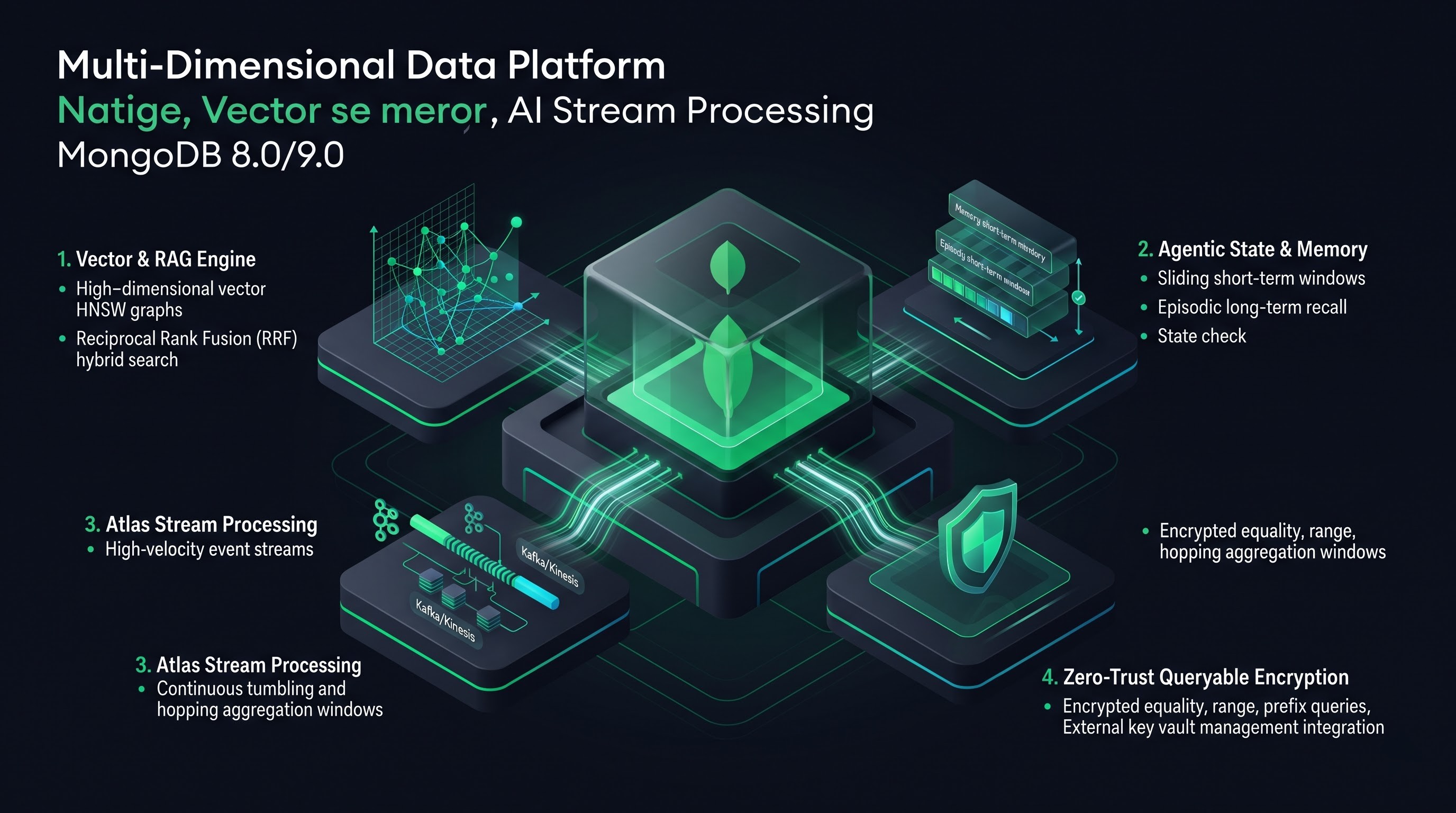
There is a huge update in the entire database ecosystem. Today's databases are capable of doing a lot of additional things other than serving documents in web applications. The operational databases today should not just perform transactions in terms of read-write actions. Modern databases must provide highly dimensional vector representations to generative AI processes, process data in nanoseconds, have zero trust security, and modify their abilities based on different infrastructure settings.
It is vital to learn about different things in each case of development besides just basic querying of collections. Due to numerous updates of MongoDB (versions 8.0 to 9.0), it is important to be familiar with different approaches other than basic ones. For people who want to move from the simplest database administration to more complex data systems, a mongodb online course at OnlineITGuru will be useful in order to learn these patterns systematically.
This note will cover MongoDB skills that are required for developing and securing modern applications in 2026.
Native Vector Search with Generative AI Integration
The use of both operational data storage and artificial intelligence infrastructure is currently one of the most significant architecture trends in 2026. Before, the engineering teams had to store their data in vector databases to be able to conduct the Retrieval-Augmented Generation operation. This led to such issues as high latency, increased costs, complex pipelines, and dual writes.
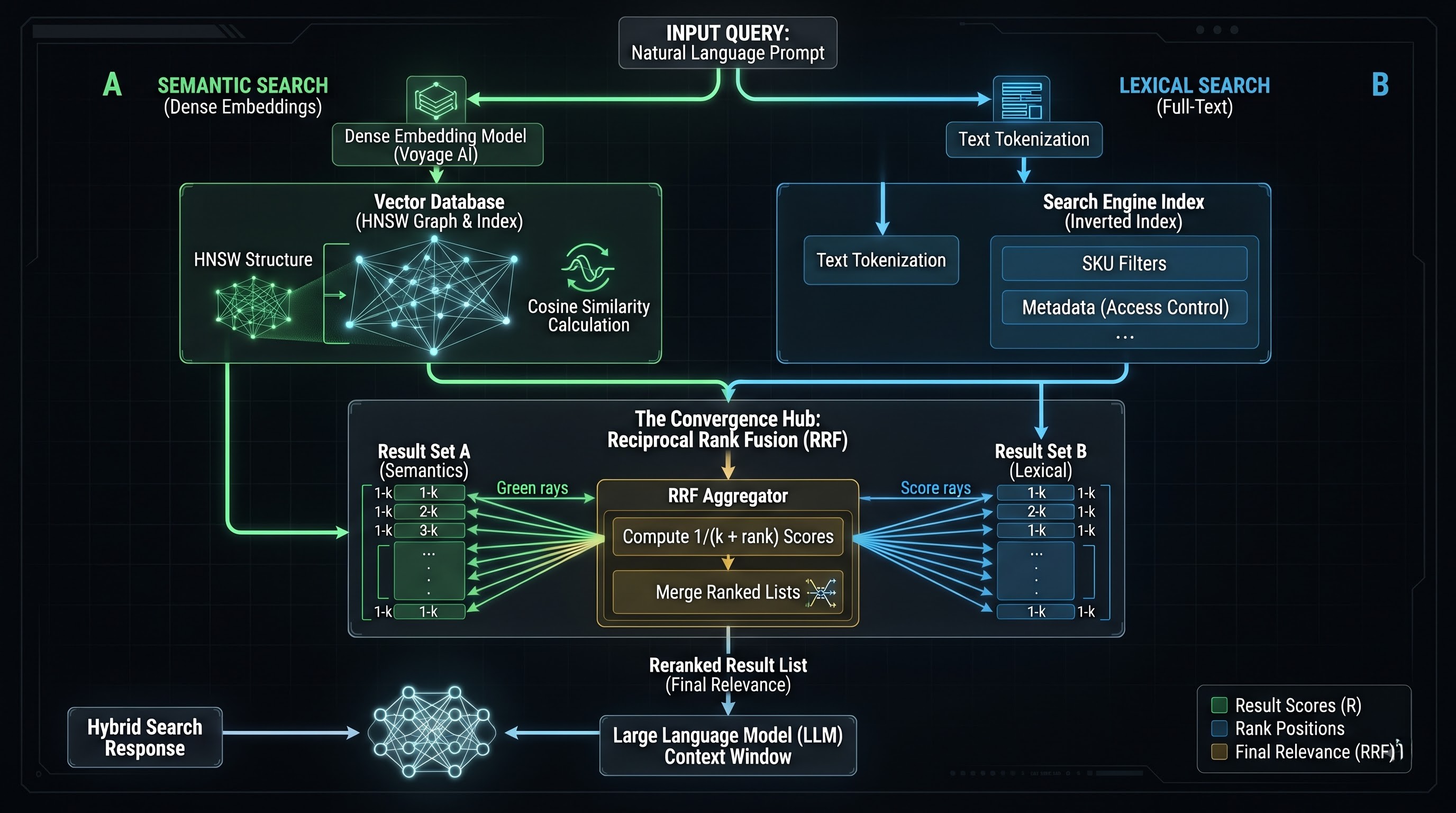
Nowadays, it is the common approach to conduct both actions in one system by using Atlas Vector Search service.
Unified Vector Storage and Embedding Pipelines
One of the fundamental skills to acquire is the understanding of how to build, index, and query dense vector embeddings in parallel to the traditional records. It is important for engineers to understand the following aspects:
Vector index architectures: The difference in terms of mechanics between Hierarchical Navigable Small World graphs and Inverted File with Flat quantization indexing. The developers must be able to strike a compromise between the memory used for indexing сonnected to the search recall and latency.
Automated Embedding Synchronization: Effectively integrating built-in deciding engines like embedded Voyage AI models to automatically create and change vector embeddings each time a related operational document undergoes alteration, thus eliminating the need for separation queue workers.
Dimensionality and Distance Metrics: Assessing whether or not Euclidean distance, Cosine similarity, or Dot Product metrics are accepted mathematically in given domain implementations of various types in terms of meaning-based documents retrieval or recommender systems work.
Hybrid Search and Reciprocal Rank Fusion
Existing business search solutions do not usually work effectively through meaning similarity only, while pure vector search gets stuck quite often in case the query contains specific SKU numbers, dates, particular words or complicated access filters.
Mastering hybrid search for organization of successful activities in 2026 is essential. Hybrid search is a combination of full-text word-indexing, linguistic tokenization, exact metadata filtering and semantic vector similarity in one workflow. Different programming specialists have to master Reverse Rank Fusion models and native re-ranking methods for ensuring the efficiency of scoring and ranking of lexical and meaning-related terms before the transition to large-language model context.
Dynamic Memory and Agentic State Management
Independent agents and multi-agent systems have become functional business solutions from experimental models. The mission for these systems is to develop robust layers of persistence that can handle variable short-term memory systems, long-term memory systems and reliable auditing abilities.
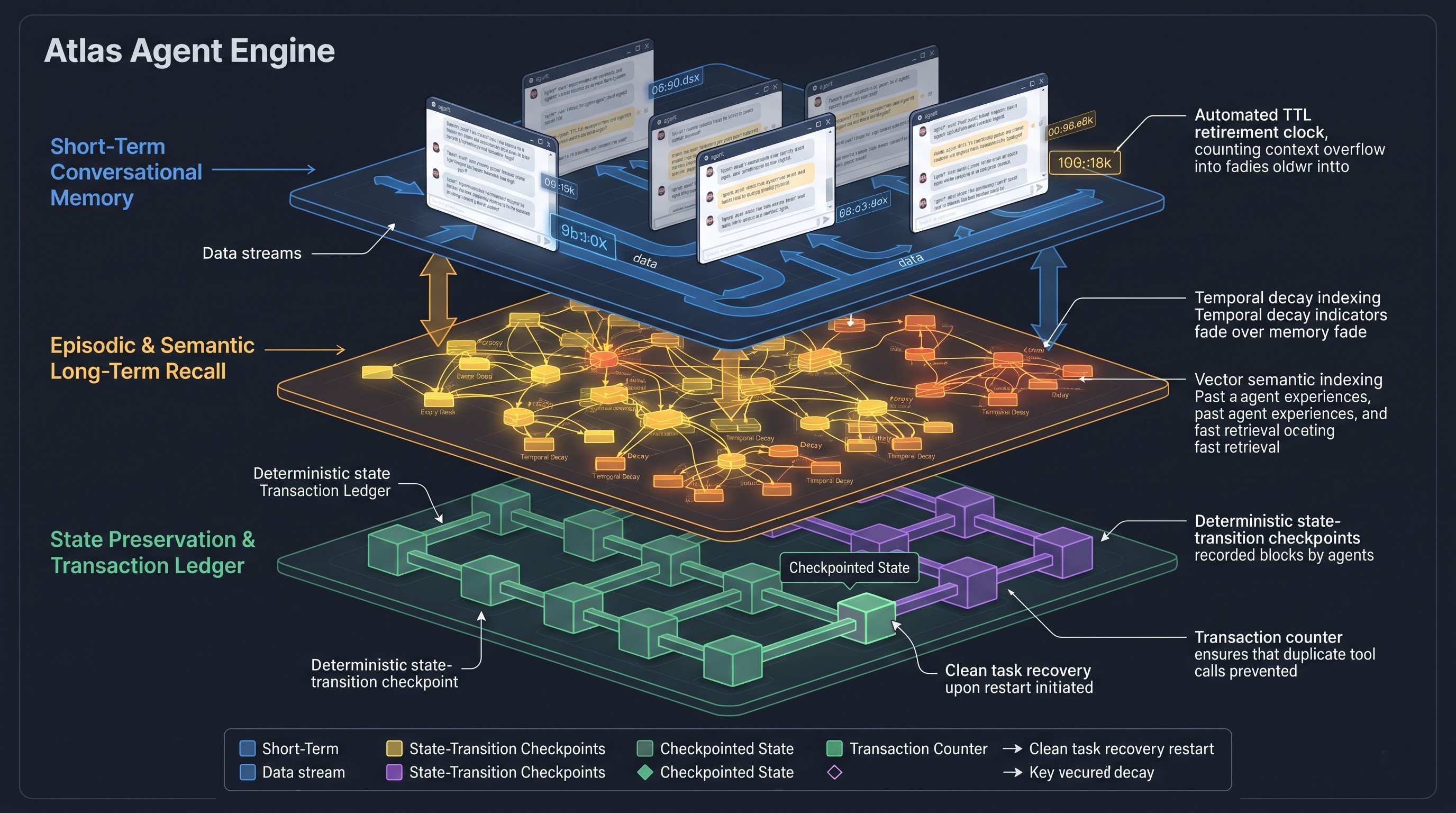
Managing context and memory setups for AI agents
Using the latest systems such as Atlas Agent Engine calls for database specialists to come up with unique schemas that ensure agent persistence, such as:
- Short-term communication memory systems – executed through sliding document systems and TTL mechanisms that allow communication over multiple discussions without growing the size of the documents.
- Episodic and semantic long-term memory systems – created by using the hierarchical architecture of memory that allows simple and fast access to the relevant past experiences of the agent with the help of temporal decay and vector semantic technologies.
- State preservation check and uniqueness systems – built by ensuring clear logs of the state transitions of the agent so that the agent can stop working, continue and bring back to the previous state of the job without repeating any actions.
Efficient Aggregation and Analytical Workloads
The MongoDB Aggregation Framework has turned into a comprehensive in-database analysis computing engine. The practice of using code at the application level to analyze large datasets implies creating network congestion and creating difficulties for the application.
Multi-Level Pipeline Structure
Highly skilled developers must create multi-level pipelines of many stages using the capabilities of the native database query optimizer. Key competencies include:
Order of Stages Optimization: Understanding the way the internal query planner pushes the filtering and projection stages ahead to use indexation, minimization of memory used for documents, and avoid spilling into the temporary disk storage
Multifaceted Search and Classification: Use multi-dimensional analytics during a single database round-trip in order to power the e-commerce drill-down filters, happenings in real-time inventories, and aggregation of statuses
Linked Graph Traversals: Use of graph search stages for traveling throughout social relationships, fraud graphs, organizational hierarchies, and bill of materials systems directly on the server.
Window Functions and Time-Related Data Analytics
Modern applications do require analytical processing capable of handling time-related analytics within operational data layers. The ability to use window functions enables developers to compute moving average, rolling sums, cumulative distributions, and leading-lagging operations on partitioned sets of data without needing external analytical data.
Real-Time Stream Processing and Systems based on Events
Batch processing is definitely no longer good enough in modern finance, logistics, and digital collaboration products. By 2026, it is expected that the change of the state should lead to the change of the state in other components of distributed systems in real time.
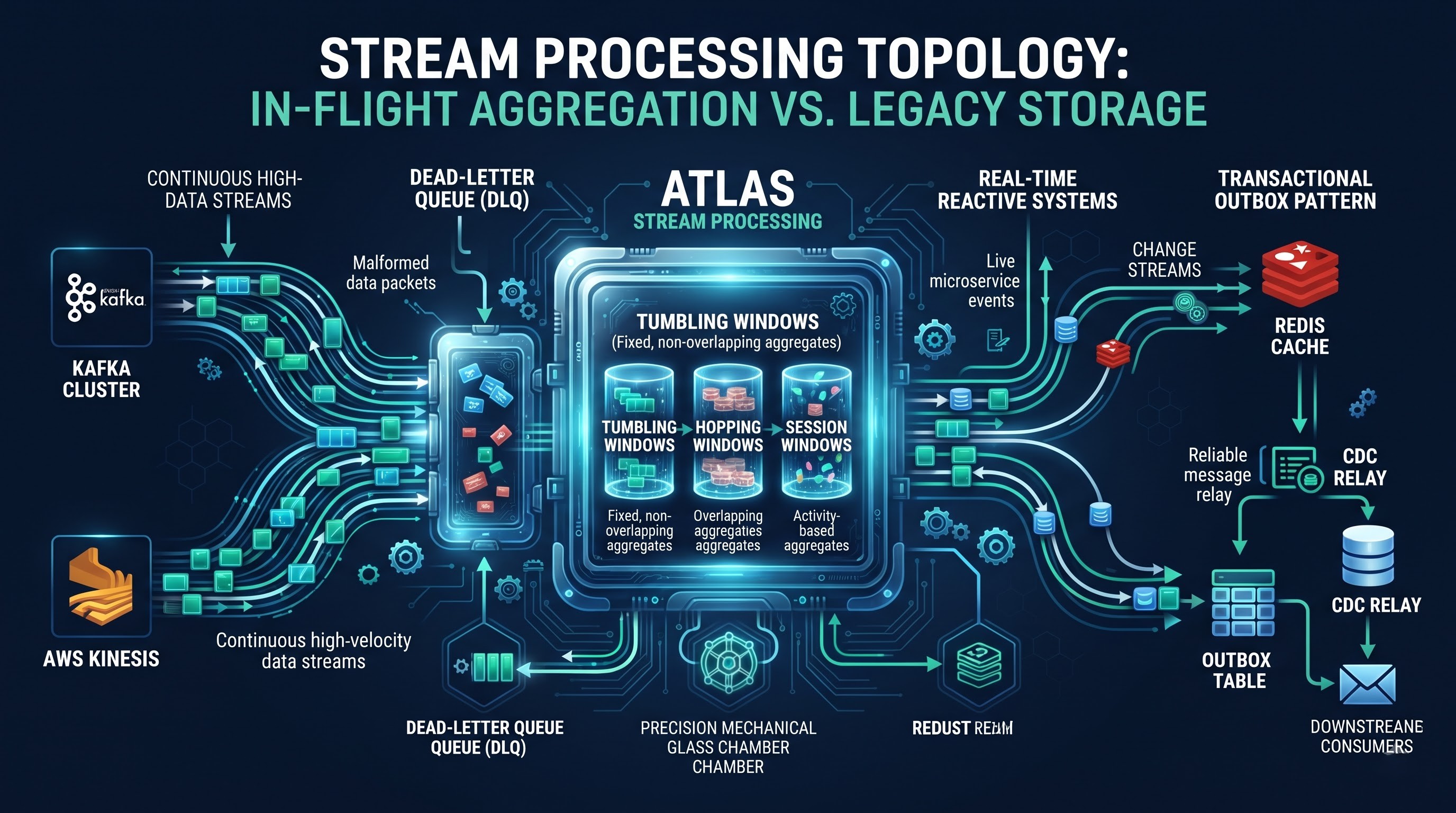
Atlas Stream Processing
Atlas Stream Processing is the source of a significant shift in thinking. One can use it to treat incoming streams of continuous data similarly to collections of data in a database by applying complex aggregation algorithms to processing data while it is not placed in cold storage.
Continuous streaming inquiries involve the establishment of long-term streams for the transmission, screening, enhancing, filtering of messages coming from high-speed sources like Apache Kafka and AWS Kinesis.
Windowed streaming aggregation deals with the use of tumbling, hopping, and session time windows to bring about real-time irregularities, detect credit card cheating, or compute sliding window measures for IoT devices.
Outdated-Letter Management and indictment implies the development of advanced streaming schemas that prevent poor-quality signals from declaring war on fast-paced inflow systems.
Change streams at scale
Change streams are responsible for event-driven interaction in microservices frameworks. It is more important for developers to be able:
Use change streams in building dependable cache invalidation schemes and adjust Redis or memory caches after the effective realization of the operation document.
Utilize the Transactional Outbox pattern without needing the involvement of third-party polling entities.
Use the resumption graphs appropriately.
Contemporary Document Schema Architecture and Ways to Avoid Anti-Patterns
In terms of the advantages of schema-less polymorphic data architecture, the flexibility offered comes with a number of pressing issues. If structure is missed, there will be huge problems with overusing the memory, documents, index, writes, etc.
Patterns of Modern Structural Design
In 2026, a professional database architect always knows when to link data and when to embed it.
The Bucket Design Pattern - means combining records of continuous events, telemetry data, and financial data into one parent document by time interval or the number of occurrences so that the index usage becomes lesser.
The Subset Design Pattern - means placing key fields in the main document, while allowing less used ones to be accessed from different documents.
The Extended Reference Design Pattern - means embedding heavy data inside the outer document together with its foreign reference so that expensive joins are avoided.
Polymorphic and Versioning Schema Design - means designing collections with documents that differ from each other according to the type of product or law and using identifiers for faithfulness when upgrading applications.
By eliminating unsafe anti-patterns
Engineers must spot and solve the problems posed by anti-patterns:
Unrestricted Array Increase: Letting arrays increase without restriction leads to trouble like frequent document movements, disk fragmentation, and memory strain.
Massive Joins through Several Stages: Over-normalizing collections creates an unnecessary number of joins that impede distributed systems’ functioning.
Indexing Spread: Making a single-field index for every version of each query leads to excessive RAM usage and poor writing processing.
Advanced Query Optimization, Indexing, and Query Engine
Knowing the term of the internal query is what separates amateur programmers from skilled performance engineers. Being able to save in milliseconds in high concurrency enterprise systems is essential.
The ESR rule and compound index modeling
The compound index must be made according to the Equality-Sort-Range principle:
Equality Principles: Fields assessed on true scalar equality must be positioned first in compound indexing to efficiently narrow the candidate pool.
Sorting Principle: The fields defining order must be positioned right behind the equality fields in order to help the internals of the database engine traverse the index tree in order, which eliminates the need for costly in-memory sorting.
Range Principle: The fields using range operators must be positioned last in the index definition to avoid any unnecessary branching.
Simplicity of Indexing Techniques
Partial and Sparse Indexes: Indexing only the documents that meet the required conditional predicate to lower the index footprint.
Wildcard Indexes: Indexing dynamic and unpredictable attributes without needing to define the schema ahead of time.
TTL Indexes: Automating the retirement of documents in a lifecycle for session statuses, temporary tokens of authentication, and rolling caches.
Query Plan Interpretations and Diagnostics
Engineers must learn how to interpret execution plans for the following purposes:
To differentiate between Index Scans and Collection Scans, ensuring that only relevant keys are evaluated in query execution.
To identify mismatches of index prefixes, rejected plans, and uncovered queries.
To use Database Profiler and Performance Advisor indicators to discover temporal lag spikes backed by resource conflict, lock queue, or operation lacking an index.
Distributed Scaling, Sharding Topology, and MongoDB 8.0/9.0 Architecture
When scaling horizontally in distributed environments, one should have a good understanding of cluster topology, consensus protocols, and hardware features.
Sharding
Sharding divides large collections into parts placed on different server clusters. Using incorrect sharding strategies can lead to hotspotting, unutilized clusters, and scatter-gather queries across shards:
Hashed Sharding: It is distributing inserts uniformly across the cluster by applying the hash function to the shard key, and is especially useful in the case of identifiers that only grow.
Ranged Sharding: The documents in this case are divided into blocks depending on their values; therefore, it becomes easy to query dates or numbers range-wise.
Zone Sharding: With this type of sharding, organizations would be able to adhere to various legal requirements that govern data sovereignty and data residency due to data being transferred to certain geographical regions.
Better performance in sharding: From version 8.0 onwards, there has been an improvement in terms of better algorithms of horizontal scaling which reduce the time taken for shard balancing significantly.
Improvements in Core Engine
The present version of the technology is characterized by the following characteristics:
TCMalloc Memory Management: The thread-caching memory allocation mechanisms have been created in order to minimize the problem of memory fragmentation when writing continuously happens at once.
Bulk Write Operations: With the help of bulk process implementation, the system becomes able to increase the efficiency of the process and save resources.
Time Limits on Reading Operation: Implementation of the read operation time limit allows halting the process before it goes beyond the acceptable limits.
Security Enterprise-Grade, Zero Trust, and Confidential Computing
Gone are the days when security was only an add-on and primarily an issue that infrastructure people should deal with. These days, database admins and application developers have to secure their systems not just at the schema level but also at the query level.
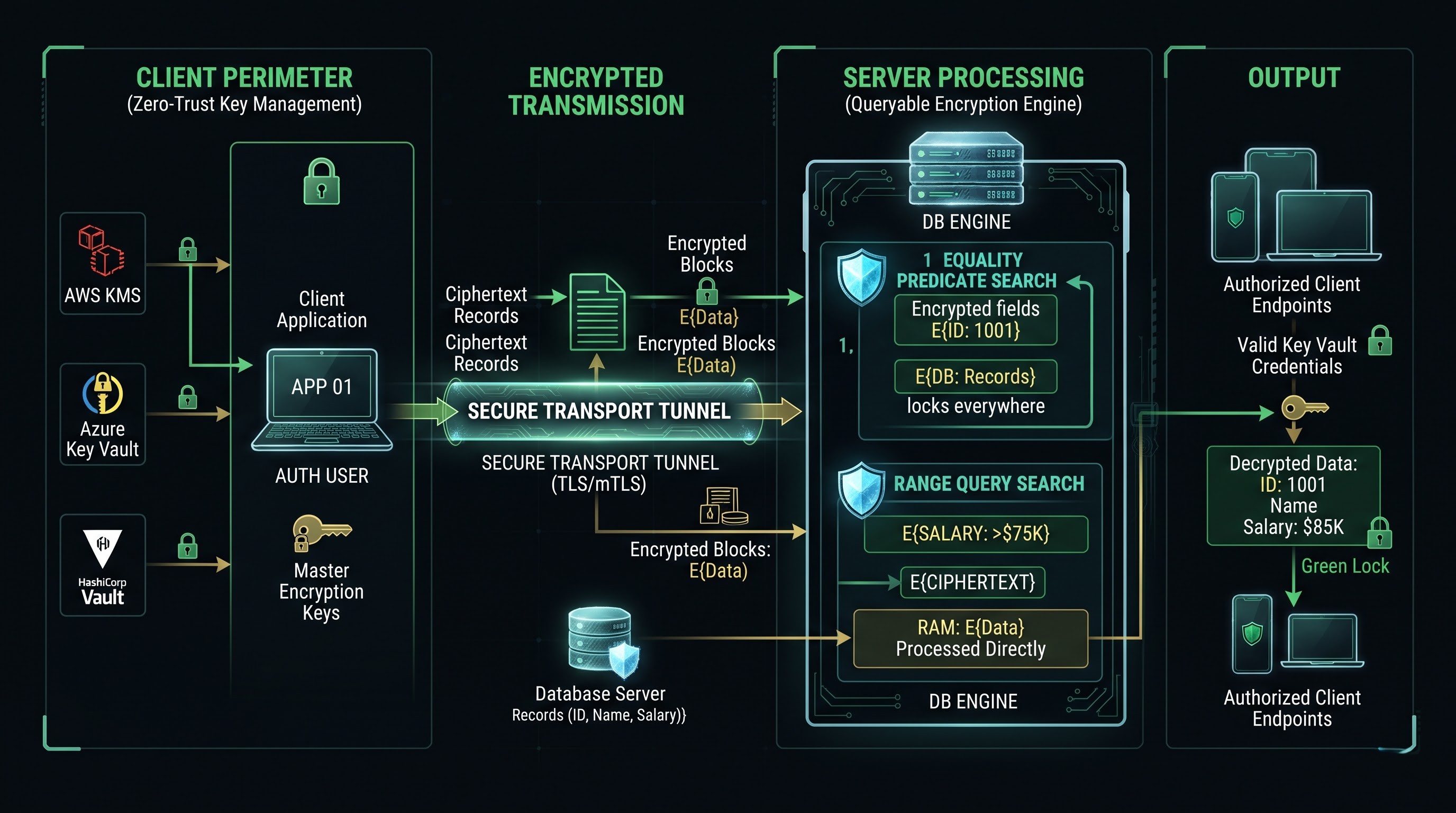
Queryable Encryption
Most probably, the most groundbreaking invention in modern databases is Queryable Encryption. The usual Field-Level Encryption provides security of sensitive data when storing and transmitting them while completely protecting the server from querying a specific field until all records are decrypted.
Using Encrypted Range and Equality Queries: Due to the development of the Queryable Encryption, the search queries can be performed by the database engine using equalities and ranges of values in the completely encrypted fields (e.g. social security numbers, health identifiers, salary values, etc.).
Zero-Trust Key Management. External Key Management Systems (such as AWS KMS, Azure Key Vault or HashiCorp Vault) can be integrated into the organization’s database management systems so that the database hosting infrastructure will not have access to the encryption keys.
Access Control and Compliance Governance
Operating an enterprise database necessitates a secure operational environment:
Role-based access control: This means implementing different authorization roles to serve access to people or services only necessary for them.
Auditing: Setting up audit logs that could not be altered, and logs every authentication and administrative action, including access to sensitive collections, according to standards such as SOC 2, HIPAA, and GDPR.
Multi-cloud operations, database as code, and FinOps
Utilizing web interfaces for cluster configuration is outdated in delivery of enterprises. Large-scale distributed systems require automation, infrastructure as code practices, and IT financial control.
Database as code and GitOps
At present, engineering teams use database technologies along with programming:
Using Terraform and OpenTofu: Configuration files are enabled to configure clusters, private endpoints, peering, user permissions, and alerts.
Kubernetes operators: Kubernetes MongoDB operator enables to run MongoDB enterprise platform within containers.
The emergence of Cloud FinOps and Resource Optimization
These days, managing expenses related to cloud computing has become vital for being a good engineer:
Three-tier storage and online storage: Developing policies for automation storage that enables the flow of obsolete and rarely used data from expensive first-rate storage hardware to low-cost storage like Amazon S3, while still being able to use this information in analytical inquiries.
Correct sizing and self-scaling: Setting parameters for calculating dynamic computing in line with specific time trends to prevent undesirable over-sourcing.
Isolation of workload using unit processors: Using nodes in good search for separating memory for vector requests from nodes designated for typical read-write traffic; thus, preventing any surge in requests from affecting important transactions.
Technology for specific engines: the ability to handle time series and graphs
Stable storage engines of MongoDB databases prevent the necessity to introduce and maintain several specific-purpose databases.
Built-in time series engine
To be able to maintain a huge amount of data obtained from sensors, banking operations, and application logs, it is necessary to carry out the work with specialized time-series systems.
Column-Based Compression: Discovering what kind of internal column data structure the time-series data repository applies to records, helping in significant reductions in storage and improving the performance of analytical queries for certain measures.
Granularity Definition: Setting the right time series granularity (seconds, minutes, or hours) to let the internal engine evaluate the level of packing of the subsequent data points in the internal bins.
Downsampling and Rollup Regulations: Making sure raw measurements are converted in automatic mode into either daily or hourly totals, preserving the historical behavior visibility without putting the overall number of raw measurements.
Recommended Learning Path for 2026
Competence in today’s vector stores, stream pipelines, and zero-trust encryption can be achieved through a systematic journey through four practical stages. By taking part in structured, mentor-led mongodb training, one can speed up the process by accessing live production sandboxes and architectural insights.
Phase 1: Basic Contemporary Mode and Basic Aggregations
The key point is to master the document model from the accessibility perspective, and not just limit the work to queries making use of aggregations, schema design patterns, and ESR rules. Search and identify anti-patterns like limitless arrays and unnecessary server joins.
Phase 2: Vector Searching, Semantic Pipelines, and Agent Persistence
Extend possibilities into generative artificial intelligence data creation. Utilize the Atlas Vector Search, examine hybrid questions with reciprocal rank fusion, and prepare automatic embedding generation employing the latest model. Create the memory buffers of the conversations and log the transformations in the agent framework.
Phase 3: Streaming Systems and Distributed Scaling
Move into systems engineering with high throughput. Analyze Atlas Stream Processing and Change Streams to develop systems responding to events. Explore distributed shard key selection, data chunk transfer, and multi-region clusters to allow horizontal scaling.
Phase 4: Enterprise Security, Automation, and FinOps
Increase production governance capabilities. Use Queryable Encryption with external key vaults, set the infrastructure by means of declarative Terraform, and come up with tiered archiving strategies to gain a combination of security, performance, and cloud management costs.
Concluding Remarks
The knowledge field associated with MongoDB has greatly expanded. Experts in software developing and architecture will no longer be engaged only with the storage of JSON files but will also apply various data systems. These aspects can be achieved with proper knowledge in the field of vector search, streaming, modeling schemas, and cryptography security, which will allow people to develop successful and innovative applications.
To acquire practical knowledge associated with the implementation of the concepts mentioned above and obtain internationally acknowledged certification in the industry, you may get trained in mongodb training online at OnlineITGuru, where you will learn all necessary techniques via hands-on labs.