
Growing Demand for UiPath Professionals and Career Prospects
Last updated on Jul 12, 2026

Digital transformation is one of the most potent forces shaping the modern enterprise. Organizations across sectors are taking the technology-led initiatives to improve efficiency, reduce costs, enhance customer experience, and remain competitive in rapidly evolving markets. Today RPA is one of the core business capabilities of the technology suite that powers this transformation. “Companies are moving past digitization and are investing in smart automation solutions that can solve repetitive tasks, improve business outcomes and increase accuracy.
Today, UiPath is the most widely adopted platform in the automation ecosystem. UiPath can automate complex business processes and is designed to integrate with enterprise environments. Automation initiatives are being embraced fast by organisations of all sizes from large multinationals to mid-sized companies. This has led directly to the demand for professionals who are familiar with UiPath.
Automation is creating a new type of job requiring technical skills, analytical ability and business acumen. As companies accelerate their automation efforts, the ability to automate is becoming a key business advantage. This is why UiPath is a lucrative career option for people who want to build sustainable long term opportunities in tech space with growing market demand.
The expanding influence of UiPath in business transformation
Historically, organisations have used manual workflows to manage administrative functions, data processing, approvals, reporting, customer interactions and regulatory compliance activities. These old school methods work for small business but they are not efficient when the business gets bigger and the complexity of operations increases. Manual processes usually require a lot of employee involvement, which leads to delays in execution, higher operational costs and higher risk of inconsistency and human error. As organizations scale, the challenge of ensuring productivity and accuracy in business operations without depending solely on manual effort becomes more pronounced, creating roadblocks that can impact business performance and long-term growth.
In today’s competitive business environment the keys to success are speed, efficiency and agility. Businesses need to respond quickly to customer needs, to handle ever increasing quantities of information, and to provide high levels of service quality, all at the same time as controlling costs. But the established process management methods normally do not satisfy these expectations. These repetitive tasks take up valuable employee time and pull the organization's focus away from innovation and strategic priorities. Businesses are leveraging automation technologies to create efficiencies and scale their operations.
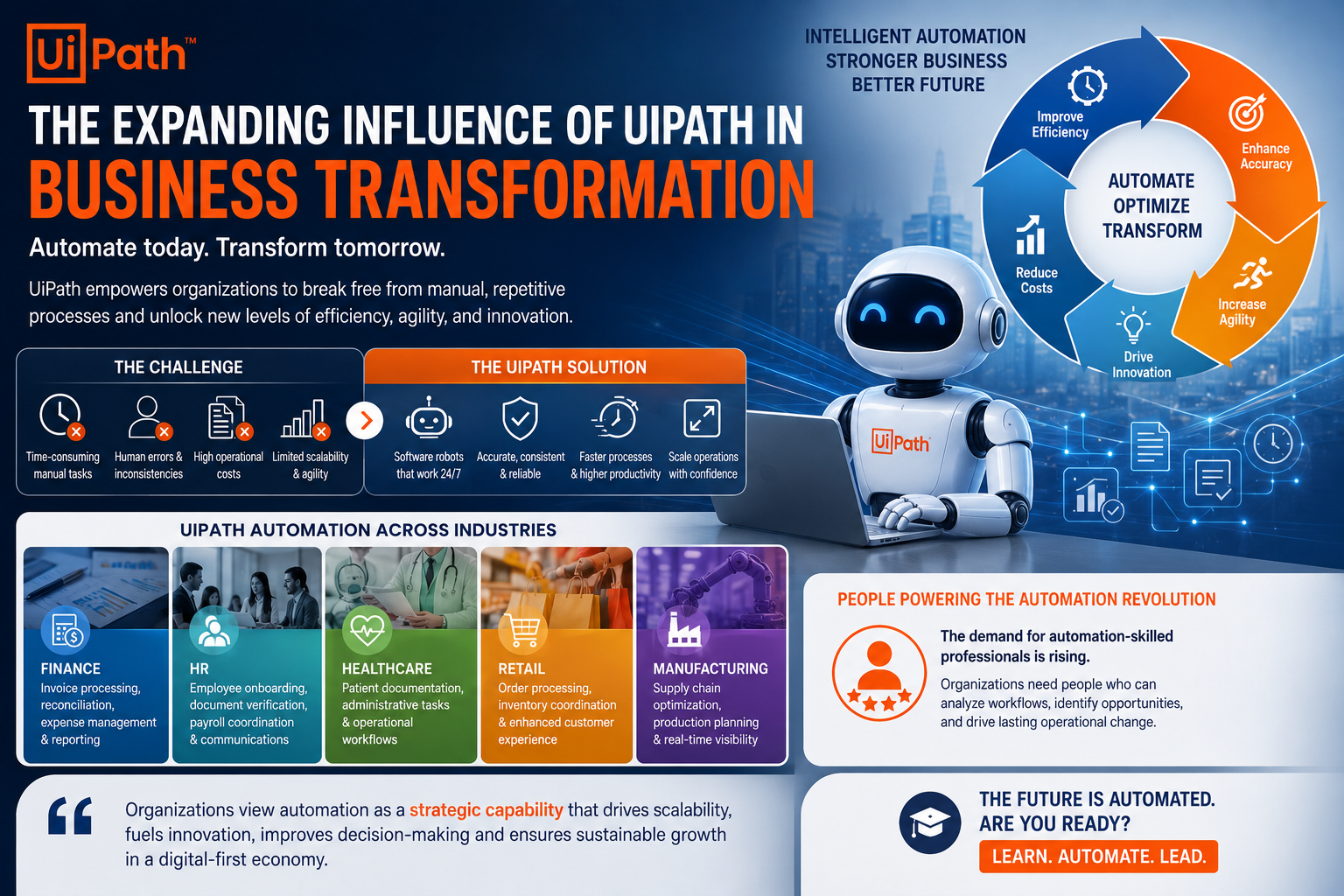
UiPath helps organizations to address these issues by automating structured and repetitive processes with software robots that perform pre-defined tasks in a consistent, fast and reliable manner. Re-engineering existing systems is less feasible than automation of existing enterprise systems with as little disruption to everyday business as possible. This gives organizations the agility to speed up their transformation efforts without having to rip and replace their existing technology infrastructure.
UiPath automation improves efficiencies in business processes, leading to tangible benefits such as faster processing times, less manual input, and greater operational consistency. Software robots can do the same job over and over again without getting tired. This allows companies to scale up production without any compromises to quality standards. This leads to better use of resources so that employees are freed up to engage in decision making, innovation, customer engagement and other higher value business activities.
There is a lot of automation in many industries and in the real world . Companies are automating finance departments and automating processes such as invoice processing, account reconciliation, expense management and reporting. HR departments can realize increased efficiency by automating employee onboarding, document verification, payroll coordination, and internal communication processes. Today, healthcare organizations are receptive in automating patient documentation, administrative tasks and operational workflows. Retailers can improve the customer experience with increased order-processing accuracy, inventory coordination and service responsiveness. Manufacturers are turning to more automation driven by supply chain optimization, production planning and operational visibility.
As organizations begin to recognize the value of intelligent automation, demand for automation-savvy individuals is growing. Increasingly companies want people who can use technology and optimize business processes. “Nowadays, automation projects need people who can look at workflows, see opportunities for improvement and help out with the long-term operational change.
Organisations are not just looking at automation as a quick fix to boost productivity and cut down on manual labor. Rather, they see automation as a more strategic business capability that provides scalability, fuels innovation, enhances decision making and sustains growth in a more digital economy.
Why UiPath Professional is so popular?
“There is a demand for UiPath professionals as companies are starting pilot projects for automation. Organizations are moving from departmental automation to enterprise automation. This shift creates a demand for professionals who can provide large scale implementation and long term operational success.
For this to happen companies need people who can identify where automation can be applied, determine if processes are ready, design workflows, implement solutions, measure results and improve performance over time. As automation ecosystems grow more complex, organizations need governance, infrastructure and operational oversight.
The main reason for career growth is the lack of skilled automation professionals as compared to demand in the market. “Many companies moving toward automation are finding it difficult to locate people with the right qualifications and practical experience in actually putting these systems together. “There is a high demand to get into this field and the supply is limited, so it’s a good working environment.
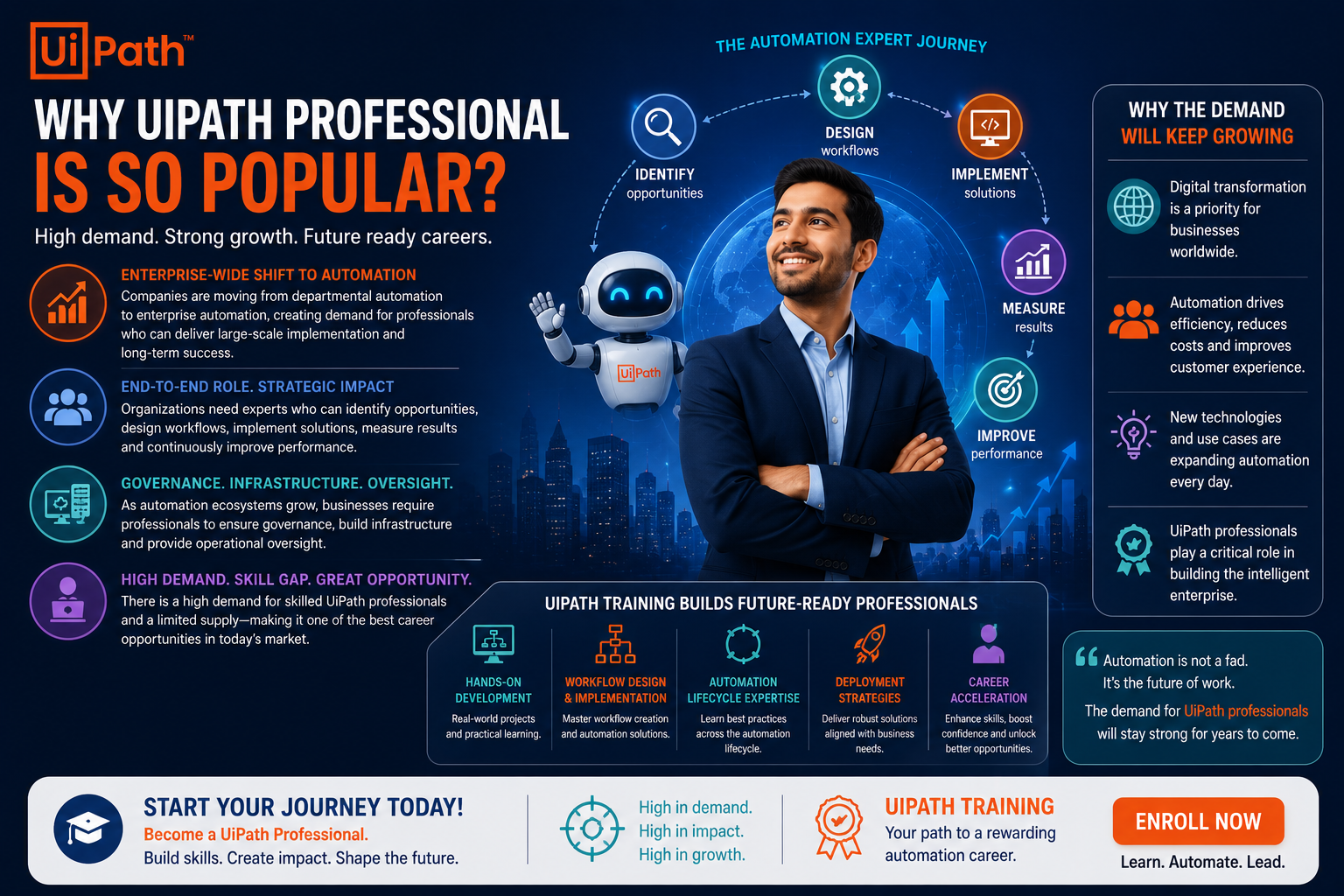
People interested in automation career are still attracted by hands on development and practical implementation focused learning paths. UI path Training helps many professionals augment their core knowledge by teaching them workflow design and implementation methods, automation lifecycle principles, and deployment strategies appropriate for business needs.
This is not a fad market trend but automation initiatives are evolving and demand will be strong for years to come.
Careers at UiPath
There are a lot of jobs in the automation industry that don't involve software development. Opportunities are available for entry-level professionals in technical, analytical, consulting, operations, and leadership positions, depending on interest and experience.
One of the entry points is the automation developer. They design and administer workflows to automate business processes. They partner with stakeholders to transform operational needs into automation solutions.
Business Analyst is also part of automation program. They are often responsible for identifying inefficiencies, gathering requirements, evaluating return on investment and ensuring that automation initiatives align with business objectives.
We developed scalable automation environments for enterprise operations with solution architects. They develop technical structures, set standards for their implementation and integrate them into the overall infrastructure of the company.
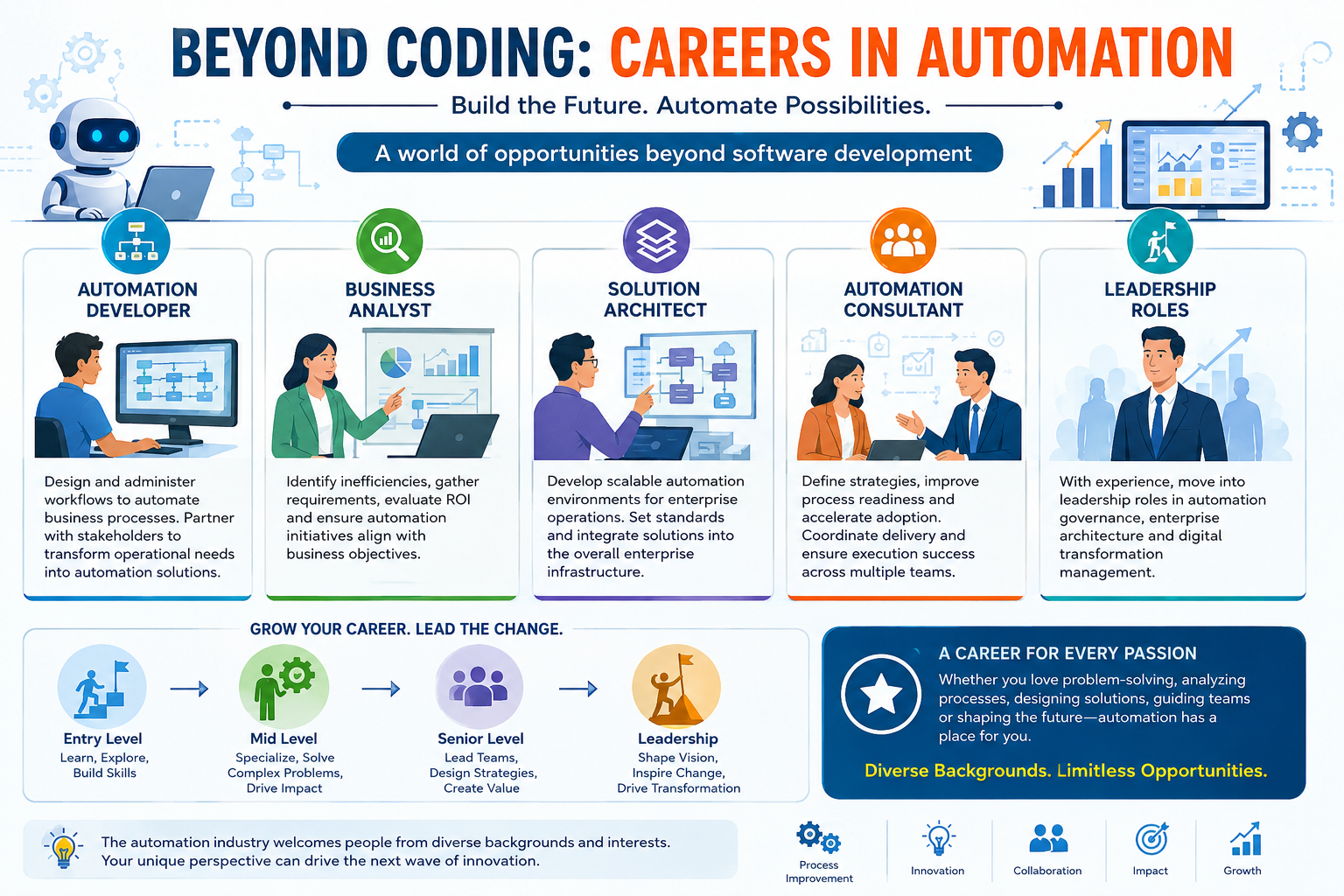
Consultants help organizations with their implementation journey by defining strategies, improving process readiness and accelerating adoption. They coordinate delivery dates and success of execution between multiple teams.
With experience you can move into leadership roles in automation governance, enterprise architecture and digital transformation management. The good thing is that there’s a wide spectrum of career opportunities for people of a wide spectrum of backgrounds and of a wide spectrum of interests.
Skills for the Long-Term Career in the Age of Machines
While technical skills are the foundation of a successful career in automation, today's employers want more than just technical execution. Today’s organisations are looking for people who can combine automation skills with strategic thinking, business awareness and the ability to deliver measurable operational results. Automation is key to enterprise transformation initiatives and professionals need to know how to build workflows and how automation impacts productivity, efficiency, customer experience and long-term business goals. This translates to more demand for automation specialists and a stronger appetite for people who can connect the dots between technology and business outcomes.
The single most valuable skill for an automation professional to learn is probably process analysis. Automation solutions start with identifying what business activities are candidates for automation and how to optimize those activities to deliver real value. Analytical types can deconstruct existing workflows to see where inefficiencies lie, identify repetitive tasks and suggest solutions that can deliver measurable value. Successful professionals do not just do efficient processes. They are making work processes lean to deliver maximum performance and business impact.
A big plus for a successful career in automation is to know the logic of workflows. “Good automation solutions are based on systematic professional thinking and consideration of different operating scenarios. Organizations need to put in place strong process structures to develop effective workflows that will drive consistency and scale as business needs evolve. Understanding your workflow architecture allows you to implement the flexible and robust automation solutions that can adapt to changing business needs.
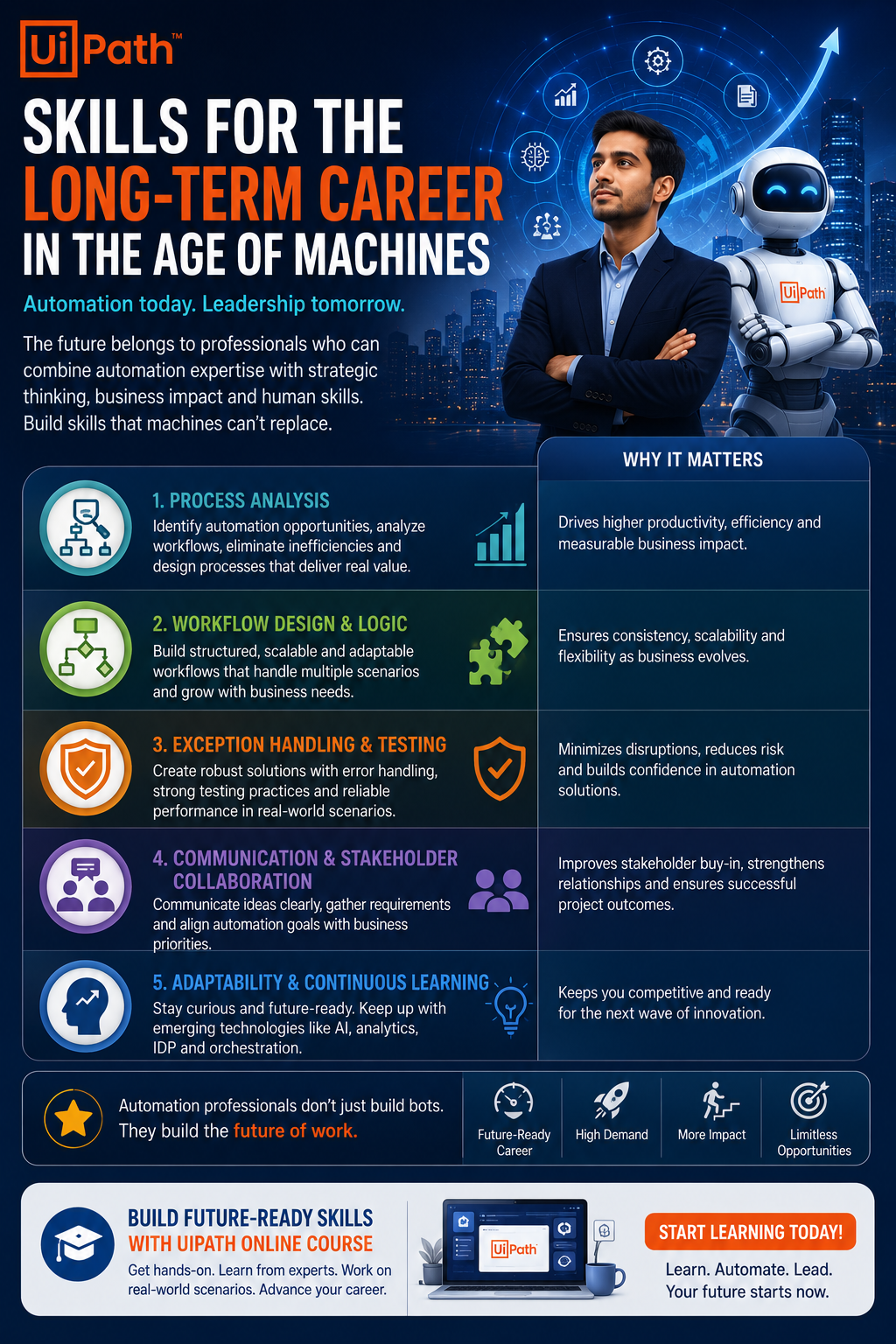
Automation systems are built to operate in the real, dynamic and often unpredictable world of business. Professionals can help organizations formulate effective exception management strategies to minimize disruptions and ensure the continuity of operations. Good testing practices give confidence that automation solutions will perform reliably in a range of scenarios, reducing risk and enhancing the quality of implementation. These capabilities are useful for driving successful long term adoption and building organizational confidence in automation efforts.
Strong communication skills are also critical for automation roles, since most of these projects will be between technical and business groups. Automation professionals work with other stakeholders who may not have a technical background. The ability to articulate automation ideas clearly, gather requirements and align implementation goals with business priorities directly impacts project outcomes. Good communication skills enable professionals to forge better relationships, to gain more buy-in from stakeholders, and to achieve more organizational support for automation initiatives.
Flexibility was found to be an important aspect of long term career development. The pace of change in automation technologies is rapid, with innovations in artificial intelligence, analytics, orchestration platforms, intelligent document processing, and advanced decision-making capabilities. Professionals who have maintained their curiosity and are continually updating their knowledge are better positioned to stay competitive in changing markets.
For those who are looking for some practical exposure, they usually prefer a structured learning experience by enrolling in a UI Path Online Course which helps them get acquainted with the implementation strategies and get exposure to working with automation environments which are close to the real world business requirements and the professional expectations.
How Automation Is Impacting Industry Hiring Trends
The business environment today is witnessing more focus on automation and the hiring trends continue to vary from industry to industry. Organizations are not only assessing technical skills or years of experience when evaluating candidates. Today’s employers are looking for professionals with a much better understanding of digital processes, automation techniques and technology-led transformation than they did in the past. Today’s hiring trend is looking for people who can lead digital initiatives, bring in new innovations, improve operational efficiency and make business better in the long run. This trend indicates the growing importance of automation as a key component of organizational growth and competitive advantage.
Rapidly evolving intelligent automation technologies are changing the workforce requirements in many industries. Businesses are realizing that the key to digital transformation is people who can connect their technical know-how to business goals and operational processes. Employers increasingly want people who know how to optimize processes, implement automation, and work across departments. Automation skills are a highly demanded professional skill that can lead to different career paths.
Automation is also changing the way health care organizations function. Intelligent automation solutions can take over repetitive tasks in standard administrative workflows, such as patient documentation, appointment scheduling and data management workflows. Medical providers are turning to automation on the rise to create operational efficiencies and allow medical personnel to spend more time on patient care and quality of service. This trend means there is an increasing demand for people who know how to implement technology but also how to optimize processes.
Insurance Firms. Insurers still look for automation initiatives that will enhance policy administration, claims processing and customer support and operational consistency. Automation can cut down on processing time, improve the service and boost customer satisfaction. “The experts behind these initiatives can help organizations grow and become more efficient.
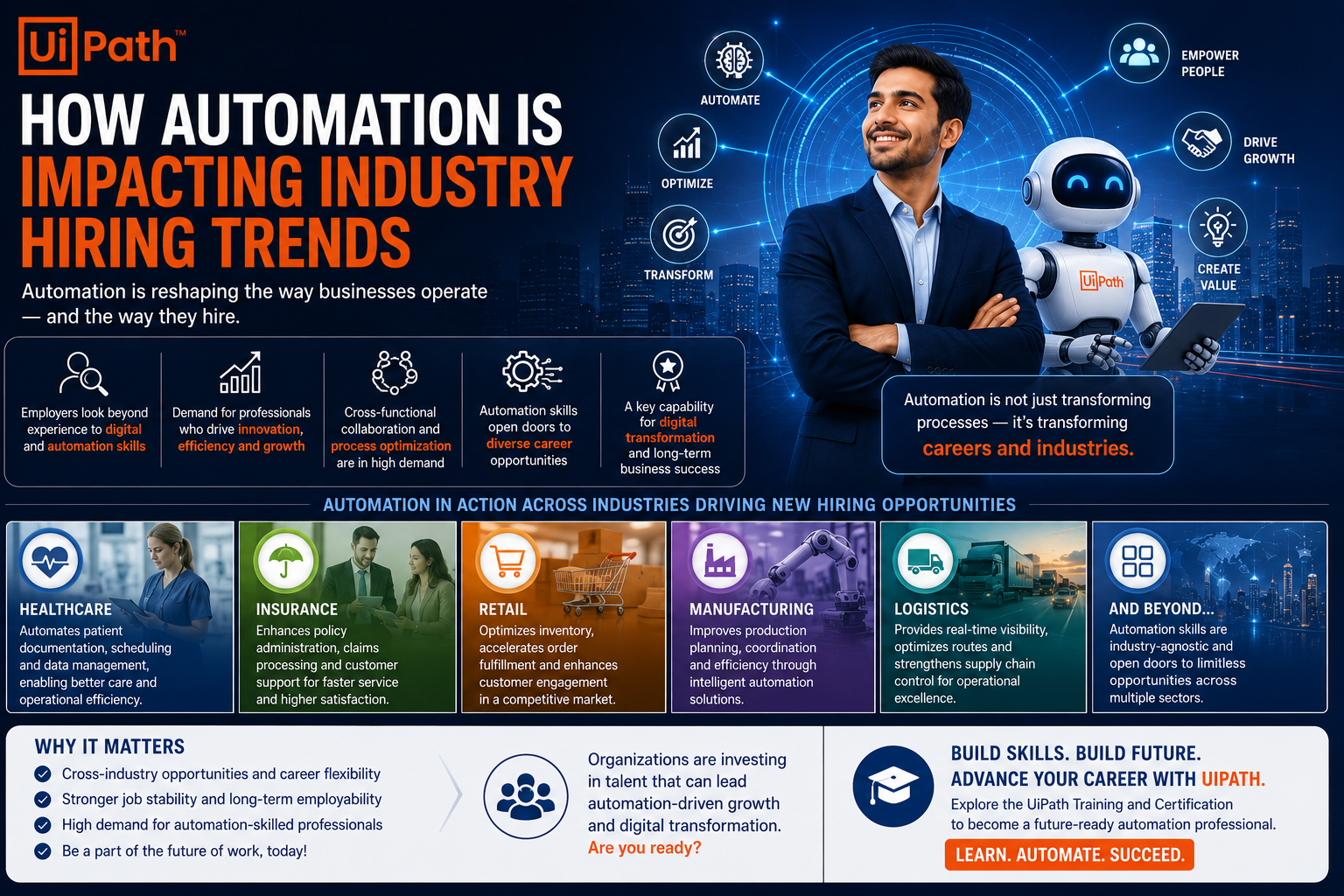
Retailers are quickly adopting automation to optimize inventory management, speed up order fulfillment processes, and improve customer engagement strategies. Retail markets are fiercely competitive, demanding faster response times and more operational visibility. Automation helps organizations meet these requirements but also increases productivity and customer experience.
Intelligent automation helps manufacturers better forecast production, coordinate operations and improve overall efficiency. Logistics companies are automating to gain more visibility on shipments, optimize schedules and gain more control over their supply chains. Improvements like these show how automation can be used to achieve operational excellence in complex business environments.
Automation technologies are not industry specific but there is more flexibility for professionals to choose different career paths and opportunities in different industries rather than sticking to a particular domain. Better career stability, a boost to long term employability and increased opportunities for professional growth is offered by its cross industry nature. “Organizations are increasingly thinking about how a candidate can contribute to the organization’s digital transformation initiatives, so automation capabilities are one of the most valuable skills in today’s ever-changing hiring landscape.
Increment & Salary Progression Benefits
Career development is one of the main attractions for professionals looking to enter the automation industry. “Organizations continue to invest in digital initiatives, but compensation for experienced automation professionals remains competitive with many traditional technology roles.
Great learning opportunities and pay ramp up are often found in jobs for entry level professionals. Experienced professionals take on roles in architecture design, strategic planning, consulting and enterprise governance.
Compensation growth is driven by hands-on implementation experience, project complexity, industry exposure, and the ability to lead enterprise-wide automation initiatives. The more you upgrade your skills, the more your chances to get hired will grow
Structured learning environments can help build practical understanding which can help to accelerate career progression and many learners choose UI Path Course to boost their confidence in implementation and improve their employability in competitive markets.
Opportunities in your career
Automation is moving beyond the traditional automation of tasks and repetitive workflows to a more holistic model of intelligent business orchestration. The modern organization is not dedicated to automating individual tasks to make them more efficient. Instead, they are constructing integrated operating environments in which automation is a strategic enabler of decision-making, business agility and continuous innovation. This is a huge change in how enterprises are thinking about digital transformation, from just automating processes, to integrated ecosystems that can dynamically adapt to changing business conditions.
Companies are demanding more operational intelligence and automation platforms are being infused with advanced technologies that can support more adaptive and responsive environments. “Today’s companies need automation systems that can do more than just follow programmed rules. “They are looking for automation systems that can help in analysis, pattern recognition, suggesting actions and business impact. These trends are making automation into a strategic capability that can influence enterprise performance across many functions and departments.
And one of the main drivers of this change is the infusion of artificial intelligence into the automation ecosystem. AI automation platforms help organizations manage increasing volumes of information, find patterns and make faster decisions An intelligent automation environment can operate on pre-programmed instructions to analyze data and more complex business scenarios. This capability enhances the operational agility and makes the firms responsive to the changing market conditions.
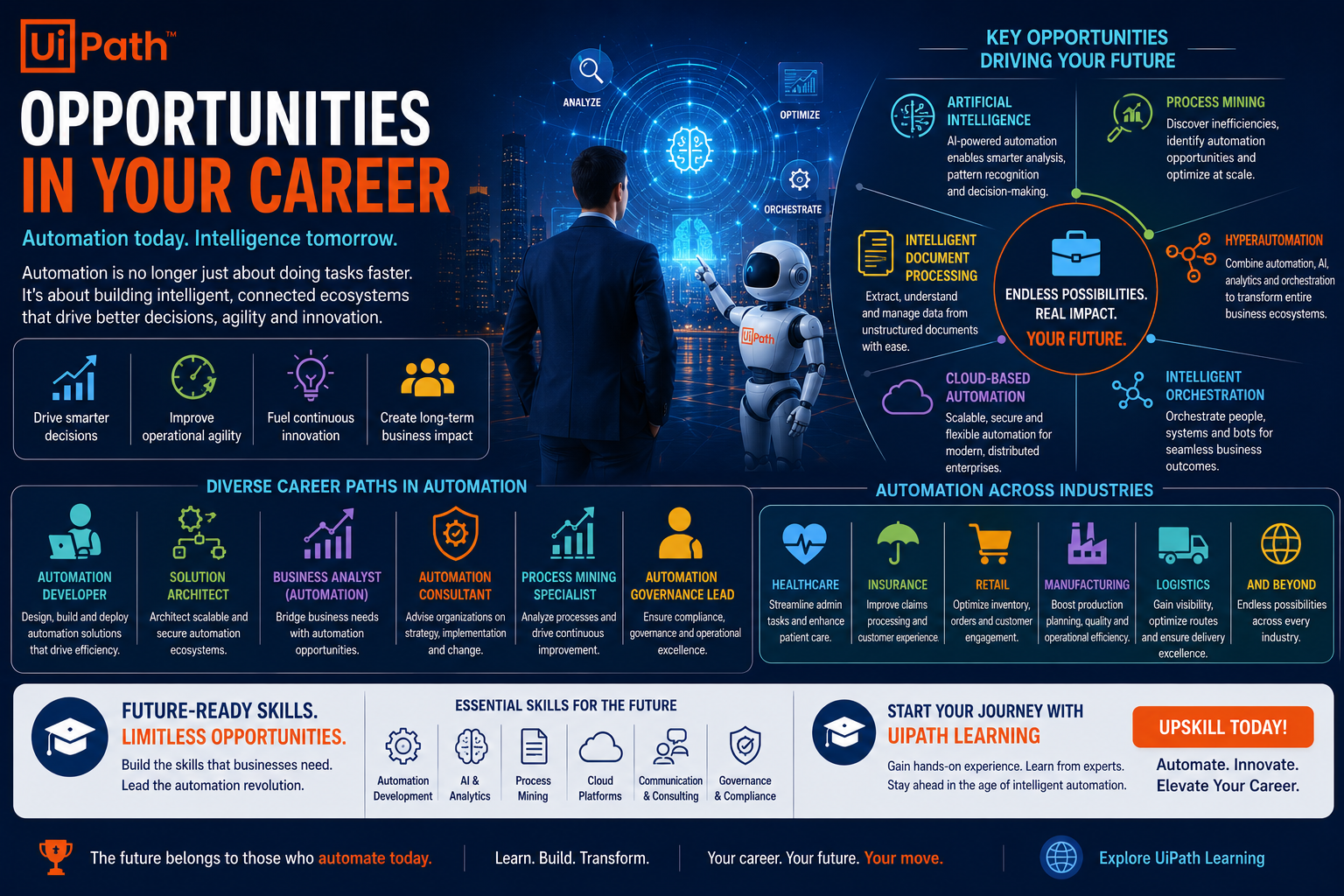
Another major trend is intelligent document processing. “Which means organisations can get at, interpret and manage information from unstructured content better. But many organizations still have critical business information in documents that require a lot of manual effort. “Intelligent automation reduces the need for human intervention, and with it availability of information, and accelerates business processes. Opportunities exist for organisations to enhance productivity whilst maintaining operational consistency and quality.
At the same time, process mining technologies are emerging as companies seek greater visibility into their operational performance. Workflows can be analyzed at scale, bottlenecks discovered, inefficiencies exposed, and automation opportunities found. Data-driven insights help organizations to find their automation targets and how to enhance their processes overall, rather than guessing or evaluating them manually. This approach results in long-term business optimization programs.
The growth of cloud-based automation environments is driven by the demand for flexibility, scalability and centralized management of operations. Organizations that are planning to pursue cloud and hybrid infrastructure strategies need automation solutions that can operate in distributed environments, and that provide reliability and governance. Growing cloud adoption also calls for more professionals with skills in modern automation architecture and enterprise deployment strategies.
Seek hyperautomation that uses automation, AI, analytics, orchestration and process intelligence to automate larger business ecosystems instead of one process at a time. This creates opportunities for careers outside of development and increases the need for skills in architecture, analytics, governance, consulting and business transformation. The more integrated environments you use, the more valuable the people that can work within them will be.
As companies keep investing in intelligent automation strategies, professionals that develop skills in this area early will probably see continued market demand and more career opportunities in the long term. Taking UI Path Learning , many professionals are serious about long term readiness and getting a broader understanding of how to implement automation, operational governance and changing enterprise requirements.
UiPath Building a Career Path for the Long Haul
Automation isn’t only about tech certs. Continuous learning and real-world experience are the keys to a sustainable career. Successful professionals can identify problems in a business and turn them into scalable technology solutions.
Exposure to real world projects often is a strong factor for better career outcomes, enhancing problem solving ability and confidence in implementation. In real world business scenarios you probably have a better understanding of how to create value from automation.
Technology is always evolving and education should be ongoing. Keep up with the trends in the industry, learn new automation skills and sharpen your complimentary skills. This will pay off and help you stay employed for a long time.
Your work and activity on the network also contribute to career development. Community participation, sharing implementation experience and knowledge of the latest industry developments are vital to stay competitive in a changing market.
Companies want people who are proactive, adaptable and able to leverage technology to achieve tangible results.
Conclusion:
As organizations embrace automation and industries evolve, the demand for UiPath professionals is going up. There are still chances in digital transformation, development, consulting, architecture, governance, and leadership. The ones that can combine the technical know how with business savvy and real-world experience are the ones that will come out on top in the long run. They still have to compete with continuous learning and exposure to real-world automation environments. OnlineITGuru helps learners to acquire automation skills and prepares them for evolving opportunities in the world of intelligent automation.