
How UiPath Improves Productivity Through Intelligent Automation
Last updated on Jul 10, 2026

Operational efficiencies matter still across all industries, reducing repetitive tasks and speeding business outcomes. “To be competitive and grow, digital transformation needs automation technologies. Robotic process automation, artificial intelligence, analytics and process optimization are powerful ways to improve the efficiency of business operations, which is intelligent automation. UiPath is a leader in this space. It is known to help organizations automate tedious tasks and free up staff to do more higher value work .
Intelligent Automation is so much more than just taking away effort and manual work. This builds a culture where human skills and digital technologies can work together for greater productivity, accuracy and speed of decision-making. As workloads increase, companies are increasingly turning to automation strategies to improve the customer experience and make the best use of resources.
Business Today Quick Brief Smart Automation
Intelligent automation is the newest technologies combined with the capability of systems to perform rule-based and data-driven processes with little human intervention. Traditionally, automation has been applied to structured, repetitive tasks. Intelligent automation is the orchestration of workflows, analytics, document understanding, machine learning (ML) and artificial intelligence (AI). This evolution is moving organizations away from doing the repative work and moves into the business of building more agile, responsive and scalable operating environments.
In today’s digital business environment, it generates thousands of transactions and huge volumes of data each day across multiple systems. This is often a manual process leading to operational inefficiencies such as increased processing times, greater error rates, less consistent outputs, and higher administrative costs. As organizations grow their digital businesses, these challenges become even harder to address through traditional approaches.
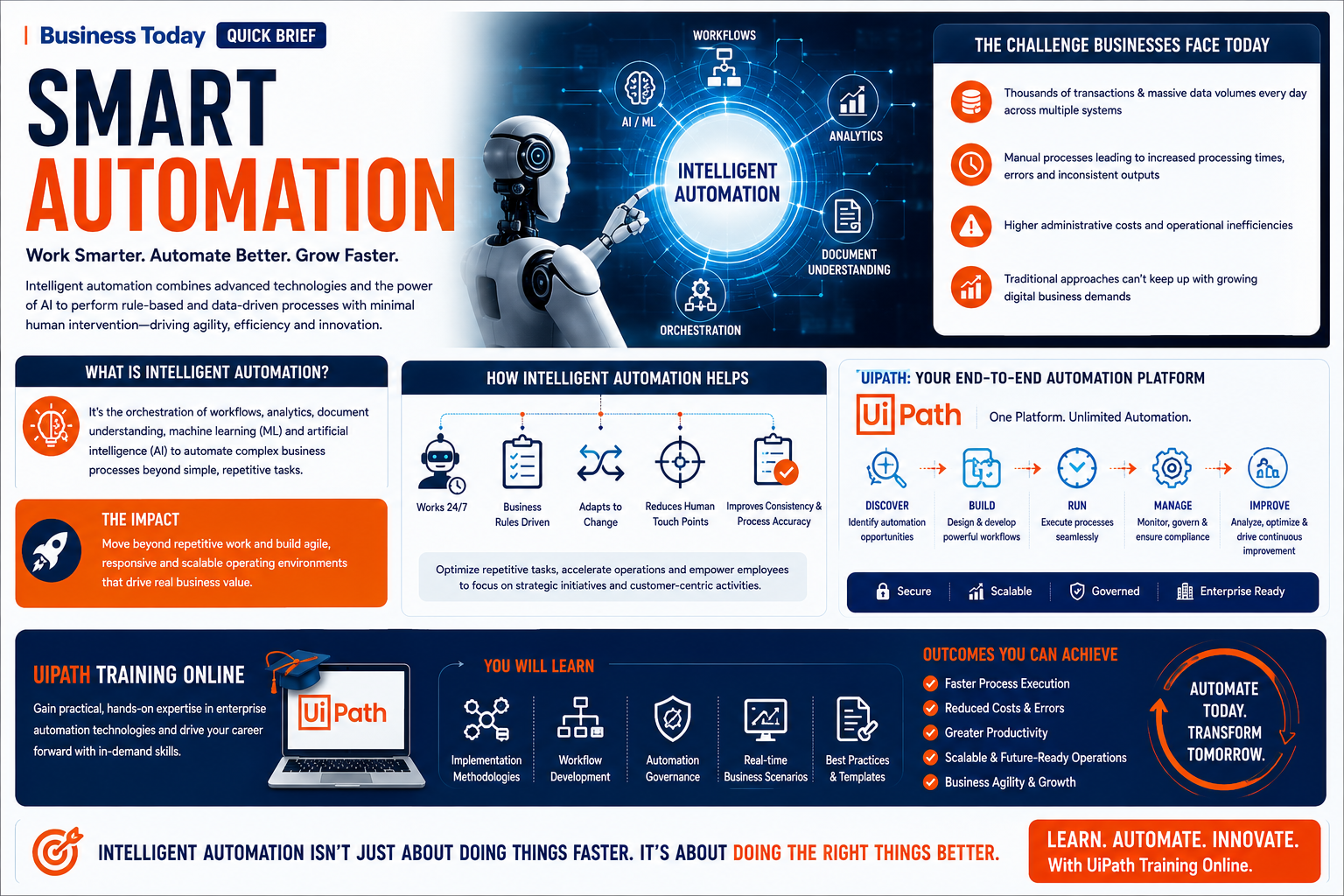
Intelligent automation addresses these types of problems through digital workflows that are capable of working 24/7, are business rules driven, and are flexible enough to accommodate evolving process requirements. Automation reduces human touch points and helps move data forward and increase the consistency of the entire process.” Optimizing repetitive admin tasks can help speed up the operations and free up employees to work on strategic initiatives and customer-facing activities.
That's what UiPath is all about. Automated life cycle management for full end-to-end automation ecosystem. The platform helps organizations identify automation opportunities, build workflows, execute automated processes, track performance, and drive continuous operational improvement. It is intended to support simple task automation and complex enterprise-wide automation initiatives with governance, security and scaling capabilities.
UI Path Training Online is providing practical knowledge to the people on enterprise automation technologies. UI Path training enables the professionals to gain expertise in implementation methodologies, workflow development, automation governance and real time scenarios on business automation as per the modern digital transformation goals.
More efficient working at all levels of the organization
One of the biggest ways UiPath drives productivity for organizations is accelerating operations. A lot of industries have a large number of people who spend a good part of their day doing repetitive, time consuming, and strategically low-value administrative tasks. Productivity also drops because of the time spent on data entry, report generation, invoice processing, document validation, updating records and synchronizing systems. These processes are critical to business continuity, but manual intervention can cause delays, inconsistencies and high operational overheads.
Automation speeds up these workflows, increases accuracy and adds consistency. Intelligent automation-powered digital workers can perform the same repetitive work without breaks, interruption, or manual scheduling. The constant execution reduces the cycle time of processes, improves the quality of service and allows organizations to reach a higher output with the same resources. Workflow automation can also help to prevent bottlenecks during peak operating times.
In so many ways, speed matters in business. Automation improves the accuracy of transactions in invoice processing, account reconciliation, expense validation and financial reporting for finance teams, while reducing processing delays. HR departments can help with new employee onboarding, document verification, payroll and maintenance of personnel records. It can be used in customer service. It can automate ticket assignment, inquiry category and response workflows to improve the responsiveness of service. Operations teams can better track transactions, manage inventory, and monitor what’s happening in real-time across business systems.
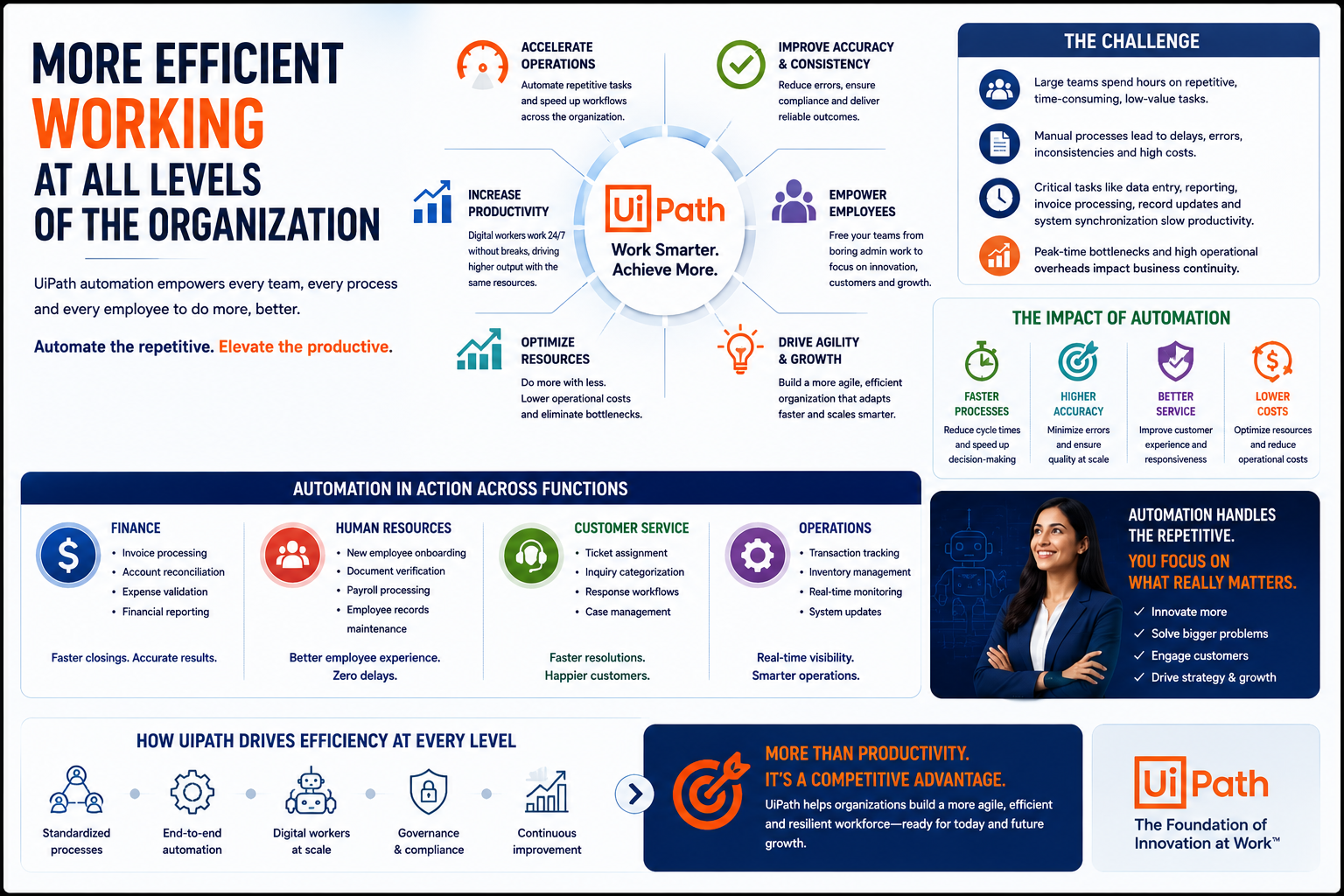
Companies are automating the boring admin stuff so their employees can work on the stuff that really matters. “It will allow employees to innovate more, to work across functions, to engage customers, to solve problems and to strategize. “It’s not just about making us more productive, it’s about having a more agile, efficient operating environment and driving long term growth of the business.
Increase accuracy, cut human errors
Manual business processes remain one of the toughest challenges to address, especially with increasing volumes of transactions, data and operational workflows. Even the best teams have bad days when asked to do repetitive tasks under time pressure or in different systems. Common problems such as incorrect data entry, duplicate records, inconsistent processing, unauthorized transactions and delayed task completion can impact operational performance and customer satisfaction. These inefficiencies increase costs, reduce productivity and create more administrative work to find and correct errors.
To overcome this problem UiPath can assists organizations to perform business processes in a more standardized, reliable and accurate way. Automation helps to standardize rules, ensure that workflows are executed as designed and reduce the variability that is normally inherent in manual processes. The repetitive human element of routine tasks will be eliminated, results will be consistent and the quality of operations of the department will be improved.
Another major advantage of intelligent automation is the ability to enhance the quality of the process by automating validation and exception handling. Automated workflows won’t need post-process audits to catch errors but always do check input and execution conditions and will alert if something looks suspicious. Exception handling allows organizations to catch and route exceptions for review without stopping the entire workflow. “Proactive equals fewer operational hiccups, more ability to fix things.
More precise processes. Better organization. Teams can focus on strategic business priorities instead of fixing errors, reprocessing transactions or dealing with compliance issues. “The improvements in reliability also increase customer confidence, improve quality of service and contribute to long term operational efficiency. This provides scalable growth opportunities and sustainable business performance by eliminating human error and improving process consistency.
Improve Employee Experience & Productivity
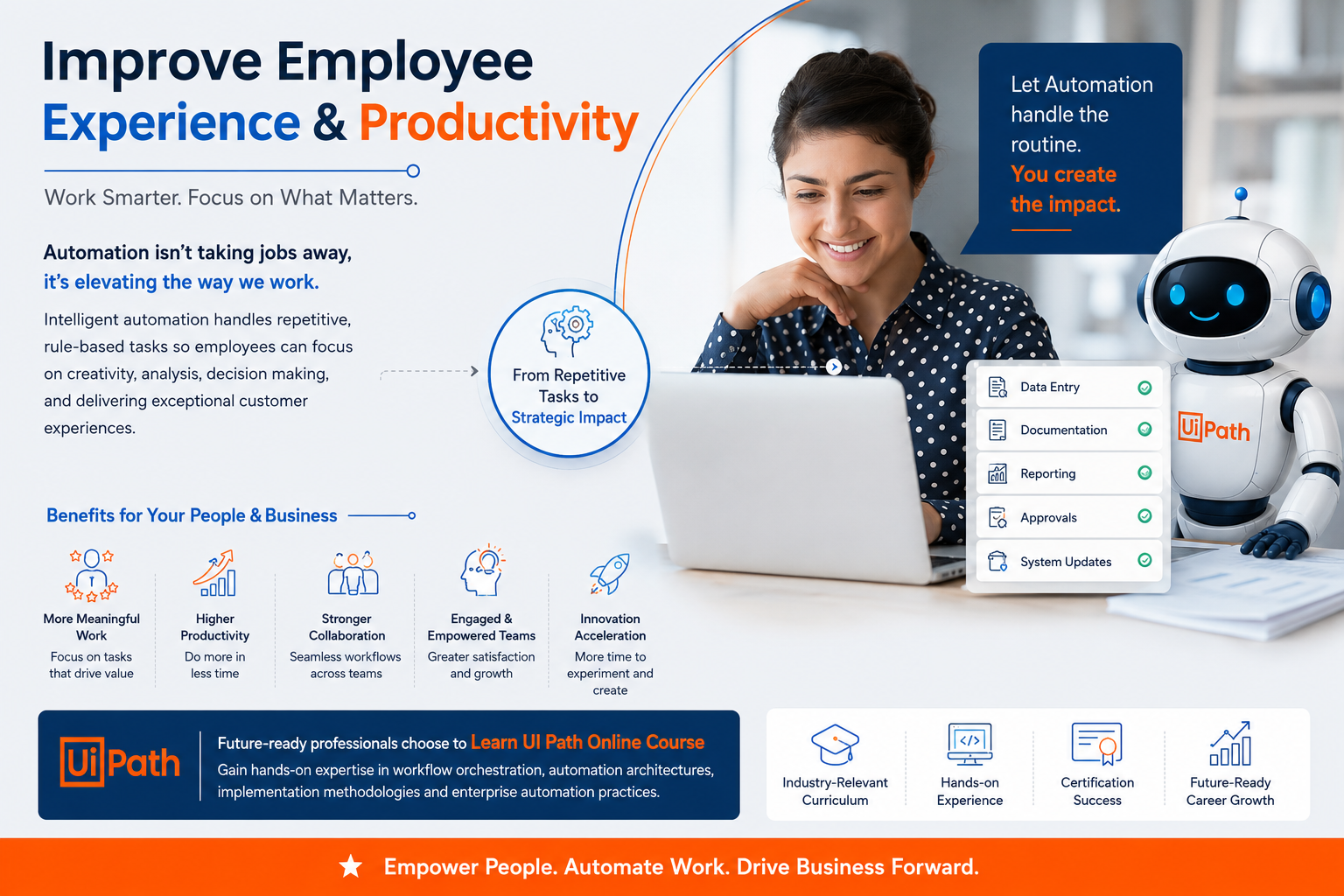
Automation is not taking jobs away, it is changing the nature of work and allowing people to add more strategic value to the organization. Employees are not doing repetitive work, but they are doing work that involves creativity, analysis, decision making and engaging customers with the help of digital technologies. Smart automation is about employing technology to take over repetitive tasks and free up employees to focus on the tasks that will make a bigger difference to the business.
Administrative work as in data entry, documentation, reporting, tracking approvals, updating systems and are unhappy in their job? Such work can be demotivating to employees, as there are few opportunities for professional development and they cannot use their expertise to solve important business problems. That’s where intelligent automation comes in. By taking predictable, rule-based work and putting it into digital systems, teams are freed up to work on more valuable work
.
Automation of repetitive processes is efficient and consistent, and it allows employees to spend more time on solving complex business challenges, building a stronger relationship with customers, improving internal collaboration and supporting innovation initiatives. This allows teams to focus on improving operations, experimenting, improving the experience of service and contributing to the goals of the organization. It makes the work more interesting and satisfying. But it also brings greater productivity to the workman.
Automation is one of the key enablers for companies to improve employee experience, speed up business processes, enhance resource utilization and overall operational performance. Employees are more strategic, and not bogged down with repetitive execution tasks.
Majority of the future intelligent automation professionals opt for Learn UI Path Online Course to gain hands-on experience in workflow orchestration, process automation architectures, implementation methodologies and enterprise automation practices that pave the path for long term digital transformation initiatives.
Size, not the complexity of growth
As you grow you’ll discover new opportunities – and new operational challenges that can stretch your existing processes, resources and teams. As we add new markets and/or new service offerings and grow our customer base, the number of transactions will increase. In the traditional sense growth means more people, more infrastructure environments and more administrative overhead to keep the wheels turning. Such tactics may lead to growth in the short term, but they also add costs and complexity, making the processes difficult to sustain in the long term.
The universe of intelligent automation is growing. This enables companies to scale their productive capacity without any overhead. “It allows companies to automate high volume repeatable processes to scale to increased demand without sacrificing performance levels rather than relying on manual effort.” Flows automation always on. faster execution, improved consistency and less dependency on resource intensive manual effort
Run scalable business with a centralized automation ecosystem to create, deploy, monitor and optimize multiple workflows in parallel, with UiPath platform. “Governance is not lost, it can be automated across departments but it remains visible and controlled.” The centralized approach enables organizations to automate incrementally, measure results and scale efforts as business priorities and operating needs evolve.
Automation also provides organizational agility, enabling organizations to respond quickly to market dynamics without sacrificing service quality or operational consistency. Automation can run your business functions around the clock, and scale with your changing workloads.
When you are growing fast, have seasonal demand swings, are involved in M&A, or are undertaking major digital transformation initiatives, flexibility is the name of the game. The right scalable operating model, puts organisations in the best position to continue to grow, optimise resources, build long term business resilience and deliver great customer experiences consistently.
Data Fusion to Accelerate Decision Making
Organizations today are more data driven than ever before and the battle to improve operational performance and adapt to a constantly changing market is fierce. Departments generate and consume huge volumes of data every day, from customer interactions, financial transactions, operational data to performance metrics. But with data in different systems and reporting done manually, organizations often don’t have the critical insights when they matter. These inefficiencies may impact decision making, visibility and ability to quickly respond to emerging opportunities or operational issues.
UiPath’s platform helps organizations build connected automation environments that connect data across applications and business systems to help make better decisions. Automation workflows automate the collection, processing, validation and organization of information so that the manual collection and consolidation of data from multiple sources is eliminated. That makes it easier, because it cuts down on reporting time and gives decision makers more up-to-date and reliable business intelligence.
The automation workflows keep the information consistent and reduce the chances of errors or human involvement in the reporting. Enterprise applications, customer platforms, operational systems and business tools all produce structured output that can be used for analysis and strategic planning. This provides a better understanding of the performance indicators for the leaders. It also supports the leaders to make decisions based on the current state of operations.
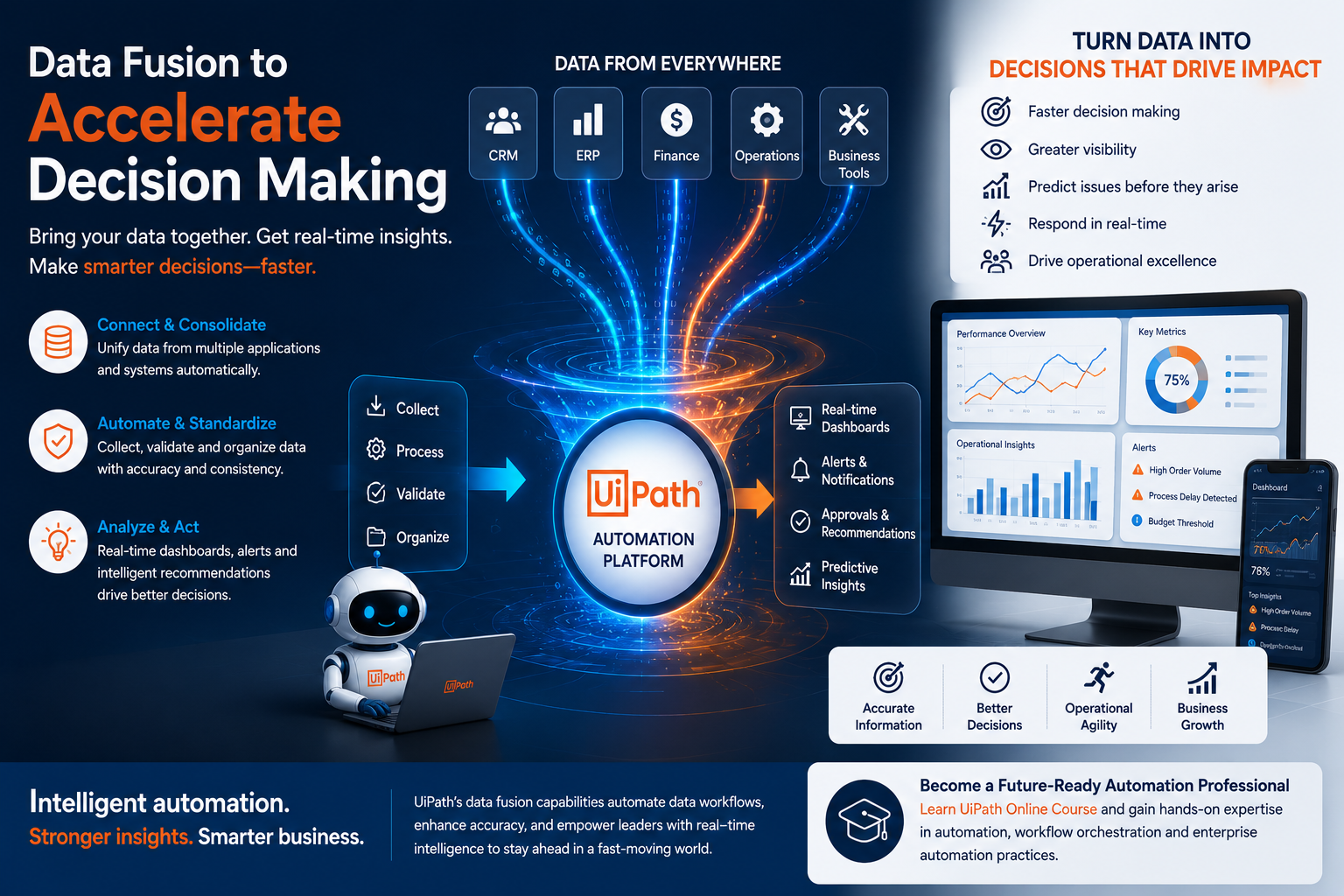
Automation allows organizations to report and gather data and build intelligent response mechanisms. Organizations can automate workflows based on business conditions they detect, including alerts, dashboards, approvals and suggested actions. The predictive ability will allow organizations to be aware of issues before they arise and take steps to rectify it so as not to further disrupt operations.
“Fast, accurate information can help teams make decisions and move forward. “Intelligent automation enables organizations to be more responsive in real-time, provides greater visibility, delivers faster analytics and lays the groundwork for smarter and more efficient business operations that foster organizational agility.
Automation & Customer Experience
Customer expectations are changing across industries, digital experiences are getting faster, more personal and more convenient. Customers today demand quick response, seamless experiences, accurate information and a consistent level of service across all customer touch points. Companies that don't meet, or can't meet, these expectations can have customer satisfaction, retention and competitive position problems. Consequently, many organisations are implementing intelligent automation to improve service delivery and operational efficiencies.
Customer Experience: UiPath reduces response time and enhances consistency, eliminating lag time related to manual processes. Automation allows companies to perform routine customer-facing interactions accurately and efficiently. Fast processing and standard work flows ensure reliable service experiences, building long-term relationships and instilling customer confidence.
Automation can simplify the customer journey, from onboarding through to order management, service requests, complaints, status updates and communication flows. “Automation is also removing repetitive administrative approvals and manual processes for customers, so we can execute faster and resolve issues faster,” the company explains. “This results in shorter lead times, more transparency and more predictable service outcomes for the customers.”
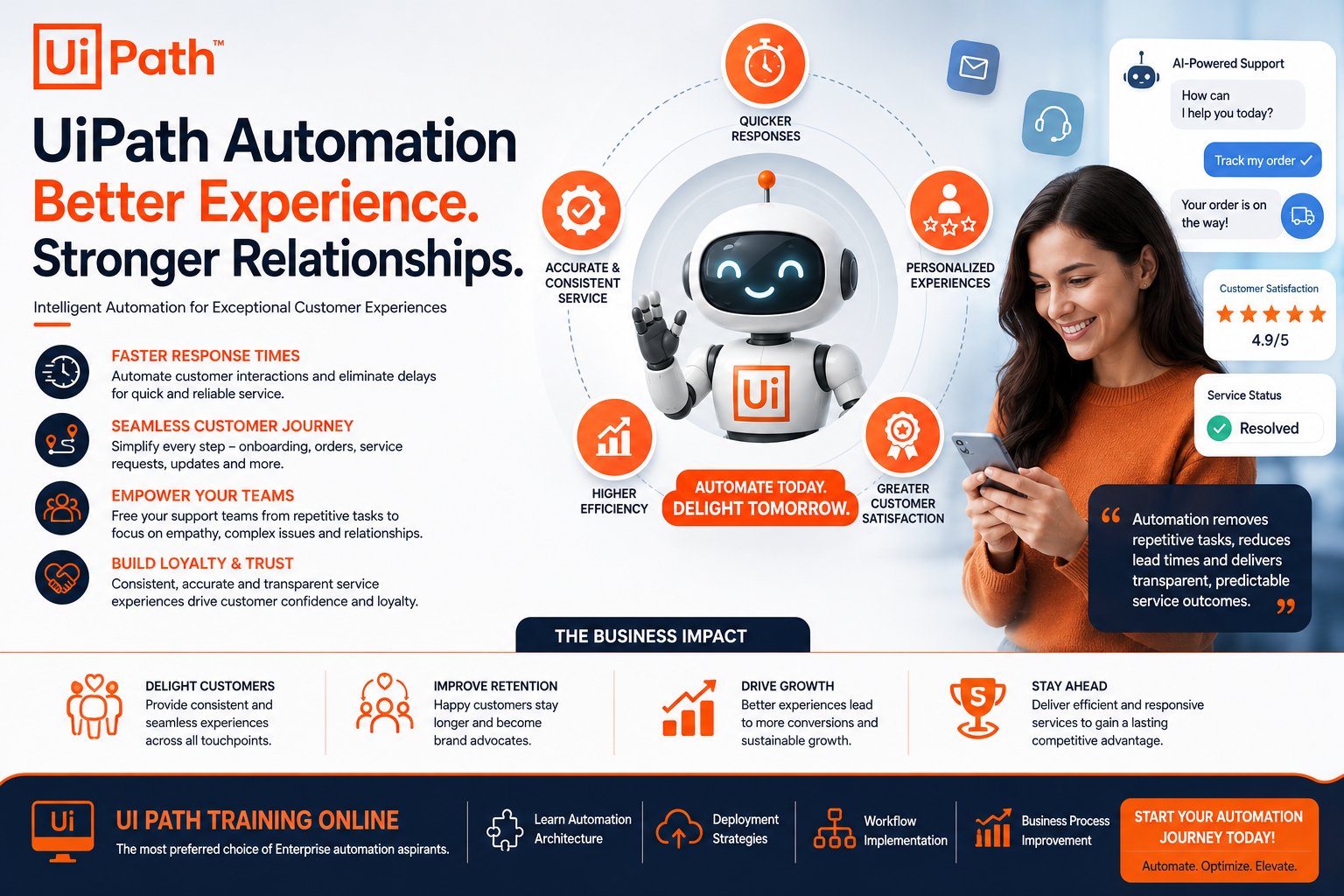
Automation allows support teams to spend time on interactions that require human judgment, empathy and problem solving. Automation workflows handle routine questions and repetitive requests so employees can focus on more complex customer needs and build deeper customer relationships.
A better customer experience means better customer loyalty, higher retention rates and sustainable growth for the business. Companies that can deliver a consistently efficient and responsive service can achieve a sustained competitive advantage.
UI path Training Online is the most preferred choice of Enterprise automation aspirants as it is a systematic way of learning automation architecture, deployment strategies, workflow implementation and business process improvement techniques in practice.
Improvements to Governance & Compliance
Companies are facing the challenges of business and compliance environment. Changing regulatory requirements across all industries “Companies are likely to continue to balance operational efficiency and growing their business against their internal policies, industry standards, legal obligations and data governance frameworks. It’s hard to maintain compliance when business processes are complex and transaction volumes high across departments and systems. Weak governance structures can leave a company vulnerable to operational risks, audit issues, reporting inconsistencies and potential compliance gaps.
With automations that deliver visibility, repeatability and controlled execution, UiPath helps organizations increase governance and compliance. Automation workflows help organizations build repeatable processes that follow business rules and regulatory standards. Organizations can better manage their operations and reduce reliance on manual oversight with controlled workflows and audit trails, as well as access control and execution monitoring capabilities.
“Automation provides an open operating environment.” Organizations can provide accountability and traceability with a complete history of process activities. They can automate the capture of all transactions, approvals, workflow activities and exceptions to deliver accurate historical documentation for compliance. This visibility helps to perform internal audits, regulatory reporting requirements and helps teams better identify operational risks.
Another major advantage of automated governance is risk management. Automated validation mechanisms and exception handling capabilities can identify process deviations while they are being executed, not after they have been completed. This enables organizations to act quickly on incidents, ensuring business continuity and improving the overall control environment.
Regulatory expectations are increasing and governance capabilities are a key pillar of productivity and business performance strategies. Automation can help reduce administrative burdens, improve the reliability of processes, drive accountability and build scalable environments for continued growth and changing regulatory requirements by ensuring compliance and operational oversight.
Fast long term digital transformation
The productivity gains of automation can be far greater than the immediate efficiencies and near term operational improvements. “The companies that are deploying intelligent automation today are not just optimizing processes for today, they are activating larger digital transformation initiatives. As companies modernize their operations, automation becomes a strategic capability that enables greater agility, better collaboration and ongoing innovation across the enterprise. Automation is not a technology investment, but rather an enabler of scalable and connected digital business ecosystems.
UiPath is at the forefront of this transformation, with integrated digital ecosystems that link applications, workflows, analytics platforms and people into one smart entity. By integrating systems and automating information sharing between departments, organizations can break down operational silos and become more agile overall. With increasing business complexity, the convergence of everything will make it easier for teams to get information, be more agile and offer consistent operations.
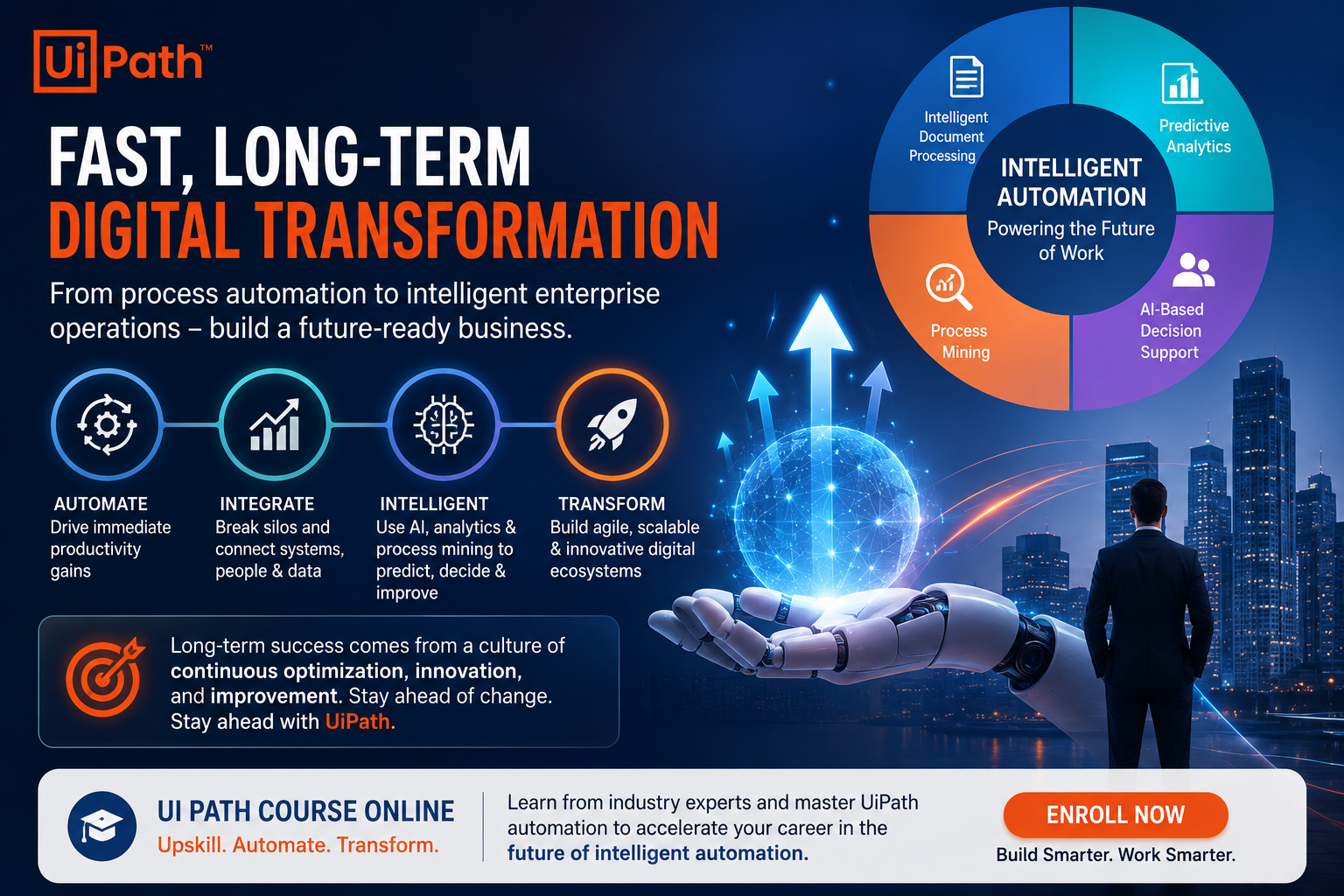
As organizations mature on their automation journey, they will be able to deploy more advanced technologies to broaden their automation scope and deliver greater business value. These include predictive analytics for outcome prediction, AI based decision support for smart recommendations, intelligent document processing to extract insights from unstructured data and process mining to identify improvement opportunities across processes. These technologies will help organizations move from task automation to intelligent enterprise operations.
Long term success isn’t about adding automation, it’s about constantly looking for ways to optimize, innovate and improve process. The firm that has a culture of constant change is best positioned to respond to the ever changing environment of market pressures and customer desires.
The UI Path Course Online is one of the most preferred courses to upskill the technical skills for any person who is looking to understand the way of implementing the tool and keep their skills up to date with the growing demands of digital transformation and smart automation initiatives to grow their careers in the field of enterprise automation.
Conclusion:
UiPath continues to set the path for organizations to increase productivity through intelligent automation. Business operational benefits are achieved by removing repetitive tasks, improving accuracy, enabling scalability, improving employee experiences, and accelerating decision-making processes. Intelligent Automation drives continuous growth while allowing teams to focus on strategic goals. As businesses expand their digital capabilities, the ability to develop automation is becoming more important. OnlineITGuru provides professionals and organizations looking for structured learning and practical guidance on automation technologies the opportunity to acquire essential skills and achieve long-term career advancement.
Write your blog content here...