
How Workday AI Transforms Hiring and Workforce Planning
Last updated on Nov 18, 2026
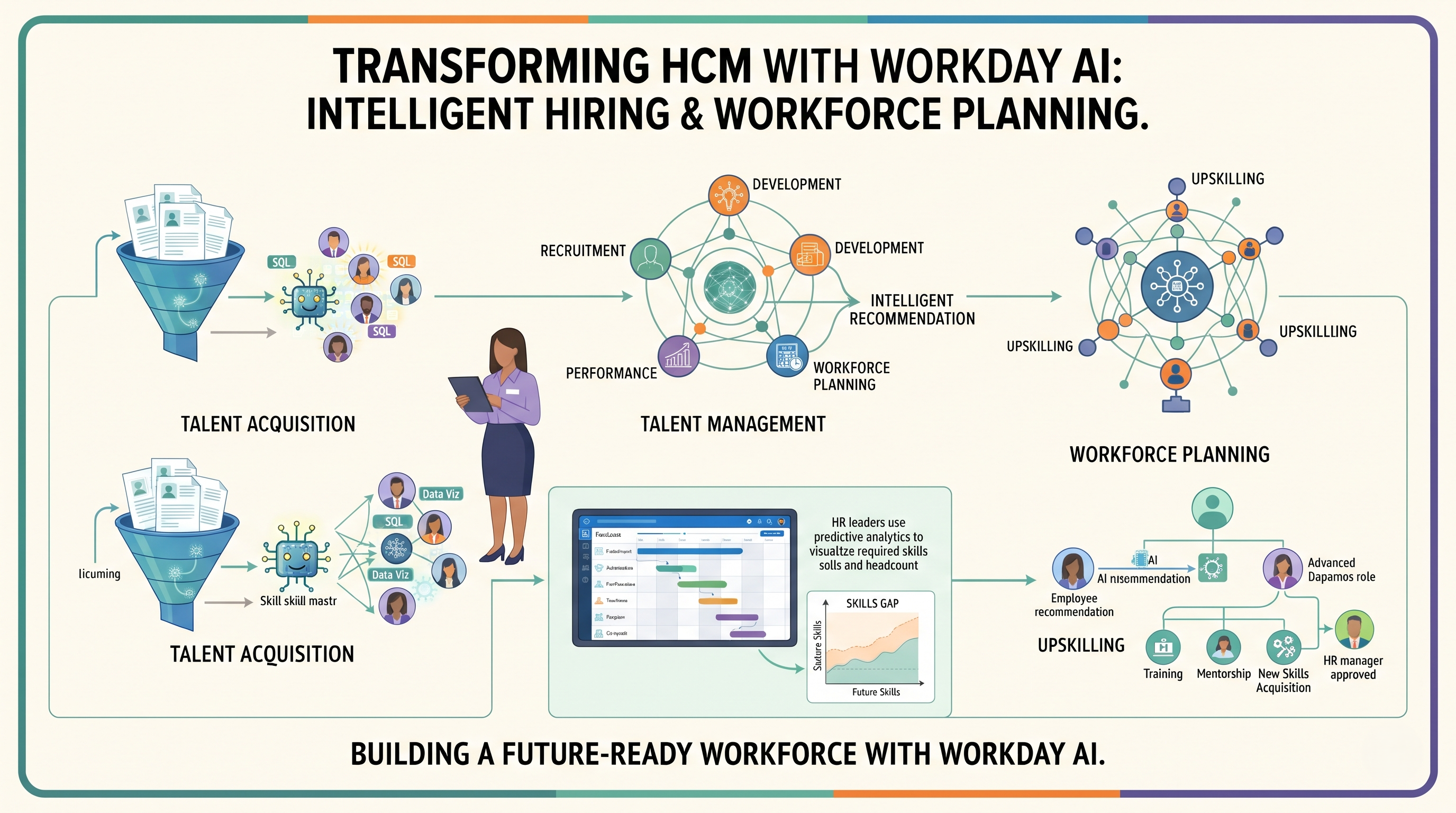
Incorporation of Artificial Intelligence (AI) in the field of business is causing a shift in the way in which personnel management, recruiting, and workforce planning are done. Digital HR is gaining popularity with the organizations while the conventional method of Human Resource Management is getting replaced. Organizations are taking up an approach in which there is no requirement for manual recruitment process and workforce planning using excel sheets. Augmented AI is being used for decision making regarding talent management and workforce planning.
Workday is one of the big platforms behind that move. Workday is a cloud-based Human Capital Management (HCM) solutions provider, helping organisations manage employee information, recruitment, talent development, compensation, performance and workforce planning. “With its AI capabilities, HR professionals are able to simplify complex processes, enhance hiring experiences and make better workforce decisions.
Workday AI is particularly helpful for two core HR processes: talent acquisition and workforce planning. Talent Acquisition is the process of sourcing, attracting, evaluating and recruiting candidates. Workforce planning is all about making sure you have the right people, with the right skills and resources to deliver on the business objectives.
The company uses AI, machine learning, automation and workforce data to help organisations understand the talent they need, identify skills gaps, speed up hiring processes and prepare for future business needs. HR skills which make HR from a simple administrator to a business partner. This article will analyze the impact of Workday AI on talent management and workforce planning, its skills, advantages, problems and perspectives in the future.
What do you need to know about Workday AI for HCM?
Workday AI is artificial intelligence embedded in Workday enterprise software applications which make business and human resources management more intelligent. This allows organisations to analyse large amounts of workforce data, detect patterns, automate repetitive tasks and make recommendations to aid good decision making.
Traditional HR systems are used to store employee data and perform administrative tasks. AI-powered HR platforms can provide useful insights by analysing employee skills, job requirements, hiring trends, performance data and workforce movements.
Workday is embedding AI across its HCM ecosystem, including Workday Illuminate, machine learning, intelligent recommendations and AI-driven assistance. The purpose of these technologies is to reduce the amount of manual work that HR teams need to do, and to improve the quality and speed of their decisions.
AI is able to tell you what skills are needed for different jobs, point you toward good candidates, and tell you how much appropriate talent is out there. A company that needs to staff a new department. Workforce planning teams may also review employee skills and organisational data to determine if existing employees can be transitioned to fill future roles or if recruitment from outside the organization will be necessary.
“We’re not trying to replace HR professionals but we want to give them smart tools that will help them be more productive, consistent and strategic in their planning.”
How Workday’s AI Is Transforming Talent Acquisition
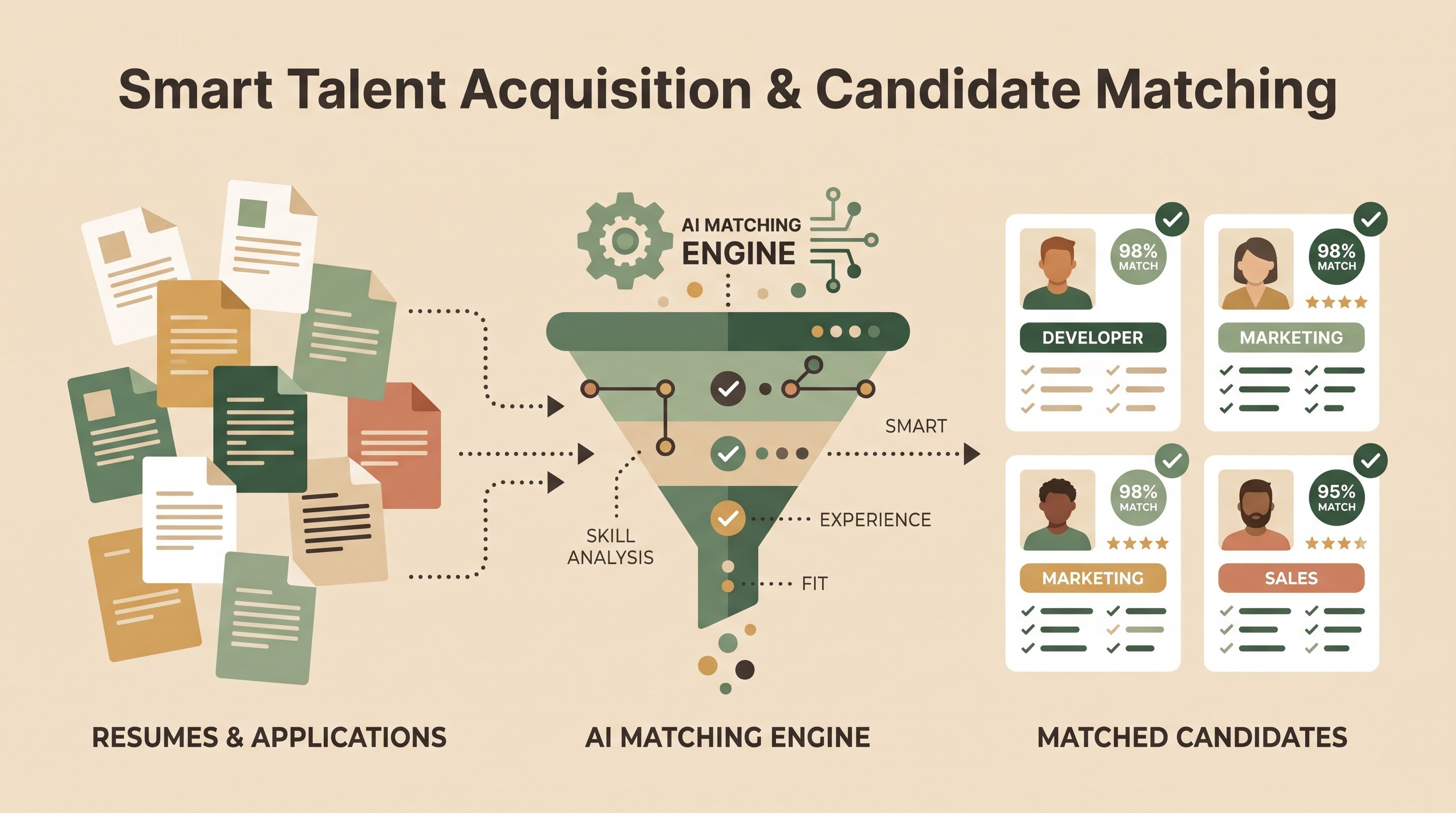
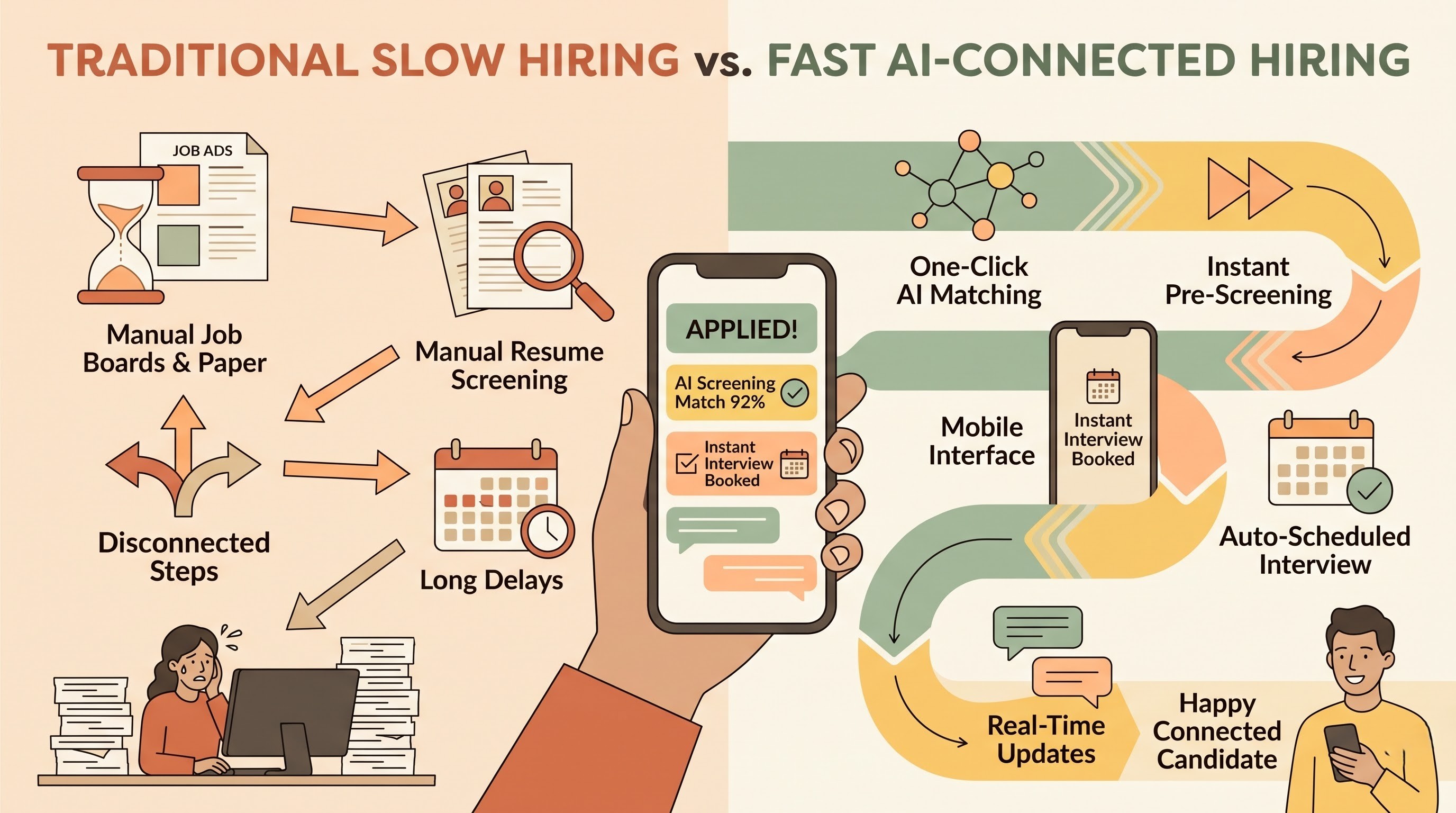
One of the most important functions of an HR department is talent sourcing. Finding the right people and screening applications, interviewing and managing the whole recruitment process can be very time consuming and resource intensive. The traditional way of recruiting is a manual process that involves going back and forth with candidates, sifting through resumes and tracking applications across a number of systems. These practices can slow down the hiring process and stop recruiters from getting through large volumes of applications.
Workday AI is the leader in transforming recruiting with intelligent automation and data analytics and AI guidance throughout the hiring process.
1. Smart Sourcing & Candidate Matching
Finding candidates who possess the required skillset and experience is among the toughest challenges one encounters during recruitment. Traditional sourcing processes entail only keyword matching and resume screening, thereby ignoring qualified candidates. Recruiters can use AI capabilities to get valuable insights about the candidate by matching skills, experience, qualifications, and job requirements.
Workday’s talent and recruiting capabilities can effortlessly match candidate information with open positions and streamline the recruiting process. The AI-powered matching can find good potential candidates based on relevant information, not just keywords. A company looking to hire a data analyst, for example, might see people with different job titles but the same skills in data visualisation, SQL, reporting and business intelligence. Smart matching can make the search process for the recruiters more efficient to find such candidates. It broadens the talent pool and helps organisations to find candidates they might otherwise miss.
2. Speed up the review of applications and resumes
Recruiters have to sift through hundreds, even thousands, of applications for a popular job. Each application has to be looked at separately, which takes time and slows down the hiring process. Artificial intelligence can help filter out information on candidates, pull out relevant qualifications and compare experience to the requirements of the position.”
Workday’s AI recruiting tools can automate some of the candidate review process, freeing up recruiters to spend more time on the most relevant candidates and conduct meaningful interviews.
Automation can also help with the repetitive administrative tasks such as sorting through recruitment information and dealing with application-related tasks. AI generated recommendations are meant to be used as decision support tools. Recruiters have to wade through applications carefully and applicants need to be evaluated fairly.
3. Enhanced Candidate Experience
The candidate experience is a big component of an employer’s employer brand. Job seekers want to be communicated with quickly, know what jobs need to be filled and have an easy hiring process. Top talent will leave an organization if they have to use clunky applications and experience slow response times.
Workday AI also improves the candidate experience by speeding up communication, providing relevant information about the hiring process, and ensuring a seamless interaction between the candidate and the hiring systems. AI-driven assistance can also help candidates understand job requirements, navigate the application process and find information about available opportunities. This turns the recruitment journey into a win-win situation for the candidate and the recruiter. The candidate has a more structured process and HR teams can process applications better.
4. Simplify the hiring and administrative process
Recruiting has so many redundant tasks which include managing job posting, organising candidate information, scheduling interviews and updating application status.
These tasks are done manually, which leaves little time for recruiters to focus on strategic hiring decisions. The Workday platform can be utilized to help make the recruitment process easier with the use of AI and automation. It will give recruiters time to engage with the candidates and work with the hiring manager to recruit the right candidates.
This can be done with the use of AI software to help the recruiter write the job description, analyze data, and arrange tasks for recruitment.
5. Talent Evaluation and Hiring Based on Skills
Companies are ditching old-school hiring practices that rely on degrees, job titles and years of experience. Employers are beginning to turn their attention to learning new technologies and hands-on skills. Workday Skills Cloud uses AI to search, analyse and connect skills across an entire company’s workforce. It helps recruiters to understand the relation between different skills. And helps them to find the right candidates with right skills for the specific job requirements.
For example, a business analyst candidate may have experience in reporting, excel, SQL, data visualisation and business intelligence. Even if the candidate has never done that specific job before, if their skills are a good match, they may still be a good fit for the job. It’s these types of transferable skills organisations that are smart with artificial intelligence intelligence are able to identify. It also helps make recruitment more skills-based, enabling companies to consider a wider range of applicants and find people who can grow into new roles.
6. Data analytics improved hiring decisions for workers
Historically, recruitment decisions were based on hiring manager’s opinion, recruiter’s experience and past recruitment data. AI gives us a new toolbox to analyse them.” But those things still matter. With Workday AI, organisations may utilise recruitment and workforce data to detect patterns, measure hiring effectiveness, and optimise talent acquisition strategies.
Recruitment analytics can provide HR professionals insight into:
Which sourcing channels produced the best candidates?
Which departments take the most time to hire?
Where candidates leave the hiring process
More rare talent
Internal recruitment. Recruitment from outside.
Which jobs require more recruiting muscle.
Such insights help organisations make better decisions and improve their recruitment strategy over time. If a company struggles to find cyber specialists, HR teams may assess the reasons for the shortage and explore other solutions, such as training or reskilling current employees, or searching for new talent.
“It means that hiring is a proactive, not a reactive activity.”
Workday AI and the future of workforce planning
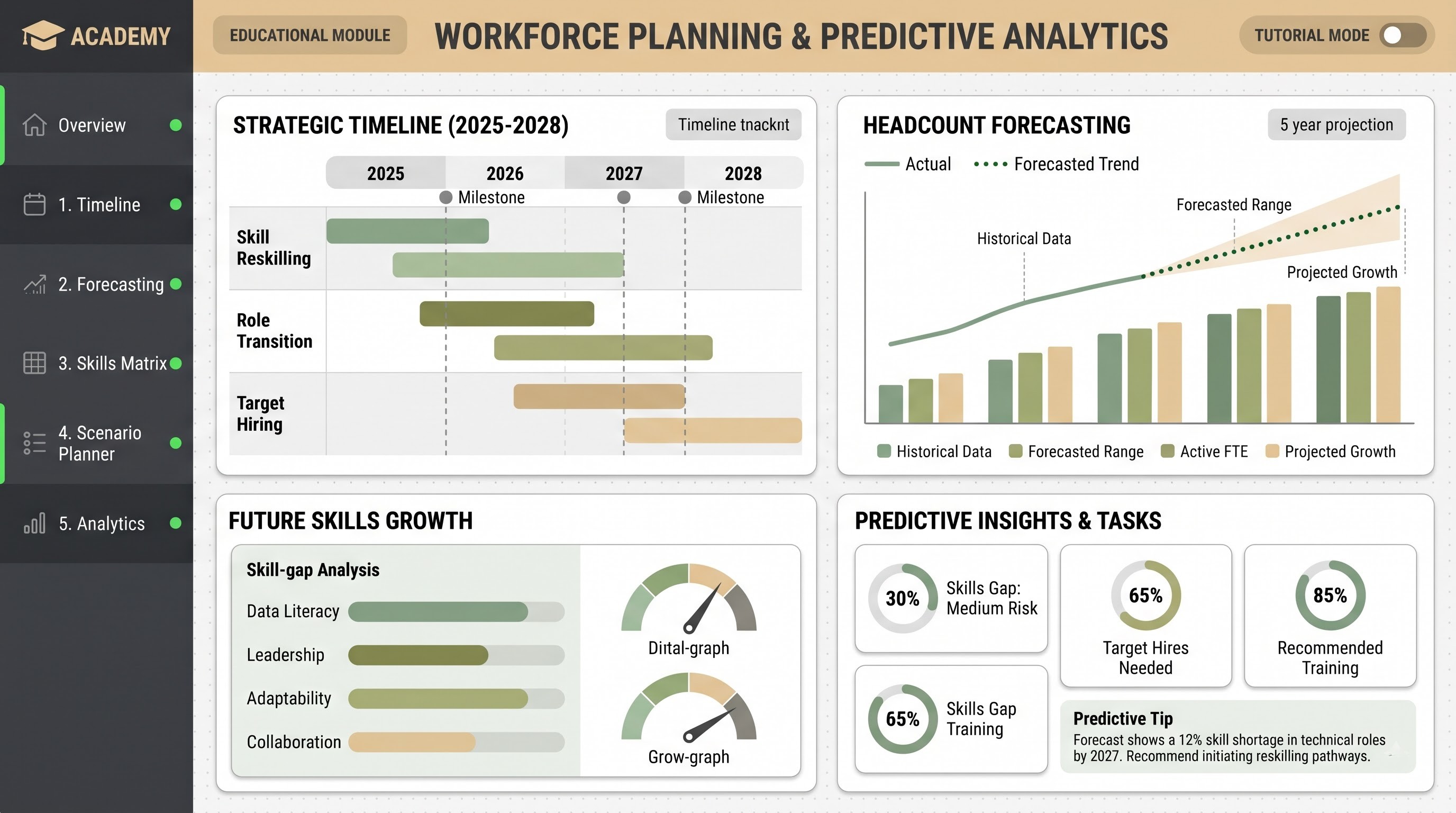
Workforce planning is the process of determining what your organization needs from its employees today and tomorrow so the right people are in the right place at the right time. Businesses operate in a changing environment. Staffing needs can change as technology advances, competition increases, business expands, employees leave and customer needs change. Previously, workforce planning was carried out through spreadsheets, annual reports and manual calculations. This makes it difficult to respond quickly to changes in business conditions.
Workday AI helps you work smarter by connecting your people, skills, organization needs, and workforce insights. This way, HR leaders can find potential roadblocks -- and get ready for them -- before talent shortages become a problem for business operations.
1. Forecasting the workforce needs of the future
The most powerful application of AI in workforce planning is perhaps predicting the future staffing needs. Organisations need to know how many staff they’ll need, what skills will be critical and which departments could be short of talent. Artificial intelligence can help HR departments understand the needs of the future by analysing past workforce data, employee turnover, trends in business growth and changing skills requirements.
For example, a technology company that is releasing new products based on artificial intelligence will have to hire more machine learning engineers, cloud specialists, data analysts and cybersecurity experts. Workday-enabled planning processes can help organisations understand their current workforce capabilities and business needs to determine what skills the organization has in house and where it may have to look outside. This allows companies to move from reactive to proactive workforce planning
2. Spotting gaps in your staff’s skills
Skill gaps are when employees don’t have the skills needed for current or future business activities. Every sector is undergoing digital transformation, with growing demand for workers with skills in artificial intelligence, cloud computing, cyber security, data analytics, automation and digital communication. Workday Skills Cloud leverages AI to reveal the connections between your employees’ knowledge and your business needs. This gives organisations greater visibility of the skills they have in their workforce. These insights can help HR leaders determine which departments have the right skills and where there is more work to be done.
For example, an organization that wants to implement advanced data analytics solutions may find that some of its current employees have the technical knowledge but need some additional training on some tools. The company can also decide to upskill its existing workforce instead of going out and hiring new professionals. It can also help cut the cost of recruitment, improve employee development and build long-term workforce capabilities.”
3. Internal talent mobility enhancement
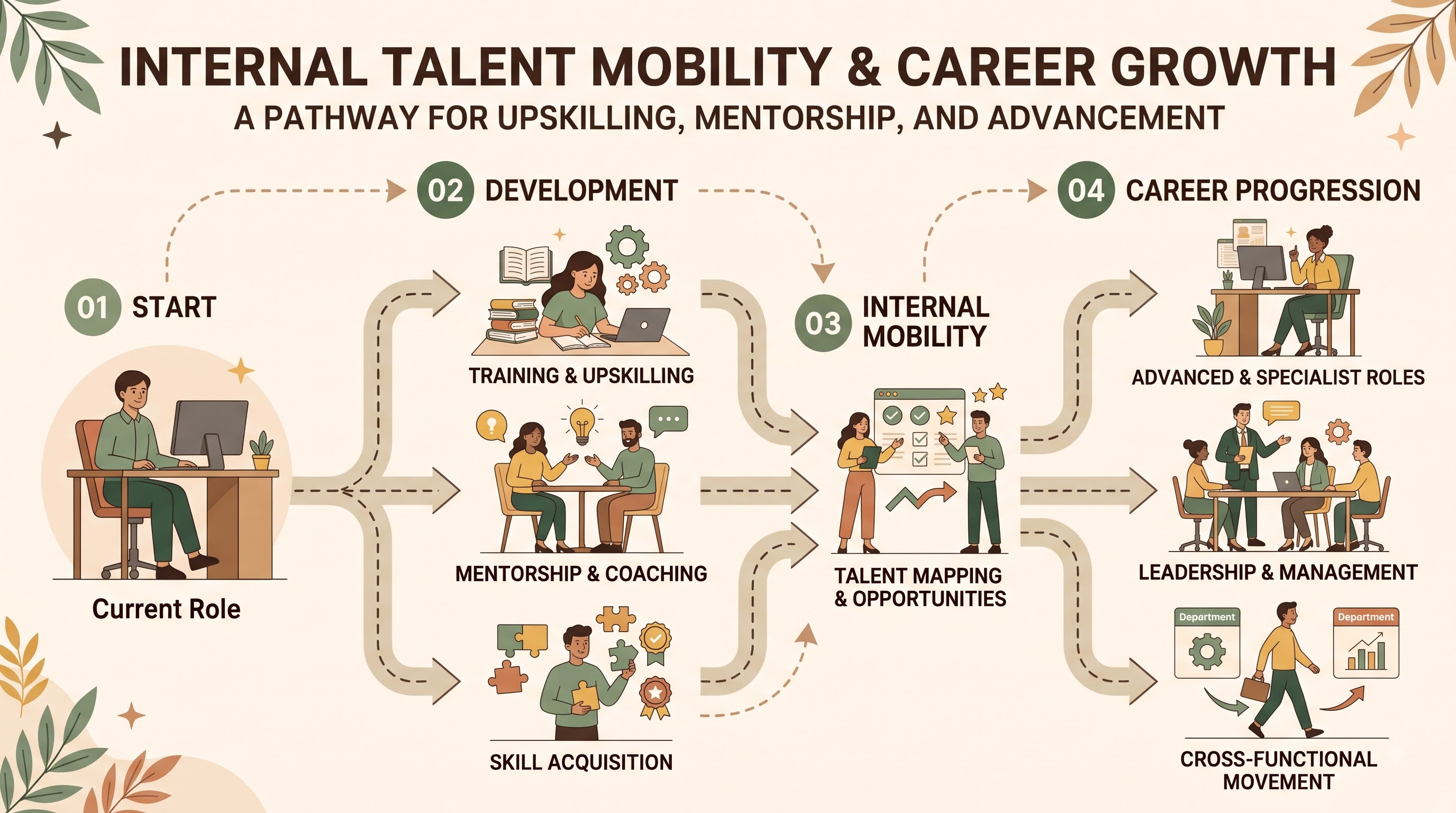
Internal talent mobility is when employees move into new roles, departments, projects or responsibilities within the same organization. “We have people in-house and a lot of companies are bringing in outside people.” This may be because HR teams don’t see the skills, experience, career interests and potential employees have. Workday AI connects employee profiles, skills data, career opportunities and organisational needs to help organisations identify internal talent.
For example, a customer support employee with strong communication, problem solving and analytical skills could, with a little more training, be a candidate for a business operations or customer success role. AI-driven recommendations can help employees discover these opportunities and advance their careers. Benefits of internal mobility are many and they are as follows: Organizations are able to retain their experienced employees; decrease in costs of recruitment; increase in job satisfaction of employees; quick filling up of important positions in the organization; and learning opportunities to employees.
4. Courses to support upskilling and reskilling
Upskilling is an update of existing skills. Reskilling is learning new skills for new jobs or roles.
As AI and automation change the nature of work, both are becoming more relevant. Workday’s AI-powered learning and skills capabilities enable organisations to connect employees to learning that’s relevant to their current skills and future career needs.
For example, a conventional financial reporting professional may need to learn new skills in data analytics, automation and sophisticated reporting tools to keep pace in a fast-changing business environment. This supports organisations in identifying skills gaps and providing appropriate learning and development resources. Workday Learning gives employees personalised educational experiences to help them discover learning that is relevant to their professional development needs. This gives companies a more flexible workforce and reduces their reliance on importing talent from abroad.
5. Improved workforce planning scenario
Business conditions can change quickly. Organisations may be growing quickly, facing economic uncertainty, restructuring, adopting new technology or experiencing changes in customer demand. Scenario planning for the workforce helps HR leaders understand how change will affect people needs so they can prepare for different business scenarios. That is where artificial intelligence can provide a helping hand by analysing workforce data and giving organisations the chance to explore different planning options.
A company looking to expand internationally might have to think about different workforce scenarios. That could mean hiring new people, redeploying talent you already have, building skills in-house or partnering with external experts. Similarly, an organization that decides to automate may want to know what tasks will be impacted and what new skills are expected from the workforce. Workday Workforce Planning combines workforce planning with business planning so that you can make better staffing, skills, and resource decisions.
6. Greater Employee Retention and Stability in the Workforce
High employee turnover is one of the major challenges for organisations. Companies can incur costs through the loss of skilled employees, such as recruitment costs, loss of knowledge, problems with productivity and an increased workload for the remaining employees. Artificial intelligence analytics can help HR teams to recognise patterns around employee turnover and what factors might impact retention. Organisations can use employee engagement, career development opportunities, workforce transitions and feedback trends to identify areas for improvement.
Workday Peakon Employee Voice uses AI and natural language processing to analyse employee feedback and provide insight into the employee experience at work. These insights can assist managers in gaining greater insight into employee concerns, enhance engagement strategies and foster more effective employee retention initiatives. But AI insights are non-deterministic predictions of individual employees. HR teams need to use them responsibly, factoring in what employees say and the context of the organization before taking action.
Workday AI for talent management and recruiting
Workday has a suite of AI-powered tools to address today’s talent management and workforce planning needs.
The main features are:
Workday Illuminate Workday’s AI (artificial intelligence) initiative to embed intelligent capabilities into the enterprise’s workflows. It helps organisations build AI-powered experiences that increase productivity and business processes.
Workday Skills Cloud: AI-Powered Skills Analysis, Skill Gap Identification, Internal Mobility and Matching Employee Skills to Business Needs
HiredScore AI for Recruiting: AI helps recruiters find the right candidates, prioritise top talent and streamline hiring processes with AI-powered suggestions.
Workday Recruiting: It handles the whole recruitment process starting from job requisition to candidate management and recruiting processes.
Workday People Analytics: It enables organizations to perform analysis of workforce trends using insights generated from employee and organizational data.
Workday Learning helps in offering personalized learning opportunities for employees.
Workday Peakon Employee Voice: It offers insights by leveraging employee feedbacks and artificial intelligence analysis that help organizations understand engagement and how to improve employee experiences.
All these features together make up recruitment, workforce analytics, talent management and learning all in one HCM environment.
Benefits of Workday AI for HR
For organisations, there are several benefits to using AI to attract talent and plan the workforce.
1. Benefits of HR Efficiency
Artificial intelligence can save time on routine administrative tasks, allowing HR professionals to focus more on recruitment strategy, employee engagement and workforce development.
2. “The people choices are better
AI knowledge allows companies to assess the skills of their employees, find the right candidate, and understand the needs of their workforce with relevant data.
3. reduced cost of recruitment
Identifying the talent you already have and encouraging internal mobility saves organisations unnecessary recruitment costs and a better match with candidates.
4. Better Employee Experience
A good employee experience is driven by better career opportunities, personalised education recommendations and more efficient HR services.
5. A more agile workforce
Standard artificial intelligence can help organisations identify new skills required and prepare staff for new roles in response to changes in the business.
6. Better planning techniques
Workforce analytics helps HR leaders align the needs of employees with business goals for the long-term success of the business.
Workday AI for HR: Challenges in Deployment
There are many advantages of AI but there are few challenges that organisations need to consider before implementing AI backed HR solution.
1. Data & Privacy Safeguards
Human resources is responsible for confidential employee information such as personal details, salary, performance reviews and work history. Organisations should have the right controls, access permissions and data governance policies in place to protect data about employees.
Any use of Workday’s AI capabilities should be framed in a manner that protects employee privacy and is compliant with applicable data privacy laws.
2. AI Bias and Hiring
Traditional artificial intelligence systems can produce biased recommendations when they are trained on incomplete or historically biased data. For example, an AI system may inadvertently favour candidates from certain educational institutions, if recruitment processes have always favoured such candidates in the past. “Regular audit of AI-enabled recruitment processes, monitoring of outcomes and ensuring recruitment decision-making is fair and inclusive, should be part of organizations’ regular processes.
3. Integration with current HR systems
Many organisations use a range of HR apps including payroll, recruitment, employee management and workforce reporting. Integrating Workday AI with existing enterprise systems may require some technical planning, data standardisation and configuration. To achieve reliable knowledge, organisations must ensure that accurate information flows between disparate systems.
4. Training for Recruiters and Employees
As they bloom, it is important for employees and HR pros to understand how AI-powered HR technologies work. Recruiters need training in understanding AI recommendations, looking at the information of the candidates and knowing where human judgement is needed.
Organisations need to be transparent over why AI is being adopted so that employees do not worry about automation and job security.
5. Preservation of human decisionmaking
The idea is that AI is there to support the HR person, not to make vital hiring decisions on its own. You need the context of the organization. You need professional and human judgement to hire, promote, assess employees and restructure workforce. “We need clear policies so that a person can properly oversee the final decisions of companies.
Last Words End Words
Workday AI is changing the way organisations manage their workforce, shifting from legacy HR processes to intelligent, automated, data-driven talent acquisition and workforce planning. AI in talent acquisition solves for matching candidates to jobs, faster recruiting, hiring for skills and better candidate experience. It also enables recruiters to be more efficient in their recruitment efforts and to focus on building relationships and spotting talent.
Artificial intelligence for workforce planning helps companies to identify skill gaps, anticipate future talent needs, improve internal mobility and plan effective employee training programs. These capabilities allow companies to better utilise their existing workforce, and to prepare for the challenges ahead. Examples of AI use cases within the employee life cycle include Workday Illuminate, Workday Skills Cloud, HiredScore AI for Recruiting, Workday Recruiting, and Workday People Analytics.
But deploying sophisticated technology does not mean that AI is successfully implemented. Organisations also need to focus on data security, responsible AI practices, training of employees and oversight by humans. Experts who understand Workday HCM and its AI-powered capabilities will be able to help modernise HR operations as organisations embark on digital transformation.
If your dream is to become a Workday HCM Consultant, a Workday Functional Consultant, a Workday Recruiting Specialist, HRIS Analyst, a Workday Integration Consultant, or you want to be something else, then it will be helpful for you to get familiar with Workday HCM. To acquire these highly sought after skills, you can opt for a workday hr training online or a complete workday hcm full course, that too created by industry experts. Lastly, with the help of Workday AI and human insight, organizations can build a future-ready workforce.