
Inside Ab Initio: Data Integration, Transformations, Processing Essay
Last updated on Sep 29, 2026

For any business, the information residing in systems is rarely static. Customer data can be stored in one place, financial information – in another, transactional data – in yet another, and so on. Additionally, different systems can use drastically different representations of the same data. In this environment, simply having access to information is not enough – it has to be integrated, processed, and presented in a way accessible to the target application or user.
This is where enterprise data integration platforms come in, and Ab Initio is one such product that has seen widespread adoption due to its capacity to handle large-scale data transformations and processing. Naturally, the tool has a myriad of features tailored to support data integration, but its essential role can be summarized in one sentence – providing a way to extract, transform, process, and deliver data in an integrated manner.
However, understanding how Ab Initio fits into the big picture is only one side of the coin. For someone learning the tool, it is crucial to understand the underlying principles and the ways Ab Initio can be utilized to achieve specific goals. With this in mind, the current essay will explore ten crucial aspects of data integration, transformation, and processing, including Ab Initio-specific considerations.
Ab Initio Enables Enterprises To Process And Integrate Information From Various Sources
At the most basic level, Ab Initio is a tool that enables creating data-processing workflows. It is particularly useful in situations when information needs to be integrated from different sources, which is generally the case whenever the data was created by different systems. For instance, a company may want to create a daily report based on customer information, where the customers are managed in a CRM system, while the purchases are made through an external website. The address data, in turn, may be housed in another database, while the financial data is processed by yet another application. Each of these systems is likely to use a different set of identifiers and formats to represent the same data, and a successful integration will have to involve transformations to bring the diverse representations to a common schema.
While Ab Initio excels at performing these transformations, it is critical to remember that successful data integration goes beyond simply copying information from one source to another. Ideally, once the data is transformed, it should become more accessible – easier to consume, process, report, analyze, and utilize in other downstream applications. This is particularly important in large-scale enterprises where the data often needs to undergo continuous cycles of transformation before being put to end use.
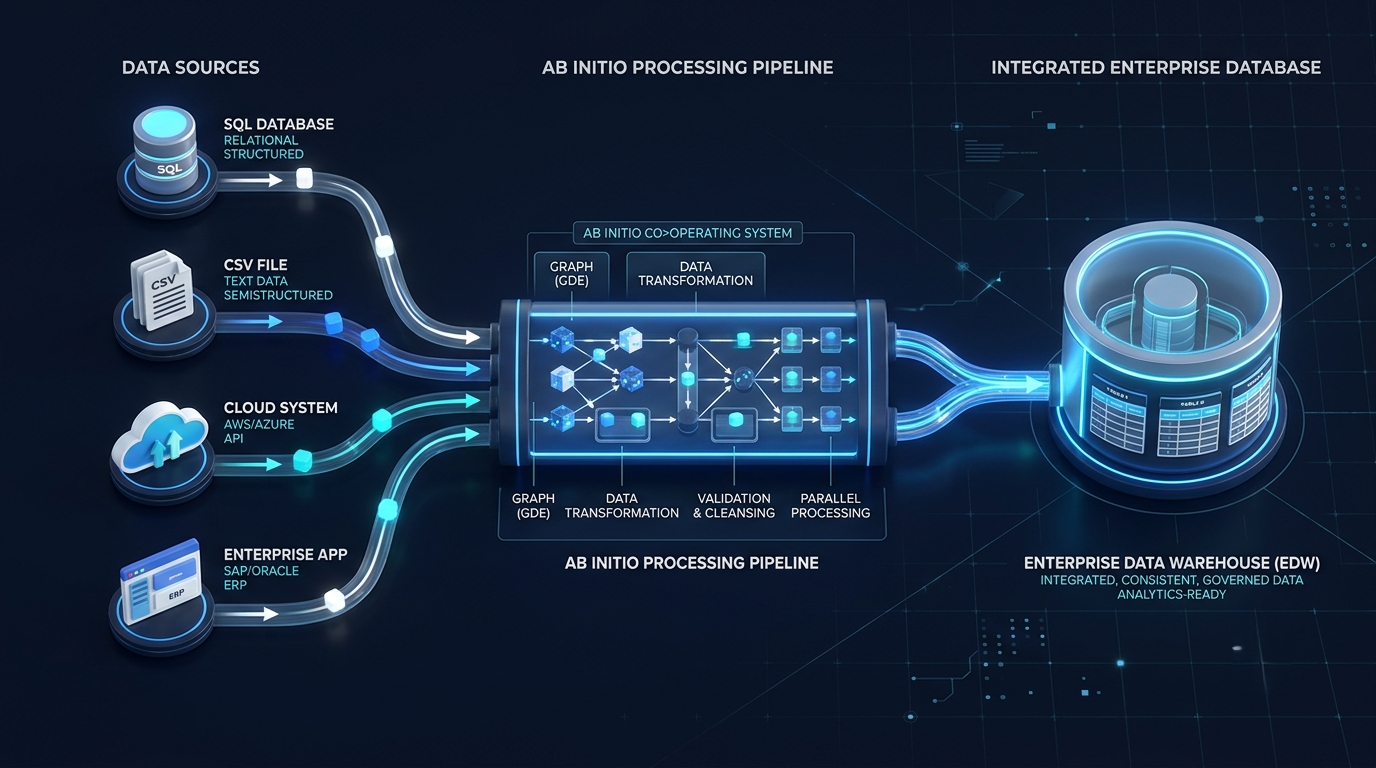
As such, in such an enterprise, one should be able to design an appropriate process in Ab Initio that would handle the relevant data accordingly. Note that this definition of processing also includes validation, as the data should meet certain criteria before proceeding to the next stage.
Ab Initio Facilitates ETL Processes By Supporting The Creation Of Targeted Workflows
At the most basic level, data integration is about getting data from one or more sources to a target repository, which is generally referred to as ETL – extract, transform, and load. ETL processes can take various shapes and sizes depending on the nature of the source and target systems, but they generally involve extracting information from one or more sources, transforming it to meet the requirements of the target, and loading it there. Ab Initio can be used to perform all three stages, which is why it is essential for enterprises to utilize it for data integration and warehousing needs. However, this begs the question – what sets ETL-centric data integration apart from other types of data management activities?
A good starting point for understanding the fundamental principles of ETL processes is to identify their basic constituents. As mentioned earlier, obtaining data from the source systems is the first step, which is generally referred to as extraction. Naturally, the details of this step will be defined by the specifics of the source system, or systems, but they generally involve establishing the connection, identifying the target records, and reading them.
Then, the records need to be transformed to match the requirements of the target schema. This step is the most diverse, as it depends on the nature of the source and target records, the data types, identifiers, and formats used in them. Some transformations are relatively simple, such as removing special characters from a field or converting the case of a string. Others, in contrast, involve advanced operations, such as joining of multiple records, aggregating information, or sorting.
Data Transformation Helps To Get The Target Records Into The Desired State
Beyond simply copying or renaming fields, data transformation generally refers to a series of operations that need to be performed on a record to make it presentable in the target system. As mentioned earlier, the details of these operations will be defined by the peculiarities of the source and target records.
For instance, when creating a report, the source records may have to be grouped in accordance with some criteria, and additional operations, such as aggregation, may have to be performed to obtain summary statistics. Other transformation examples include field masking, filtering, sorting, and various operations aimed at improving the readability and overall quality of data.
For illustration, let us imagine a scenario where a company wants to produce a summary of sales by customer. The source table may look something like this:
Customer Product Quantity Price
John Doe Widget 1 $5
John Doe Thingamabob 2 $15
Jane Smith Widget 1 $5
While this data is perfectly fine on its own, the company’s management is likely to want aggregated information that shows how much each customer spends on how many items purchased. This means that the quantity and price fields will have to be aggregated per customer, and the resulting table will look like this:
Customer Quantity Price
John Doe 3 $40
Jane Smith 1 $5
It is essential to note that while this example deals with a relatively trivial case, real-life scenarios are generally much more complex and may involve extensive transformations on a large scale.
Ab Initio Training Helps To Develop An Understanding Of ETL Logic
As mentioned above, ETL processes generally begin with extracting records from the source system. However, this step is rarely straightforward, as it generally involves identifying which records need to be extracted based on specific criteria. For instance, an insurance company may receive policy information from multiple sources, where the data may be inconsistently structured, formatted, and validated. Prior to storing this information in the company’s databases, it will have to be cleansed and normalized in accordance with the established standards. This logic is likely to be unique to each ETL process, and thus it is critical to spend sufficient time designing it.
It is also crucial to remember that while ETL processes are generally fairly straightforward from a technical point of view, they are not immune to issues stemming from the data quality. In other words, while an ETL workflow may successfully transfer the data from one system to another, this data may not conform to the requirements of the target system. This is particularly true for insurance, where data validation plays a crucial role in all operations. As such, ETL development is always a dual-task: realizing the logic of the process while addressing the data validation concerns.
Parallel Processing Makes Large-Scale Data Transformation Possible
One of the challenges of working with large records sets is that they often require significant computational power. Simply put, there is a reason why such operations as sorting or joining are often notoriously slow. The reason for this lies in the mechanics of how these operations are performed, which generally involve scanning through all records in the dataset to identify their position in the sorted list or find the matching keys, respectively. As such, it is easy to see how such operations as joining two datasets of significant size can take substantial time and effort. This is why large-scale data transformation and integration often involves utilizing parallel processing.
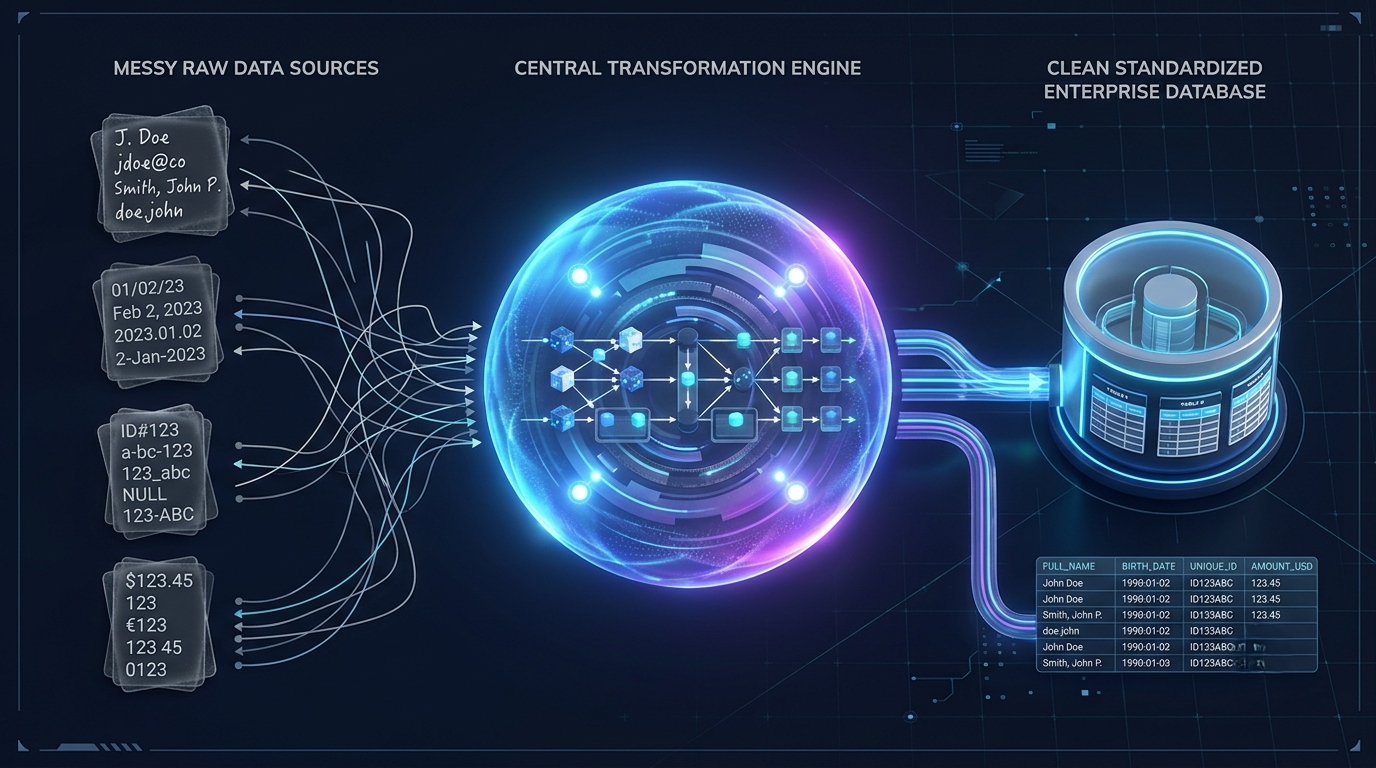
Ab Initio is one of the data management tools that offer extensive support for such operations, as they can be designed to distribute the processing load across multiple machines. However, in order to leverage this capacity, large-scale data transformation and integration projects must be aware of the fundamentals of such operations.
For instance, when performing parallel processing, the processing logic has to be divisible in accordance with the available resources. In other words, while such operations as sorting or joining typically rely on a single stream of data, there are ways to make these operations parallel. For instance, a large dataset of 100 million records can be split among multiple threads in order to accelerate the processing, which makes such operations viable in large-scale projects. Naturally, the specifics will depend on the task at hand, but the underlying principle of appropriate resource allocation remains the same.
Data Quality Inspections Are An Integral Part Of The Process
One of the frequent challenges of data integration processes is the presence of incorrect or otherwise erroneous records. It is relatively easy to imagine a scenario where a customer’s information is incorrectly represented in a database, perhaps with a missing or inaccurate address and telephone number. Naturally, such issues can be distracting to the least experienced analysts, but they also pose a much bigger challenge to the integrity of the data integration processes.
In other words, a data integration pipeline will generally have to deal with erroneous records in some capacity. While it is possible to simply ignore them, this approach is generally not optimal, as it creates an additional risk of data loss. A more reliable option is to design the process to handle the faulty records in accordance with the requirements of the target dataset. This can involve a variety of methods, ranging from standard data validation practices to individual reviews of the suspect records. It is also crucial to distinguish between processing failures and data quality issues. In other words, even an apparently successful data integration process may produce unreliable results if the source data was incorrect to begin with. This is why it is crucial to ensure that the records that make it to the final destination are actually valid.
This consideration has implications for designing a reliable data integration process. Ideally, such a process should not fail abruptly whenever a suspicious record is encountered, but should have dedicated tools and procedures to handle such cases. It is also crucial to remember that while the data validation rules should be fairly straightforward, there is always room for exceptions. This, in turn, implies that while such records should be separated from the main stream, they should not be ignored outright. Finally, while the data validation rules are generally standardized, different data integration processes will have different tolerances for the data quality.
Developer Training Helps To Build An Understanding Of Data Flow
At the most basic level, enterprise data integration is a process that involves moving information from one data repository to another. Naturally, such a definition is too simplistic, as data integration processes generally involve a series of transformations that aim to make the data more accessible and useful to downstream processes. However, at the most basic level, data integration always involves a source system, a target system, and the logic that defines how the information in the source system should be transformed to comply with the specifications of the target.
This is why the basic principles of data integration are similar to the fundamentals of spreadsheet operations. In a spreadsheet, the user defines cells that contain the source data, the cells that contain the transformation logic, and the cells that will contain the result of applying this logic to the source cells. Naturally, the mechanics of performing these operations will be significantly different in a data integration tool, but the underlying principles remain similar.
This, in turn, means that Ab Initio developers should be familiar with the fundamental principles of data integration, including the characteristics of source, target, and transformation records, as well as the logic that defines how the transformations take place. As such, Ab Initio training can be an invaluable opportunity to gain a better understanding of these fundamentals.
Understanding Of Relationships Helps To Perform Data Integration Successfully
As mentioned earlier, data integration processes almost always rely on the fundamental principles of spreadsheet logic. This is why one of the most common operations performed within data integration is joining, which is similar to the VLOOKUP function in spreadsheet software. Joining is generally the way to combine two sets of data based on a common key. In other words, joining allows retrieving the necessary information from one database based on the information contained in another database. This is particularly useful in situations when the data is distributed across different databases, but the data integration process requires accessing information from both of them.
However, in order to perform joining successfully, it is crucial to fully understand the data and the logic that defines the relationships between different keys. For instance, joining two databases is not simply a matter of identifying two fields that contain similar information and telling the system to join them. A reliable joining operation requires understanding what data types are involved, what the unique and non-unique keys are, whether there are any relationships that are not immediately apparent, among other details.
How Data Can Be Used To Solve Real-World Problems
In essence, data integration processes are about using specific instructions to extract certain fields from designated data records, transform them, and write them to a target system. This sounds fairly straightforward, but it takes extensive practice to truly grasp how individual components fit together to produce a working process. This is why ab Initio etl training focuses on learning the fundamental principles of data processing rather than simply trying to memorize individual functions and keywords.
For instance, when learning data transformation, it is crucial to remember that transformation instructions only affect the records they are applied to. This is relatively simple when working with databases, as the source fields are clearly defined. However, when working with unstructured data sources, it is crucial to remember that records should never be taken for granted, and it is always important to inspect them to ensure that they were transformed correctly.
The same principles apply to joining operations. They might seem simple at first glance, but there are numerous ways of implementing joins incorrectly, including forgetting to account for missing or repeating keys. This is why it is essential to always test the joining process with a small set of test records before proceeding to implement it on a larger scale.
Ultimately, ab initio developer training should focus on helping students think about the logical underpinnings of data processing. In other words, they should always ask themselves questions, such as: What needs to happen to this record in order to get it to the target system? What transformations does this record need to undergo? How will these transformations affect the rest of the data integration process, if at all? And so on.
Performance Optimizations Should Be Considered At All Stages Of An Ab Initio Workflow
Performance optimization is always an important consideration in large-scale data processing, and Ab Initio is no exception. In many ways, the fundamentals of performance optimization are the same across different data management platforms. In essence, optimizing a data integration process means designing it in a way, that makes the data processing faster or uses the available resources in a more efficient manner.
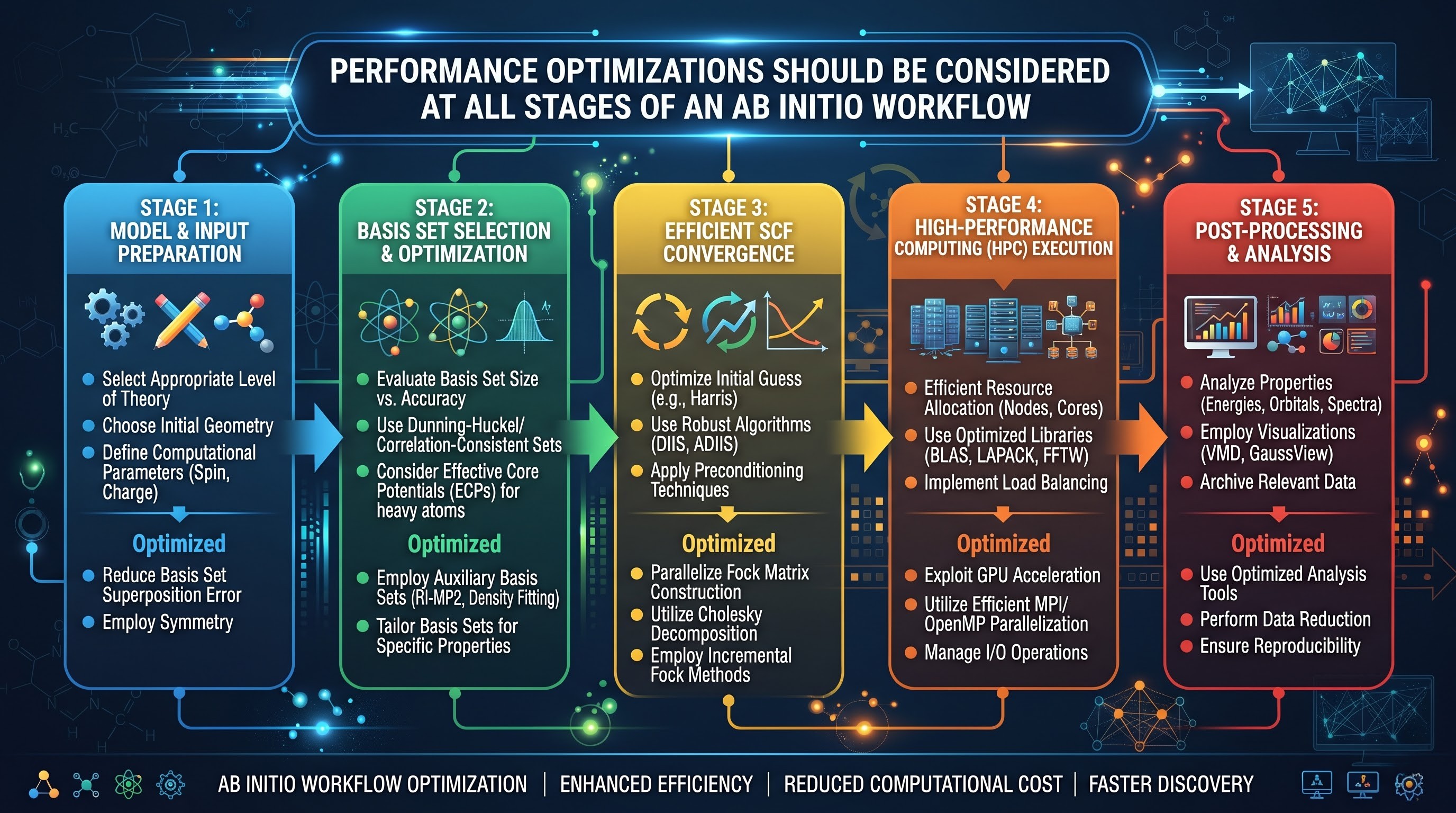
However, the specifics of optimization will always be defined by the data integration task at hand. For instance, a data transformation process will always be different when working with unstructured data compared to working with a database. Similarly, a process that implements heavy sorting operations will involve a different set of optimization techniques compared to a process that relies on joins. This is why there is no universal answer when it comes to performance optimization – it is always important to assess the specific needs of a data integration task in order to define the performance goals.
That being said, there are several broad principles that should be considered when optimizing any Ab Initio processes. For instance, when designing a data integration process, it is important to identify the dataset size, as the optimization options will vary drastically depending on whether one is working with a few hundred records or millions of records. Similarly, it is important to optimize how the data is sorted, partitioned, and joined, particularly when working with large-scale datasets. This is especially true for operations that rely on multiple stages of processing, as such operations can benefit greatly from rearranging the processing order to minimize data movement.
Monitoring Helps To Ensure That Things Proceed As Planned
Data integration processes are rarely simple, and thus it is always possible for something to go wrong. Some issues may be obvious, such as when a data integration process suddenly stops working. However, more often than not, the issues will be subtle, such as when fewer records than expected are processed or the number of rejected records increases significantly. This is why it is always crucial to establish appropriate mechanisms to monitor these aspects of a data integration process.
In essence, monitoring is about defining what needs to be reviewed and how frequently it should be done. For instance, one should always keep track of basic metrics, such as whether the process successfully completed, how many records were processed, what percentage of records were rejected, and so on. At the same time, it is also important to note the context of these figures, such as comparing them to previous runs of the same process. For instance, if a data integration process that normally processes 500,000 records suddenly processes only 40,000, it is imperative to investigate the cause of this discrepancy.
Ab Initio Helps To Address The Needs Of Complex Data-Intensive Environments
In many ways, Ab Initio represents the culmination of decades of experience working in the data management space. Its principles and practices are the result of extensive research and practice working with data, and its features are primarily aimed at addressing the needs of data-intensive environments. In other words, Ab Initio is not a tool for simple data integration tasks – rather, it is designed to work with high-volume data and perform extensive data transformations.
At the same time, it is crucial to understand that large-scale data integration needs do not arise in isolation. In other words, an enterprise would not seek to implement a high-volume data integration process simply because it has more data than before. Rather, this decision will generally be driven by specific business needs that can only be addressed by building an extensive data pipeline. As such, Ab Initio plays a crucial role in addressing these business needs by providing the infrastructure to build such pipelines.
Courses Can Help One Master The Fundamentals Of Data Flow
When learning Ab Initio, the most common challenge is to understand how the individual elements fit together into a working data pipeline. In other words, one has to learn what transformations can be implemented, how different data types can be joined together, how to handle exceptions, among other things. In reality, this knowledge comes from extensive practice, and abinitio online courses can help to greatly facilitate this process.
For illustration, the Ab Initio fundamentals training can enable the learner to develop a working knowledge of data flow, transformation logic, and basic processing operations. More specifically, the learner should always know what data records are being processed, what they represent, and what transformations can be applied to them. The understanding of the data records will vary depending on the data source, but the principles will remain the same. With this knowledge in place, the learner will be able to perform the basic operations of data extraction, transformation, and loading.
The ultimate goal of any Ab Initio course should be to help the learner fully grasp the potential of the tool and be able to use it to address real-world problems. In essence, the most crucial aspect of Ab Initio development is to be able to see the bigger picture and fully understand the data processing workflow. This way, the learner will be able to identify the most viable course of action in any situation and avoid the most common pitfalls. This approach may appear to be time-consuming, but it has clear advantages in terms of efficiency, as the learning process will be more intuitive.
Ab Initio: Processing Data To Make It Useful To End Users
It is always easy to describe Ab Initio as a tool for data transformation, but the reality is that Ab Initio is a data integration platform, and data transformation is only a small part of data integration. Processing data is not the end goal – rather, it is a means to make data more accessible and useful to downstream systems and processes. This is why the data records extracted from the source system always need to be transformed, validated, and processed before they can be moved to the target system. In other words, data transformation always takes place within the context of the broader data integration process.
For instance, data transformation processes will always follow specific rules defined by the target system requirements. More specifically, the target systems will define what records should be extracted from the source system, what transformations should be applied to them, and what rules should be used to validate the transformed records. This way, data transformation always takes place within the context of specific target requirements.
Ultimately, enterprise data integration processes always have specific goals in mind, such as making reports more accessible or automating repetitive tasks. Regardless of the specific use case, such processes always serve to make data more accessible to end users.