
Introduction to Workday HCM and the Modern Enterprise Ecosystem
Last updated on Sep 1, 2026
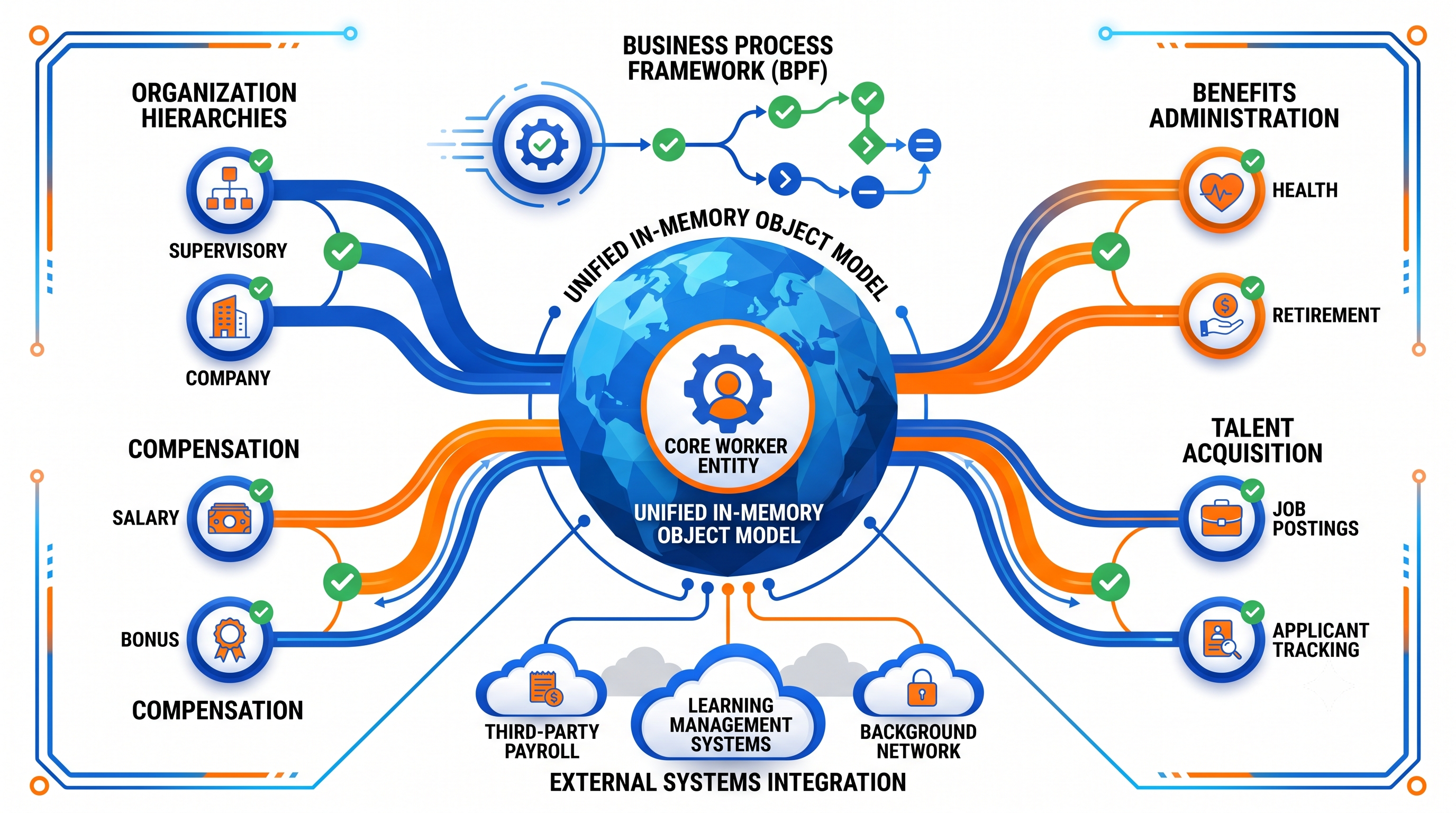
Over the course of the last twenty years, Human Capital Management (HCM) has witnessed radical developments. Firms are moving away from antiquated, installed relational database systems with different non-integrated modules to all-encompassing and cloud-enabled enterprise suites. The leader here is Workday, an entirely cloud-based enterprise management system. Workday’s HCM platform can manage the entire employee lifecycle including human resources, remuneration, financial advantages, payroll system, recruitment, employee performance, timekeeping system and workforce planning.
While traditional Enterprise Resource Planning (ERP) systems use an accumulation of different acquisitions and systems have been certified by different layers of integration middleware, Workday has a unified architecture. Each functional module operates under the same data model, security and logic. As a result, real-time data access for global entities is possible because of this unified structure without synchronization delays or processing at night.
The transition of various Fortune 500 companies and other large corporations to Workday has increased the need for experienced and qualified Workday HCM specialists. Through a structured workday hcm training online from providers such as OnlineITGuru, professionals such as an HR technology professional, functional and system analysts, and implementation consultants, can acquire the expertise necessary to set up, implement and sustain complicated corporate environments.
Architectural Foundations: Object-Oriented Design in Memory
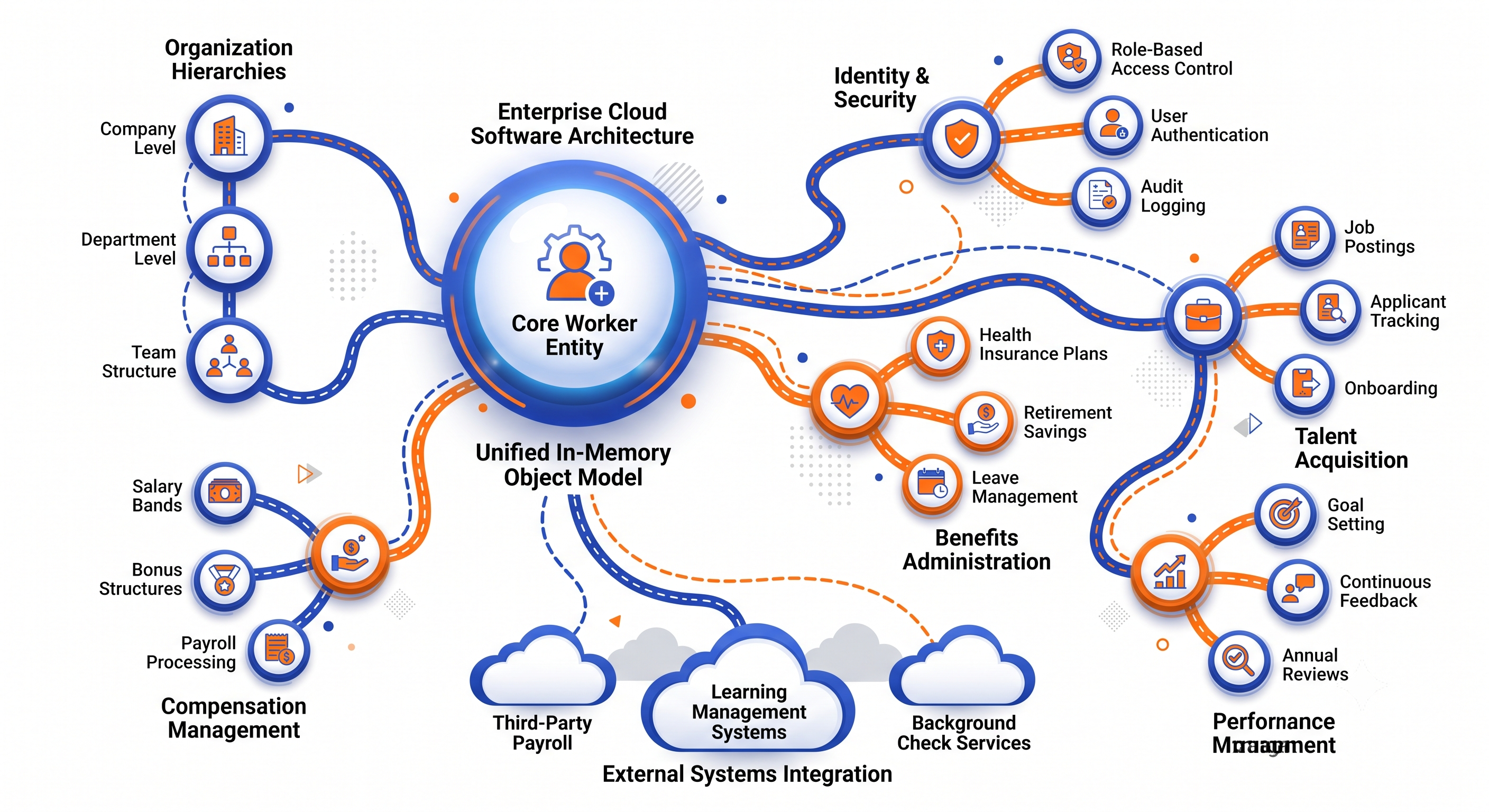
To successfully complete a Workday HCM course, one needs to first understand the architectural paradigm that makes Workday different from earlier generations of relational database management systems (RDBMS).
Processing data in memory: Workday uses speed RAM hardware to process data instead of reading and writing on the disk storage. This allows it to generate analytical data and reports as fast as possible with no time loss.
Data model based on object-oriented programming: Conventional systems utilize relational table databases using keys to connect them. Workday database uses business entities depicted as independent objects. For example, a worker is an object and may be linked with job descriptions or with hierarchies. When something is changed in the particular field, the object is automatically amended in all related business areas.
Multi-tenancy system with cloud presence: All customers of Workday work under the same system. Thanks to the cloud this system does not require many years of infrastructure improvements or development of custom software.
Managerial organization: The managerial organization is the unit composed of all people working in the organization.
Key functional modules in the Workday HCM program
A professional Workday HCM course starts with basic functional areas each of an administrator and consultant has to configure.
Core Human Resources and Organizational Foundations
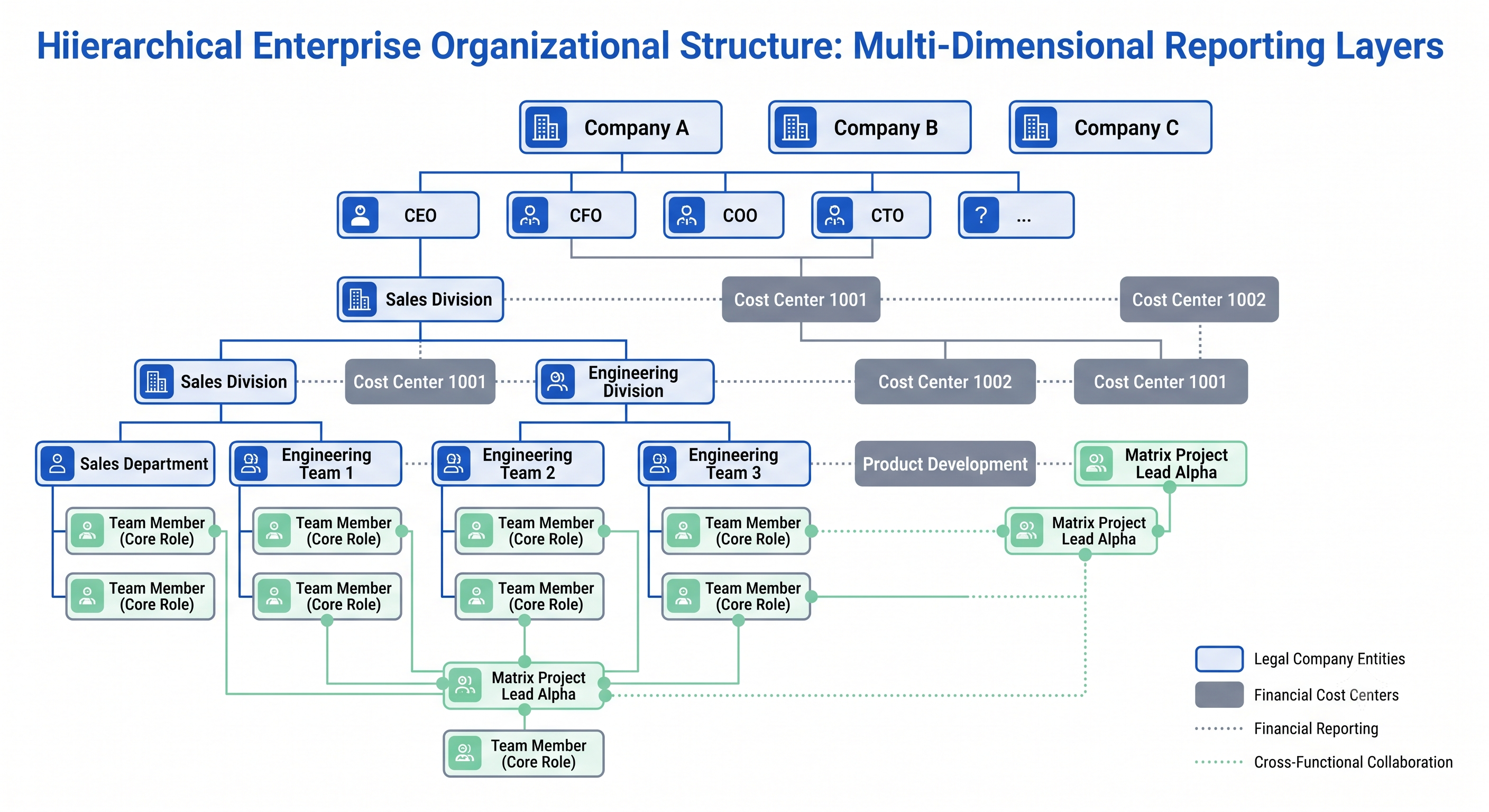
The core module creates the company structure. Students learn about configuring different types of organizations with certain functional, legal and financial meanings:
Supervisory Organizations: Determine reporting, approvals, and employee transactions.
Company Organizations: Connect directly to legal entities needed for financial and legal reporting.
Cost Center Organizations: Assure distribution of operational staffing expenses related to corporate financial records.
Region and Location Organizations: Provide geographical limits in terms of tax compliance, local labor laws, and legal reporting.
Matrix and Custom Organizations: Organize employees across functional borders to perform cross-functional project management and indirect leadership.
Training in addition to organizational structure covers Staffing models regarding the hiring and monitoring of individuals:
Position Management: that involves creating a unique position of some role before the hiring process takes place.
Job Management: that is concerned with the actual selection of workers based on their qualification for a job without defining their positions in advance.
Compensation Management
The management of salaries in Workday links human resource policy with financial strategy. The topics envisaged in this course are the development of adaptive salary packages which include the following:
Compensation elements: the smallest financial part, for example, salary, bonus or commission.
Compensation plans: the groups into which the above-mentioned parts are divided according to the criteria of salary, hourly rate, allowances and bonuses.
Compensation eligibility rules: the set of rules that are based on the location of workers, their rank or tenure in a company and that help to assign the right pay plan automatically.
Administration of Benefits
In this area of interest, the Benefits domain is responsible for medical care, pensions, life assurance as well as any other plans governed by the law. As part of the course, trainees will learn to configure:
Eligibility and Benefit Groups: Grouping employees according to their employment status, geographical location, and any agreements regulating employees’ rights.
Dependents and Coverage Targets: Giving definitions of the options for coverage including self, couple, kids and family; creating rules to validate the eligibility for receiving these benefits.
Open Enrollment and Life Events: Creating the necessary descriptions and web-page layouts for annual enrollment events as well as some life-changing events.
Transmission of Data to Insurance Companies: Establishing rules for establishing codes for benefit deductions.
Superior Talent and Operational Frameworks
In addition to basic hiring and salary system, complete HCM systems examine sophisticated modules that inspire talent management and everyday workforce management processes.
Talent and Performance Management
Workday places review operations in the worker's track record. The main task areas are:
Goal Management: Setting organizational, cascading, and individual goals for performance connected to reviews.
Performance Appraisal and Continuous Feedback: Developing tailored review forms, self-assessments of employees, multi-rater evaluations, and calibration procedures.
Succession Planning and Talent Pools: Definition of talented and promising people, analysis of potential for their leaving, and the management of succession chains for key positions.
Skills Cloud and Machine Learning: Creating taxonomies of talents which are in line with the existing staff and its career opportunities.
Workday Recruiting
The Recruiting system is capable of performing all stages of talent acquisition:
Job Requisitions and Job Postings: automating job requisition and job posting processes from the time of headcount approval.
Candidate Management Pipelines: using pipelines for managing job seekers from application to offer.
Referrals and Agency Portals: operating with supply chain partners and payment of terms of job candidate referrals.
Time and Leave Management
In order to effectively introduce leaves management policy worldwide, it is essential to have comprehensive knowledge about the labour laws in various parts of the world.
Time off programs v/s accrual programs: Differentiation between these two leaves management programs
Formula configuration: creation of sophisticated formula to calculate accrual for the month or pay stubs, accrual increase based on the length of service, restrictions on the use of leaves.
Workflows of Time Tracking: Creation of online clock timers, mobile time tracking with geofencing settings, and calculation of overtime.
Business Process Framework (BPF)
Business Process Framework is the engine that controls and organizes all transactions happening within Workday. Understanding of Business Process Framework is an absolute requirement for Workday administrators and Workday consultants implementing Workday.
Workday Business Process is a series of steps, actions, approvals, notifications, and integration services that are initiated based on certain lifecycle events (like Hire, Terminate, Propose Compensation or Change Job).
Basic Components of the Business Process
Action Steps: Actions that are assigned to certain security groups (like HR Partner will have to enter Personal Information). It could be optional or required action.
Approval Step: Points of decision when the transaction is approved, disapproved or rejected by a certain leader or cost center manager.
Approval Step Chains: Multi-level approvals chains that are defined according to organizational hierarchy and certain financial limits or hierarchy level.
Integration Step: Automation of API or EIB callouts was triggered during some point of the process (providing the IT account when Hire approval is completed).
To-do: Notification or list of tasks that need to be done by the user without changing any fields.
Notifications: Alerts, emails and mobile notifications sent to certain people.
Conditional logic and validation mechanisms
Dynamic branching is necessary for enterprise workflow. Users of Workday HCM will learn to create complex conditional rules based on the Boolean calculus. As an example, the process of "Change Job" would be able to branch: if the increase in salary is above 20%, then it indicates the approval stage going to the Chief Human Resources Officer; if the increase is below 20%, it will conclude at the Vice President level.
Validation types serve as an automated control tool that does not let users make actions that violate company rules, like approving the termination date earlier than the hire date.
Security Structure and Governance
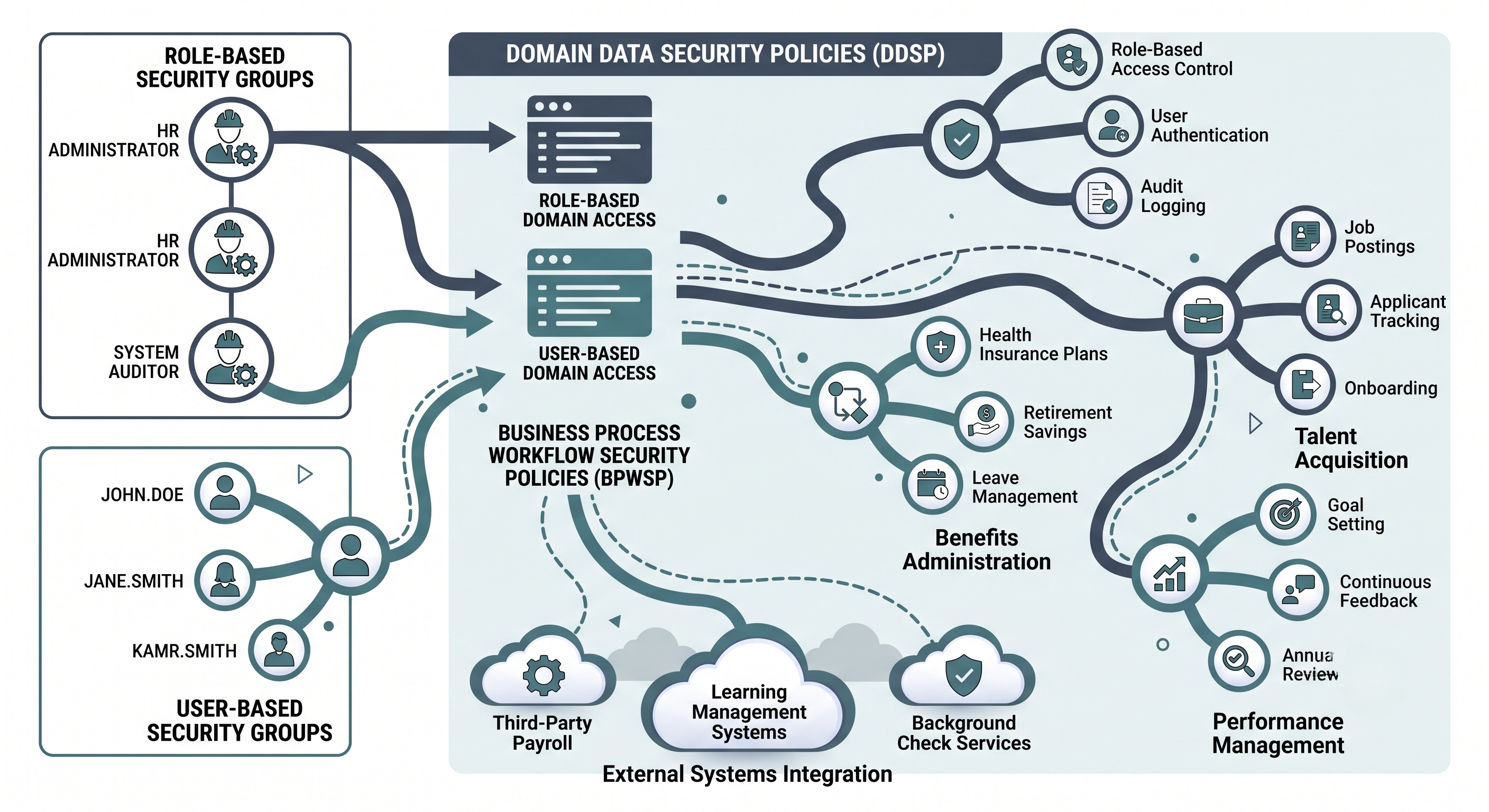
Workday utilizes a single security model and is based on both user and role security. It is important to understand this security structure to secure sensitive information about employees who can be identified by different means and satisfy various regulations (including GDPR, HIPAA, and SOX).
System Security Basics
Domain Security Policies: Define regulations for user access to particular information fields and reports (e.g.: whether an employee’s SSN or bank information can be accessed).
Business Process Security Policies: Define user rights and responsibilities regarding the business process stages.
Security Groups: This is a group of users that have the same user access to the information.
Role-Based Security Groups: The individuals assigned to roles inside an organization (such as Manager, HR Partner, Compensation Specialist) inherit their rights automatically.
User-Based Security Groups: These groups assign rights to individuals and have worldwide, organization-independent access (e.g., Security Administrator, Integration Developer).
Segment-Based Security Groups: Their access is limited to particular sections of the information, such as executive compensation data.
Intersection and Aggregation Security Groups: These groups allow combining various security conditions in a unique way using logical operators.
Implementing Security Policies
The alterations in security are not instantly operational after the changes are saved in Workday. The changes are made in a draft mode prior to getting implemented through the task known as “Activate Pending Security Policy Changes” that also involves admin verification and an audit trail for compliance tracking and reporting.
Reporting, Analytics, and Computed Fields
An important portion of the Workday HCM training is devoted to the reporting and calculation process as data in Workday becomes meaningful only when proper business intelligence is derived from it.
Types of Reports in Workday
Simple Reports: A straightforward tabular report involving data extraction of a sole business entity used for straightforward operational checks.
Advanced Reports: The prototype types of reports that are acknowledged in the market known for its multi-entity links, parent-child relationship connectivity, proper filtering, prompts, sorting, and sub-reporting tools.
Matrix Reports: Reports that provide analytical summaries across two parameters (like a multidimensional pivot table).
Composite Reports: Sophisticated tools of reporting in terms of combining multiple output reports from various sources in the market, combining trends in HCM headcount with data regarding finance such as ledger values.
Search Reports: Specialized type of report of a specific type that brings information together on various dashboards making it available for the company's employees within their dashboards.
The Importance of Calculated Fields
When native fields do not fulfill particular reporting needs, calculated fields function as Workday's conversion language. Students learn various calculations:
Lookup Related Value (LRV): Collecting data fields across boundary objects, for example, putting a Manager's Cost Center code onto an Employee's Time Off report.
Extract Single Instance (ESI): Dissecting a group of child objects into only one of them, depending on the sorting conditions (for example, finding out the last performance appraisal of a worker).
Formatting Date and Text Calculations: Adjusting strings and joining codes of identification.
Evaluating Expression: Multi-part conditional process of calculations that encourages complex IF-THEN-ELSE situations.
Foundations of Integration: Linking the Ecosystem
While specialized Workday Integration courses may cover advanced integration development, it is essential for an enterprise HCM functional consultant to be familiar with the manner in which Workday collaborates with external systems.
Enterprise Interface Builder (EIB)
It is the most commonly used integration tool for functional administrators. It enables in and out data communication and does not require procedural programming:
Inbound EIBs: Standard Excel templates that are generated directly by Workday web services are used for performing bulk data loads, such as mass hiring, global compensation changes or historical data migration during tenant cutover.
Outbound EIBs: The data from Workday modified reports is conveyed in XML, JSON, CSV, or fixed-width formats with the help of XSLT (Extensible Stylesheet Language Transformations) and transmitted via SFTP, AS2 or REST protocols.
Web Services, Application Programming Interfaces, and Core Connectors
Workday Web Services: It is a full suite of SOAP and REST APIs that allows real-time two-way programmatic access to Workday business objects and processes.
Core Connectors: These are prebuilt and standardized templates for integrating with the most popular third-party providers for payroll processing, background checking, benefit provider servicing, and directory systems.
Document Transformation: Custom translation logic is applied to convert Workday payloads into vendor specifications.
Structure of the Complete Curriculum
OnlineITGuru’s well-structured workday hcm full course concentrates on helping students acquire knowledge through a methodical approach - the students will start from basic theories related to architecture and work their way up to professional-level solutions involving practical configuration in actual tenant circumstances.
Module 1: Overview of Enterprise Architecture and Navigation
Introduction to the multi-tenant nature of the cloud and data storage
Types of tenants: implementation, preview, sandbox, and production
Level of access to information: landing pages, worklets, global search, and related actions
Learning the Workday object model and basic business objects
Module 2: Organizational Structure and Staff Management
Configuring management organizations at different levels of the organization and departments
Creating reorganization events and their appropriateness to the company
Creating matrix, regional, accounts, and target organizations
Making comparisons between position management and employment management
Module 3: Occupations, Roles, and Employee Profiles
Formulating Job Families, Job Profile Management and Classifying Occupations
Setting Management Levels and Work Exemption Classification
Creating Job Roles, Revising Hiring Requirements and Designing Vacancies
Types of employee: Regular Workers, Temporary Jobs, and Freelancers
Module 4: Concepts of Salary
Setting Salary Factors and Basic Salary Elements
Making Salary and hourly Wage Systems
Devising Detailed Salary Eligibility Requirements
Combining Salary Blocks in the Form of Groups, Group Patterns and Packages
Creating and Endorsing Salary Changes Across Lifecycle
Module 5: Design and Admissibility of Benefits
Establishing Providers, Benefits, and Benefit Classes
Setting Health Coverage, Insurance, and Pension Plans
Organizing Open Enrollment Events and Passive Enrollment Process
Module 6: Business Process Framework (BPF) Engineering
Dissecting Business Process Lifecycle: Replication, Modification, and Activation
Establishing Action Steps, Endorsement Steps, and Approval Chains
Utilizing Validation Criteria and Error Triggers
Crafting Branching Using Advanced Condition Rules
Dealing with Business Process Security and Delegation Laws
Module 7: Security Architecture and Governance
Comprehending the Security Matrix: Role-Based Security Groups Against The User-Based Security Groups
Establishing Domain Security Policies for Data Protection
Establishing Business Process Security Policies for Workflow Governance
Monitoring Access, Managing Separation of Duties, and Engaging The Policies
Module 8: Custom Reporting and Calculated Fields
Creating Standard, Advanced and Matrix Reports
Sorting, Filtering, Organizing and Presence of Prompts
Migration Data Across the Related Objects
Creating Lookups, Obtaining Single Stories and Evaluating Existence
Module 9: Data Transition and Inbound/Outbound EIBs
Overview of Enterprise Interface Builders
Creating WEB Service Templates for Bulk Data Processes
Setting up Incoming EIBs for Bulk Recruitment and Address Changes
Setting up Outgoing EIBs that include Reports and File Transfers using SFTP
Module 10: Life cycle Actions and Go-Live
Administration of Global Worker Operations: Promotion, Change of Location, Demotion, Termination
Tackling Re-employments, Employment Changes from Contingent Workers to the Permanent, and Extension of Contracts
Strategies for Go-Live, Bulk Data Management, and Post-Go-Live Backup
Lifecycle and Implementation Projects in Practice
Real-life experience using a Workday sandbox or a training venue is key to turning theoretical knowledge into consulting proficiency as it applies to industry-standard operations requiring the practical completion of full implementation scenarios based on conventional implementations that shall go through the following stages.
Implementation Phases in Action
Architectural Design: Collection of business requirements from all stakeholders and mapping existing HR data onto Workday objects as well as defining the structure of the hierarchy.
Configuration and Prototype Iterations: Creating the organization structure, system of payments, and the processes for operation into the development tier. Performing iteration reviews with the clients to check the workflow designs.
Testing Stages:
Unit Testing: Testing of individual business processes and calculation fields.
System Integration Testing (SIT): Testing of data transactions and the validity of data movement from Workday and third party systems or services (like payroll engines or active directory).
User Acceptance Testing (UAT): Supporting our customers in their business process for confirmation of correct functioning of all requirements.
Data Transfer and Migration Data Extraction, Transformation and Loading using inbound EIB for historical data about employees, payments and days off from old system to new gold-tier system.
Hypercare and Operational Support: Checking logs of transactions, adjusting the failed processes and login access, and providing assistance in the operation of the system after its implementation.
Projects Related to Representative Training
Global Business Transformation Project: Creating the organizational structure for business activities abroad in North America, Europe, and Asia. Students set up company codes, hierarchical structure of supervision, localization principles, currency exchange, and etc. for thousands of companies functioning outside of their home country.
Integration of Merger and Acquisition: Implementing the main absorption of the acquired company, which involves creating bulk Inbound EIB loaders for input of information, transforming different compensation levels into some coherent conditions, updating supervision hierarchy, and preparing audit documents for management.
Governance of Executive Payments and Security: Making complex logic of eligibility for bonuses and stock as well as ensuring confidentiality of delicate data related to the salaries of executives for ordinary HR employees.
Certification Pathways, Credentials, and Ecosystem Tracks
Working through the Workday credential ecosystem requires understanding the structural distinction between partner certification, client credential, and independent learning paths.
Workday Partner Certification
Workday has a proprietary ecosystem. Full implementer certification is granted directly by Workday Inc. and requires sponsorship through one of the authorized Workday Implementation partners or Workday Inc. itself:
Workday HCM Core Certification, which is an essential technical certification validating the individual’s capacity to configure and deploy Workday HCM on client projects.
Specialty Functional certifications earned after obtaining the Core certification covering the following: Advanced Compensation, Recruiting, Absence Management, Time Tracking and Benefits.
Workday Integration certifications, such as Workday Pro Integrations, Workday Studio, and Cloud Connect certifications.
Workday Pro Certification (Customer Track)
This program is designed for individuals working for organizations that utilize Workday as a customer. Workday gives the employees a chance to take part in the Workday Pro program so that they can obtain a certification in expertise in various domains such as HCM, Reporting, Security, Integrations, and Payroll without having to deal with a consulting partner.
Independent Professional Training
The best decision for prospective consultants and HR experts planning to join the ecosystem is to take holistic workday hr training online through well-established institutes like OnlineITGuru. This education allows students to learn the required skills, gain tenant experience, and acquire practical configuration experience for success in technical interviews, to get a functional analyst position, and achieve formal accreditation once employed.
Educational Overview
The Workday HCM course consists of a powerful learning opportunity where participants learn about state-of-the-art human capital management systems. The course covers everything from creating a company structure and organization layout to crafting business processes, setting up security operations, creating calculated fields, and developing interfaces while ensuring that participants gain the required knowledge and skills to work in this environment.