
Is Your Job AI-Proof? The Rise of Workday Orchestrator Role.
Last updated on Apr 12, 2026

The era of the system administrator is definitely over in 2026. The Workday ecosystem over a decade was a certain breed of specialist: technical artisans, who could code up a complex business process, construct an advanced calculated field, or spend hours and hours in the semi-annual update window. These professionals were the gatekeepers of the tenant and with the 2026 R1 release, this gate has been automated.
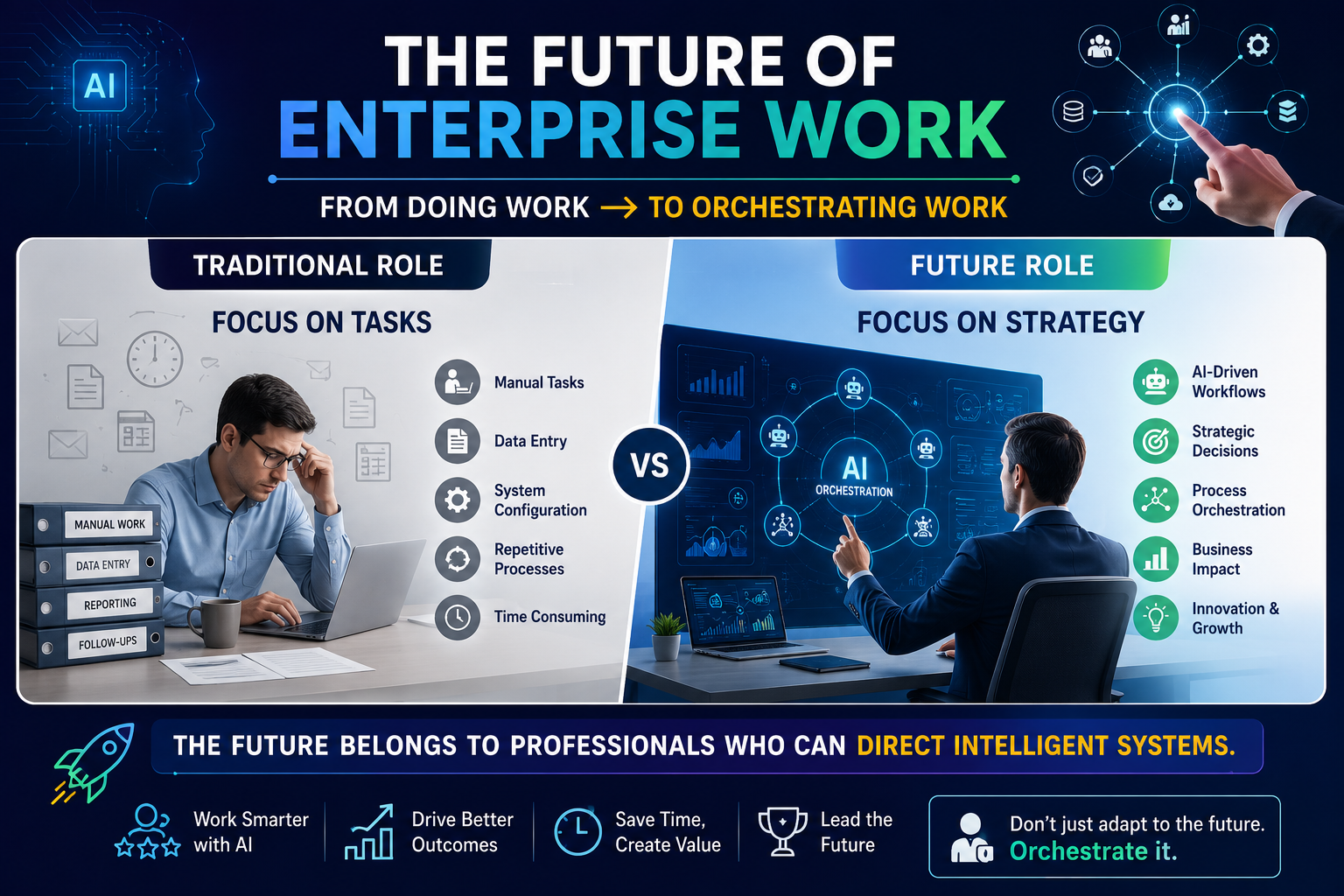
The driving force behind this change is Agentic AI. The days of the Chatbot where AI is merely suggested answers to questions are over; AI is now taking action. It executes. It self-corrects. This is because with AI becoming the heart of Enterprise Resource Planning (ERP), the manual configuration expert is experiencing an existential crisis. With this, the system now able to diagnose itself and propose architectural remedies of its own.
Workday Orchestrator:
This is not a company rebrand, or cosmetic title change, but a complete transformation of the human-machine partnership. In order to make it through this shift, professionals are shifting their career strategies and are no longer button-clicking, but strategy-oriented. This development has resulted in an enormous influx of demand on high-end Workday HR Training Online (orchestration and not administration oriented).
In 2026, the question that every HR and Finance department will be asking is not whether AI will take your job: it is whether you can make the shift away being a worker in the system to an orchestrator of the intelligence. You are going to have to learn how to harness the power of the AI in order to be relevant, so all the automated actions should be based on human ethics and business intuition. Mechanic days have passed; the days of the conductor have arrived.
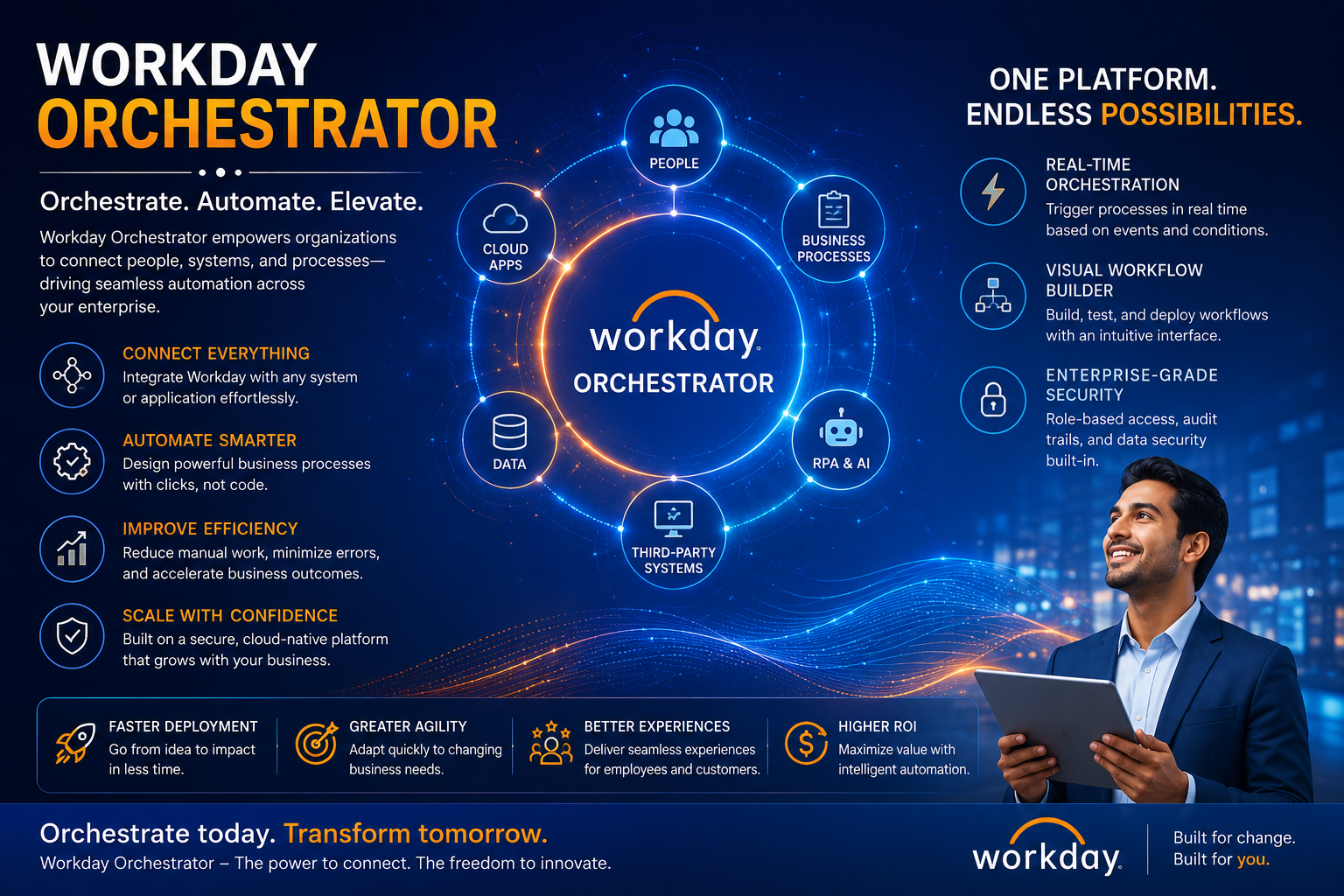
Now lets us discuss how Orchestrator is being implemented today in real world.
The Death of the Configurator.
In order to get the Orchestrator we have to first see what is fast becoming extinct in the enterprise scene. During the era of the so-called Legacy Cloud, which is circa 2015 to 2024, Workday professionals were a bit of high-level digital mechanics. They devoted more than 70 percent of their working time to high-volume but low-complexity work, which demanded accuracy but no imaginative plan.
The Manual Load of the Past.
Prior to the present AI revolution, the everyday "to-do" list of a Workday Analyst was filled with tactical fire fighting:
Creating Repetitive Reports: Wasting hours in Report Builder to customize columns in a weekly headcount file that would have been automated with less inflexible data structures.
Manual BP Troubleshooting: Get into the Process History of a stuck Business Process (BP) to understand the user who had an old or obsolete security profile or why a notification did not go off.
Data Mapping & Silos: As the human interface between siloed modules, making sure that a modification in Benefits did not inadvertently cause a calculation to break in Payroll.
Normalizing Skills Data: Cleaning up thousands of free-text entries by hand to get the Skills Cloud to work at all.
The 2026 Reality: The Autonomous Shift
Leap to the present. The Digital Brain by Workday has ceased to be a predictive assistant but instead an autonomous operator. Two major forces Veo and Lyria 3 have broken the technical barrier that safeguarded the job of the Configurator.
Documentation is not a PDF anymore with integration of the Veo video-to-learning pipeline. Should a user get lost in a new 2026 R1 interface, Veo will create a personalized, real-time video walkthrough depending on the user and the task they are meant to perform. At the same time, audio-based support interfaces of Lyria 3 enable administrators to converse with the tenant. Rather than take a journey through fifteen menus to identify a security setting, an administrator just describes the desired result, and the system maps the configuration immediately.
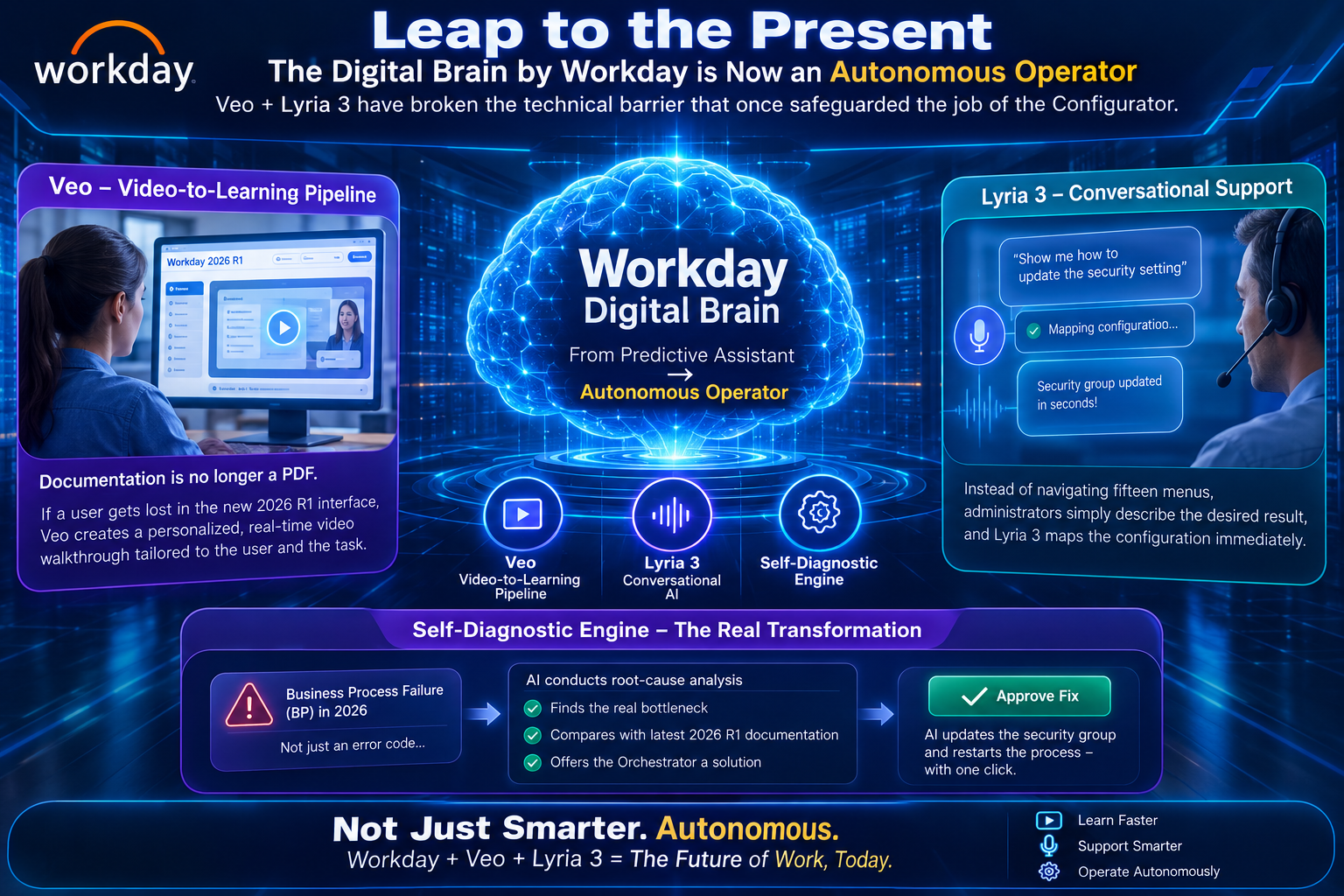
The Self-Diagnostic Engine is probably the most transformational. A BP failure in 2026 will not simply result in an error code; it will also conduct a root-cause analysis. It finds out which bottleneck is the problem, compares it with the latest 2026 R1 documentation, and offers the Orchestrator a solution. The AI then handles the fix with one click of the Approve button, updating the security group and restarting the process.
From "How" to "Why"
It is a paradigm shift of technical performance to a sort of de-skilling and a sort of re-skilling of strategic purpose. The Workday ecosystem in decades rewarded the "mechanic," the one who was familiar with the esoteric routes of navigation and the syntax of a complex calculated field. When your professional value used to be based on knowing which buttons to press, now you have to compete with a machine that presses them quicker, cheaper and with an almost zero margin of error.
Nevertheless, the machine is yet to have the single ingredient that makes enterprise successful- Context. The Digital Brain of 2026 is aware of how to shift data, yet it has no idea why a certain compensation system would inspire a sales team in the DACH region but not in Southeast Asia. It is capable of repairing a broken workflow on its own, but cannot determine whether that workflow is in line with the 2027 ESG (Environmental, Social, and Governance) objectives of the company. It can recognize a talent gap but not the cultural feel of a candidate who has the right chemistry with the team but not everyone can identify the right person.
The Architect of Intent.
The survivor of this culling is the Workday Orchestrator. They are the ones that no longer ask, no longer ask, how do I configure this update? but rather they ask, is this process actually contributing to our business objective? They use AI as a fast engine, although they are the ones with their fingers on the steering wheel. The death of the Configurator is no layoff, it is a promotion--a transfer of the hot air of the engine room to the fresh air of the captain's bridge.
Get a Bridge to Workday with Online Training.
In order to take this leap, the learning directions of 2024 will be inadequate. Modern Workday online training has turned the corner to respond to this demand, out of the easy-to-follow-just-by-clicks tutorials. The most advanced Workday Courses Online products available today are:
Strategic Architecture: How to design systems that look forward to business requirements.
AI Governance: Learning to control the guardrails that constrain independent agents.
Data Storytelling: The AI produces vast amounts of data, but how to convert it into a form that the C-suite executives can take action on?
Taking an online course in forward-looking Workday, you are not only learning to use software, but to be a leader. You are acquiring the qualifications so as to demonstrate that the work can be done by the AI, but that it is you who comprehends why the work is important.
What is the Workday Orchestrator?
The Workday Orchestrator, the next phase in the development of the traditional system administrator, will appear in 2026 as the reaction to the popularity of the Agentic AI. Contrary to the traditional roles that imply manual configuration and report creation, the Orchestrator is a strategic player in the system, a Digital Brain. They no longer focus on technical button- clicking but on high-level governance, ethics and logic architecture.
They control the performance of autonomous agents by guiding them and supervising AI-informed decisions to make sure that the machine is efficient and that its work is oriented towards human intent and business goals.
During legacy times, you were the composer of all the code of manual data entry. The performance is handled by the AI in 2026; your task is to make sure that there is a harmony between human will and machine performance. It is not a software you are dealing with anymore, it is a digital workforce.
The world of the Orchestrator is constructed to master this transition based on Three Pillars of Orchestration:
Agentic Governance
This is the most radical change. At this point, you are in charge of handling an autonomous AI persona, called an Agent, with the right to hire and fire or transfer funds or employee benefits. Orchestration implies establishing the Rules of Engagement. You decide what level of agency is permitted to communicate with one another and just how much financial or legal freedom they will have before a human is required to step in.
Logic Architecture
As the AI operates, it needs a blueprint. The Orchestrator codes the high level business logic that is the DNA of the organization. You are not programming fields, you are designing the flow of intelligence so that when the AI decides to initiate a promotion cycle it is in line with the macro-strategy of the business.
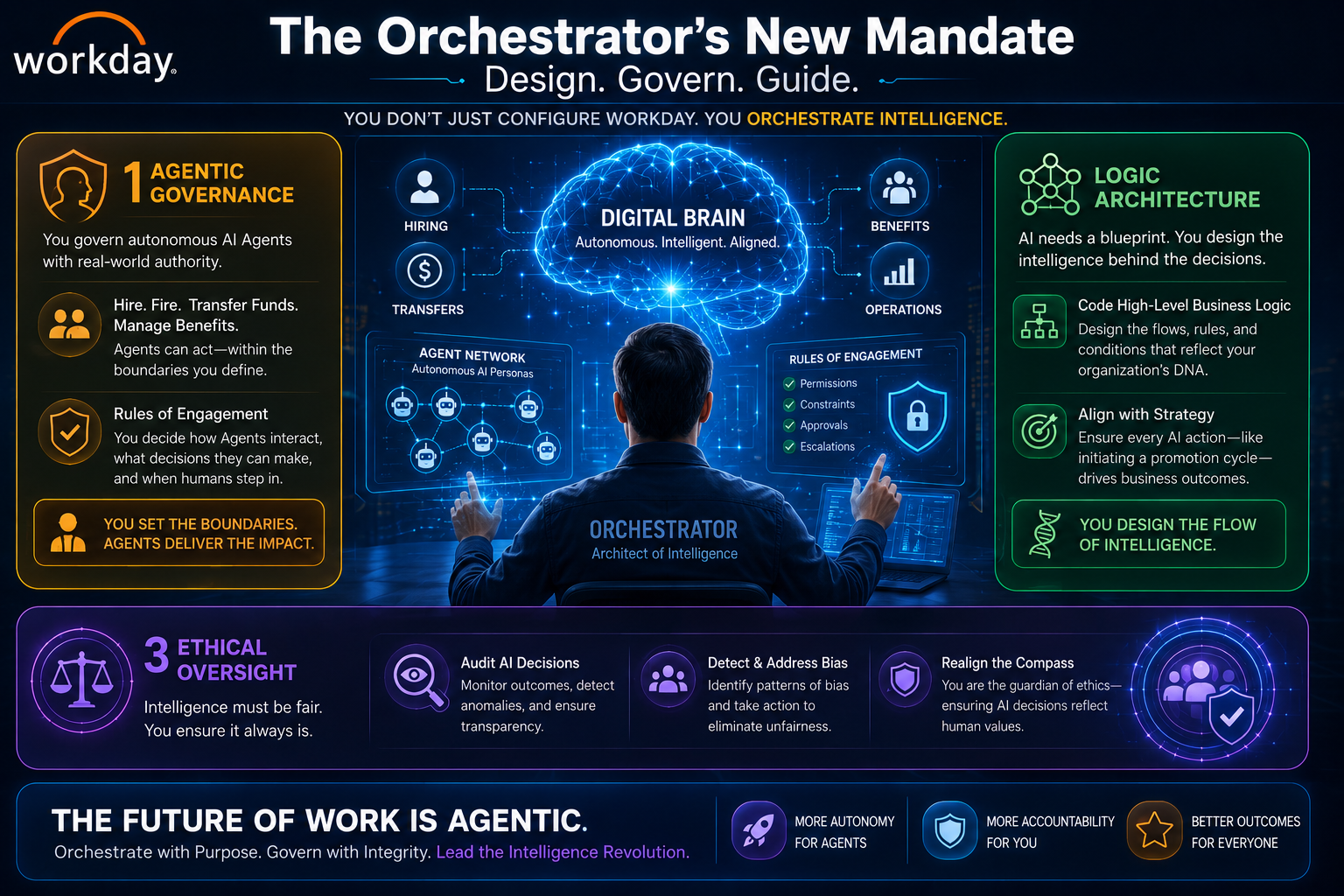
Ethical Oversight
AI decisions have to be audited by you to make sure that they are fair and open. When the Digital Brain of the system starts discriminating against certain groups of people with their leadership, the Orchestrator will be the one to trace the bias and re-align the moral compass of the machine.
So, what does a Workday Orchestrator do on a Tuesday morning (for an instance)? Previously, they may have been lost in the weeds of XML code inside Workday Studio or a broken integration. Those technical tasks of laying bricks have been delegated to the system itself by 2026. The current Orchestrator is no longer in the mindset of maintenance, but exists in a more advanced realm of Workday Extend and Graph API Orchestration where the system is not a lifeless database, but a living and breathing ecosystem.
Operating the “Agentic Workflow.
With the 2026 R1 launch, the Autonomous Agents came into the picture, which are digital entities that can cross the boundary between Workday and your external tech stack (Slack, Zoom, Outlook, and LinkedIn) without the hands-on triggers. The toolkit of the Orchestrator is now concerned with “Guardrail Configuration.
Take an average recruitment process: An AI agent recognizes a talent shortage in the Finance department, based on real-time attrition data. It then automatically writes a job description, and publishes it on job boards worldwide and then filters the first 100 applicants based on natural language processing. This work is not to be done by the Orchestrator, but to audit the Selection Logic. They employ sophisticated diagnostic systems to make sure the AI is not forming an algorithmic drift i.e., inadvertently screening by certain demographics or ivy-league qualifications which would be against the company diversity requirements or the EU AI Act.
Skills Cloud Architecture & Ontology
The stagnant "Job Title" days have ended. Workday is a fluid, skills-based economy in 2026, in which an individual is valued based on their abilities and not the title of a role they occupy. The Orchestrator is the designer of the Ontology- the living, intricate map of the relationship between skills and each other, cross-pollinating and developing.
When disruptive technology arises, the Orchestrator does not rely on an outside consultant to upgrade the system. In its place, they use the Workday Dynamic Skills Miner to determine the emerging competencies in the industry in real-time. They enable the workforce to be automatically reskilled by the Digital Brain through updating the ontology. The system recognizes the employees with a 70 percent overlap with the new tech and promotes specific learning modules through the Veo pipeline to fill in the 30 percent gap. The Orchestrator makes this "Learning-to-Role" loop quick, precise and exactly in line with the five-year expansion strategy of the company.
Learn to Master the Skills Economy with Workday Training.
It is a mindset change that this fluid architecture cannot be understood without taking the traditional HR paths. The Skills Cloud now requires thorough training of the Workday just to learn all the skills. In their pursuit of remaining competitive in 2026, professionals are pursuing specialized training modules of Workday that specifically target Machine Learning (ML) Ontology and Skill Gap Analysis.
Through constant Workday training, an Orchestrator becomes skilled in:
Map Skill Clusters: Learn how neighboring skills (such as Data Visualization and Storytelling) can be used to enhance the profile of an employee.
Audit AI Recommendations: Make sure that the “Digital Brain" does not miss out on a range of talents because of strict skills-matching criteria.
Drive Agility: Move employees across projects based on real-time needs and not fixed department lines using Workday training insights.
The most important thing you have in this skills first world is your mastery of the ontology. The right Workday HR Training can make sure that you are not only observing the workforce change, but you are the one designing that change.
Data Hygiene as Strategy (Tenant Discipline)
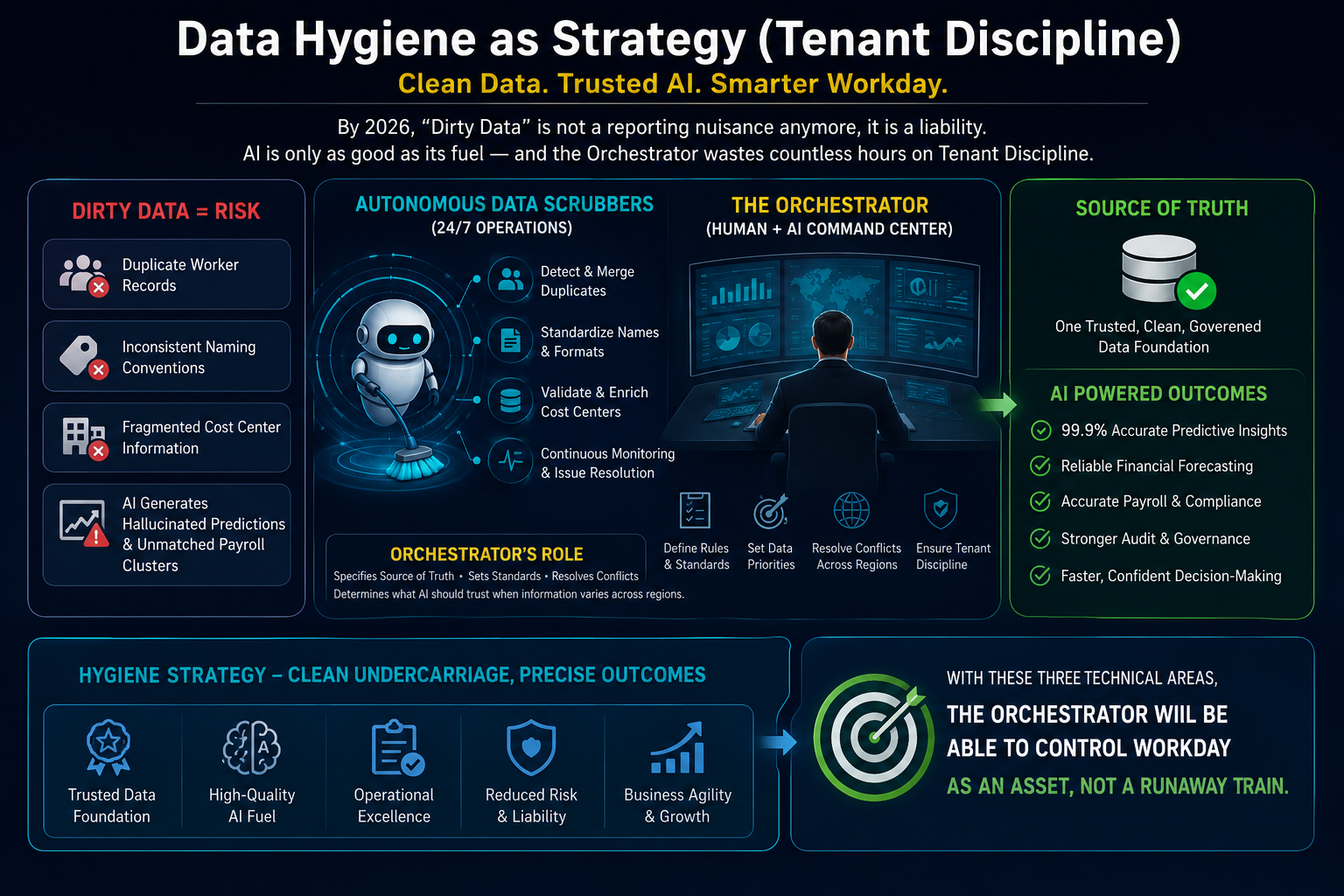
By 2026, "Dirty Data" is not a reporting nuisance anymore, it is a liability. And again AI is just as good as its fuel and the Orchestrator wastes much time on Tenant Discipline. When duplicate worker records, inconsistent naming conventions, or fragmented cost center information are fed to the system, the AI will generate hallucinated financial predictions or unmatched clusters of payroll.
The Orchestrator has applications in the form of Autonomous Data Scrubbers which operate 24/7. Nonetheless, the Orchestrator has to specify the source of Truth. They determine what kind of data the AI will need to focus on when information is conflicting in various regions. This is Hygiene Strategy- making the under-carriage so clean that the predictive insights of the AI are 99.9 accurate. With these three technical areas, the Orchestrator will be able to control Workday as an asset, not a runaway train.
How to AI-Proof Your Career.
Is your occupation AI-proof? In 2026, the answer to that is a resounding no when it comes to being a tactical operator. But as you rise up the value chain, you will be more valuable than ever. The machines have assumed the doing and left a great vacuum in the thinking, which is of gigantic, high-stakes scope. In order to sustain your career, you need to transform yourself as a system specialist into a strategic visionary.
The following is your 2026 map to be ahead of the curve:
Step 1: Learn the Human-in-the-Loop (HITL) Logic.
You need to know where AI has reached its limit to safeguard your career. Suppose the AI notices that there has been a 25 percent turnover increase in your Engineering department. Such an algorithm, based on market benchmarks and payroll will most likely propose an immediate 10% pay raise to counter the tide. A Workday Orchestrator, however, takes the same information and uses human lens. They could realize that turnover started as soon as three months after a change of leadership, or internal survey of sentiment indicates that the problem is a toxic management culture and not a compensation problem. With Strategic HR and Financial Analysis, you bring the subtlety that would keep the company from pouring money into a solution that would need a cultural solution. You are the Human-in-the-Loop that will make sure that the AI recommendations will not produce costly robotic errors.
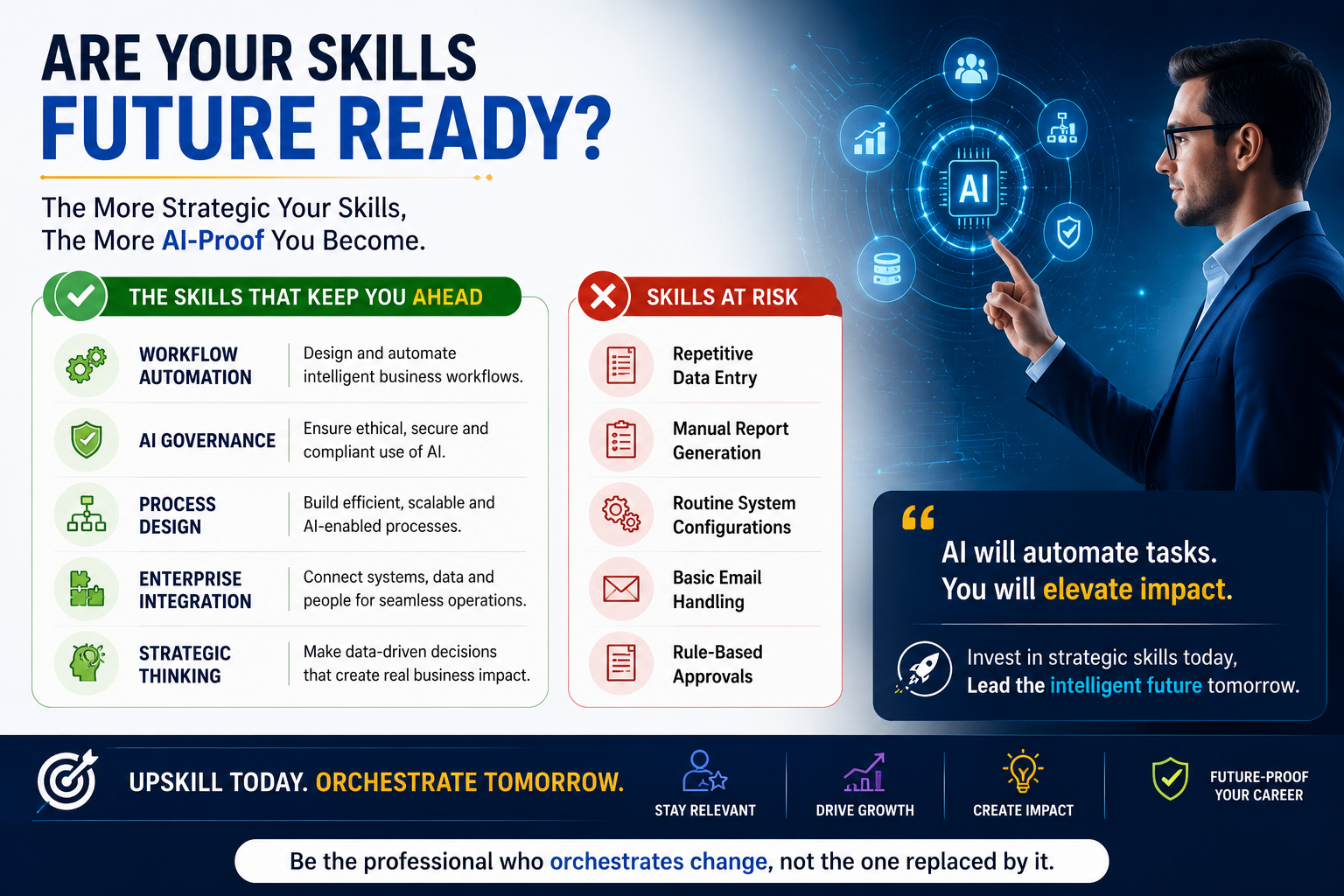
Step 2: Become "AI-Literate," Not Just "System-Literate"
The power users in the Legacy Cloud age were those who were able to learn the dark arts of Calculated Fields and complicated EIBs.. The technical environment is different in the 2026; the new competency is Prompt Engineering of ERP. You do not have to be a data scientist to succeed but must be a master communicator with the machine.
Knowledge of the Natural Language Interface of the Workday 2026 is now as important as the ability to use the previous sitemap. An Orchestrator can figure out how to nudge the Workday Assistant to produce a forecasting attrition report that refines to regional labor laws and avoids those that are temporary contractors - all within one conversational thread. Unless you are able to speak the language of the AI, you are unable to command its power. This isn't just about typing into a chatbox; it’s about understanding how to structure queries with high-level context so the AI delivers high-fidelity, actionable data visualizations instead of generic, surface-level summaries.
The importance of AI training is crucial.
The only way to bring human will and machine execution together is with a new type of preparation: AI Training. The 2026 leaders are those who take the time to undertake a formal AI Training to learn the Workday Assistant logic layers. You no longer just know where the data is stored but you need to know how the LLM (Large Language Model) understands your business requests.
High-level AI Training: Workday Orchestrators is dedicated to:
Context Injection: Training the AI to give it sufficient background information so that it is accurate but not insecure.
Iterative Refinement: Learn how to use the Chain of Thought prompt that lets you drill down into financial or HR data items.
Bias Detection: Have your AI Training to identify when a prompt can cause the system to give an exclusionary or biased outcome.
With the focus on AI Training, you will be able to turn the Workday Assistant into a strategic partner, rather than just a mere search tool. You become the translator that makes sure that the most challenging questions in the organization are answered in the most accurate and data-driven manner.
Step 3: Work in Change Management and "FOBO"
The greatest challenge of 2026 isn't a technical glitch; it's a psychological one. The workers are experiencing FOBO (Fear of Becoming Obsolete) across the globe. Such anxiety will freeze a workforce, causing them to be resistant toward the same tools that are supposed to assist them.
A Workday Orchestrator is an intermediary between cold efficiency of AI and human emotional needs of the organization. You need to master the Modern Change Management, advising the leaders on how they can apply AI-based insights to empower their teams, instead of merely supervising them. When the system notices an employee requiring reskilling, the Orchestrator will make the conversation framed as a growth opportunity with the help of Veo learning pipeline, as opposed to an automation replacement warning. Your strength is your compassion and your capability to steer humans through a digital transformation that seems more of a collaboration, rather than an acquisition.
The Future - 2027 and Beyond.
With the Workday ecosystem, as we gaze as far as the 2027 R1 release, we see the evolution of the ecosystem ramping up to a pace that used to be science fiction. We are entering the age of Self-Healing Systems and it is being replaced by intelligent assistance. In this near future, it is not that the system waits until a human has signed a patch or a security update, but rather, it automatically fixes its own security settings by real-time global threat intelligence.
The art of the So What?
Humans that survive into the 2027 and later will be the ones who will go beyond the What and the How to respond to the ultimate strategic question: So what? The separation of labor will come to light. Optimization will be done by the AI, and Orientation will be done by the Orchestrator. The AI is able to discover the most efficient route, and the human is the only one to choose the destination. In the year 2027, an average interaction between the system and the Orchestrator is:
The AI: "I have detected a supply chain structural inefficiency, and autonomous procurement protocols. I have made supply chain optimizations of 14% and reclaimed 2.4 million operational spending by rerouting logistics through our second hubs.
Orchestrator: "Great job. What does this portend our long-term mission? We will not simply assume that as profit but will re-invest 40% of those savings in our ESG (Environmental, Social, and Governance) ambitions to make by Q3. Use the capital to subsidize our carbon-neutral shipping project and refresh the employee Green Bonus pool in the Compensation module.
The Orchestrator as a Purpose-Designer
In this future, the Workday Orchestrator becomes a Purpose-Designer. You are the one who puts cold, hard efficiency into human value. The AI will know that employee is about to leave with Predictive Attrition measures, but the Orchestrator will determine whether that employee is a Cultural Pillar such as someone whose institutional knowledge and guidance is worth a personalized retention plan that is undoubtedly beyond what an automated algorithm can recommend.
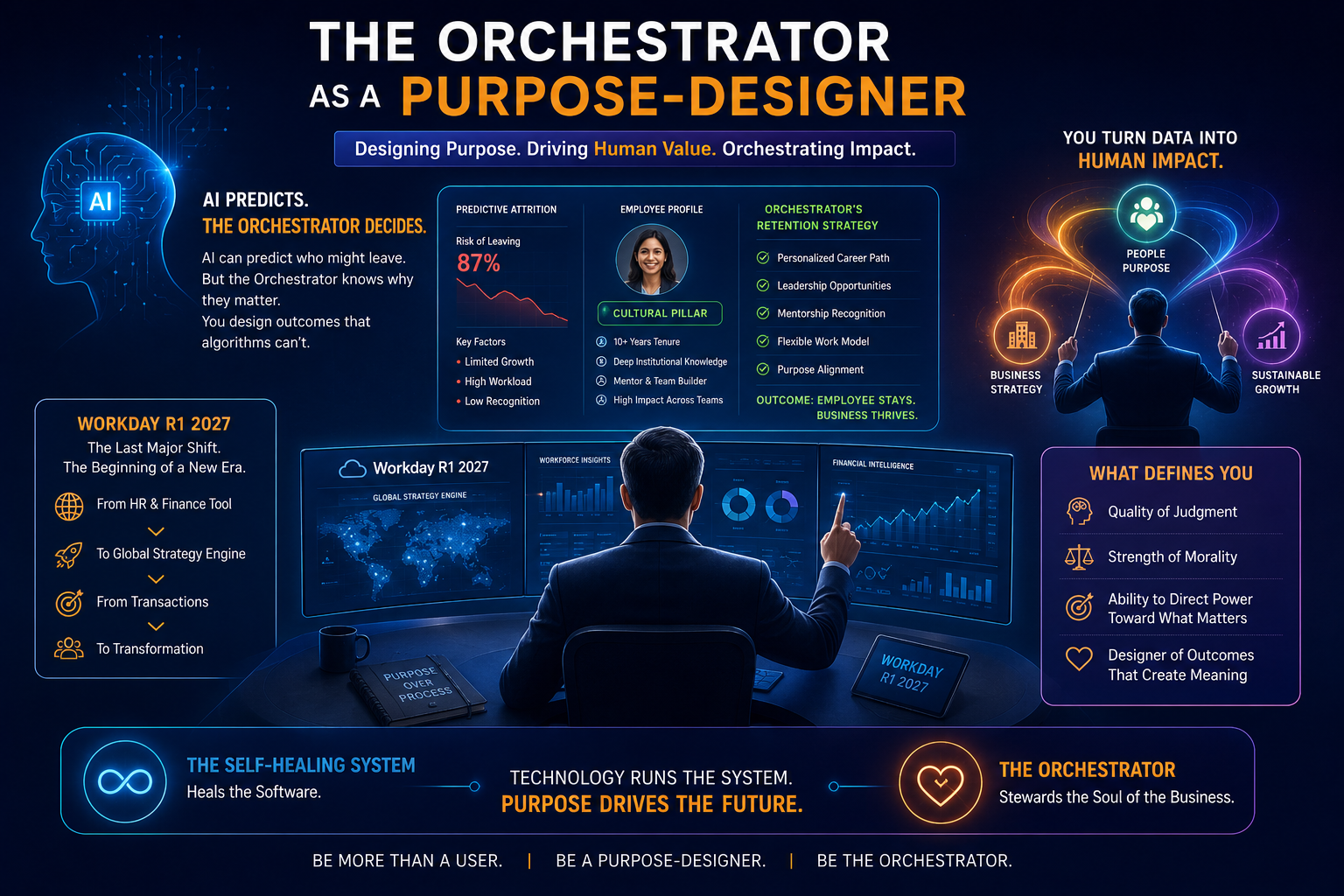
Workday R1 2027 is expected to be the last major shift of Workday as a traditional HR and Finance tool to a Global Strategy Engine. With the technical barriers that are already declining, your career will be judged not by how many clicks you get, but by the quality of your judgment, your morality, and how you can direct colossal computational power at important objectives. As the Self-Healing System is concerned with the software, the Orchestrator is in charge of the soul of the business.
Workday Course Future-proofing.
Being AI-Proof in 2027 is to be the one who explains the Why when the How is already figured out through machines. Nevertheless, one cannot lead a system that they are not familiar with. To move to this strategic level, one needs a special course in Workday, which is on Executive Orchestration and Decision Support Systems.
Taking a high level Workday Classes Online, you will be able to learn:
Synthesize AI Insights: Go beyond dashboards to strategic storytelling.
Master Strategy Integration: Understand how to integrate the Workday Digital Brain with long-term company roadmaps.
Become a Leader in Human-Centric Design: Apply your course experience in Workday to make sure that automation is made to improve the employee experience, not to reduce its value.
The baton is no longer that wrench with which to adjust a machine--it is a rod of a conductor with which to steer a business into a future that is highly efficient and also most human.
The New Hierarchy
It is now mid 2026 and the dust has settled on the massive restructuring of corporations that are the result of the AI revolution. The classical organizational hierarchical structure has been broken and a lean hierarchy with high impact is developed. The "Workday Configurator," that faithful of architects of fields and flows, has formally moved into the books of history in this new world. Where they are, there is an additional gold standard of professional: The Workday Orchestrator.
The 2026 workplace has three different layers, which you need to know to comprehend where you will fit in this future:
The AI (The Doer): This is the driver of efficiency. The AI does not support, but performs. It also does the massive volume of reporting, the self-correcting security patches, and the self-directed business processes as well as speed and accuracy unimaginable to a human being.
2.The Employee (The Specialist): These are the imaginative and strategic specialists. They use AI to supplement their respective crafts, in marketing, engineering, or people operations. Their bodies are the boots on the ground as they are the ones who utilize the tools the system gives them to create high-value output.
3.The Workday Orchestrator (The Strategist): The Orchestrator is placed at the top of this ecosystem. This is a position characterized by guidance and morals. It is you who will make sure that the efficiency of the AI is geared towards the moral compass and long-term vision of the company.
The moral of the modern-day Workday worker is simple: The only person who can be AI-proof is the one who can make the AI move to the correct direction.
Manual configuration is a thing of the past, whereas strategic orchestration is only in the offing. Adopting such change not only will you not be swept away by the AI wave but you will be the creator of the wave.
Conlusion
Days of manual configuration are long gone, and in its place is the Workday Orchestrator, which is a strategic application. In order to become irreplaceable in 2026, you will need to shift to high-level AI governance and ethical oversight, not just technical button-clicking. These are skills that can be mastered to be able to stay longer in the career. Register now, Workday Classes, OnlineITGuru to acquire the highly sought-after training to guide Agentic AI and drive your organization into the next generation of enterprise technology.