
Mastering the Cloud: The Ultimate Guide to Microsoft Azure Developer Certification (AZ-204) Training
Last updated on Jun 30, 2026

Quick adaptation to cloud-native development has ensured that the cloud developers become the center of software development for any enterprise organization. Microsoft Azure is a well-known cloud platform used by Fortune 500 companies across the globe. Below is the detailed analysis of Microsoft Azure Developer Certification Training (AZ-204). Basic concepts of architecture along with the normal course outline which covers computation, storage, security architecture, optimization, and integration with external applications would be discussed here.
Introduction: The Cloud Revolution and the Emergence of Microsoft Azure
There has been a change in the world of enterprise organizations wherein there is a shift from traditional centralized software solutions to cloud computing environments. Nowadays, an enterprise requires the agility to deal with the ever-changing dynamics of the markets and deliver the best possible experience to the users. Cloud computing plays an integral part in this scenario. Microsoft Azure is one such cloud platform amongst others.
Azure offers a wide range of cloud services, which include IaaS, PaaS, and SaaS solutions. But creating such vast cloud environments goes beyond mere system management. It calls for a new breed of engineers known as Cloud Application Developers.
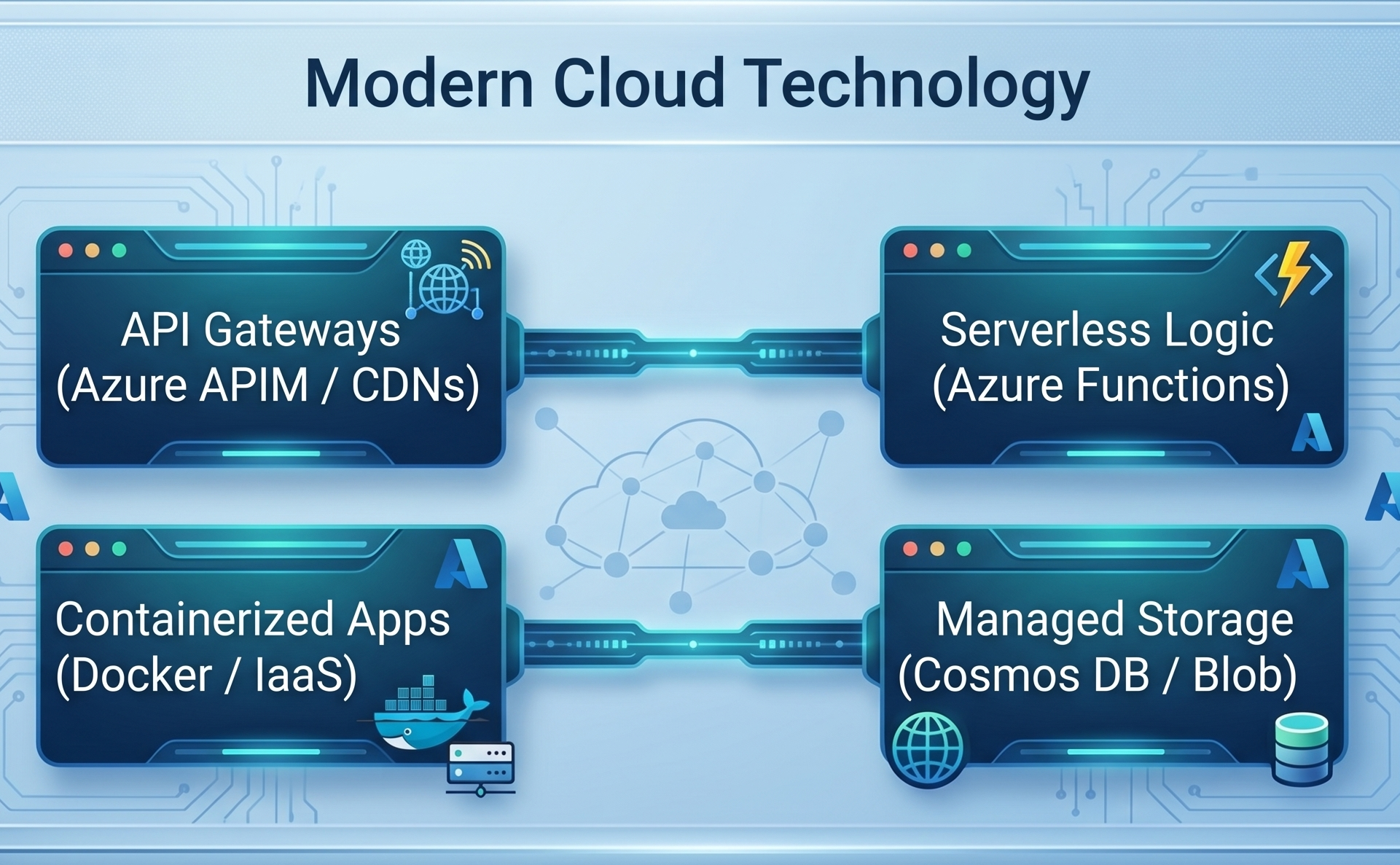
A Cloud Developer is supposed to bridge the gap between normal software programming and its actual execution in the cloud environment. To fill the precise gap, Microsoft came up with AZ-204: Developing Solutions for Microsoft Azure training program. The blueprint serves as an internationally recognized certification that proves one's proficiency in designing, developing, testing, and managing cloud applications. Enrolling in a well-planned azure devops course online program ensures that the engineers have the right structure and environment to gain expertise in these complex cloud systems and clear the exam.
Learning through such structured learning sessions, as in Microsoft Azure Developer training from Online IT Guru, allows the engineers to get enough structure needed to understand such complicated concepts. The current article will be dedicated to structured tracks used in Microsoft Azure development process. It gives a clear picture of the architectural elements that engineers need to master in order to succeed in passing the AZ-204 examination.
Module 1: Development of Azure Compute Solutions (The Brain of the Cloud)
Compute components form the basic engine of any cloud-based infrastructure. In the case of Azure development, the process of building compute solutions will involve choosing the appropriate level of abstraction starting from control over the bare-metal using virtual machines up to fully managed container execution environments and micro-billing serverless computing engines.
1.1 Building Infrastructure as a Service (IaaS) Solutions
Infrastructure as a service stands for the lowest level of abstraction that makes use of virtualized hardware available to the developer.
Provisioning and Configuration of Virtual Machines (VMs): In the case of Azure, VM is not a stand-alone resource; it is a combination of managed disks, network interfaces (NICs), virtual networks (VNets), and public IP resources. Programmatic provisioning through Azure CLI or Azure PowerShell is a basis for environment automation. The configuration of VMs includes securing the process of remote access protocol establishment (e.g., using Azure Bastion to prevent opening up the RDP/SSH ports to the Internet).
ARM Template: The current state of engineering requires Infrastructure as Code (IaC). The ARM template is a declarative JSON document that precisely captures the deployment definition, dependencies, and parameters of the Azure environment. The knowledge about parameterization, variables, and output of ARM templates ensures that the development, staging, and production environments are fully identical without any issues during the environment-specific deployment.
Containerization Technologies (Docker and Azure Container Registry): The monolith is typically packed into a container in order to achieve portability. A developer should know how to build a Dockerfile to pack a code into the image, use multi-stage builds to reduce the payload, and build an image. Then, the image is supposed to be uploaded to Azure Container Registry (ACR) that is the private Docker registry.
Execution of Containers using Azure Container Instances (ACI): If applications need to scale rapidly without any orchestration, then Azure Container Instances (ACI) can be used to run serverless containers with high efficiency. With ACI, containers can be started within seconds using hypervisor-based isolation, which makes it perfect for batch processing jobs or CI agents.
1.2 Deployment of Azure App Service Web Apps
If the application design does not need much operating system control, then a PaaS engine like Azure App Service is more appropriate.
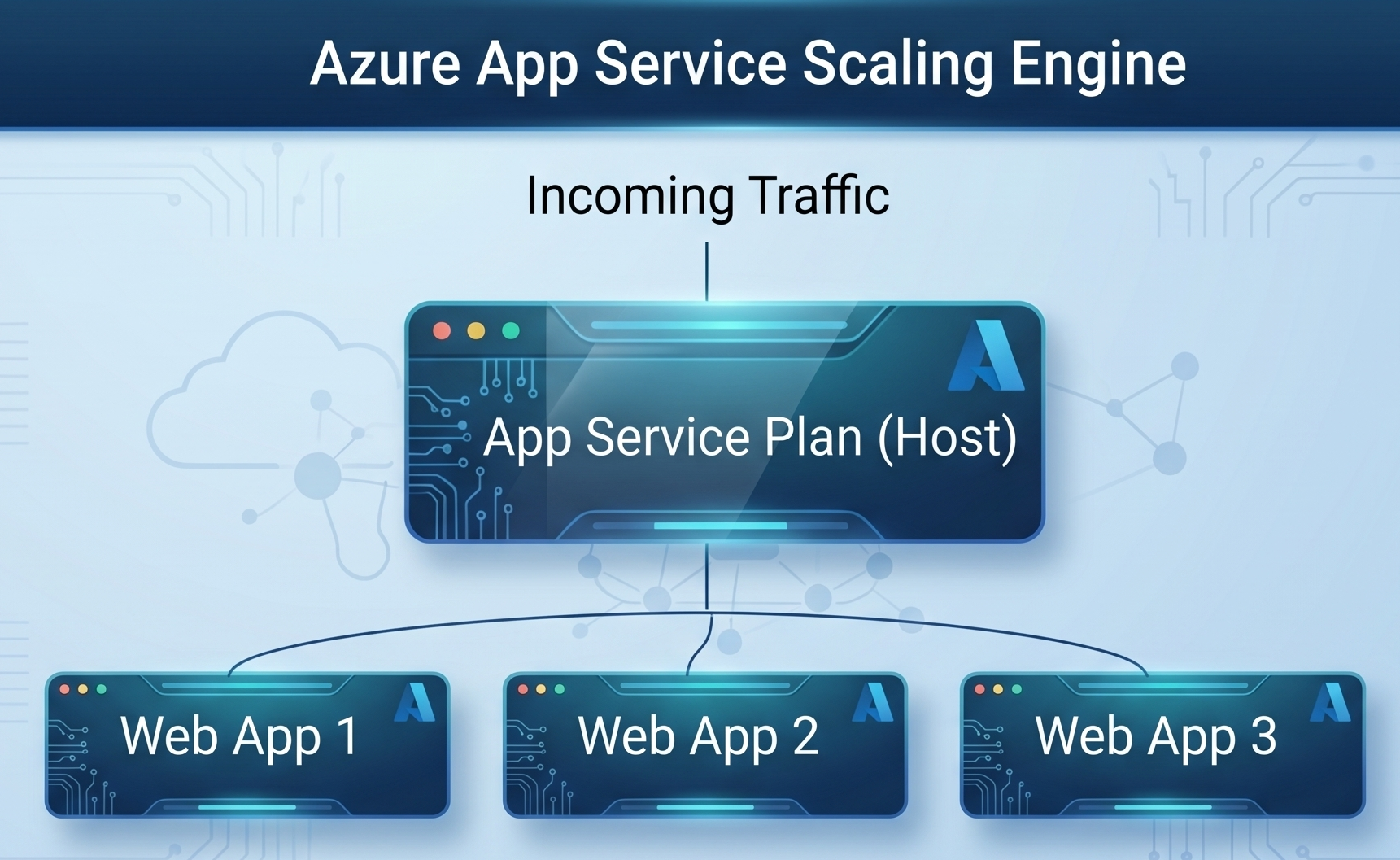
Creation of Application and Configuration of Websites: App services have runtimes which include .NET, Java, Node.js, Python, and PHP among others. Operational configuration includes app settings, connection strings, and custom domains together with SSL/TLS bindings.
Use of Deployment Slots: In order to implement zero downtime deployment, developers make use of deployment slots where code is deployed to the non-production "staging" slot and then tested for integration. If it passes the test, then the slot swap is done after which traffic is directed immediately to the newer version with the previous version being left behind in the staging slot.
Use of Diagnostics Logging: App Services have inbuilt logging structures for logging web server logs, application logs, and error messages.
Scaling-Out Policies: Applications have fluctuating traffic patterns. Scaling-out policies are defined based on thresholds (like scale out if the average CPU utilization is above 70 percent for 10 minutes) or time windows (such as scaling out before a marketing campaign that is scheduled).
1.3 Deploying Azure Functions and Serverless Architectures
The concept of serverless computing means that the host abstraction is fully removed from the developer’s view, and developers get to work with operational logic alone.
Triggers and Bindings: Functions in Azure are inherently triggered by events. Triggers are the way of invoking a function; for example, a web request made, a message received on the queue of a service bus, time intervals, or file created in the blob storage. Bindings take care of not writing boiler-plate code for setting up an SDK for initializing input streams and output destinations by providing declarative bindings to the functions.
Durable Functions: Azure Functions by default are stateless and ephemeral. For developing workflows in serverless applications that are durable, the use of Durable Functions is required. Using this feature, developers can define workflows programmatically through various ways such as Function Chaining, Fan-out/Fan-in, and so forth.
Module 2: Azure Storage Development (Data Architectures)
The strength of a cloud-based solution depends on the strength of the data persistence layer. It is important for developers to know how to manage, manipulate, and secure different data types.
2.1 Solution Development Using Azure Cosmos DB
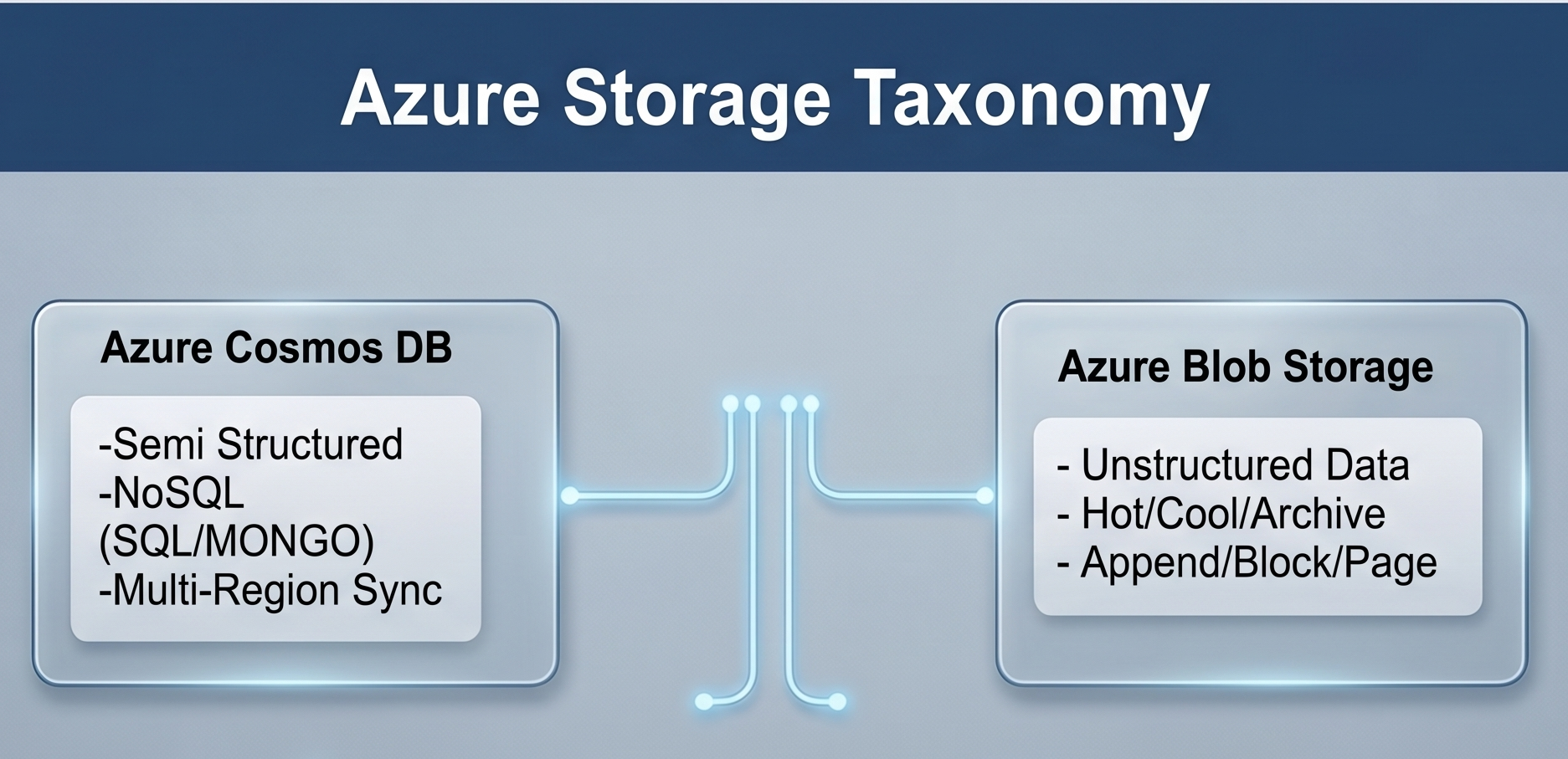
Azure Cosmos DB is the globally distributed, multi-model NoSQL database service by Microsoft, designed to provide sub-millisecond latencies no matter what the scale of your operation.
Choosing the API and Interacting with the SDK: The Cosmos DB offers several access methods including the Core (SQL) API, MongoDB API, Cassandra API, and Gremlin Graph API. In order to effectively use the connections made through Cosmos Client instance creation, developers should be familiar with the thread-safe singleton pattern implementation of the client instance creation.
Partition Keys: Scaling Cosmos DB efficiently depends on choosing the right Partition Key. The wrong choice will result in "hot partitions," i.e., one physical partition having all the requests and exhausting Request Units (RUs).
Consistency Levels: While conventional databases provide either strict or loose consistency models, Cosmos DB comes with five specific consistency models, which include Strong, Bounded Staleness, Session (default level, where read-your-write guarantee is provided), Consistent Prefix, and Eventual. The choice of consistency levels depends on the trade-off between data consistency and execution performance for the respective application.
Server-side Code Execution and Change Feed: Cosmos DB supports the use of JavaScript code in the form of Stored Procedures, Triggers, and UDFs to perform operations directly within the database engine. In addition, the Change Feed option produces a sorted feed of data changes in the respective containers.
2.2 Creating Solutions Using Azure Blob Storage
When it comes to unstructured data such as audio, video files, documents, and enormous log files, then Azure Blob Storage will act as the repository.
Blob Types & Metadata: Unstructured data falls into three types namely Block blobs (for generic files), Page blobs (optimized for reading/writing randomly with support of VM virtual disks) and Append blobs (optimized for continuous logging data). The metadata will contain a key/value pair for querying the file with tags while keeping the internal contents of the file unchanged.
Lifecycle Management & Lifecycle Tiers: It is expensive to store the data indefinitely using high-performance media. Azure classifies the storage into different tiers:
Hot Tier: Designed to suit data that is often accessed.
Cool Tier: Made to fit the infrequently used data stored more than 30 days.
Archive Tier: Made to fit the infrequently used data stored more than 180 days.
The developers create lifecycle management policies that automatically migrate blobs from Hot to Cool after 30 days, from Cool to Archive tier after 90 days and then delete the data after 730 days.
Data Transfer and SDK Operations: The transfer of data programmaticaly should use Azure Storage Blobs SDK to perform uploading of streams, parallel uploading of blocks, downloading of target files, and batching.
Module 3: Implementation of Azure Security (Identity, Access, and Protection)
With enterprise topologies broadening out into a multi-cloud and hybrid environment, it becomes essential for security perimeters to move from physical network boundaries to cryptographically based identity systems. Cloud developers implement the code for access control.
3.1 Implementation of User Authentication and Authorization
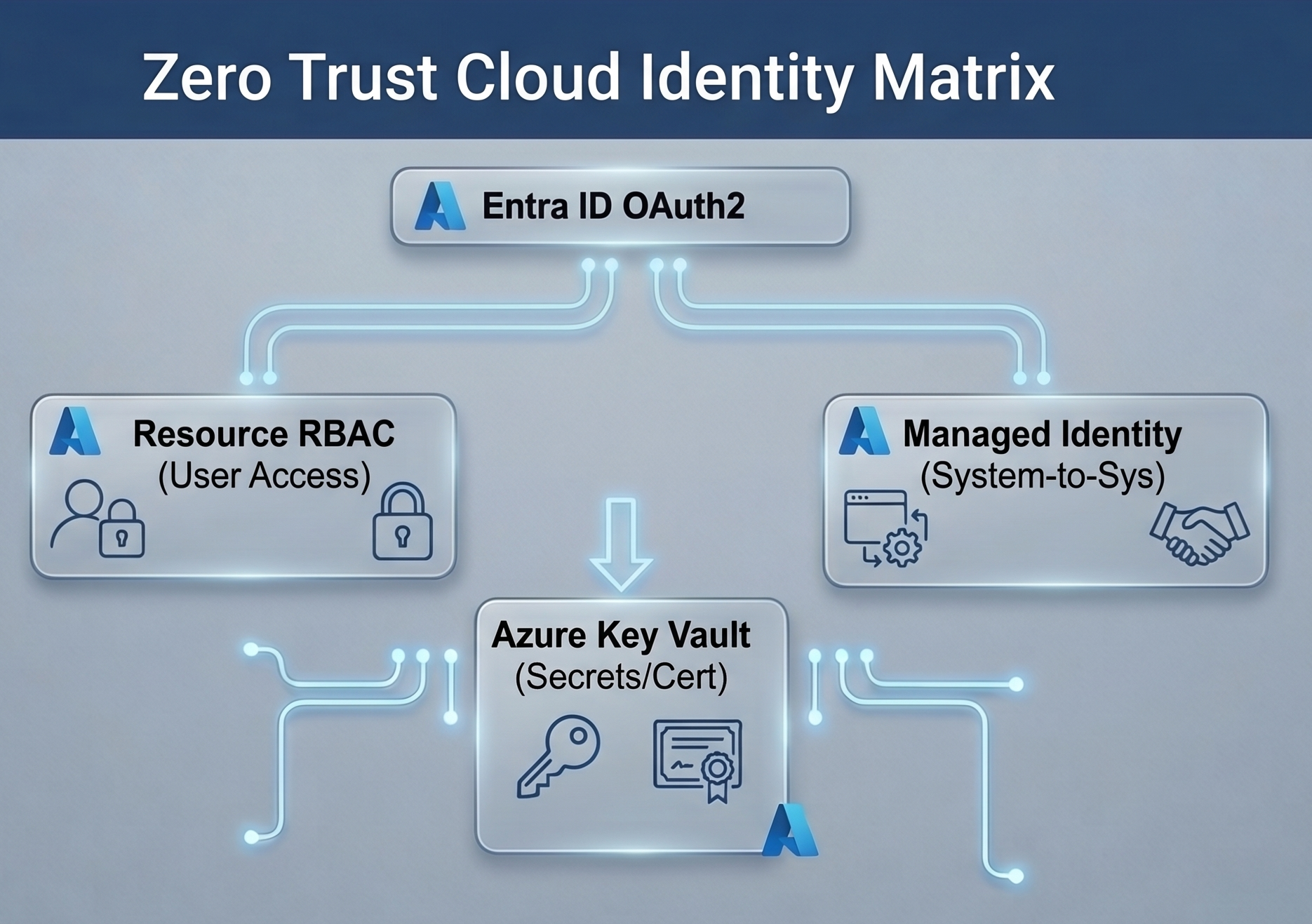
Microsoft Entra ID (formerly known as Azure Active Directory): The Microsoft Entra ID acts as the backbone for all identity-related services in the Azure cloud infrastructure. The software developers should be aware of application registration within an Entra ID tenant, creation of Application IDs, setting up Redirect URIs, and assigning API permissions like Graph API scopes.
Flow of the OAuth2 Protocol: The software developers need to become experts in implementing OAuth2 protocols such as authorization code flow and client credentials flow to secure endpoints of an application and safely handle JWT tokens.
Role-Based Access Control (RBAC): Security should adhere to the principle of least privilege. The developers make use of RBAC definition and assign detailed permission to the users, group and identities of the services at specific scopes like Management Group, Subscription, Resource Group or Resource level.
Shared Access Signature (SAS): Developers programmatically create Shared Access Signatures for delegating temporary and granular access to a specified resource in the absence of account root keys. SAS tokens provide restricted access to a particular resource within a time window and permissions such as read only access to one file in 15 minutes.
3.2 Development of Secure Cloud Solutions
Azure Key Vault API: Using the hard coding of database connection strings, API keys, or certificates in the source repositories is one of the major security threats. Developers leverage the Azure Key Vault API for the purpose of secret management. The applications retrieve the secrets dynamically during runtime in order to ensure that production credentials are completely hidden from the developers.
Azure App Configuration: Whereas Key Vault is used for managing extremely sensitive configuration, the configuration which is less sensitive can be managed through Azure App Configuration.
Managed Identities: Managed Identities remove any requirement that developers have to maintain credentials for communication between resources at all. Allowing the application to have either System-assigned or User-assigned Managed Identity configured on an Azure resource (such as a virtual machine or App Service), Azure will take care of the automatic rotation of credentials for the application, allowing it to authenticate with Azure Key Vault, SQL databases, or Storage queues.
Module 4: Monitoring, Troubleshooting, and Optimizing Azure Solutions (Resilience)
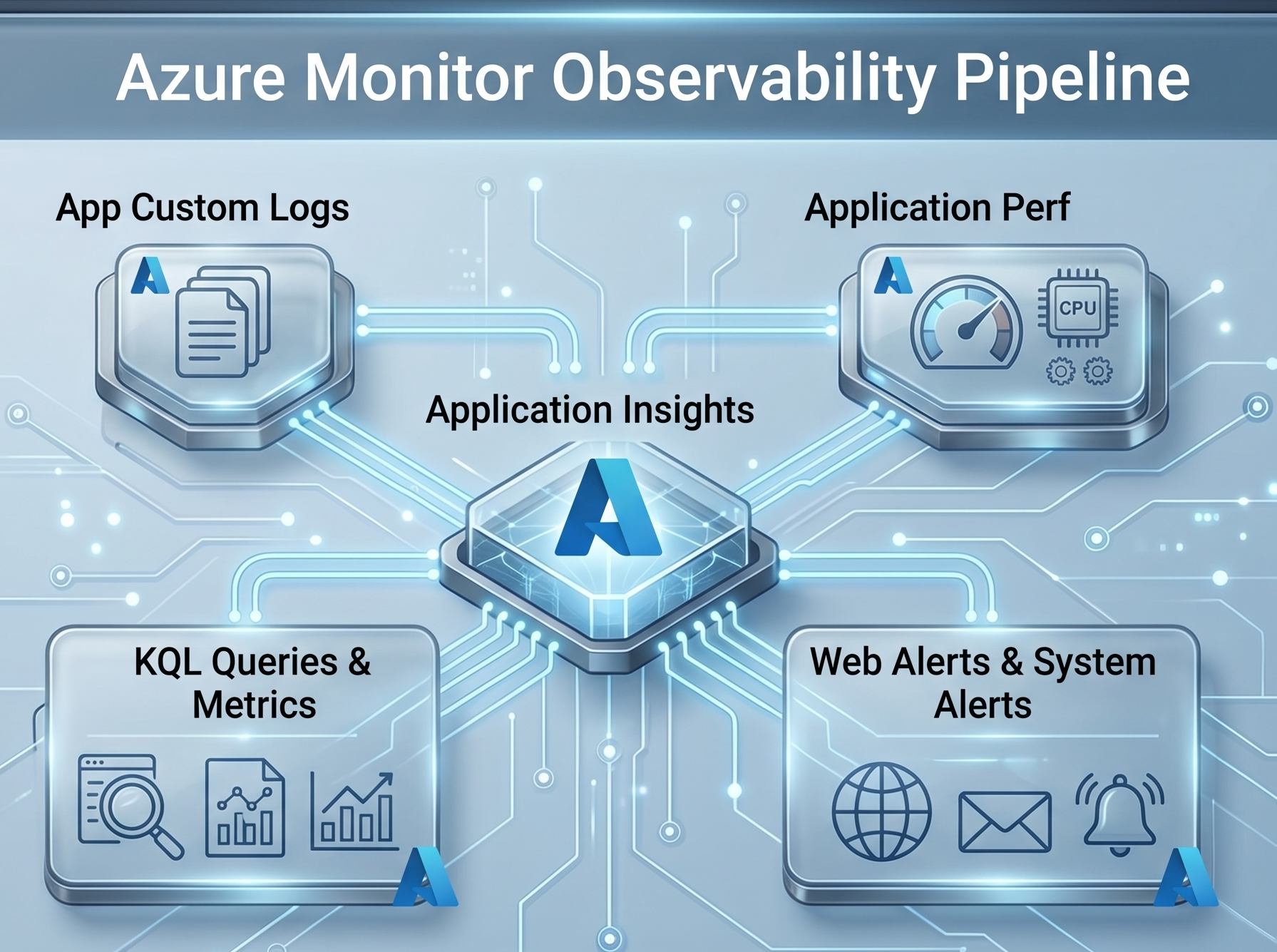
An application that is ready for production requires observability. When distributed systems face transient network errors, spikes in traffic, or performance issues in the database, there must be tools available to help diagnose the problem.
4.1 Caching and Content Delivery Networks (CDNs)
For optimizing the application performance, the focus is on lowering the server load and minimizing geographic data transfer delays.
Azure Cache for Redis: It is very fast memory based data storage that lowers back-end queries. The developer uses client SDKs of Redis to cache the data having low variances in memory, secure session state management of scaled instances, and set up the eviction policies like TTL.
Azure CDNs and Front Door: To deliver the web content across the world with low latency, developers must have provisioned Content Delivery Network. Cache expiration policies management, cleaning up of CDNs endpoint in deployments and deployment via Azure Front Door along with WAF is an important part of cloud scale deployment.
4.2 Instrumentation, Logging, and Monitoring
Application Insights: It is an expendable application performance management (APM) function that traces live applications. In order to monitor the incoming rate of requests, response time, latency, dependency call time, and unhandled exceptions, developers need to embed the Application Insights SDK in their applications.
Kusto Query Language (KQL) and Azure Monitor: All logs generated in a cloud infrastructure environment aggregate in the Log Analytics Workspaces. In order to make sense out of all those millions of logs, developers need to know how to write Kusto Query Language (KQL).
Transient Fault Management: There are transient faults in cloud computing because of connection disruptions. Software developers develop fault-tolerant code by applying an exponential back-off strategy for retries, as well as a circuit breaker pattern.
Module 5: Connecting and Consuming Azure and Third-Party Services (Integration)
Current cloud computing systems operate as ecosystems. The systems need to have effective ways for applications to interact with each other through event messaging, enterprise service buses, and standardization of API abstraction layers.
5.1 Implementation of API Management (APIM)
The Azure API Management system works as a gateway that securely connects to back-end data endpoints for exposure to the outside clients.
Instance Provisioning and Custom Policies: Programmers use APIM instances for wrapping multiple tiers of application services. Advanced features are deployed by the help of Policies, which are XML rules used during an API call one after another. This includes conversion of payloads from JSON to XML, removal of internal header, or limiting requests through rate limiters.
Authentication and Transformation: APIM acts as an intermediary between requests to authenticate JWTs or check for subscription keys before sending payloads to backend compute resources.
5.2 Event-Based or Message-Based Integration between Systems
Selection of the right communication method is very important for loosely coupling systems and ensuring that the system architecture is highly scalable.
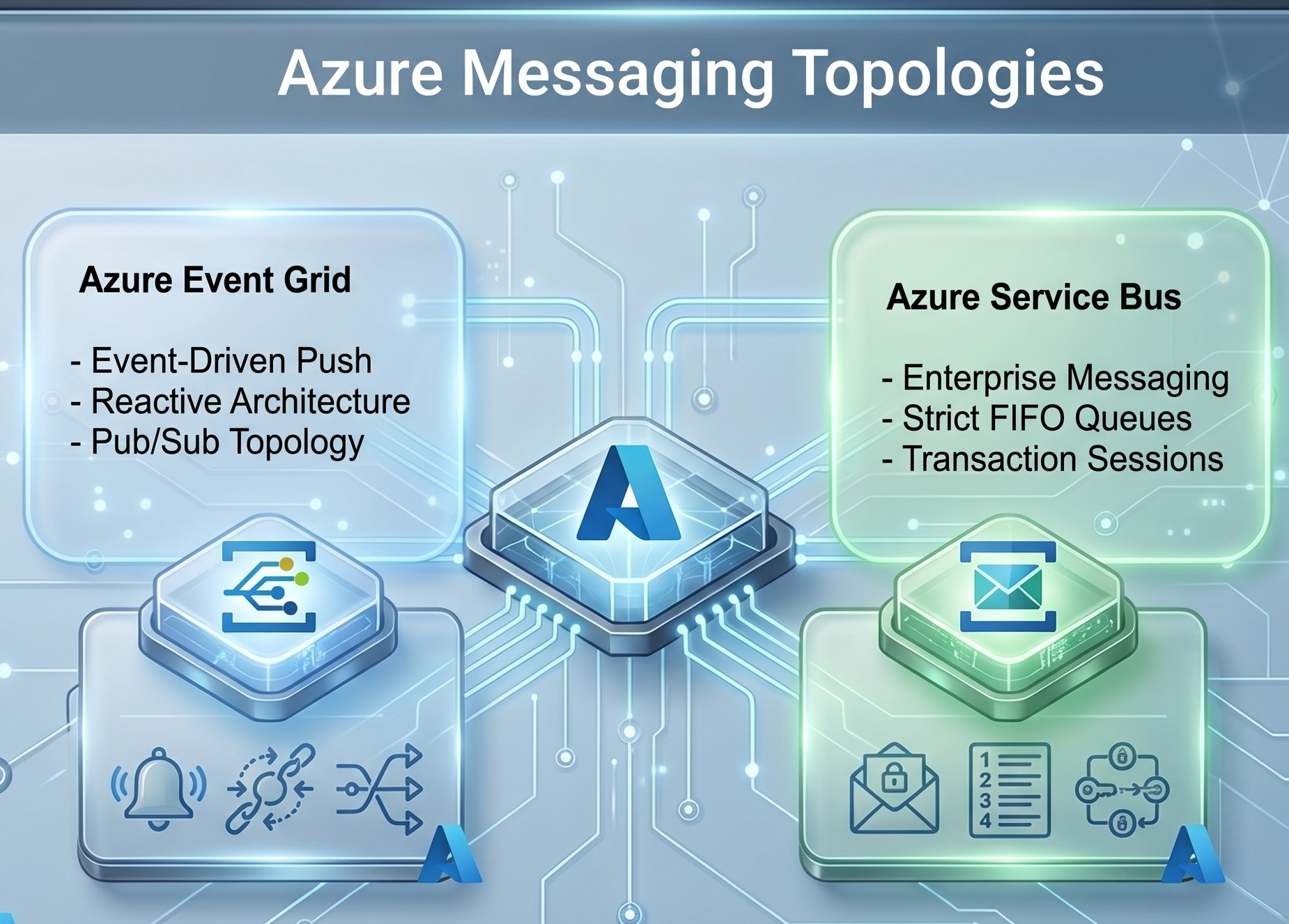
Azure Event Grid: Event Grid deals with event-driven notification systems. In this regard, as soon as the user uploads the profile picture, the event will get published instantly in a customized topic and invokes a serverless function that creates the thumbnail of the image.
Azure Event Hubs: Designed for handling big data streams, Event Hubs process millions of data events every second. Therefore, it becomes suitable for handling IoT sensor telemetry data and real-time application security logging.
Azure Service Bus: The Azure Service Bus provides transaction support for handling high-value business processes. Some of the notable capabilities provided by the Service Bus include strict FIFO queue delivery, duplicate message detection, dead-letter sub-queues for invalid payloads, and session-state management.
Azure Logic Apps: In cases where codeless system integration is needed, Azure Logic Apps are used by the developers. This workflow tool visually connects multi-step integrations through several hundred out-of-the-box connectors (for example, observing an Azure Service Bus queue and creating an entry in the CRM system provided by another company such as Salesforce or Dynamics 365 right away on receipt of a message).
Structured Professional Training
Transitioning to a cloud developer’s job not only requires practical experience but also a good understanding of the concept behind it. It becomes extremely difficult for individuals to master all the technical knowledge that is required to successfully clear the AZ-204 examination through self-study. This is when the specific azure devops course online helps bridge the gap as it converts theoretical knowledge about the cloud into practical programming skills.
Importance of Live Classes and Structured Practice Classes
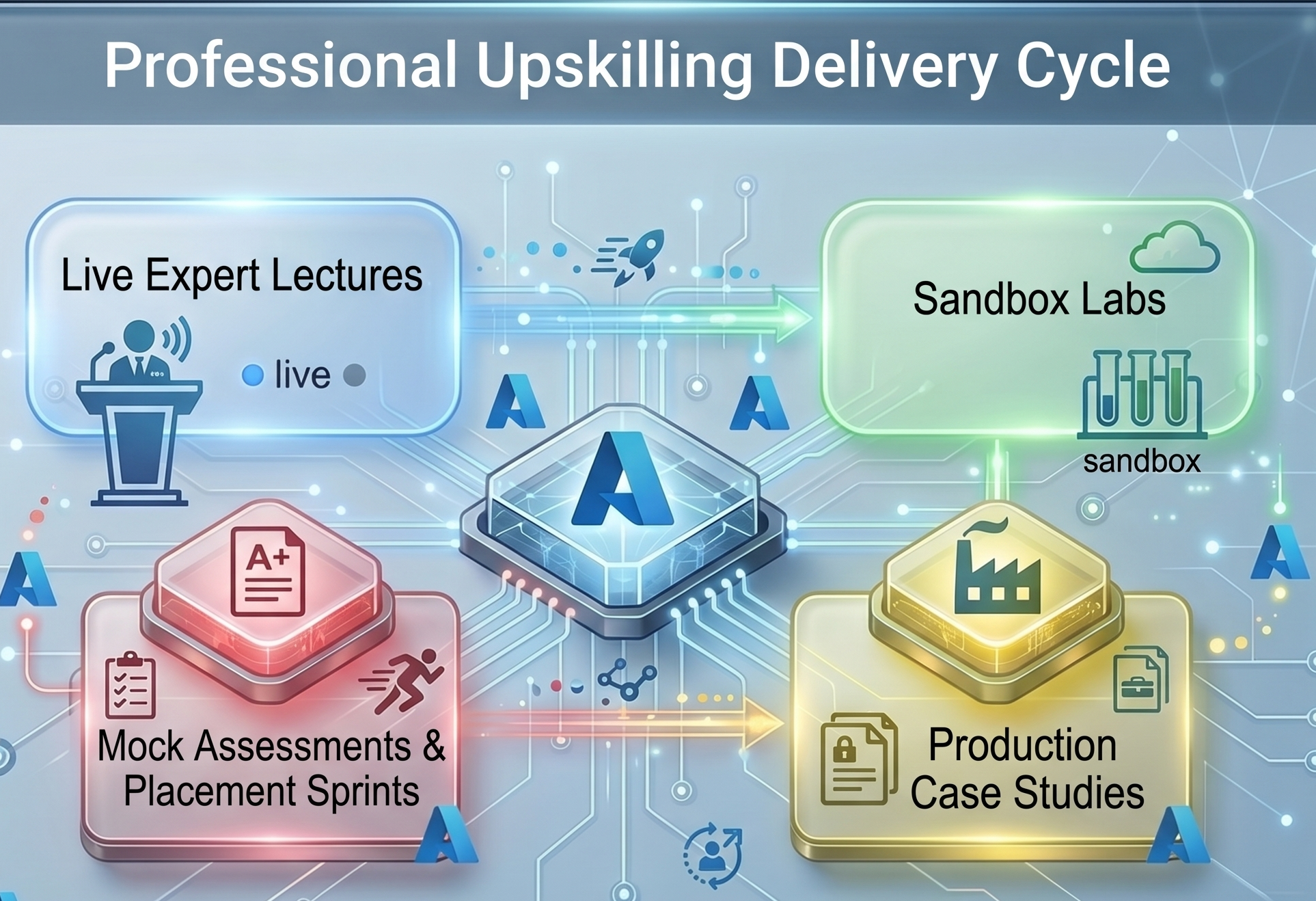
Mentorship by Experts: Gaining experience with actual enterprise consultants gives learners the context and troubleshooting methods that theoretical documentation is unable to provide.
Interactive Sandbox Learning: Practical application of theoretical knowledge is necessary. This can be done via class work where one codes, develops a registry, handles cross-region failovers, and fine tunes caching infrastructure.
LMS for Continued Access to Learning Content: Technology keeps on changing. Having access to the updated Learning Management System (LMS), where lectures are available in addition to deployment guides, enables the engineers to update their knowledge according to new cloud services.
Career Benefits and Positioning of Azure Developer Certified Professionals
Obtaining Azure Developer Associate Certification gives several career benefits in an increasingly competitive hiring environment.
Technical Validity and Architecture Freedom
A certification serves as proof that an engineer is capable of assessing cloud architecture in a critical way. Certified developers are able to think about cost and performance of their solutions and therefore:
Optimize compute to minimize the overhead costs.
Choose the right type of database and proper partitioning.
Build cloud security architecture based on the zero trust principles.
Enterprise Hiring Power
Firms using Microsoft Azure in their operations always have problems finding enough skilled employees. As a result, certified engineers earn better paychecks and get promoted faster to become Cloud Solution Architects or Principal DevOps Engineers. There are lots of courses in the market which give you supplementary resume preparation, job interview training, and placement services to assist learners and bridge the gap between from learning to enterprise hiring.
Conclusion: Starting Your Cloud Journey
The cloud is not only a distant platform where one runs virtual machines but rather it is a networked eco-system with various managed services, serverless platforms, and distributed databases. To build software applications in such an environment one must approach the design, security, and management processes differently.
The Microsoft Azure Developer Certification (AZ-204) course offers a complete road-map of learning those native cloud principles. Whether you are a traditional software engineer that needs to refresh his knowledge or a system administrator that plans to transition into the realm of cloud development, embarking on your professional re-training with the detailed azure developer training program will definitely give you the needed hands-on experience and credentials to succeed as a software engineer.