
MuleSoft for E-Commerce: Orders, Payments & Inventory
Last updated on Nov 17, 2026
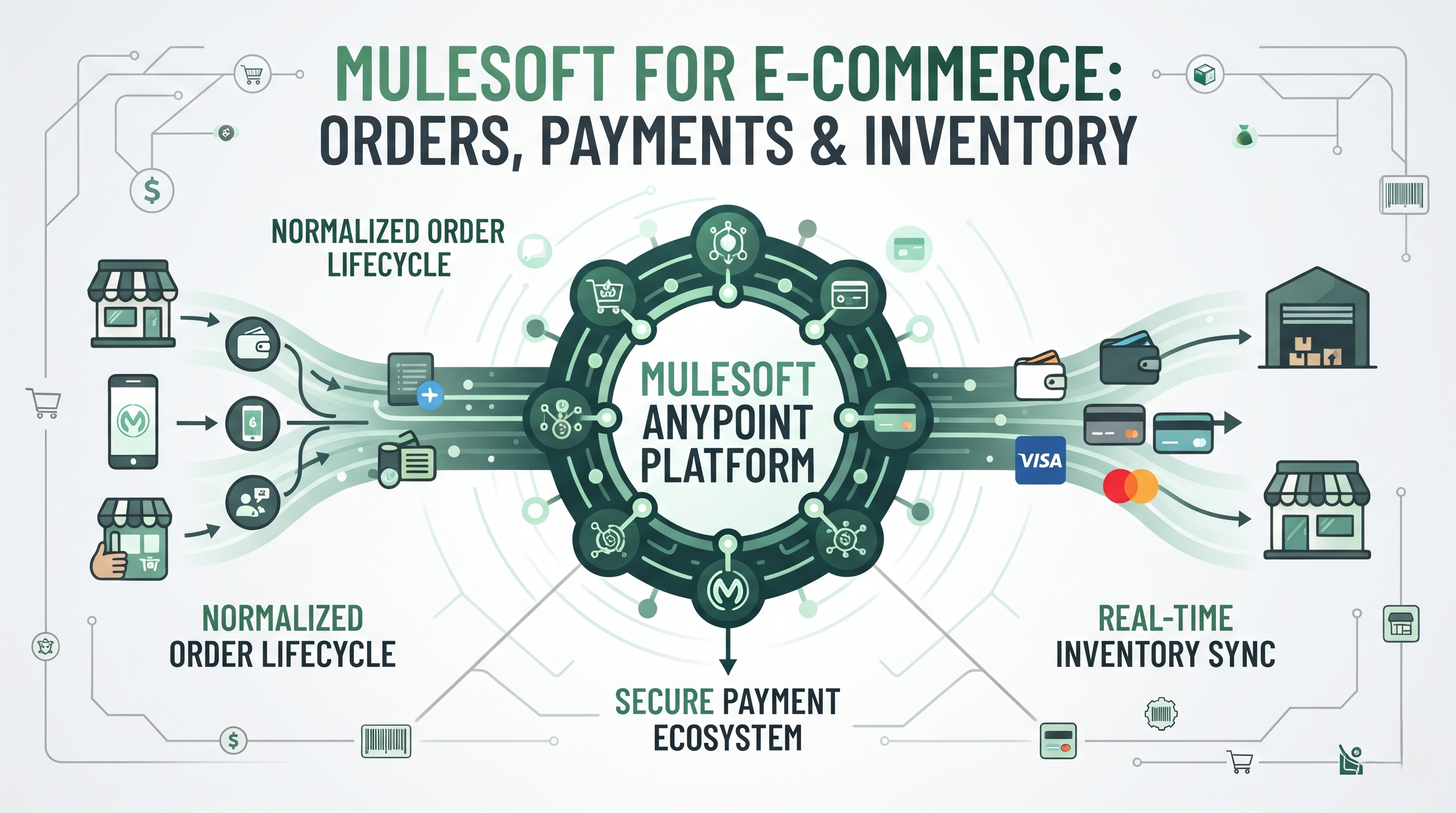
Introduction: The Integration Challenge of Today’s Digital Commerce
In today’s digital commerce space, a great customer checkout experience is half the battle. Every time you click on the “Place Order” button a complex and high stakes ballet of enterprise systems occurs. Today's e-commerce ecosystems are a fragile federation of platforms: cloud shopfronts, headless commerce engines, legacy enterprise resource planning (ERP) systems, third-party warehouse management software (WMS), specialised payment gateways and customer relationship management (CRM) databases. Take these systems out of the equation, and retail operations pretty quickly grind to a halt. Customers experience “ghost” stockouts when an item is purchased online and cancelled within a few days. Finance teams reconcile multiple gateway deposits with manual ledger entries. Customer service reps can’t get the full picture when tracking down order changes or processing rapid refunds.
To overcome this key architectural friction, leading retail and wholesale organisations have adopted enterprise integration platforms, most notably MuleSoft’s Anypoint Platform. MuleSoft’s API-led connectivity is a disciplined and scalable approach that breaks down brittle, point-to-point spaghetti integrations. It provides a single operational fabric that decouples the core back-end capabilities from the fast changing digital channels that consume them. In this deep dive, learn how MuleSoft connects, syncs and governs the three critical pillars of e-commerce architecture: orders, payments and inventory systems.
Retail Architecture Philosophy: API-Led Connectivity
In the traditional e-commerce world, integrations are typically point-to-point to the shopfront, inventory database, payment processor and accounting ledger. When a brand grows and adds mobile apps, B2B portals, headless frontends, and multiple marketplace channels, this architecture gets too heavy for it to carry. Each new channel needs custom integration scripts, creating a fragile web of dependencies where a single API update on the ERP side can crash checkout workflows across the whole digital ecosystem.
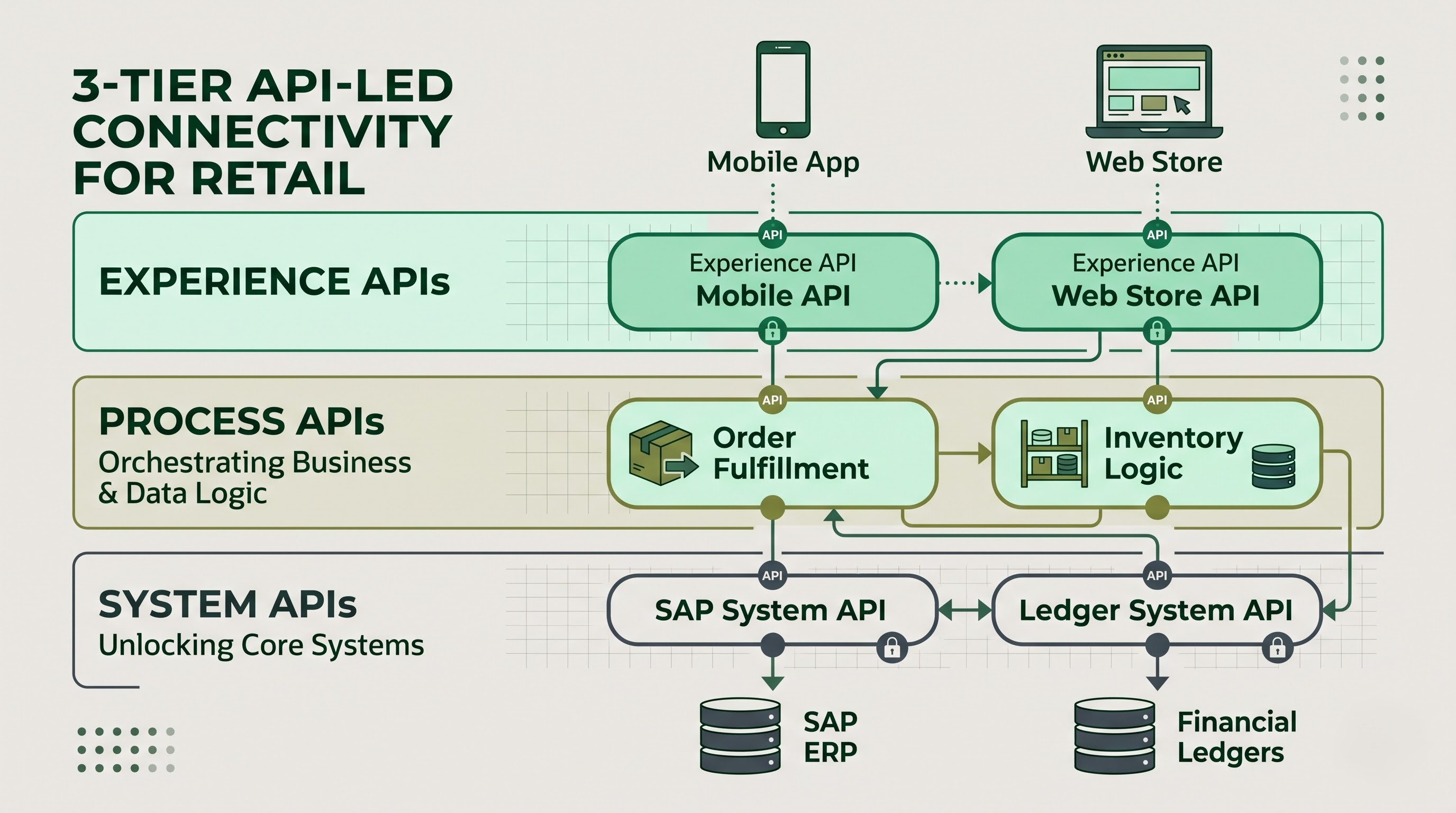
MuleSoft counters this structural weakness with a three-tier API-led integration model that categorises integration assets according to their specific business role:
System APIs: APIs provide access to data from core systems of record including SAP, NetSuite, legacy warehouse databases and proprietary ledgers. They sit on top of the complex data schemas and database queries underneath and give a standard, secure interface to the rest of the enterprise.
Process APIs: One level up from System APIs, Process APIs represent business logic and orchestrate workflows across systems. For example, Process API that handles the multi-step processing of an e-commerce order, validating inventory, reserving stock, authorising payment and triggering ERP order creation at the same time. They put the business logic in the integration layer rather than spread across a few front-end codebases.
Experience APIs: These APIs are built for the consuming channel, be it a responsive web store, a mobile shopping app, an in-store kiosk or an external B2B partner portal. APIs allow you to format, filter and aggregate the data in the way required by the client application so that downstream systems do not over-fetch or introduce any unnecessary payload complexity.
These reusable layers have integrations that give retailers a level of agility they’ve never had before. When a brand changes the design of its web store or switches to a new front end framework, the underlying ERP and inventory systems are completely untouched since only the Experience layer needs to be modified.
Managing the Lifecycle of e-Commerce Orders
An e-commerce order is not a static data record. It’s a dynamic, multi-stage transaction from cart checkout to warehouse picking, carrier handoff, last mile delivery and possible returns. MuleSoft provides seamless, rigorous orchestration to manage this lifecycle across modern multi-channel operations.
Order Capture & Normalisation
When a shopper clicks “Place Order” in an e-commerce shopfront, the shopping platform constructs a first order payload. But orders can come from many places – web shops, mobile apps, social commerce platforms, wholesale B2B portals – all of which format data in different ways. MuleSoft takes these various payloads and normalises them into a canonical data model. It’s a standard internal format, so whether an order is coming from a headless web shopfront or an external marketplace, it’s processed absolutely uniformly by downstream enterprise systems.
ERP Integration & Live Orchestration
This normalised data is then used in a MuleSoft Process API to orchestrate the sales order creation in the order management system (OMS) or enterprise resource planning (ERP). Instead of synchronous calls that would timeout when the ERP is under heavy load or maintenance MuleSoft relies on asynchronous messaging patterns and reliable queuing queues. MuleSoft logs the transaction event, safely stores it and automatically retries delivery when the ERP is back online so no orders are lost during traffic spikes like flash sales or holiday shopping events.
Splitting shipments Cancelling and returning orders
In real life retail operations, the fulfilment scenarios are often complex, e.g. multi-package shipments from multiple warehouses, partial order cancellations due to inventory discrepancies, etc. MuleSoft synchronises internal order references and handles line item status separately. “And if a customer cancels one item out of three in an order, MuleSoft will take that event and make adjustments to the warehouse management system, to the billing engine, to the customer notification service so that you don’t have operational confusion and so that your accounting for inventory is accurate.”
Payment Ecosystem Security & Reconciliation
Payment processing is one of the most sensitive and critical pieces of the e-commerce architecture. Retailers are bombarded with payment gateways, digital wallets, credit card processors and regional acquirers, all while needing to remain compliant with strict security standards like PCI-DSS. Financial transactions are also complex asynchronous events: initial authorisation, settlement, capture, chargebacks, partial refunds, fees.
Payment Gateway Abstraction
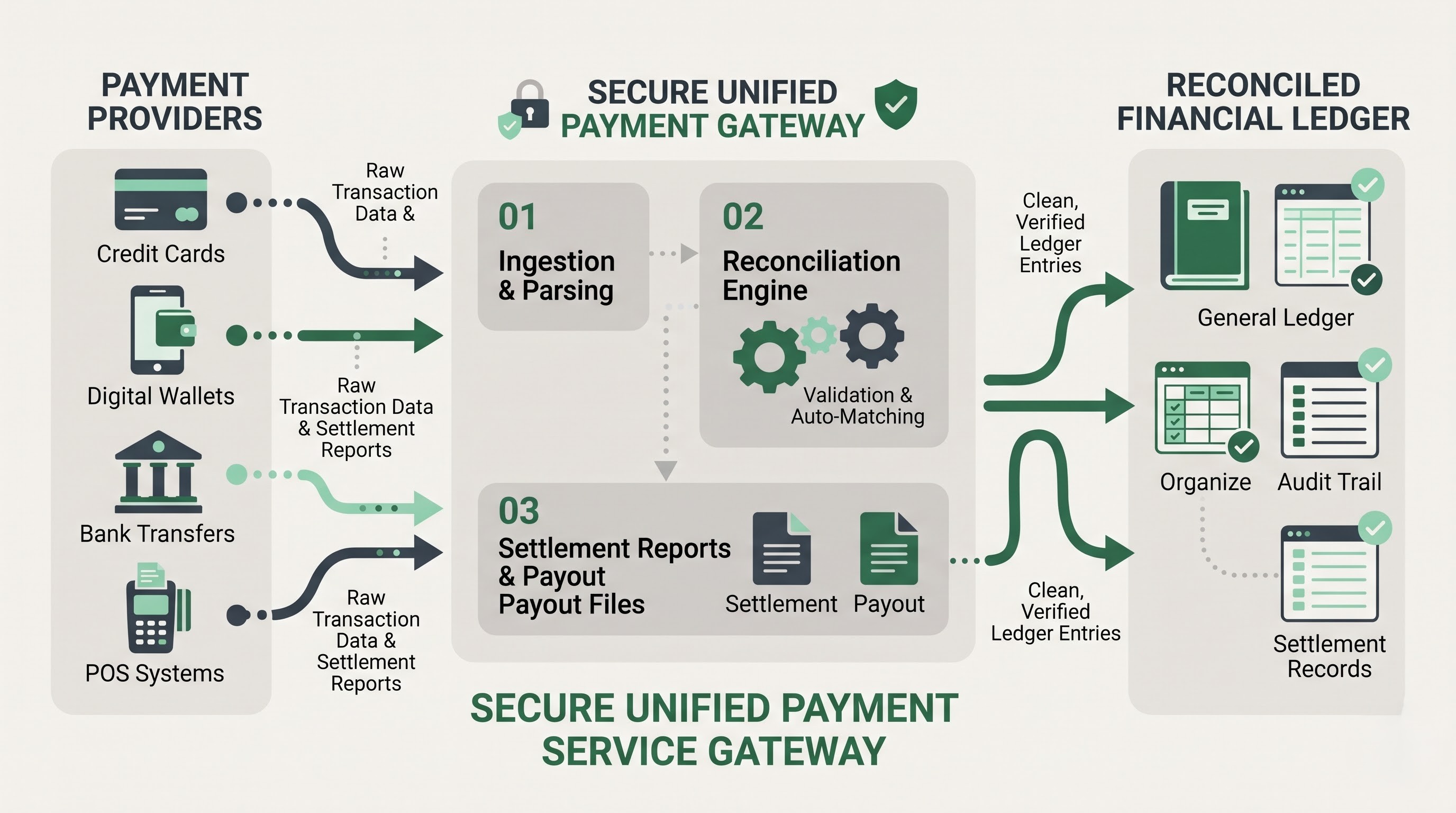
In a global enterprise environment, it is not common to have just one payment gateway in use. The provider a brand chooses often depends on things like where they are located, what currency they use, or who their customers are (like consumer credit cards versus B2B invoice terms). MuleSoft provides an abstraction layer over these different payment gateways. Then an e-commerce shopfront can ask for authorisations and captures by exposing a unified internal payment service API, without having to implement custom SDKs or deal with the protocol intricacies of each regional acquirer.
Order and Payment States linkage
A common problem with e-commerce solutions that are not perfectly integrated is that the payment confirmation does not correlate with the order completion. If a payment gateway webhook is late or broken temporarily, warehouses can ship goods for unverified transactions. MuleSoft has strict validation gates in the orchestration flows. MuleSoft either calls the payment gateway directly to check the status of the transaction or processes trusted server-side webhook events to ensure the funds are successfully authorised before sending an order fulfilment instruction to the warehouse management system.
Settlement & Money Reconciliation
End of day financial reconciliation is a notorious pain for finance teams who have to match lump sum payouts deposited into bank accounts against individual customer orders ensuring that gateway fees, currency conversion spreads and partial refunds are accounted for. MuleSoft automates this reconciliation lifecycle, ingesting settlement reports and payout files from payment providers, matching transaction IDs to original order records and posting clean financial entries directly into enterprise accounting systems. This automation reduces manual bookkeeping errors significantly and accelerates month end close cycles.
Real-time inventory sync & Omnichannel fulfilment
Inventory is the life blood of the business of retail. Today’s consumers expect to know exactly what is available where – whether shopping online for home delivery, shopping online to pick up in-store (BOPIS) or returning an online purchase to a brick and mortar retail location. To reach this level of omnichannel agility, you need to synchronise inventory in real time across all nodes in the supply chain.
Ownership and Disposition of Inventory
The biggest issue multi-channel inventory management faces is the need for a single source of truth for stock levels. Some businesses keep track of stock balances in the ERP system, whereas others have a dedicated warehouse management system or a dedicated inventory microservice. MuleSoft adheres to the defined system of record and provides visibility on the movement of stocks in almost real time to other systems.
Once the order is placed, MuleSoft sends a request for stock reservation against the system of record, inventory, before making the payment. This way overselling can be prevented, which is a very unfortunate situation when the buyer and the seller get the same stock at the same time through different digital touch points.
How to avoid overselling during peak time
Database locks and latency in batch updates of database might create inaccurate inventory count in relation to the sales speed during peak purchasing seasons, such as holiday season. MuleSoft has managed to overcome this issue using high performance cache and event driven architecture. Using strong pub/sub messaging patterns, inventory decrement events broadcast from fulfilment centers instantly update stock thresholds across all connected shopfronts and marketplace integrations in milliseconds protecting the brand from customer dissatisfaction and fulfilment penalties.
Sophisticated Fulfilment Models
Omnichannel retail requires flexible fulfilment options such as ship-from-store, dark warehouses and dropship partnerships. MuleSoft’s Process APIs evaluate complex business rules at order intake, parsing customer shipping addresses, real-time inventory across multiple physical sites, and shipping carrier rates to intelligently route orders to the most cost-effective, efficient fulfilment node.
Governance, Security & Operations Monitoring
Failure to connect mission-critical financial, inventory and order systems with the utmost rigour is a serious operational and security risk for an enterprise. A single unmonitored integration failure or an unprotected API endpoint can lead to data breaches, corrupted ledger entries, or catastrophic downtime during peak sales periods.
Security & Compliance for Enterprise-Grade
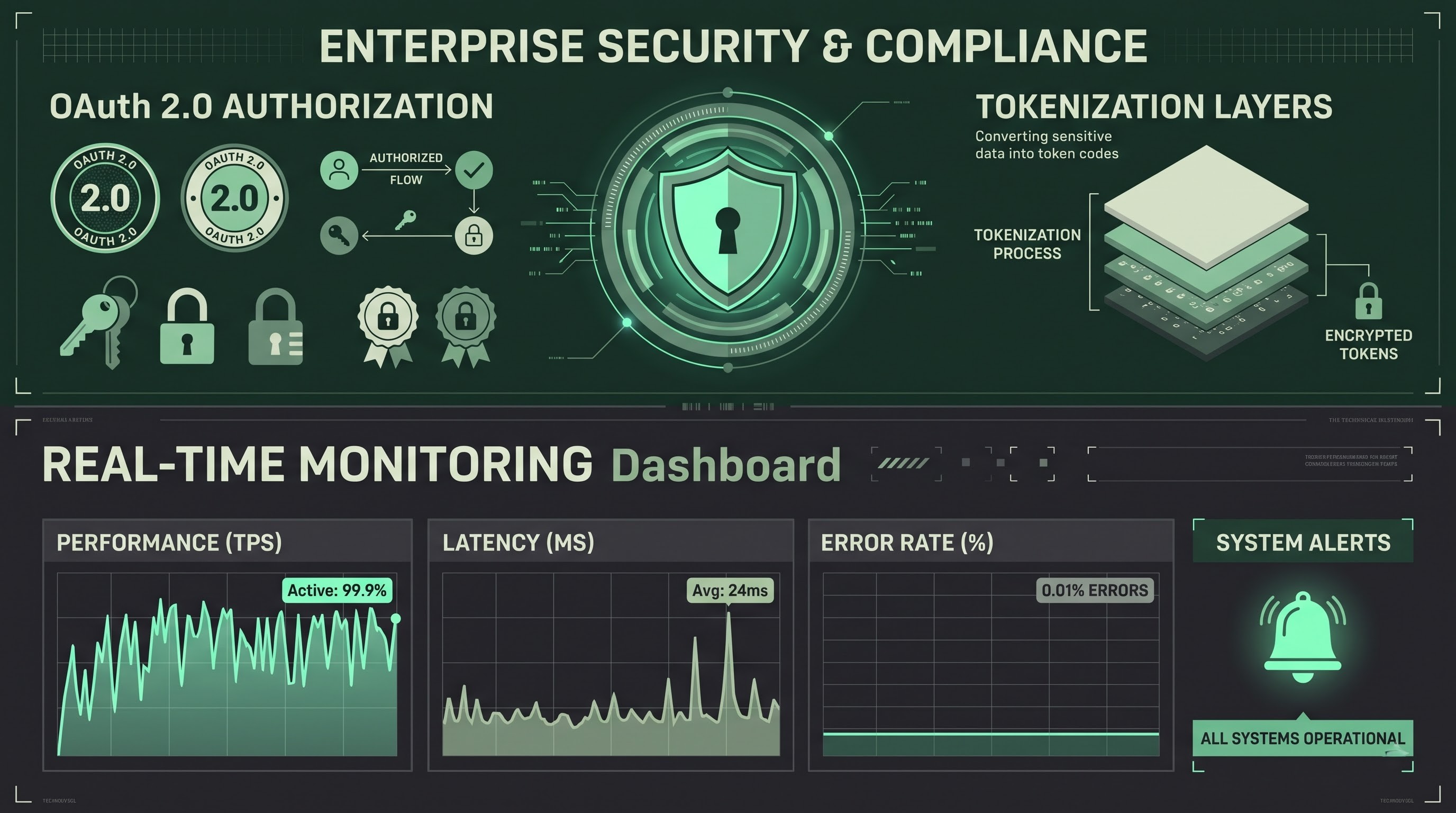
Security is embedded into every layer of the MuleSoft architecture. System APIs protect sensitive backend ERP and financial databases with OAuth 2.0 token-based authentication, mTLS and strict role-based access control. Regulatory framework compliance is fully enforced, such as GDPR and PCI-DSS, sensitive data fields like credit card and personally identifiable information (PII) can be masked or tokenised as they cross integration boundaries and data on the wire is protected with advanced encryption protocols.
Monitoring and Alerting Done
Understanding what’s happening in your operations is critical to keeping digital commerce highly available. Get telemetry in real-time and monitor API metrics like performance, transaction volume, latency distribution and error rate for all deployed flows with Anypoint Monitoring from MuleSoft. For example, if a payment gateway integration begins to throw timeout errors or order ingestion queues start to back up, you can create custom alerting rules that page IT and operations staff as soon as error thresholds are breached. By proactively monitoring this way, technical teams can stop bottlenecks in their tracks before they impact the customer experience and revenue generation.
Competitive Advantage and Business Impact
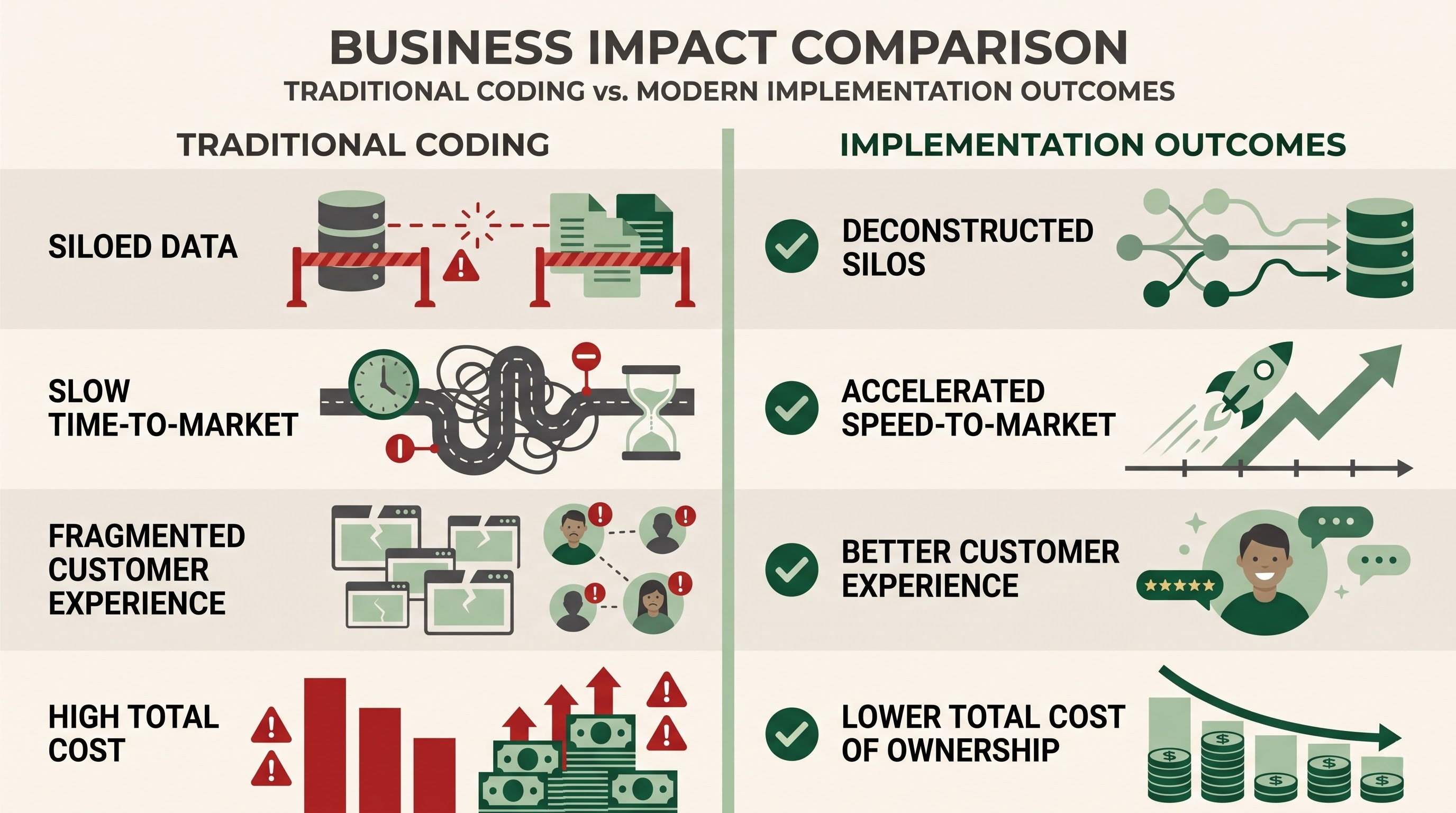
The MuleSoft implementation of orders, payments and inventory systems is a deep transformation at both the technical and business level:
Deconstructing data silos: Organisations create a single data ecosystem with governed, reusable APIs so sales, finance, customer service and warehouse teams all operate from a single source of truth, instead of fragile point-to-point links.
Speed up time-to-market: Development teams can open new sales channels, integrate new payment gateways or onboard wholesale B2B partners in a fraction of the time it would take with traditional custom coding, with reusable API assets stored in the Anypoint Exchange.
Better Customer Experience: Real-time inventory visibility cuts down on order cancellations, accurate order tracking reduces inbound customer support calls, and smooth refund processing fosters long-term brand loyalty.
lower total cost of ownership: Standardising on integration patterns reduces maintenance overhead, reduces technical debt and frees up valuable engineering resources to focus on core product innovation instead of having to create integration plumbing from scratch. For those who wish to master enterprise integration patterns and lead digital transformation, engaging in mule software training is crucial in helping them succeed professionally.
Broadening the Horizon: The Future-Proof Enterprise Digital Architecture
The digital commerce market is still growing very rapidly, which put more pressure on the technology stacks of the enterprises. New paradigms are proliferating customer touchpoints, including headless commerce, internet of things (IoT)-enabled smart stores, conversational commerce with generative AI assistants and hyper-personalized augmented reality shopping experiences. Each new channel brings with it a new set of data ingestion points, transaction speeds and inventory demands. Without this base of fast integration, retail organisations may be forced to split their operations into isolated islands of technology that cannot talk to each other in real-time.
MuleSoft’s API-led connectivity model is designed to help organisations future-proof, by building a culture of composable enterprise architecture. With a composable business model, integration assets are built one time and published to a central repository like Anypoint Exchange for discovery and reuse by development teams, business analysts and digital product managers for new strategic initiatives. From swapping out its front-end headless framework to hiring a new regional third-party logistics (3PL) provider to integrating decentralised cryptocurrency and digital wallet payment capabilities, the core integration framework is stable and extensible.
Furthermore, as data privacy regulations tighten in global markets, centralised governance and security through the integration layer is becoming a must-have. Policy-driven API management, tokenisation and automated audit logging at each integration boundary enable IT leaders to safely expand their digital footprint without compromising sensitive customer records and monetary systems. The end game is perfecting the synchronisation of orders, payments and inventory through smart enterprise integration that turns operational complexity into a powerful competitive advantage for brands to scale fearlessly into the next generation of commerce.
To make this ecosystem work in a proper manner, one needs to have certified individuals. In case you are a developer and looking for certification, mulesoft developer course will definitely be the right option.
Conclusions
Digital commerce is so much more than the transaction between the shopfront and the shopper online. Today’s customers want everything to happen instantly, without having to change channels, and they want it to be foolproof. The consumer wants to have zero friction when they hit that buy button. But behind that single interface is a complex and high stakes ecosystem of back-end platforms, financial gateways, warehousing management tools, and legacy enterprise databases. In this hyper-competitive environment traditional, fragmented systems integration approaches are no longer sufficient. The integration layer is no longer a background technical utility. It is now a strategic core differentiator for retail businesses and can be the make-or-break differentiator for a retail business.
To serve the needs of the modern shopper, we can’t think of order, payment and inventory systems as functional silos. Operational effects propagate quickly through the enterprise when these systems are disconnected. Phantom stockouts, cancelled orders due to inventory mismatches, delayed payment reconciliation that irks finance teams, blind spots in fulfilment that leave customer service representatives unable to provide accurate tracking information. But real operational harmony means knocking down those barriers and linking every touchpoint to form a single, unified organism.
API-Led Connectivity in Practice
The answer to this complexity in enterprises is disciplined adoption of an API-led connectivity model. Organisations unpick the core backend capabilities from the digital channels that consume them, replacing fragile point-to-point spaghetti integrations with a clean, reusable operational fabric.
System APIs safely open up data from legacy ERP and inventory databases:
Process APIs encapsulate core business logic to orchestrate complex, multi-step workflows such as order routing and stock reservation.
Experience APIs format the data for particular use cases of online stores, mobile apps or B2B partner portals.
The layered architecture enables a brand to change its front-end user experience or add a new sales channel without changing the underlying backend systems, greatly reducing technical debt and deployment times.
Order Processing, Payment and Stock Management
“When you think about integration as a strategic asset, it changes the entire e-commerce lifecycle. Order Management goes from reactive to proactive. Standardised data models allow orders from multiple channels to be ingested in a consistent way, and asynchronous messaging patterns mean zero lost transactions, even during high traffic surges, such as holiday sales or flash events.
In the meantime, the processing of payments has been improved. The internal services are consolidated in one service layer abstracting the regional gateways to secure financial transactions and perfectly matching fulfilment milestones. Automated settlement matching reduces manual bookkeeping and accelerates financial reporting cycles.
On the supply side, real-time inventory synchronisation provides a single source of truth across all physical and digital nodes. Real-time stock reservation at checkout allows retailers to avoid overselling and can support advanced omnichannel fulfilment models such as ship-from-store and buy-online-pickup-in-store.
Driving the Commerce of Tomorrow
In the end, a strong operational backbone that scales and secures gives retailers the confidence to operate in a volatile marketplace. By coordinating orders, payments and inventory, businesses can remove friction from the system, protect margins and deliver the great, reliable experiences today’s consumers demand. Not just systems integration anymore, it’s about connecting the brand to its future growth.
It does not simply involve integrating the systems; it involves the integration of the brand and its development along with the integration of the engineers and their high-paying careers. Those professionals who feel that they should demonstrate their proficiency in architecture opt for the mcd level 1 certification.