
Salesforce Automation for Sales and Lead Management
Last updated on Nov 9, 2026
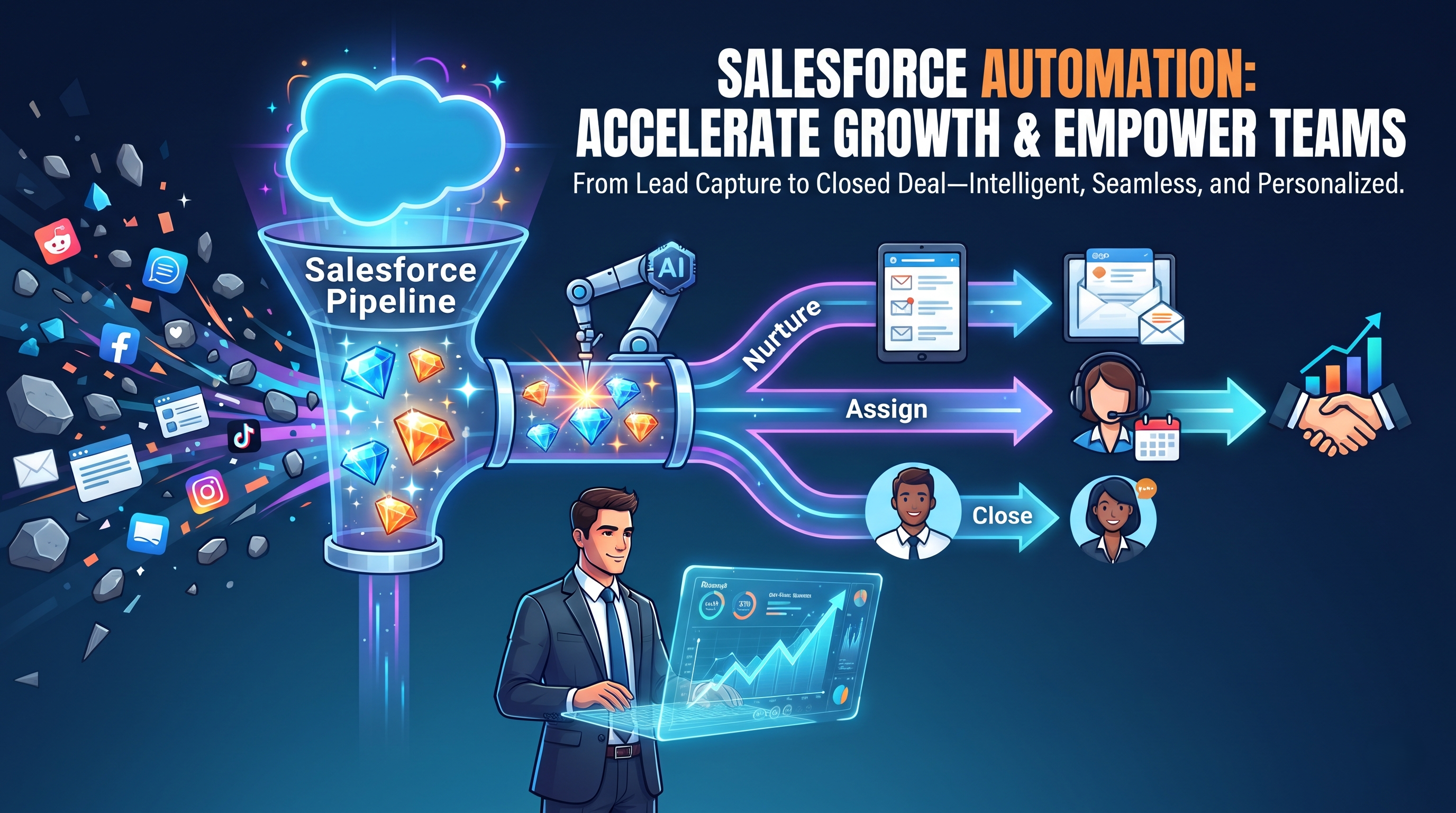
In today’s global commercial environment, the speed at which an organization can process information, engage prospects and build customer relationships can often be the difference between market leadership. "The expectations of modern buyers are often not met by old school sales environments that still use manual data entry, disconnected spreadsheets and fragmented communication channels. Today’s consumers expect hyper-personalized interactions, instant responses, and seamless transitions across multiple touch-points. To meet these demands—and beat them—both growing companies and long-established corporations turn to Sales Force Automation (SFA) platforms. Salesforce is leading this technology revolution. It is a complete ecosystem which is looking to change the way businesses acquire, manage and retain customers.
Revenue operations driven sales and lead management salesforce automation. Now organisations can automate intelligently so that their sales reps can spend time on the human touch points and the negotiations and relationship building that add value – instead of spending time doing tedious admin tasks. The whole point of sales automation is to make sure no lead is missed, no follow-up is forgotten and every decision is based on accurate real-time data. But to really understand this platform for lead management and sales growth, one has to dig deeper into its features, strategic implementation frameworks and best practices for sustained success.
Lead Management – The Strategic Imperative
“The core cycle of revenue generation is lead management. It covers the entire journey a potential customer takes - awareness of your brand and giving you data, being qualified and nurtured and finally becoming a paying customer. Without a structured and automated approach organisations often have a lot of friction to go on this journey. Marketing teams can generate thousands of leads but if the handover to sales is slow, ambiguous or disorganised potential buyers will lose interest and move toward more responsive competitors.
Salesforce streamlines the lead management process by collating all incoming prospect data in one system. A lead may have come from a digital advertisement, social media campaign, organic search, email inquiry or event registration, but Salesforce captures the raw data and normalises it in one environment. This data consolidation tears down data silos and gives marketing and sales teams a single source of truth.
But it’s not the raw data that makes money. The real power of Salesforce for lead management is its capacity to parse, clean, enrich and route that data in the blink of an eye. When a new prospect shows interest, the platform automatically checks the profile against the pre-determined criteria. It takes away the slowness of manual sorting and optimises your speed-to-lead metrics, which are one of the most important factors in conversion success.
Key Features of Salesforce Lead Lifecycle Automation

The Salesforce Lead Lifecycle is meant to shepherd prospects along a prescribed path from initial interest to commitment. Automating this path calls for careful placement of specific functional components on the platform.
Lead Capture & Lead Ingestion
It starts with capture. Salesforce connects to web forms, landing pages, chat apps, email servers and external advertising platforms. Automation rules allow you to automatically create a lead record in Salesforce when someone completes a form on an external website. This is immediate, eliminates human delay and captures intent while the prospect is hot.
Lead Qualification and Scoring

Not all leads are the same or ready to buy. The trick is to differentiate the casual browser and the serious buyer and allocate funds accordingly. Salesforce employs more sophisticated lead scoring models, often augmented with predictive intelligence, to assign a numerical score to prospects based on explicit data (industry, company size, job title) and implicit behaviour (website visits, email opens, white paper downloads and webinar attendance). Once a lead reaches a certain number of points, the system automatically tags them as sales-ready and tells the team to start reaching out directly.
Assignment and Routing Rules
Once you’ve qualified a lead, the next important step is routing that lead to the right sales rep. Manual distribution is slow, and can be missed/biased. Salesforce automation also boasts sophisticated assignment rules that will distribute incoming leads based on geographic territory, product expertise, language skills or round-robin workload balancing. Escalation rules will automatically move the lead to a manager or secondary queue if the primary rep is unavailable or doesn’t respond within a certain amount of time. Always fast response times.
Build Automation Sequence
Most leads we get aren’t ready to buy right away. When you give up on those leads, you’re essentially throwing away a huge chunk of your marketing acquisition spend. Salesforce nurtures those leads over time through targeted email sequences, educational drip campaigns, and personalised multi-channel interactions based on their behavioural signals and industry preferences. It tracks how the prospect engages with those communications and updates their lead score accordingly until they show purchasing intent again.
Sales Operations Transformation: Workflow Journey Automation
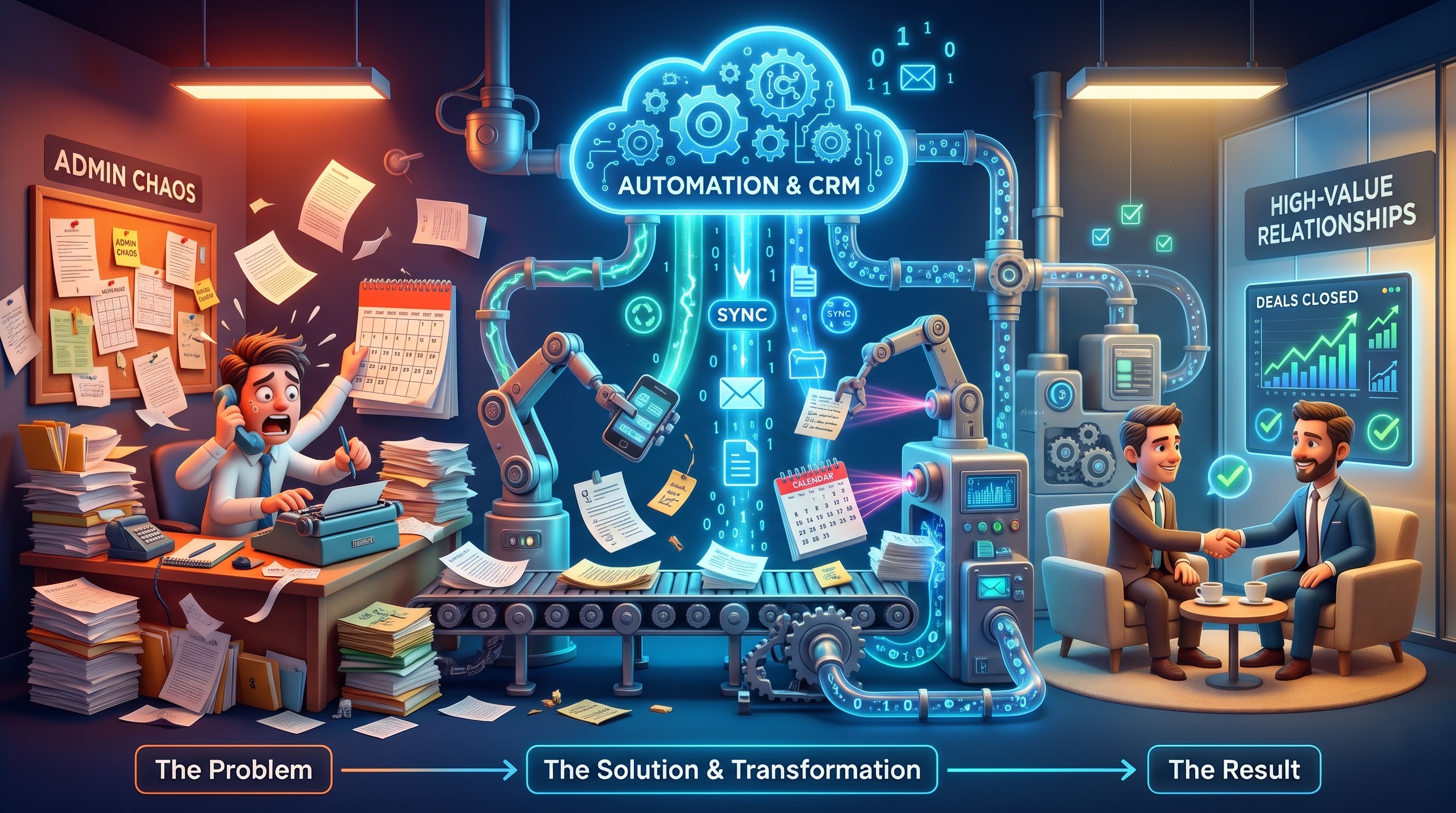
But Salesforce is more than just lead management. It automates the entire sales pipeline, simplifying the day-to-day working reality for account executives and sales managers everywhere. Sales reps spend a huge amount of their day on non-revenue-generating activities such as updating CRM records, writing follow-up emails, looking for internal documentation and scheduling meetings. Salesforce automation takes these administrative tasks out of the hands of sales professionals and frees up more time.
Automation of Jobs and Tasks
Sales cycles need regular, systematic follow-up. Salesforce can be set up to create tasks, reminders and calendar events for sales reps as they progress through the pipeline stages. For example, when an opportunity moves from discovery to demonstration, the system can automatically create a checklist of items to prepare, schedule a reminder for a technical check 2 days prior and send a personalised confirmation email to the client. Because of the orchestration, there is no import.
Integrations & Email Tracking
Sales is communication. Sales Force integrates tightly with your corporate email clients to automatically synchronise correspondence. When a sales rep sends an email to a prospect, the activity is automatically logged on the contact or opportunity record. Reps can send personalised mass outreach using automated email templates with merge fields, and trigger specific follow-up templates when a prospect opens an initial proposal, dramatically increasing engagement rates and reducing manual typing.
Internal processes for collaboration and approval
Complex sales often require internal approvals for special discounts, custom legal terms or non-standard credit limits. In legacy environments these requests are in paper form or unstructured email threads. Salesforce internally automates approval routing by creating multi-tier approval chains. When a rep submits a discount request that is over the normal thresholds, the system automatically routes the inquiry to the appropriate finance or executive approvers and tracks each sign-off and updates the opportunity status in real time as it is finally approved. That eliminates bottlenecks and accelerates deal velocity.
Higher intelligence and predictive capability

Organisations with experience using Salesforce move from simple rule based automation to sophisticated artificial intelligence and predictive analytics. Today’s sales environments require more than historical reporting, they need forward looking insight to inform strategic decisions.
It also uses artificial intelligence engines that analyse historical win-loss data, customer interactions, frequency of communications and external market signals to provide predictive scoring and forecasting. For sales leaders, predictive forecasting automates the gathering of pipeline data, eliminating subjective rep estimates and replacing them with objective, data-driven revenue projections. This capability allows executives to spend money more effectively, identify pipeline bottlenecks before they impact quarterly targets and pivot go-to-market strategies in real time.
Salesforce’s AI-powered assistant tools can also help analyse customer sentiment in calls and email conversations and suggest next best actions, ideal time to reach out or opportunities to cross-sell and up-sell based on the purchasing behaviours of similar accounts. It transforms the sales rep from an administrative coordinator to a strategic, insight-full adviser to the client.
Organisational and Change Management Sync
The technical implementation of robust Salesforce automation for sales and lead management is seldom the problem. It’s an organisational transformation. Technology can automate processes. But human adoption is the final arbiter of success. The greatest ROI is the result of collaboration between Marketing, Sales and Operations focused on change management and continuous process improvement.
Closing the gap between marketing and sales
The friction between marketing and sales departments has long been a roadblock to corporate growth. Marketing will often complain that sales doesn’t do anything with the leads they generate. Sales will say marketing leads are low quality. Salesforce automation does this by providing objective, shared definitions of lead qualification through Service Level Agreements (SLAs) built right into the platform. The key here is transparency – when lead scoring models, status definitions and handoff criteria are transparent and enforced via system automation, the two teams are working toward a common goal. Marketing gets clear feedback on which campaigns are creating revenue opportunities and sales gets pre-qualified leads that fit their expertise.
Overcoming Adoption Resistance
Sales people are people people, they like people, they like field work, they see CRM data entry as bureaucratic friction. To get the automation in place, organisations need to be able to articulate how the tools will directly support the sales team. Leadership can create enthusiasm rather than resistance by showing how automation can eliminate repetitive data entry, speed up commission realisation and instantly flag the hottest prospects. Training programs that are strong and continuous internal support, for example, by signing up team members to a salesforce admin training course program, guarantees that the system is comprehensively understood and utilized.
Data Cleanliness & Governance
Automation is only as good as the data it’s built on. Automated routing of bad data simply propagates errors throughout the organization and therefore rigorous data hygiene and governance remains an ongoing imperative. Salesforce must have validation rules, duplicate management algorithms and mandatory field requirements in place to ensure data is clean, standardised and reliable. Regular audits of workflows, assignment rules and user permissions help to keep the system uncluttered.
Ensuring that the above validation rules, custom workflows, and other best practices are implemented needs specific skills. Companies have found an alternative for bridging this skills gap by motivating their operational teams to participate in salesforce admin classes.
Measure success & continuously optimise
Automation in Salesforce is not a project to be done once and then forgotten, but an ongoing process of improvement and optimisation. You need to define metrics for performance and KPIs throughout the entire sales and lead management process to ensure you’re still getting the benefits of automation.
These metrics can include lead response time, lead conversion rate, sales cycle length, win rate by lead source and productivity of each sales rep. The sales ops manager needs to be constantly monitoring these metrics to uncover areas of friction before they happen. If your lead response time is getting worse, this could be a sign that your incoming lead volume is exceeding your current capacity. So you have to change your routing rules, hire more sales reps, or change your lead qualification criteria. Likewise, if the lead conversion rate from a certain marketing campaign is low, sales and marketing teams can work together on modifying messaging or target audience.
You need to continuously test the automated workflows, email nurturing programs and scoring algorithm to keep it relevant to the changing market conditions and customer behaviour. Companies that view their Salesforce environment as a dynamic, evolving ecosystem consistently outperform those that don’t adapt, and instead rely on static configurations.
Personalisation and Omnichannel Engagement Matter
A lead may come across a brand through an organic search, click on a targeted social media ad, read an industry white paper downloaded as part of an email campaign and request a product demo via a live chat widget on the corporate website. Each touchpoint collects valuable behavioural data that individually offers a fragmented view of the buyer’s true intent.
Salesforce automation addresses this complexity by merging all omnichannel interactions into a single timeline. As soon as a prospect changes channels, all of his online presence will be collected and incorporated into his profile. Thus, the constant process of collecting the information makes the personalization process easier on an unprecedented level. Instead of the universal broadcasts, prospects will receive individual messages relevant to the particular point where he is within the buyer’s journey process.
Personalisation is so much more than just putting a first name into an email marketing template. Salesforce analyses behaviour patterns over time to determine the best channel, tone and time for each communication. If a prospect is consistently engaging with video tutorials rather than lengthy text documents, automated workflows can change the next touchpoints to deliver video content automatically. This level of personalised engagement builds trust, educates the prospect faster and shortens the overall sales cycle by delivering the right information at the time the buyer is most receptive.
Scale Enterprise & ATM Sales Approach
Transactional sales models require high-volume lead management, but enterprise-level business-to-business environments often require an Account-Based Marketing (ABM) approach and complex, multi-stakeholder account selling. The target is not just a lead, but the whole organization, with scores of decision-makers, influencers, gatekeepers and technical evaluators, each with their own priorities and concerns.
With Salesforce automation, you have the infrastructure to scale your ATM efforts. Instead of tracking individual leads, the platform organises contacts into separate account hierarchies so sales and marketing can see the entire buying committee as a single target. Automated workflows can track the collective engagement of an entire account, alerting sales when multiple stakeholders from the same organization visit pricing pages or download technical documentation simultaneously.
Enterprise sales cycles involve coordination across many internal departments, such as legal, finance, product engineering and executive leadership. Salesforce automates all of the messy internal handoffs that come with enterprise deals. For instance, when an account gets into contract negotiations, the CRM can automatically trigger a cross-department review process, where legal reviews the customized contract, finance analyzes the risks involved while the technical team reviews the product scope requirements. Enterprise contracts can thus not get stuck in the red tape bureaucracy and there is a seamless way of presenting the company to its potential high-profile customers.
Conclusion
Salesforce automation for sales and lead management is a must-have capability for companies that want to compete and win in a demanding digital marketplace. By automating lead capture, scoring, routing and nurturing, you remove the administrative delays that routinely eat into your conversion potential. In addition to this, efficient internal process management through automating processes such as approvals, tracking and management enables sales representatives to focus on what they do best, which is forming meaningful relationships and solving clients' problems and closing profitable deals.
Efficient delivery of these architectures relies on the appropriate blend of solid technological architecture, strategic alignment between marketing and sales, effective data governance, and constant optimisation. Organizations that manage to properly automate Salesforce enjoy high efficiency levels, thorough visibility of their revenue pipeline and a platform for future profitable growth.