
Strategic Impact: How The Modern Business Analyst Drives Value
Last updated on Sep 3, 2026
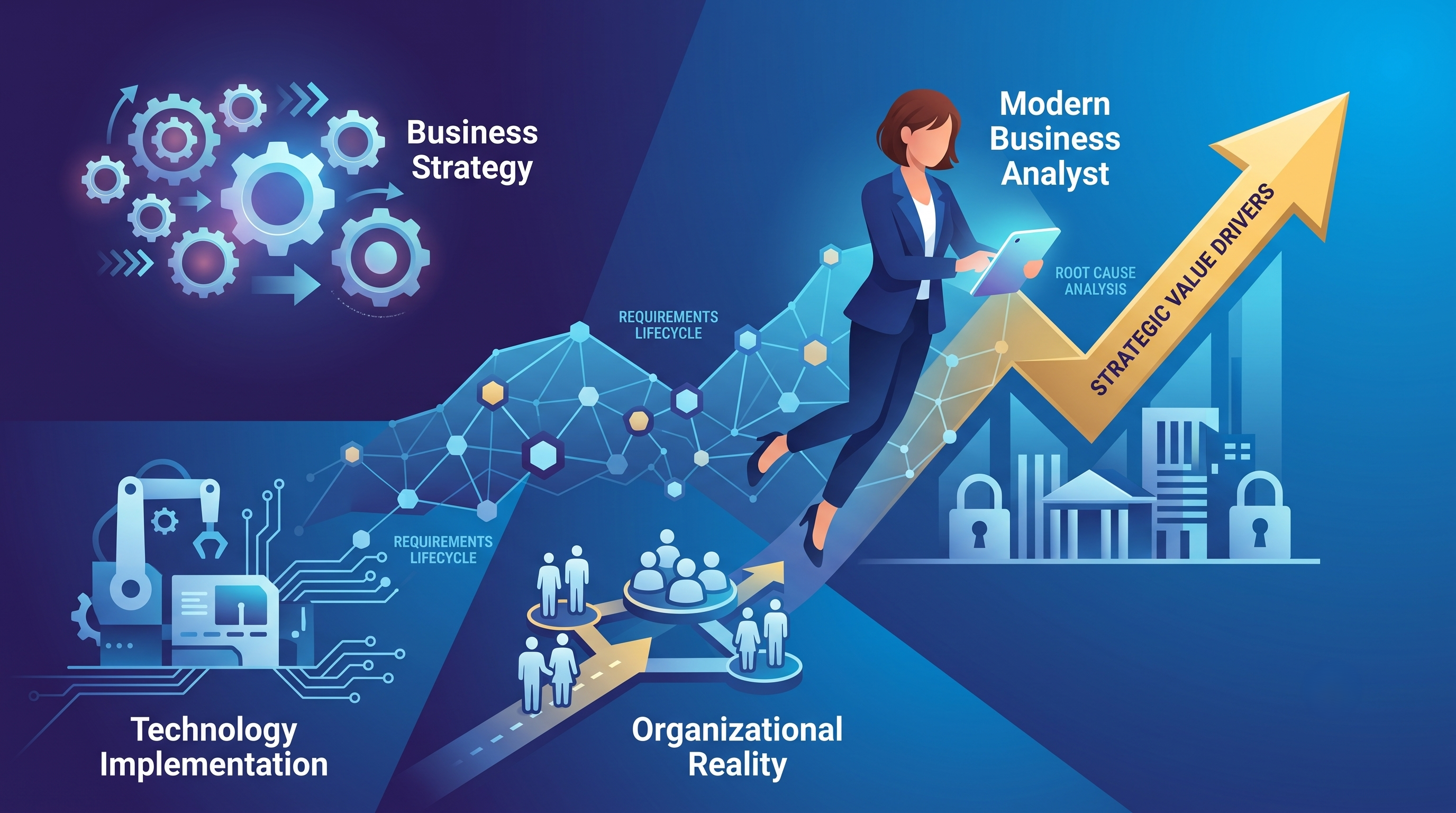
The discipline of business analysis lies in the intersection of business strategy, reality and technology. The role of a business analyst is more than just being a foreign intermediary. In the modern world of fast digitalization and unstable environments, most companies do not fail because they cannot carry out one simple operation. They fail because they create the wrong solutions for the wrong problems. A business analyst's role is to solve that problem by making the complicated tasks easy.
The development and fundamentals of business analysis
Business analysis has its roots in the beginning of industrial engineering, the principles of scientific management, and operational research. Beginning in the mid-20th century, business analysts have studied workflow processes at the time of business growth when the enterprises became more complex. The introduction of computers into the business world in 1960-1980 brought about an unexpected clash between engineers and managers who had completely different languages, with programming referred to in terms of strict logical sequences, memory allocation, and databases while business language was based on the concepts of margin, cash flow, and speed of operation.
In the early days of systems analysis, there was a need for specialists who could help businesses understand and apply newer technologies. Traditional management recognized after some time that technology does not solve all problems. If a company automates a broken manual process, it will end up with a process that is just as inefficient, but significantly more expensive. In this way, the function of the system's analyst has been transformed into one of a professional business analyst through the efforts of various organizations such as the International Institute of Business Analysis where useful tools were established such as the Business Analysis Body of Knowledge where the main attention was transferred from systems engineering to solving business problems, generating value, and transforming business. Nowadays, those who are interested in acquiring crucial and basic knowledge of business analyst tools look for structured business analyst classes online.
Business analysis essentially is the practice of applying change in an organization by means of identifying needs and devising solutions that create value for the stakeholders.
2. Principal Elements of Business Analysts’ Responsibilities
The daily duties of the business analyst might vary from one sector to another, but a few principal elements are equally important in any industry.
Strategy Seeking and Problem Creation
Defining problems is the most dangerous part of the project. Often stakeholders come to us with solutions instead of problems. For example, a stakeholder may signal the need for a mobile application for customers while in fact the problem is bad retention after buying the product due to poor tracking of deliveries. A good analyst does not take the symptoms for the causes. An analyst should conduct thorough root cause analysis and probing questions to find out the real problem.
Identifying Stakeholders and Managing Relationships
Initiatives of an enterprise will affect a variety of groups with different interests, different agendas, and different means of communication. The executive sponsors expect high returns for their investments and a reduction of risk. The operational staff wants things to be usable, simple, and safe. The architects focus on the system being scalable, reliable, and easy to maintain. The business analyst identifies all groups that are affected by the initiative from the beginning, estimates their influence and attitude, and finds a way to unite all parties involved.
Requirements Engineering and Lifecycle Management
The process of gathering requirements is the most important step in the transformation of organizations. This means the analyst should take care of them throughout the entire process of elicitation, analysis, specification, verification, validation, and governance. The difference between an effective analyst and the one who does not rely solely on this activity is that an analyst does not passively listen to requests but tests each requirement for clarity, completeness, feasibility, testability, and specificity of business benefit. They also should be aware of the effect of changes within an individual subsystem on the operations in the system as a whole and ensure traceability.
Solution Evaluation and Value Realization
The work of the analyst does not end up after launching a new system or introducing a new operational model. They have to understand whether the new system works as it had been intended. This requires the analyst to set clear baselines before the launch, for instance, related to transaction time, the manual exceptions, and user involvement in the system.
The Continuum of Requirements
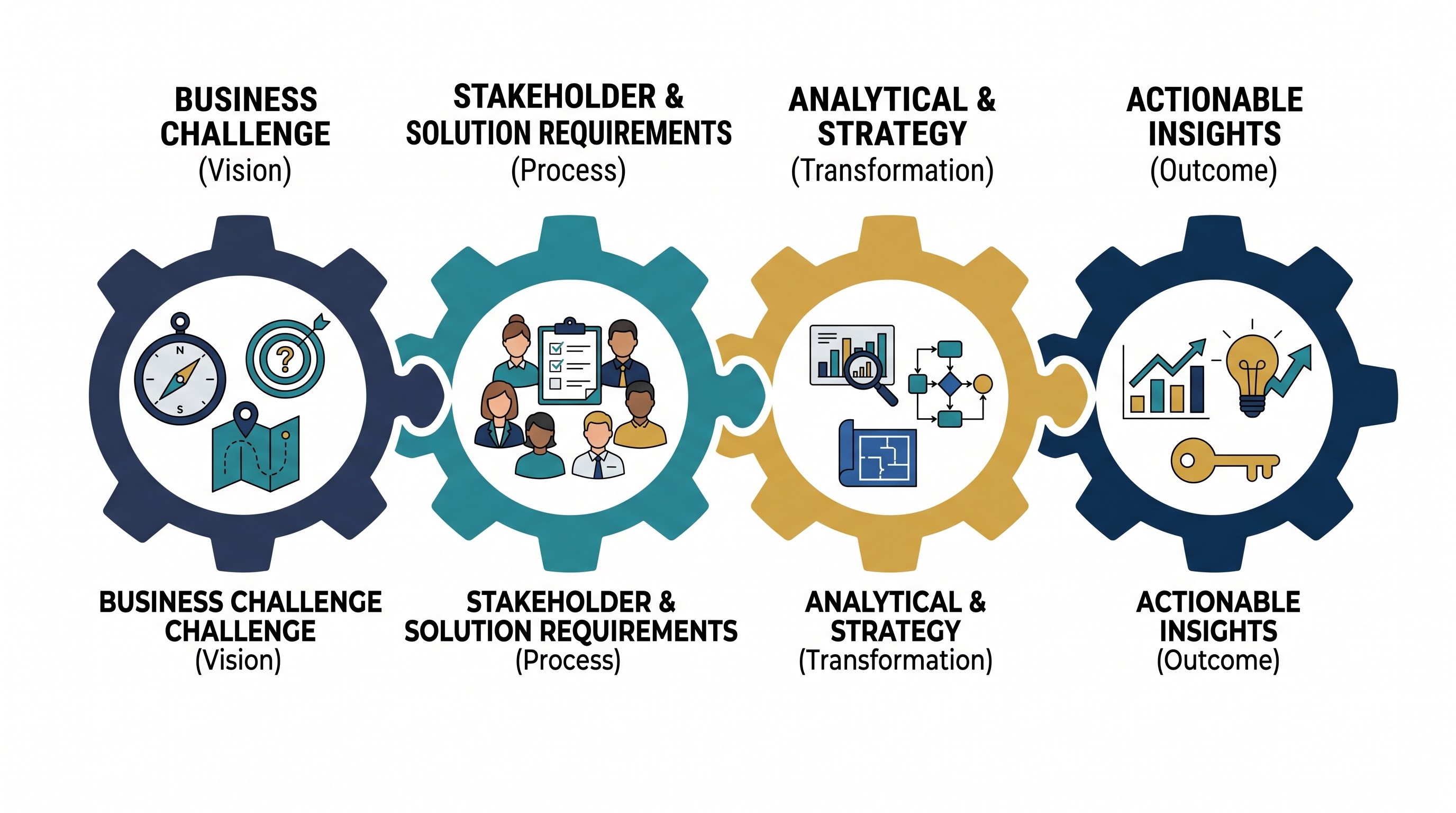
Grasping the classification of requirements is essential for the field. Requirements can be understood on a continuum that ranges from the highest level of vision to the smallest details of operation.
Business requirements: This is the highest level of organizational intentions. It defines the main reason for undertaking an initiative, expressed in business goals, alignment with the strategy, and expected outcomes. Business requirements explain the reason for making an investment, like achieving a thirty percent increase in order fulfillment efficiency or saving two million dollars yearly on compliance costs.
Stakeholder requirements: These represent the connections between corporate strategy and practical implementation. These requirements describe the needs of certain stakeholders, namely how some people use solutions to achieve their goals. Stakeholder requirements reflect the human aspect of work and tell how a company's personnel functions on a day-to-day basis.
Solution requirements: This category gives exact information about the characteristics the solution should possess to meet business and stakeholder requirements.
Functional Requirements: These outline the exact operations, processes, actions, and changes that the system should accomplish. They explain what the system must do, such as recognizing user IDs, checking whether financial transactions comply with the permissible limits, and sending notifications after changes of statuses.
Non-Functional Requirements: These stipulate the system’s performance, quality characteristics, limitations, and operational framework. In particular, they provide information on the reliability of the system with such details as speed of operation, processing capability, availability, disaster recovery period, data retention requirements, and accessibility of information.
Transition Requirements: These often-neglected requirements explain the temporary capabilities and operations required for transitioning smoothly from the present to the future. Transition requirements include data migration procedures, user training programs, termination of old systems, and running parts of the systems in parallel.
Techniques and Approaches to Elicit and Model
Business analysts employ various techniques in order to impose structure on uncertainties.
Elicitation is more than just asking standard questions. Good analysts use observational technologies like job shadowing, which allows for observing the operational problems that employees forgot to mention during the interviews. The analysts also create structured discovery workshops in an attempt to reach an agreement among cross-functional leaders, make use of well-targeted surveys to collect vital information from numerous departments, and apply interface analysis to reveal how legacy software communicates with each other.
Once the data has been gathered, analysts turn to process and conceptual modeling to represent complicated real-life situations in a visual format. Learning how to apply these practical modeling techniques is a key part of modern ba analyst training programs where students create visualizations of workflows from start to finish including all swimlanes, decision-making points, and alternative paths.
In addition to workflows, analysts create enterprise context models using use case analysis, user stories with defined acceptance criteria, state transition diagrams, and logical data models. These graphical and conceptual models form a universal language for operation so that misunderstanding between non-technical business people and engineering teams who are not familiar with the business context is avoided.
Adaptability Amid Different Project Approaches
The essential notion behind business analysis is unchanged through different delivery methods. However, methods of implementation depend on the operational style of the organization.
In traditional methods, such as Waterfall, the involvement of an analyst is too much at the very beginning of the process. They perform detailed research to make an exhaustive documentation including business requirements document, functional specification and traceability matrix before any development starts. The way this method works implies requiring extensive contractual fulfillment, formal approval system, and strict change control.
In Agile and iterative approaches of work, such as Scrum and Kanban, the involvement of the business analyst changes from being a creator at the beginning of the project to being a contributor and strategist throughout the entire project. Instead of creating massive documents beforehand, the business analyst collaborates with the product owner and developers to manage backlog updates on a continuous basis. They convert high-level business initiatives to epics and user stories, set up precise acceptance criteria, and figure out the edge cases before sprint planning. In this manner, business analysts are much faster, contributing to peer-to-peer feedback loops, checking results of their work with users, and making changes in requirements based on real-life data.
Regardless of whether an organization uses Waterfall, Agile, or a hybrid model, there is still a need for proper business analysis.
The Strategic Significance of Root Cause Analysis
An important distinction between an amateur requirement farmer and an experienced business analyst is the practice of root cause analysis. Problems in organizations do not come in isolation, they are symptoms of larger operational, structural or cultural shortcomings.
If a sales leadership team complains about inaccuracies in their pipeline forecasting, a novice professional immediately proposes that there be some required fields in the CRM system. An experienced analyst goes on the examine other important factors. They want to know if sales incentives discourage the reporting of deals that haven't yet closed, that pricing models are not too complex for sales people to calculate their contracts or if the software being used is difficult enough so that they start to ignore it completely until the end of the month.
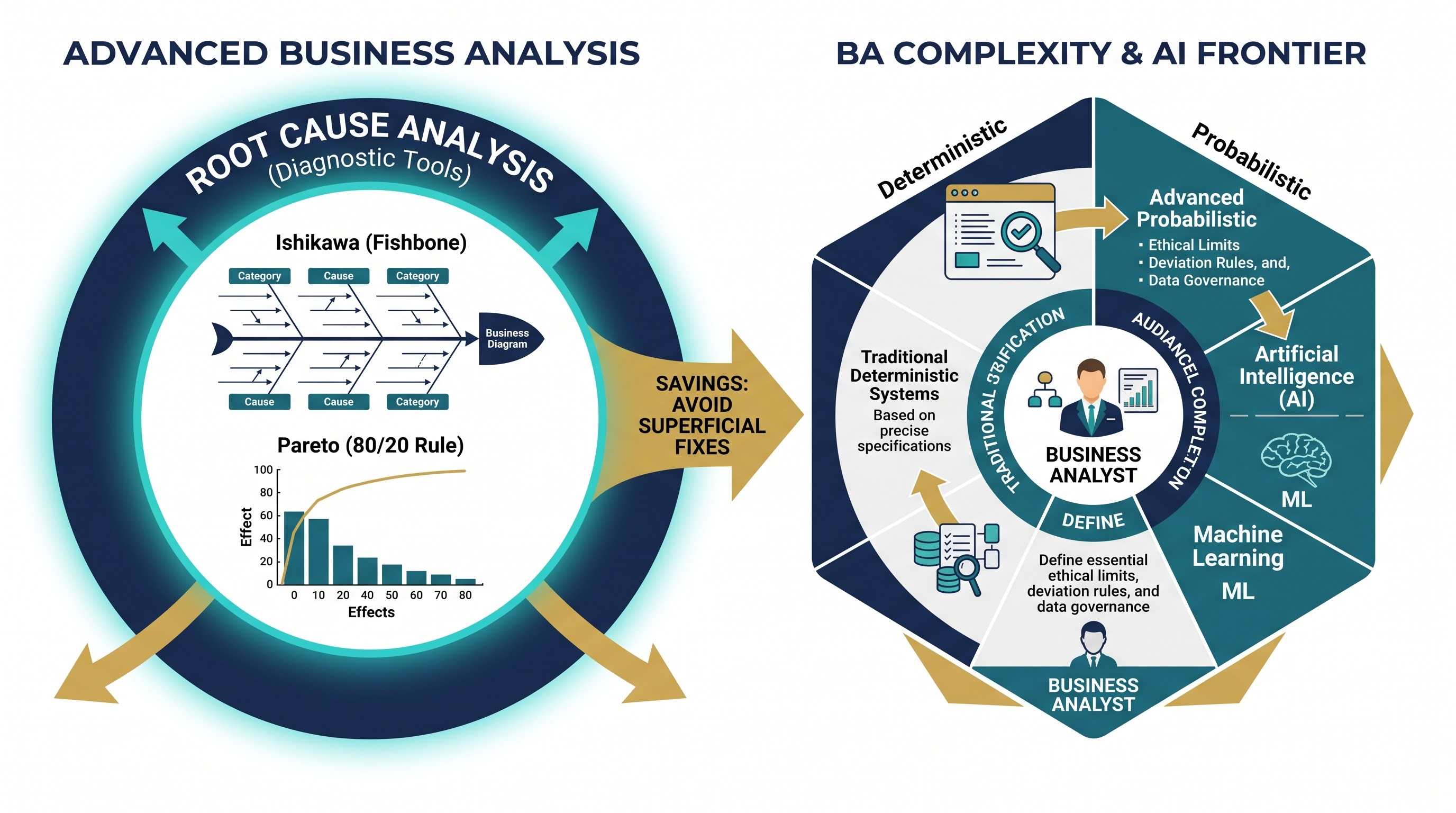
The use of some diagnostic tools like Five Whys analysis, Ishikawa diagrams or Pareto analysis makes it easy to analyze the real causes of the problem. Solving the root cause helps organizations save money by avoiding different patch-ups and superficial fixes.
Key Competency Profile of a Contemporary Business Analyst
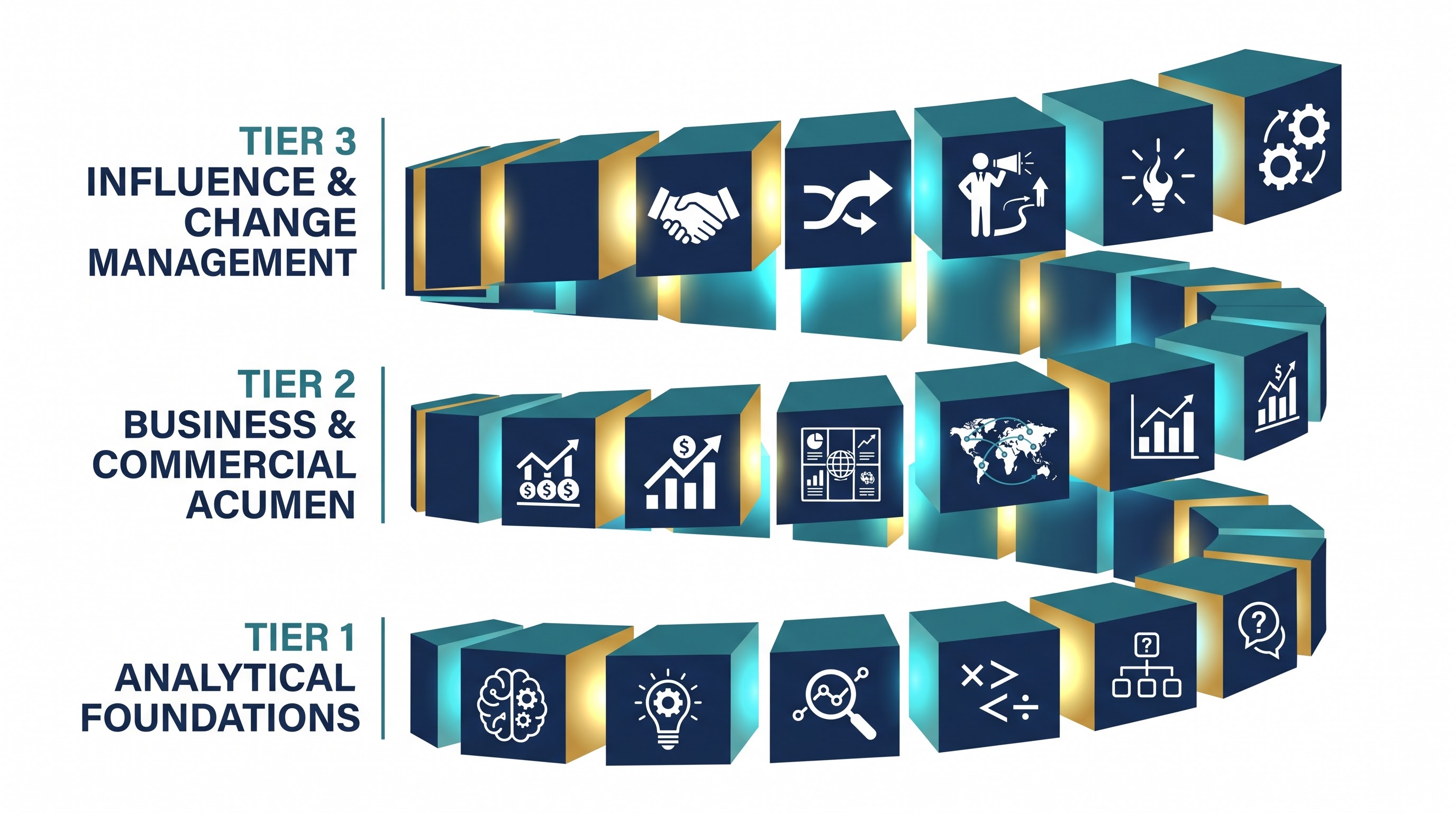
To achieve success in business analysis, an exceptionally rare combination of analytical skills, business insight, and social skills is necessary. By taking part in detailed business analyst classes, students will develop the skills mentioned above by means of real-life case analyses and workflows that match industry standards.
Analytical and Critical Thinking Skill
An analyst must assess data objectively to distinguish factual information from organizational prejudices, assumptions, and fantasies. They should be skilled in working with unstructured data, deconstructing complicated systems into understandable elements, recognizing patterns, and calculating system risks. Critical thinking enables the executive analyst to constructively question any assumptions made by managers, ensuring that the company’s resources are spent on successful strategic objectives.
Commercial Acumen and Business Sense
For a technical solution to succeed, it must comply with the financial, regulatory, and business environment. Therefore, business analysts need to grasp the key elements of a business’s success, including a profit and loss statement, unit economics, and operational risks, market participants, and regulatory requirements, to know how the value of a business is formed so he or she knows what initiatives to choose in order to ensure maximum net gains.
Communication, Facilitation, and Translation
The ability to speak the language of business and technical architecture well is one of the most visible skills for a business analyst. Analysts have to adjust their communication style to suit their audience, explaining complicated technical issues to top management in terms of business risks; and explaining strategy to developers in terms of logical boundaries and functions.
Negotiation, Influence, and Change Management
Every project is equivalent to change, and change comes with human anxiety and conflict. Business analysts are in charge without official power. They need rational arguments, data, and an understanding of the stakeholders' emotion to lead the team during the negotiations. Knowledge of the change management theory will guide the analyst in planning the launch of the program that will accommodate the process of human adaptation.
Dealing with systemic challenges in practice
In practice, business analysis is a complicated process. Analysts face many obstacles that concern the project results.
Dealing with scope creep
One of the greatest dangers to any project is scope creep: the uncontrolled growth of a project beyond what was originally envisioned, without making changes to the budget or the deadline. It usually starts with well-intentioned ideas expressed in informal conversations or during late project review meetings. The business analyst has the responsibility of keeping scope under control. The analyst makes use of a scope baseline related to the original business case and makes sure that any modifications submitted for appraisal are subjected to impact assessment.
Overcoming Inertia and Resistance in Organizations
When new solutions are conceived, teams often resist because they fear that the installation of the solution could interfere with their job performance or make their job redundant. As a result, anything developed in isolation through discussions with top executives runs the risk of being rejected by a large number of teams. To mitigate this risk, analysts should include frontline teams actively in discovery and design processes. The more frontline team members see their views incorporated into the requirements under development, the more likely they are to become supportive of the changes.
Addressing Ambiguity and Conflicting Goals
Most enterprise programs are launched with rather vague goals such as improving customer-centricity or redesigning internal processes. Trying to convert these vague ideas into solid requirements can be very difficult. Analysts accomplish this by breaking the program into operational results that can be measured. Next, they conduct trade-off exercises that help stakeholders rank the initiatives based on their feasibility and value.
Emerging Frontiers: Data, AI, and Modern Business Analysis
New and emerging forms of technology in Artificial Intelligence, Machine Learning, and Enterprise Data Platforms have shifted the traditional business model of an analyst.
In the past, the focus of an analyst was on deterministic systems: software that performed in a constant way based on some known rule. But now there is an increasing tendency towards analysis of probabilistic systems, where the output is known through analyzing patterns, statistical evidence, and possible scenarios.
This shift complicates the work of the analyst. In research in algorithms, the analyst goes beyond the writing of specifications. They define ethical limits, acceptable rate of deviation, false positives’ percentage, and data governance policy. They ask very important questions: how can we train the algorithm in order to escape systemic bias? What is the acceptable error of the automated model's decisions on loans? What manual algorithm must be applied if the automated model is uncertain?
Furthermore, contemporary specialists employ modern analytical tools in order to move away from them based on anecdotal evidence. A modern ba analyst course enables professionals to master the advanced skills needed to assess event logs, study operational telemetrics, and determine operational pain points that cannot be identified using traditional interview techniques.
The role of a business analyst in the creation of value for the business organization
The role of business analyst is crucial in the creation of a protective mechanism against wasted investments, project failures, and strategic failures. Without well-planned analysis, the experienced software engineers would create systems that would be working technically perfectly but would not help to solve a business problem.
Business analysts play the roles of relentless investigator, sympathetic facilitator and pragmatic solution designer, enabling the companies to get the maximum value out of their investment. As the ecosystems become more and more interconnected and the change rate accelerates, the business analyst's capability to derive substance from vagueness, recognize distortion of opinions, and align business execution with the overall strategy becomes one of the key competitive advantages for any company today.
Conclusion
Modern companies operate in an environment where technology precedes strategy implementation. With every enterprise system getting more sophisticated and AI taking over the traditional deterministic decision-making process, it is no longer about whether technology can be applied, but whether the solutions designed are appropriate and allow addressing the right problem.
The role of the business analyst is crucial in breaking down barriers in an organization. By grounding actions in dependable root-cause analysis rather than basic symptoms, it guarantees that transformation initiatives deal with structural bottlenecks rather than the automation of current failures. By applying methodical requirements engineering, cross-function facilitation, and consistent scope control the analyst is capable of aligning executive vision with technical implementation while influencing people’s acceptance.
Finally, the business analyst plays the role of the expert in requirements documentation, but also the strategist in protecting the organization’s capital and aiming. He/she is able to relate the high-level goals with the concrete actions and prevent the project from scope creep, organizational inertia, and misalignment. In a world that is constantly becoming more automated and unstable, the skills of an experienced analyst to convert uncertainty into clarity, to bring opposing stakeholders together, and to deliver the value remain the major competitive advantage of the new-age organization.