
The Architectural Renaissance of Modern Full-Stack Java (2026 Edition)
Last updated on Jun 30, 2026

Java has been the backbone of enterprise computing for almost thirty years now. But everything about this environment has changed tremendously. The days of using monolithic Java Server Pages (JSP) with bloated stateful application servers are far behind us.
Nowadays, a Full-Stack Java Developer not only takes care of the server management but also writes code on the client side. Instead, he designs distributed systems, orchestrates data in real-time, uses cloud containers, and builds highly interactive client applications.
In one manual, this is all you will learn which acts as the advanced level learning of what you learn in a complete course on full stack developer course online and helps you become a Java development expert.
1. The Architectural Paradigm
Modern day full-stack Java applications are predominantly designed with a decoupled API-first approach. The separation of the client-side UI component from the server-side logic leads to maximum flexibility, fault isolation, and independently deployable components.
The Monolith to Microservices Journey
Traditionally, Java-based web applications contained the user interface and the business logic in one package of deployment (the .war or .ear file). Two types of architectures are common in modern day enterprise software:
Decoupled Monolith / Modular Monolith: A single deployment package where the front end is completely decoupled from the back-end, built in technologies such as React or Angular, and interacts with a well-designed Java application through RESTful or GraphQL endpoints.
Microservices Architecture: The software application has been decomposed into various bounded contexts. The front-end communicates with the API Gateway (Spring Cloud Gateway), which routes the calls to stateless and lightweight Spring Boot microservices.
2. The Frontend Ecosystem (The Client Layer)
Obviously, it is important to emphasize that a full stack developer course online requires excellent proficiency while interacting with up-to-date architectures of the client side. In contrast to typical backend engineering which is centered around servers, a full stack development program enables developers to learn modern SPAs which became an industry standard in enterprise dashboards, e-commerce, and SaaS systems.
The Modern UI Frameworks
Though the server-side programming language stays Java, the client-side architecture of web applications is built using frameworks written in TypeScript. Two major solutions that have been integrated into Java architectures are:
React: It is a JavaScript library that works with virtual DOM rendering and unidirectional data flow. When developing React UIs for Java backends, state management and asynchronous fetch libraries (Redux Toolkit, Zustand, Axios, TanStack Query) are used.
Angular: It is an in-depth structure developed and braced by Google. It is very popular among enterprise Java solutions as Angular's approach is very similar to Spring Framework in many aspects.
Advanced TypeScript & State Sync
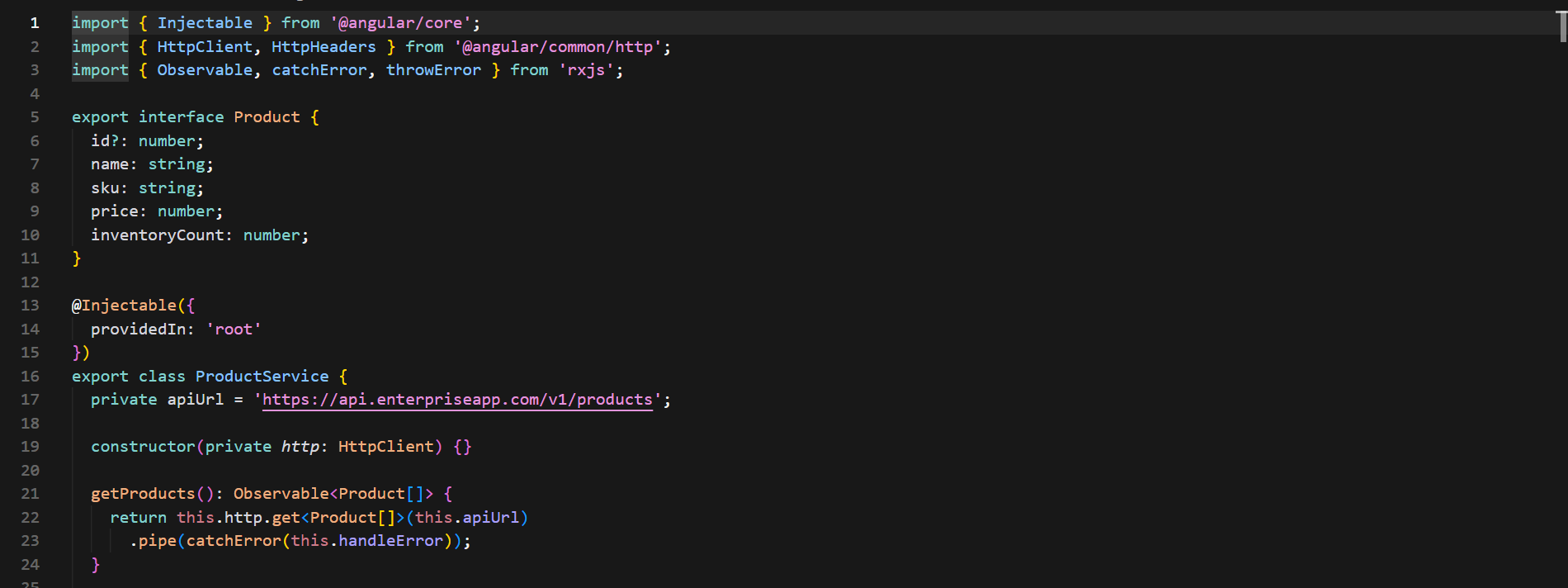
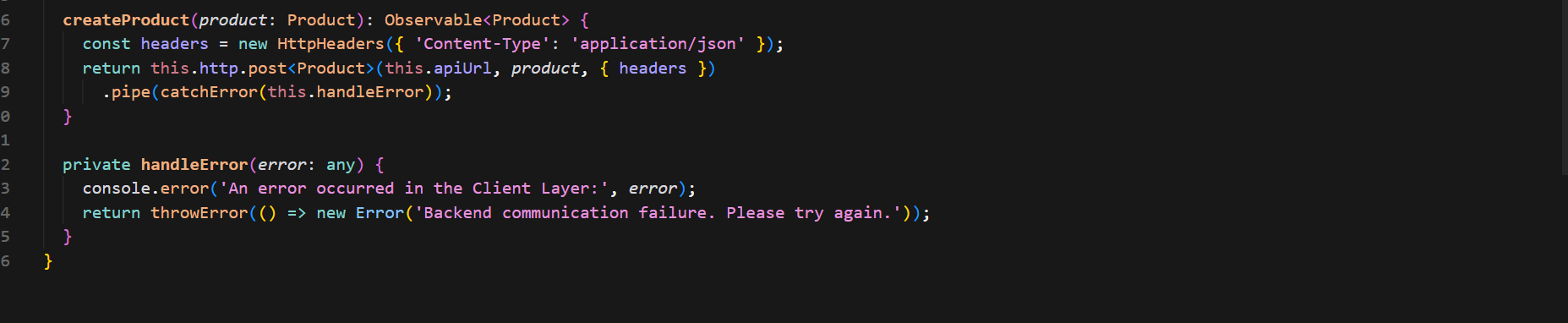
Modern frontend framework uses asynchronous code to ensure the interface stays responsive. Understanding the life cycle of HTTP requests, state management, and push notifications is very essential for developers. Below is an illustration of an Angular service component that interfaces with a Java back-end(Spring Boot) using reactive programming(RxJS).
Angular TypeScript Code(product.service.ts)
3. Backend Core: Enterprise Java Basics
For development of backend core components, it is required to write Java code in an optimized manner. The basic enterprise version of Java is Java 17 to Java 25 (LTS).
With the latest capabilities of the languag
Records: Use of immutable principles in order to avoid additional coding of such components as getters, toString, equals, hashCode.
Pattern Matching for Switch: Approach to handle complex conditional and type casting expressions.
Sealed Class: Opportunity to control inheritance models and specify which classes are able to inherit certain parents.
Virtual Threads (Project Loom): Feature added in order to change the multithreading concept in Java. While classic platform threads consume much memory and can be used in the ratio 1:1 to OS threads, virtual threads are light and run in JVM being able to perform millions of operations without memory overflow.
Understanding JVM Memory Structure: Stack vs. Heap Mechanism
For efficient development of backend logic with zero errors, it is important to have a clear picture of JVM memory structure, which basically differentiates memory allocation in Stack and Heap memory.
In order to provide fast, thread-safe access, Stack memory is designed using Last In, First Out (LIFO) principle. It contains primitives and pointers to objects. The lifetime of Stack memory is managed automatically by execution loops of threads; as soon as a thread completes its job, the whole stack memory frame and its associated local variables are cleared off.
On the other hand, Heap memory acts like the repository of data that is available across all threads. While Heap memory access is slower compared to Stack memory, it ensures that enough memory is available to store all the actual objects, arrays and global string pools. Unlike the Stack memory, the Heap data does not depend on any particular execution thread and continues to exist dynamically as long as any active reference pointer exists to it. It is only marked for Garbage Collection once it becomes obsolete.
Collections Framework and Internal Working of HashMap
The collections framework serves as the foundation of data management in a Java backend application. A good example of how efficient Java architecture is the internal working of HashMap.
In HashMap, there is an array of buckets where data is stored using hashing. In case of hash collisions where two different keys generate the same hash value, the entry is added in a linked list form in the same bucket.
To avoid the worst-case scenario of degrading the performance from $O(1)$ to $O(n)$ in case of many hash collisions, Java internally changes the bucket from linked list to red-black tree format after adding more than 8 elements in it.
4. The Spring Boot 3.x EngineSpring
Boot 3.x is undoubtedly the top-tier framework among full-stack Java developers. It gets rid of cumbersome configuration processes by virtue of its auto-configuration and opinionated starter dependencies enabling one to build a production-ready application swiftly.
Deeper Dive: Dependency Injection (DI) and Inversion of Control (IoC)
The core principle of Spring framework lies in its IoC container, where instead of self-instantiation of dependencies (resulting in an untestable and inflexible code structure) everything happens via managed lifecycle, bean creation and their injection into each other.
Constructor DI: It is definitely the best practice in the industry as it makes your dependencies immutable (final keyword) and provides guaranteed initialization of class with mandatory components present in it.
Been Lifecycle: Been creation, population with properties, post processing and then destruction at the end of application context life cycle.
High-Performance REST API Development
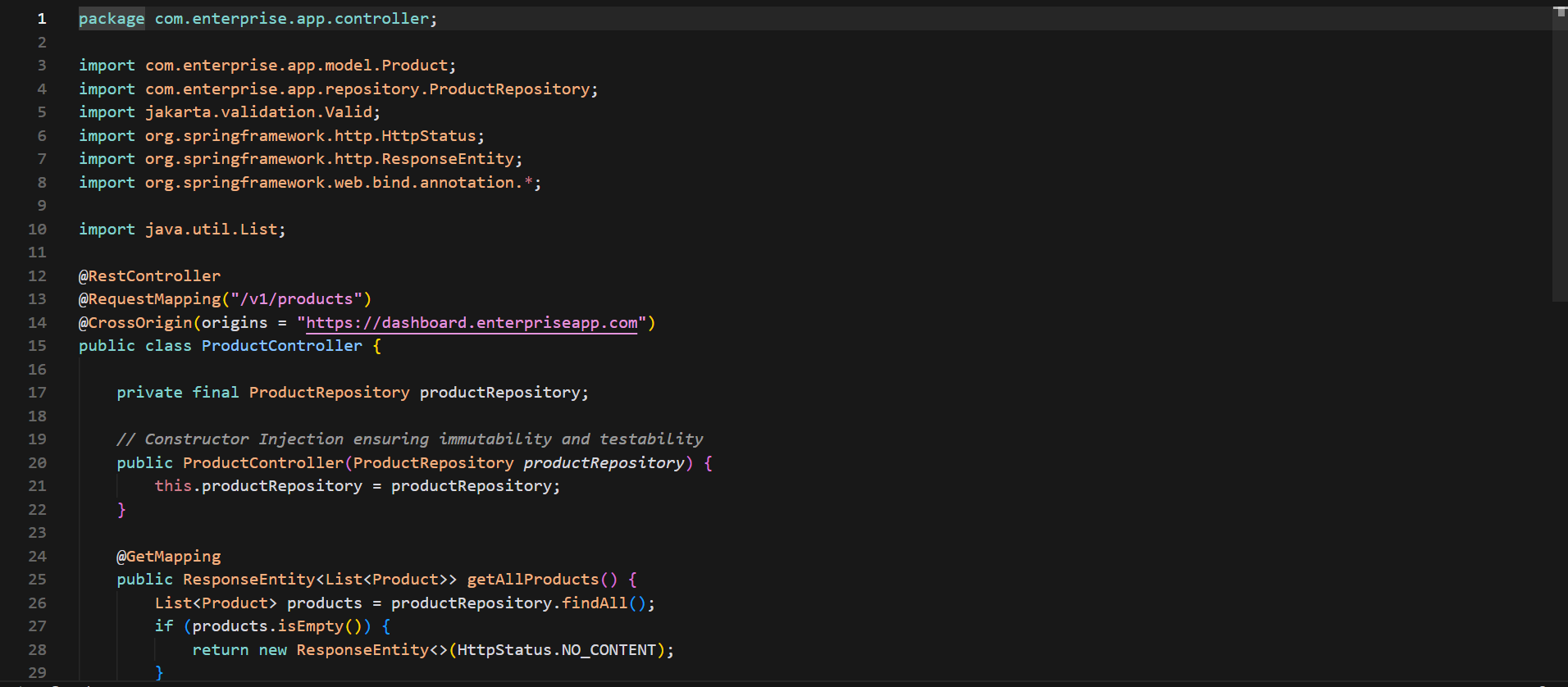
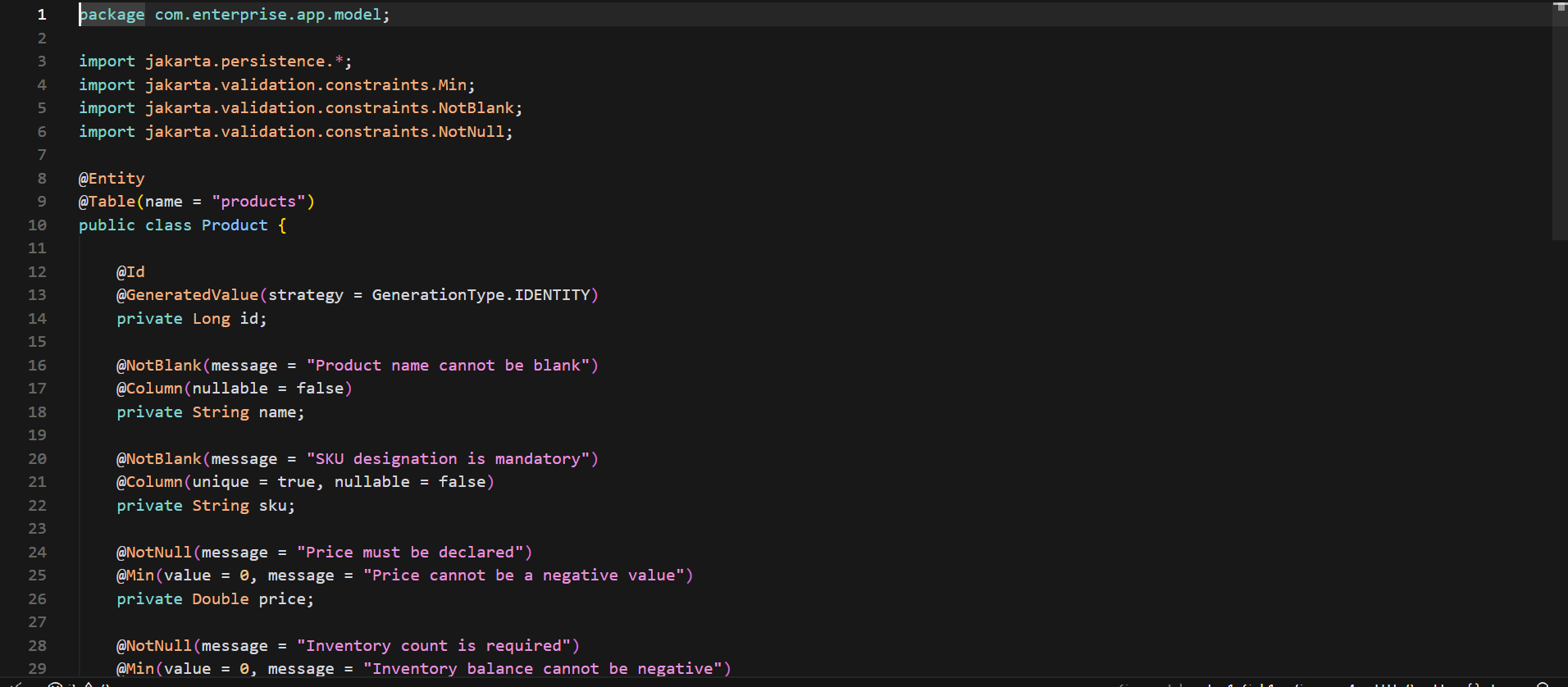
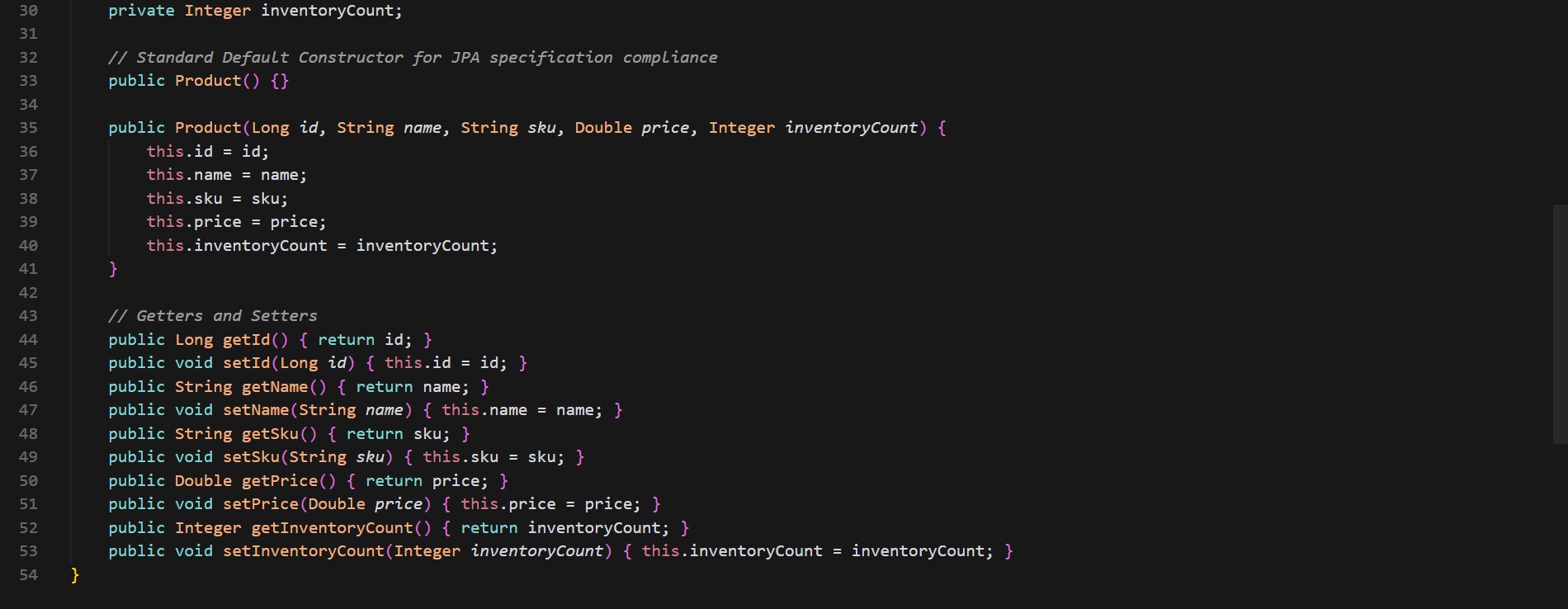
Every backend should have efficient, safe and standardized endpoints. Below is the example of production-ready Spring Boot REST controller which utilizes constructor injection, data persistence via Spring Data JPA, validation and custom exceptions handling.
Java Application: Product Leader

Java Application: Immovable Entity Object (Using Java Records & JPA)
5. Resilience & Data Access Layers
The strength of any full-stack application lies in its ability to access data. Therefore, developers need to learn both relational and non-relational database systems, as well as ORM principles linking them to Java programming.
Relational Databases vs. Non-Relational Data Storages
SQL (PostgresSQL, MySQL, Oracle): Relevant in use cases where you require high-level compliance with the principles of ACID (Atomicity, Consistency, Isolation, and Durability).
NoSQL (MongoDB, Redis, Cassandra): Used for high-performance, low-latency environments, unstructured documents or data caching globally.
Management of ORM frameworks (Hibernate and Spring Data)
ORM framework Hibernate is designed in such a way that it helps users avoid writing SQL statements by directly associating the database table with Java classes. Nevertheless, certain architectural mistakes may result in performance degradation.
❗ Major Architectural Mistake: $N + 1$ Query Issue
The $N + 1$ query issue arises when there is the execution of one primary query to obtain the parent data followed by $N$ more queries that retrieve the child objects.
For instance, obtaining 50 orders from the database followed by making 50 SQL requests to get the information about the customers corresponding to each order. Solution to the issue: Full stack developers overcome the performance issue by explicitly configuring Entity Graphs or using JOIN FETCH queries:

6. Robust stateless identity and edge security pipelines.
Protecting web applications needs a cohesive defensive approach for all tiers of your architecture.
Edge Validation, CSRF, and CORS Implementation
Cross-Origin Resource Sharing (CORS): Given that the frontend single-page application (SPA) and backend API services exist in separate subdomains or different ports, developers need to create specific CORS explicit whitelists. Wildcard settings (*) should never be implemented in the production environment.
Cross-Site Request Forgery (CSRF): Stateless REST backends which carry authentication in the HTTP Authorization header are automatically protected against CSRF attacks; however, for applications using classic cookies, the CSRF token validation pipeline should be implemented.
Stateless Identity Management: JWT & OAuth2
Today's full-stack architecture favors token-based authentication mechanisms.
[According to the illustration of the stateless JWT flow, the client sends its credentials, and the server produces a signed JWT. The client would then add the signed JWT in the authorization header for subsequent API requests.]
So, the client sends its credentials directly to the secure portal.
The backend generates a signed JWT token after the successful authentication of the client, which contains details on the various roles user has, scopes utilized and time-duration for which the token is valid.
This token is obtained by the client and used as a part of the header of further requests: Authorization: Bearer <token_string>.
API modules then check the authenticity of the received token without any stateful checks (there is no need to look for session IDs).
7. Cloud-Native Application Development & DevOps Practice
A modern-day programmer's work is not done after compiling the program in his/her local environment. It is also essential to know how to deliver and manage the program's packaging and delivery in the cloud environment efficiently.
Strategy for Containerization: Multi-Stage Docker build
In order to provide consistent execution irrespective of whether the application is running on the local machine of developers, testing, or production cloud clusters, applications are packaged using Docker.
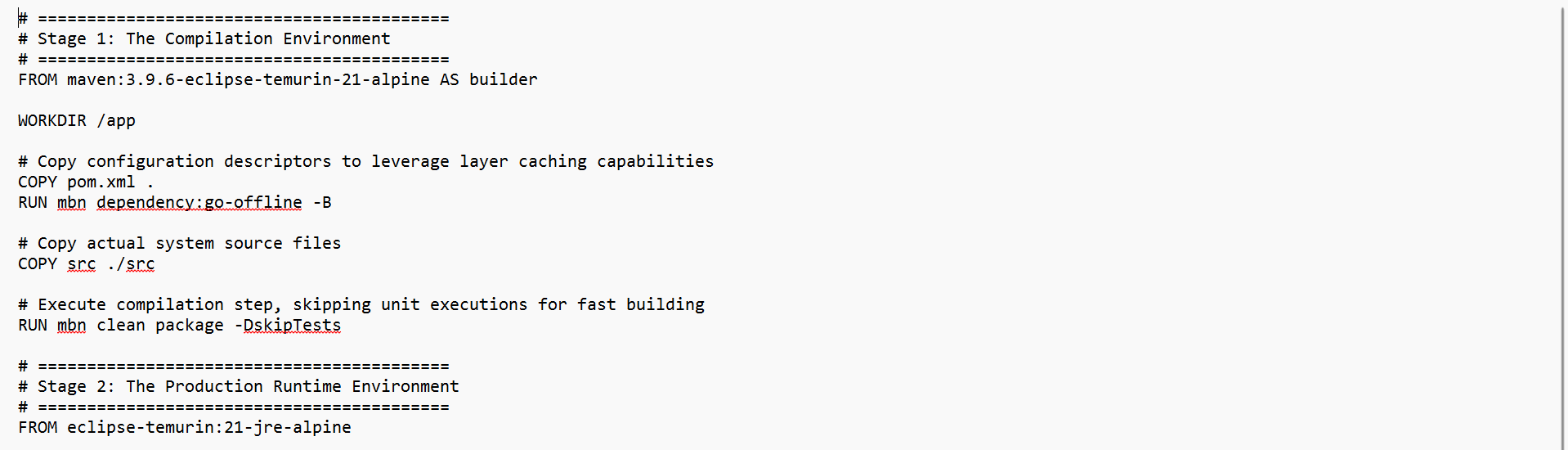
Earlier, Docker used to include everything from build tools (Maven or Gradle) to source code, which was highly inefficient and posed significant security threats. Now-a-days, it is mandatory to follow the multi-stage Docker build pattern.
Production-Upgrade Multi-Stage Dockerfile

Orchestration and CI/CD Workflow Automation in the Modern World
After being containerized, most apps will be deployed using Kubernetes for orchestration of scaling, routing, self-healing and deployment processes through the server clusters.
The current deployment process is built around the CI/CD pipeline which is automated and consists of building and testing the code after every push, image compilation with the use of multi-stage docker configuration, and GitOps approach (ArgoCD, Flux) that synchronizes cluster states with changes in your Git repository instantly.
8. Continuous Optimization and Production Monitoring
Once you deploy the systems into production, you have to gather real-time data to monitor their performance and optimize resource utilization.
Distributed Tracing & Metrics for Performance
Within a decoupled or microservices architecture, individual user transactions frequently cross several network hops and system boundaries. In order to determine the underlying cause of unexpected delays or failures, we need centralized solutions for monitoring such problems:
Prometheus & Grafana: Promtheus periodically scrapes metrics from the operations of the system (including metrics related to heap allocation, CPU usage increases, and HTTP request counts), and Grafana presents this information in an interactive dashboard form.
Micrometer & OpenTelemetry: Using Micrometer & OpenTelemetry in our Spring Boot configuration will automatically assign a traceId to any incoming requests. This traceId travels through all subsequent microservices calls, logging statements, and even database queries.
Comprehensive Implementation Checklist
To complete your architectural journey map, here is a fundamental checklist to ensure that your enterprise full-stack systems align with contemporary architecture
Architectural Layer Checkpoints
Strict Layering: Ensure that client presentation layer is separated from server layer and communicates only through REST or GraphQL API.
Data Ingestion Validations: Implement the rules for validating incoming data both on UI level and in controllers (jakarta.validation) in order to prevent bad data coming into your app.
Full Fault Boundaries: Implement global exception handling (@RestControllerAdvice) to catch runtime exceptions, log the technical stack traces in internal logs and return safe error messages to clients.
Database Performance Tuning: Perform deep analysis of the code that interacts with the database in order to identify the performance bottlenecks like the $N+1$ queries problem and fix them with JOIN FETCH operations.
Stateless Identity Pipelines: Implement authentication services based on cryptographic protocols such as OAuth2 or JWT.
Light Containers in Production: Create light container images with multi-stage Docker builds running in unprivileged minimal operating system environments.
Deep-Dive: The Lifecycle of a Java Object in Memory
To become fully proficient in full-stack Java development, you will need to dig deeper than surface-level ideas to learn precisely how the JVM synchronizes the Stack and the Heap at runtime. After the receipt of the REST request by the microservice, the JVM gives out a specialized platform or virtual thread to fulfill the request. This thread gets its own individual Stack.
In order to invoke a method within the thread, there is a Stack Frame added on the Stack every time. It acts as a temporary working area, housing the local primitive type variable values (such as int, double, boolean) and precise references of the objects.
For example, when a login request by a user is processed by your Spring Boot backend, your controller makes use of:

The JVM takes it to mean two actions, one for each memory space. Creation of a new User("admin") implies an allocation of the Heap memory.
At the same time, the declaration of the local variable User currentUser generates a very compact 64-bit reference pointer inside the current Stack Frame. It contains only the hexadecimal memory address of this User object in the Heap.
Stack memory being tied directly to thread execution, its garbage collection is extremely fast. As soon as the current method ends and encounters the closing curly bracket, its stack frame is popped from the stack. Local primitive variables and the currentUser reference pointer disappear instantly.
But the real User object lives past the method call and stays in place in the Heap. It becomes what is called an unreachable object. There is no stack frame anymore, hence, no active reference pointers pointing to this particular heap address.
That is where the Garbage Collector (GC) comes into play. The JVM will be executing some background GC threads (like G1 or Z Garbage Collector) to look through the heap for such unreachable objects.
By using algorithms such as Mark-and-Sweep, the Garbage Collector detects those objects which are not connected to any root references anymore and deallocates heap space for them and defragments memory pool to allocate new objects.
Understanding such double memory management mechanism is very important to avoid two main problems in the production of enterprise Java applications:
StackOverflowError – this problem appears because of lack of space in the Stack, often resulting from infinite recursion or deep nesting of method calls that push new frames on the stack without popping them off.
OutOfMemoryError (OOM) – this problem occurs because Heap is totally filled with objects. Such kind of error appears because of memory leak – the case when the object is not used anymore, but some kind of references to that object are being saved (static global collection or open database connection pool).
Conclusion: Utilizing the Modern Java Ecosystem
The evolution of full stack Java from heavy and monolithic frameworks to decoupled and cloud-native architecture is a great architectural feat. Leveraging the benefits of highly reactive and components-based frontends (e.g., React, Angular) coupled with efficient and high-performing backends based on Spring Boot 3.x and other modern language features, today’s engineers can create reliable distributed applications.
As can be seen, mastering the modern Java ecosystem requires a balanced approach which implies gaining profound knowledge of low-level JVM engineering (such as managing Stack and Heap allocations in order to avoid memory leaks in production) alongside high-level architecture (containerization with multiple stages, stateless token identity management and observability pipelines).
Finally, Java’s architecture revolution continues to keep the language in a unique position in enterprise-level software development. Aspiring developers wishing to adapt can enroll in a high-standard full stack online course that equips them with the comprehensive framework required to successfully integrate client-side UI architecture with efficient JVM processes.