
The Complete Salesforce Course: CRM Fundamentals to Enterprise Architecture
Last updated on Aug 20, 2026
In early March 1999, Marc Benioff, Parker Harris, Frank Dominguez, and Dave Moellenhoff initiated the revolution against the business software industry by setting their goal to change the status quo through technological advancement. In this regard, enterprise software was characterized by complexity, high price, and low reliability. Indeed, businesses spent a lot of money on physical servers, software licenses, and hired experts to implement solutions over the course of several years. Data silos and complicated upgrade processes were commonplace, negatively impacting the small and medium businesses.
The founders of Salesforce believed that business software should be just like any other utility—that is, it should be as simple and universal as possible. They built the notorious “No Software” campaign around this idea of theirs and started using the principle in practice, thus becoming the founders of the SaaS (Software as a Service) concept.
What commenced as a specialized sales force automation application has turned into the leading customer relationship management (CRM) system at present and the most large enterprise software corporation globally. Salesforce has modified its processes constantly during the last twenty years. With the help of Salesforce, companies have altered the way they keep, study, process, and apply customer information in various processes, including sales, customer support, marketing, and digital commerce, enterprise cooperation, and artificial intelligence.
Salesforce has continually transformed its operational processes in the past two decades. To comprehend the redesign, professionals usually begin learning through a more systematic structured salesforce course for understanding the ways in which the organizations gather, analyze, utilize, and apply data related to clients.
Building Principles: Multi-tenancy and Metadata-Based Architecture
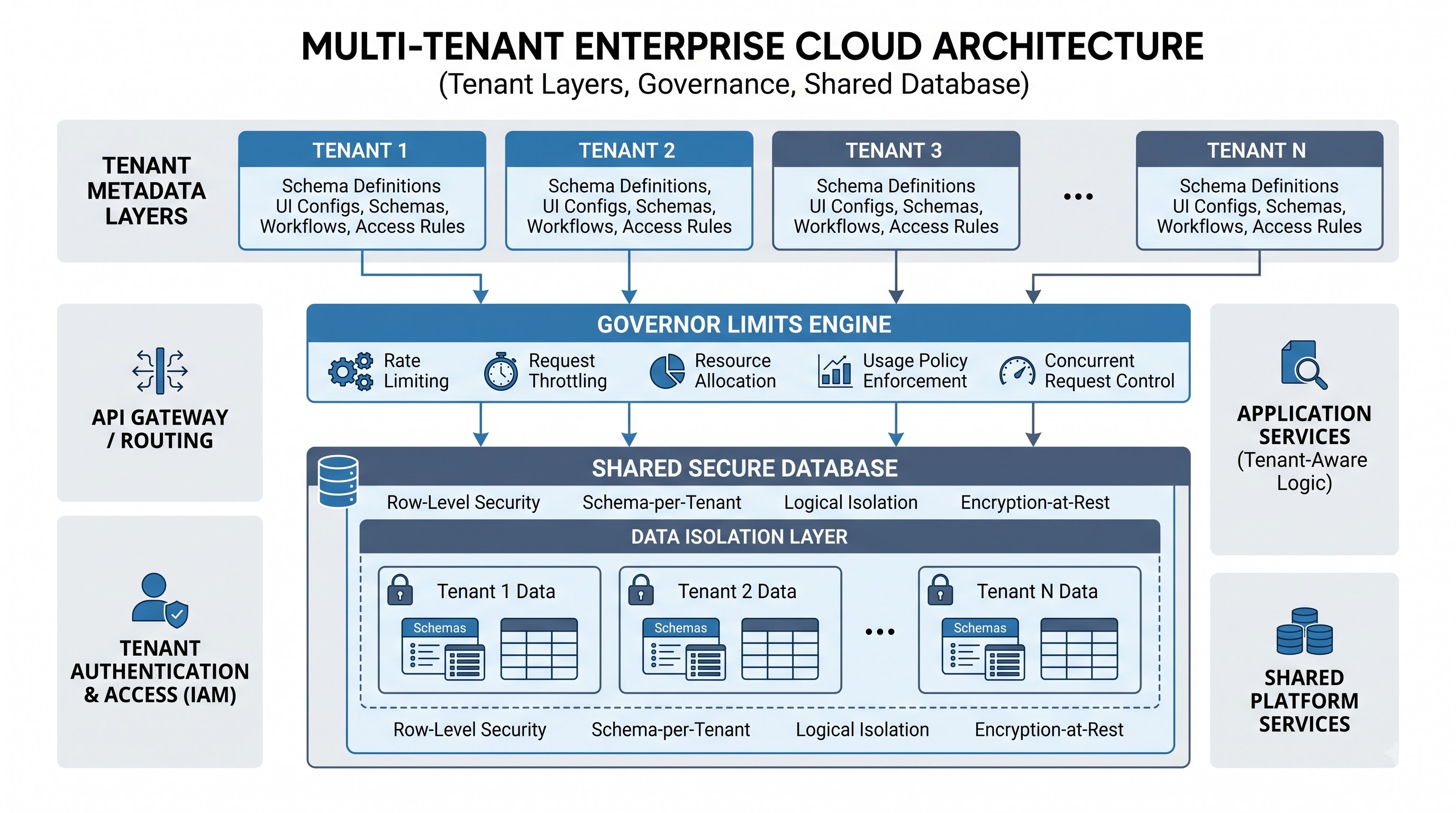
Recognizing the factors that allowed Salesforce to succeed against conventional software architectures is only possible with a broad examination of the main architecture of the architecture which is a cloud-based and multi-tenant architecture.
Multi-Tenancy at the Enterprise level
The term multi-tenancy refers to a system based on multi-tenant architecture. In these systems, various client organizations (i.e., tenants) use the same system with all necessary components while maintaining complete isolation of their own information. In traditional multi-tenancy systems, each corporation operated its own hardware, software updates, and changed database design. Salesforce systems operate according to the multi-tenancy principle, which means that all clients are using the same technology stack.
Salesforce has come up with strict computational limits called governor limits that prevent any single user from completely monopolizing the available computing resources, memory, or database jobs threads. The governor limits work by restricting the execution times, database calls, and memory usage on the platform, thus ensuring universal access to the service.
The Metadata Driven Architecture
The most notable innovation brought by Salesforce is the complete separation of application metadata from the underlying business data. According to Salesforce, data denotes actual operational data such as names of customers, amounts of deals, email texts, and helpdesk tickets. The metadata is used for the purpose of identification and it is represented by such components as: DB schemas, custom fields, page layout properties, validation scripts, security policies, and automated workflow logic.
Since customization is done as metadata layers and not through hard-coding any changes in the database, Salesforce can be customized without jeopardizing the stability of the platform. When Salesforce releases its seasonal updates, metadata configuration eloquently adopts significant updates in the software platform without losing business operations, processes, and integrations. This infrastructure decoupling allows technology departments to overcome the upgrade paralysis that has long troubled companies in the area of enterprise resource management as well as customer relations management.
Core Cloud Ecosystem
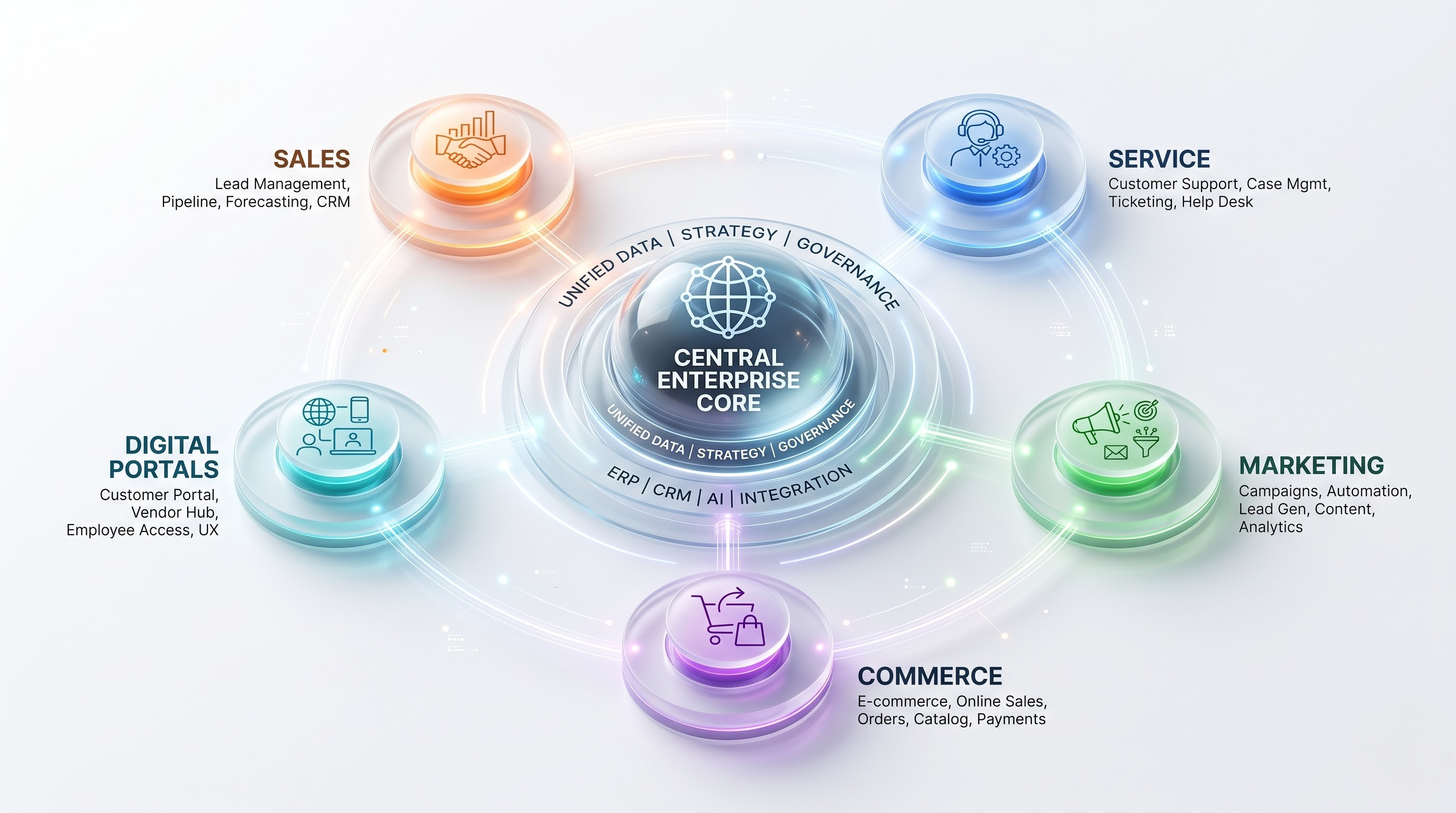
The main focus of Salesforce on sales pipeline management was quickly expanded into a portfolio of interconnected services and applications known as Customer 360 platform. Each cloud in this solution covers a vertical in terms of function of an application while using one data model.
Sales clouds
Sales cloud is the first product developed by the company. This application was designed to manage sales processes from collecting leads to signing contracts.
In addition to the essential record keeping aspects, the modern Sales Cloud has sophisticated capabilities for intelligent sales engagement, activity capture automation, and predictive deal scoring. Thanks to those technologies, sales representatives are now able to prioritize potential customers depending on their win probability for the deals, initiate outreach efforts automatically using cadence-based communications, and track in the same console information regarding their deals’ success.
Service Cloud
In order to meet customers’ needs, the Service Cloud has taken operations out of the traditional reactive ticketing methods of customer service and beyond. To fulfill this requirement, the Service Cloud gives customer care agents one platform, which features a holistic view of the way the customer journey went.
Now the platform can connect the support query to the best qualified available agent via traditional telephony, email, web chat, messaging applications, and social media. Moreover, the platform has integrated articles of knowledge management, automated workflows, and tools for managing field services that allow organizations to solve various technical problems in a very efficient manner.
Marketing Cloud
The tools offered by Marketing Cloud enable digital marketers to oversee multi-channel customer journeys across various means of communication, including email, mobile messaging, digital advertising, web personalization, and social networking. The use of audience segmentation engines, dynamic content personalization, and real-time triggers helps marketers send contextual messages instead of standard batch messages. Marketing departments can focus on cross-channel communication to measure attribution, compute the return on investment of campaigns, and create efficient lead nurturing strategies.
Commerce Cloud
Commerce Cloud is based on the acquisition of Demandware and is now used to manage enterprise-level digital stores in both B2B and B2C environments. The platform gives brands an opportunity to create and manage digital buying experiences, update their dynamic catalogs, optimize their search results, improve the process of inventory fulfillment, and manage large-scale payments. It also integrates with the Sales, Service, and Marketing levels of business, so that marketers learn the customer behavior patterns post the purchase.
Experience Cloud
Previously known as Community Cloud, Experience Cloud gives enterprises the chance to create branded digital portals, collaboration forums, partner management locations, and self-help sites for customers. It facilitates communication between partners, vendors, and customers by providing safe access to Salesforce objects and procedures over outgoing web platforms.
Industry-Specific Solutions: Verticalized CRM
In creating Industry Clouds to develop customized CRM solutions, Salesforce has considered that the traditional CRM processes require substantial modification. Industry Clouds offers distinctive solutions for certain industries.
Financial Services Cloud: This cloud, designed for use in retail banking and wealth management, offers a way of tracking complex networks relevant to households and clients as well as compliance audits, financial objectives, and portfolios.
Health Cloud: Health Cloud is designed for healthcare organizations and payers. It connects patient information and e-health records, patient treatment plans, networks of healthcare providers, and clinical processes while ensuring that all necessary privacy regulations are adhered to.
Manufacturing Cloud: This piece of software is meant for manufacturers and is oriented toward synchronization of manufacturing schedules and sales agreements. This solution gives the manufacturer an ability to synchronize sales forecasts with their manufacturing capabilities and learn about long-term customer projections and actual demand of their products.
Public Sector Solutions: This solution is developed specifically for government institutions. It is intended for licensing and permits, managing social programs, and interacting with citizens using efficient cloud solutions.
4. The Modern Data Engine: Salesforce Data Cloud
It is well-known that the enterprise IT industry is characterized by its fragmentation and fragmentation of customer information, behavioral insights, enterprise resource planning data, and legacy systems. However, in order to drive AI and real-time analytics, Salesforce announced its Data Cloud, or Data 360 as it is called in the unified company architecture; it is basically a hyper-scaled data engine.
Real-Time Data Ingestion and Data Harmonization
Data Cloud allows ingestion of structured, semi-structured, and streaming data from both internal Salesforce apps and external relational databases, telemetry from websites, mobile apps, and the Internet of Things ecosystem. Consequently, this data undergoes mapping into standard Cloud Information Models, which makes it possible to create unified customer graphs.
Identity Resolution and Calculated Insights
The challenges faced in managing customer relations include identity fragmentation. This phenomenon occurs when a person is recognized as a customer in Sales Cloud while the same person holds the Support case in Service Cloud, an anonymous browser cookie in Commerce Cloud, and an external ID in the ERP billing database. The issue of fragmented identity has timely been solved by the Data Cloud through sophisticated deterministic and probabilistic algorithms. This technology enables putting together the fragments of identity data into stable global customer profiles.
Zero-Copy Architecture and Federation
Old data architectures make use of inefficient extract, transform, load (ETL) processes that replicate a lot of outside information on CRM systems and incur lots of money on infrastructure and security. Salesforce introduced a new zero-copy federation technique that cooperates with the biggest cloud warehouses, e.g. Snowflake, Google BigQuery, and Databricks. Because of virtualized data given on both ends, Salesforce can extract, process and act on the analytical data stored in the cloud data lake without having to necessarily clone or transfer the source records.
The Artificial Intelligence Frontier: From Einstein to Agentforce
Today, artificial intelligence passed through a significant transformation from a test tool to the core of the entire Salesforce technology platform.
The Development of the Einstein Artificial Intelligence
Salesforce first presented Einstein as a detailed adaptive platform of predictive intelligence that facilitated processes such as lead scoring, opportunity insights, case Classification, and next-actions suggestions. With large language models and generative AI taking leaps in technologies, Einstein became capable of autonomously generating personalized sales email, drafting contextually competent service ticket answers, summarizing intricate interactions, and assisting its developers in generating auto-composed formulas and codes.
The Einstein Compliance Layer
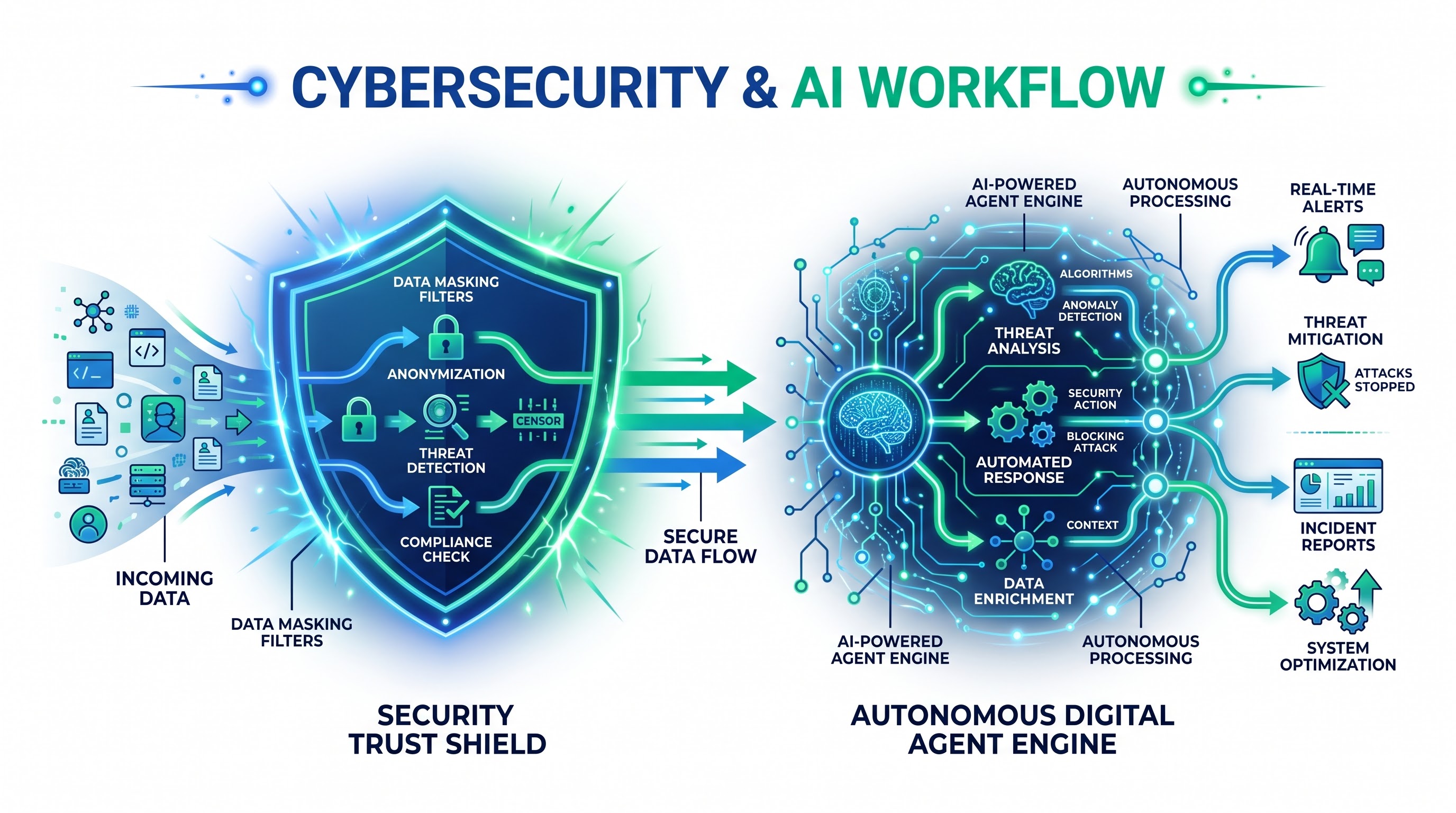
When it comes to the use of AI in highly regulated institutions, security, compliance, and privacy measures must be strict. Addressing the enterprise security issues of the Einstein Trust Layer, Salesforce implemented an architectural security layer between the enterprise data repository and external linguistic models.
Dynamic data masking is enforced by Trust Layer. This process involves removing the personally identifiable data such as credit card numbers and social security numbers from the data before it is sent to the external foundation models.
Besides, zero-data retention agreements are in place as part of the Trust Layer. This prevents the third-party AI provider from using business data to train its foundation model.
The architecture is very robust with the presence of the toxicity monitoring systems, grounding system, and audit trails.
Agentforce and Agentic AI Paradigm
The enterprise software sector is now transforming from the state when conversational generative copilots are used only for human help, to the point where autonomous agentic systems can plan, think, and carry out several operations independently. The introduction of Agentforce signifies this transition.
Agentforce is a revolutionary system as compared to ordinary and traditional chatbot solutions. Agentforce uses the idea of dynamic technology to receive and process enterprise data in real time.
For example, in a realistic setting, a self-governing customer service bot can deal with an incoming request about a delayed delivery, check the shipping carrier status, apply internal policies related to compensation, create a return label, make some credit to the account, and initiate an updated notification series in a matter of seconds without needing human input unless some boundary for escalation is exceeded. The agentic model turns software from a system that remains idle and where users have to make the necessary administrative updates into a digital employee that performs all important operations.
Strategic Acquisitions: Expansion of the Ecosystem
Both organic growth through in-house innovations and large-scale mergers and acquisitions have contributed to the success of the company. Unlike being isolated instruments, these acquisitions have become part of the main Customer 360 platform.
MuleSoft: API-Led Connectivity
Modern businesses tend to use many unconnected software systems, whether they be on-premises legacy installations, clouds managed by third parties, or specially developed databases. MuleSoft became a part of Salesforce to address these difficulties. With Anypoint Platform, MuleSoft created an API connectivity approach that classifies integration into several layers: system APIs that give access to core data, process APIs that make business logic work, and experience APIs that provide data to applications used by end customers. This structure enables organizations to integrate their systems, be they complicated ERP, logistics, or banking software.
Tableau: Visual Analytics and Business Intelligence
Tableau was acquired and integrated to provide companies with ultimate capabilities in analytics. This solution processes raw operational data into visual dashboards and predictive models. It is embedded into the data layer of Salesforce and helps executives and frontline managers detect market anomalies, monitor sales processes, allocate supplies, etc.
Slack: Digital Headquarters and Communication Interface
By acquiring Slack, Salesforce has revolutionized the way companies work together. Instead of treating CRM as just another web application that employees need to check on from time to time, Slack becomes the digital layer for communication and collaboration for all teams. Thanks to automation solutions and the use of interactive dashboards, employees together with Agentforce representatives can analyze sales opportunities, approve discounts and deal with the escalated client issues in the chat.
Salesforce has achieved a remarkable level of penetration in the market for software development, largely because of its innovative approach to the process. Since both non-technical staff members and professional programmers use the single framework, Salesforce allows for effective and seamless collaboration.
Salesforce Flow as the Engine of Declarative Automation
Salesforce Flow is an important part of the platform and serves as its low-code automation engine. By means of Salesforce Flow, any business analyst and technical administrators are able to create effective business processes and complex automations using simple drag-and-drop features. Screen Flows help the organization create guided user experience based on the input data.
Programmatic Extensibility
The platform not only has declarative functionalities but also possesses a powerful programmatic development layer designed for more intricate applications. Those interested in acquiring the necessary skills related to declarative and programmatic development can become acquainted with practical project work via structured sfdc online training:
Apex: An object-oriented proprietary programming language that is strongly typed and similar to Java, Apex runs directly on the Salesforce multi-tenant server infrastructure. It allows for execution of database operations, complex data manipulations, and web service integrations, all conducted under strict governor limits.
Lightning Web Components (LWC): A modern front-end framework that follows the latest web standards and allows developers to create responsive, simple, reusable interfaces.
Salesforce Object Query Language (SOQL): An efficient querying language that was created primarily for retrieving structured records and the hierarchies of objects stored in the database of the platform.
Modern DevOps, Scratch Orgs, and Governance
Enterprise software development today necessitates the use of controlled source code, continuous integration, and automated testing methodology. Salesforce advanced from old method-based development modes to new model system-enhanced app lifecycle management. With the help of Salesforce Command Line Interface, developers can acquire ephemeral pre-formatted environments called scratch orgs, track metadata in Git repositories, and automate their Cloud using CI/CD tools.
The Broader Ecosystem: AppExchange, Partners, and Trailhead
In addition, being one of the worldwide technology leaders, Salesforce possesses one of the biggest entrepreneurial ecosystems in the modern technology industry.
AppExchange: the enterprise Cloud marketplace
Established in 2005, AppExchange is the leading platform for enterprise cloud software. Any independent software vendor, systems integrator, or developer can publish their ready-made app, integration, flow, or AI agent there. Thus, no matter if the organization needs e-signature, ERP, document flow services, or specialized finance tools, millions of verified apps are eligible for installation in Salesforce without any programming.
Global Partner Network
A big international network of consultancy firms, global integrators and regional boutique hotels helps the platform become more popular among international companies. The partners make architecture designs, carry out migration of data, implement industry clouds and design custom apps. Each of the activities mentioned leads to a huge economic impact in the Salesforce Economy. In order to meet demand for certified talent, many professionals are pursuing comprehensive sfdc training online.
The Trailhead System – a Game Based Experience in Learning and Creating IT Careers.
Trailhead provides short modules along with practical environments and pre-defined learning paths which encompass basic administration, software architecture, data management and artificial intelligence in prompting. In the event learners want structured, instructor-supervised education, they can apply for a dedicated salesforce certification course and benefit from practical assistance.
Taking into consideration the lack of qualified professionals capable of growth of the company in the future, Salesforce created Trailhead. Trailhead is a gamified platform for online learning that provides the user with small modules, development sites and series of certifications covering admin basics, program architecture, data planning and AI prompt design. It provides many people with access to IT education and to the world of technology.
Security, Trust in Business, and Governance
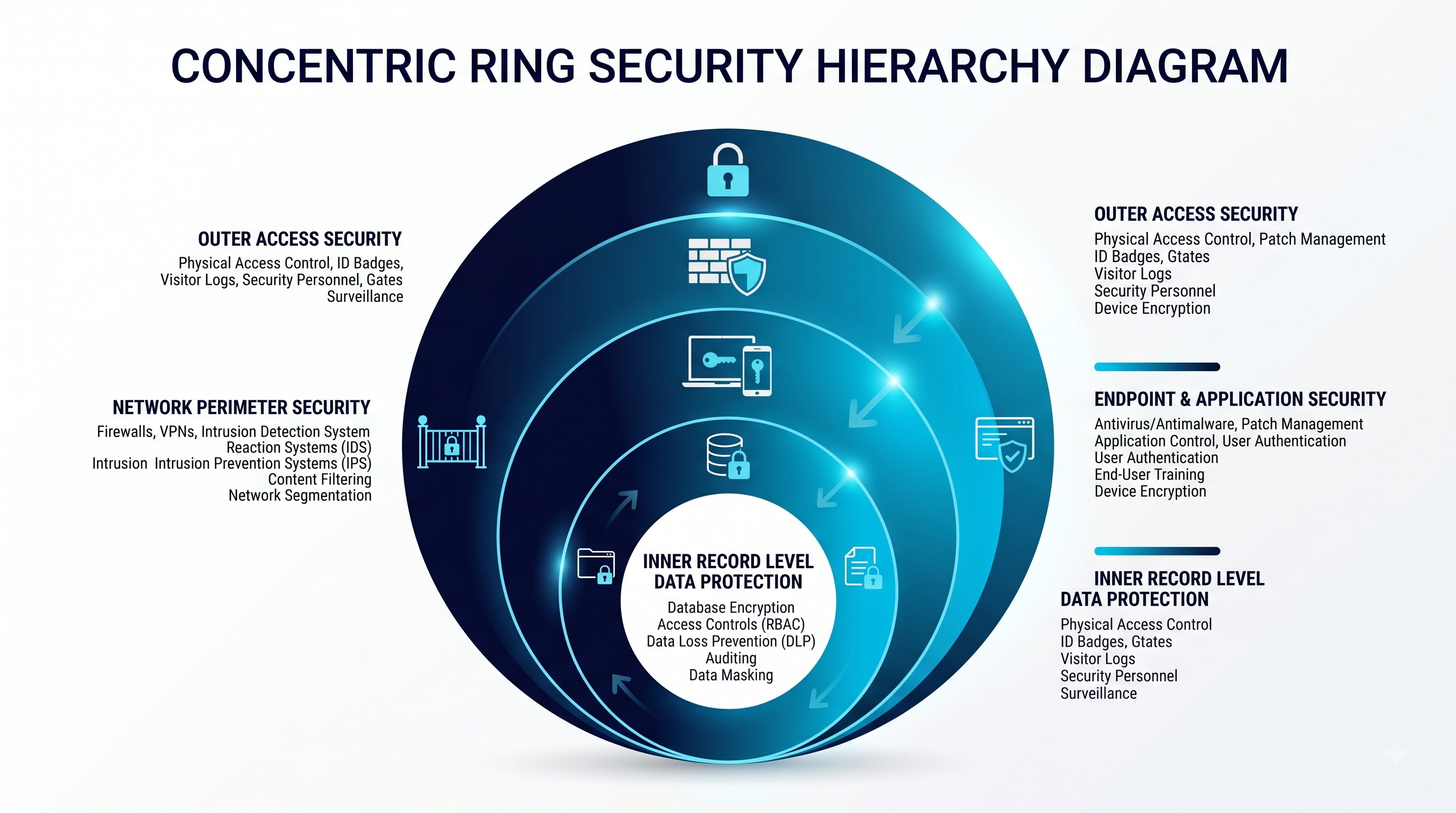
Salesforce says it values trust above all else. The platform is responsible for storing other people's classified data, records of operations, and even proprietary information for many companies around the world. This is why Salesforce employs use of a number of security measures in case there is a threat to its database.
Multi-level Access Control
The data protection facilities of Salesforce work at several operational levels:
Organization Level Security: Implementation of two-factor authentication and single sign-on through various identification standards.
Object Level Security: Defines access rights on the level of user profiles and groups.
Field Level Security: Limits accessibility of fields of some records so that information like salaries and banking data stay hidden even if a user can view the record itself.
Record Level Security: Regulates what records can be visually displayed according to general settings and user's role in the organization.
Market Positioning and Future Challenges
Salesforce has been sitting on top of the enterprise computing heap for a long time with the largest global market share in CRM software as per all leading analysts. But to maintain dominance in other areas of enterprise computing brings continuous challenges and strong competition.
The big hyperscalers and older enterprises such as Microsoft, Oracle, SAP, and Google, are inflicting direct competition on Salesforce. Microsoft represents a strong competitor here with its tightly integrated Dynamics 365, Power Platform, Azure core and Copilot features together.
At the same time, the problem of architectural complexities accompanied Salesforce throughout the years of its growth, and numerous acquisitions and enhancement of features. It is necessary to rationalize platforms constantly to make sure that various disparate products will create the impression of one product.
Moreover, as AI is developing from supervised robots to independent systems capable of decision-making, the companies start facing different issues related to the data source, ethical limits of making decisions, accountability in operation and reliability while using the data. The modern technologies development will be more and more tied to their ability to practice clean data management, zero-copy federation and deterministic autonomous reasoning.
Salesforce demonstrates various important transformations in the course of its development from the revolutionary web-based service for sales in 1999 to the hyperscale data-driven, agent-based intelligence platform. While companies are going through the age of integrated real-time data and autonomous AI, Salesforce remains the key digital system for fulfilling various operations across the globe.