
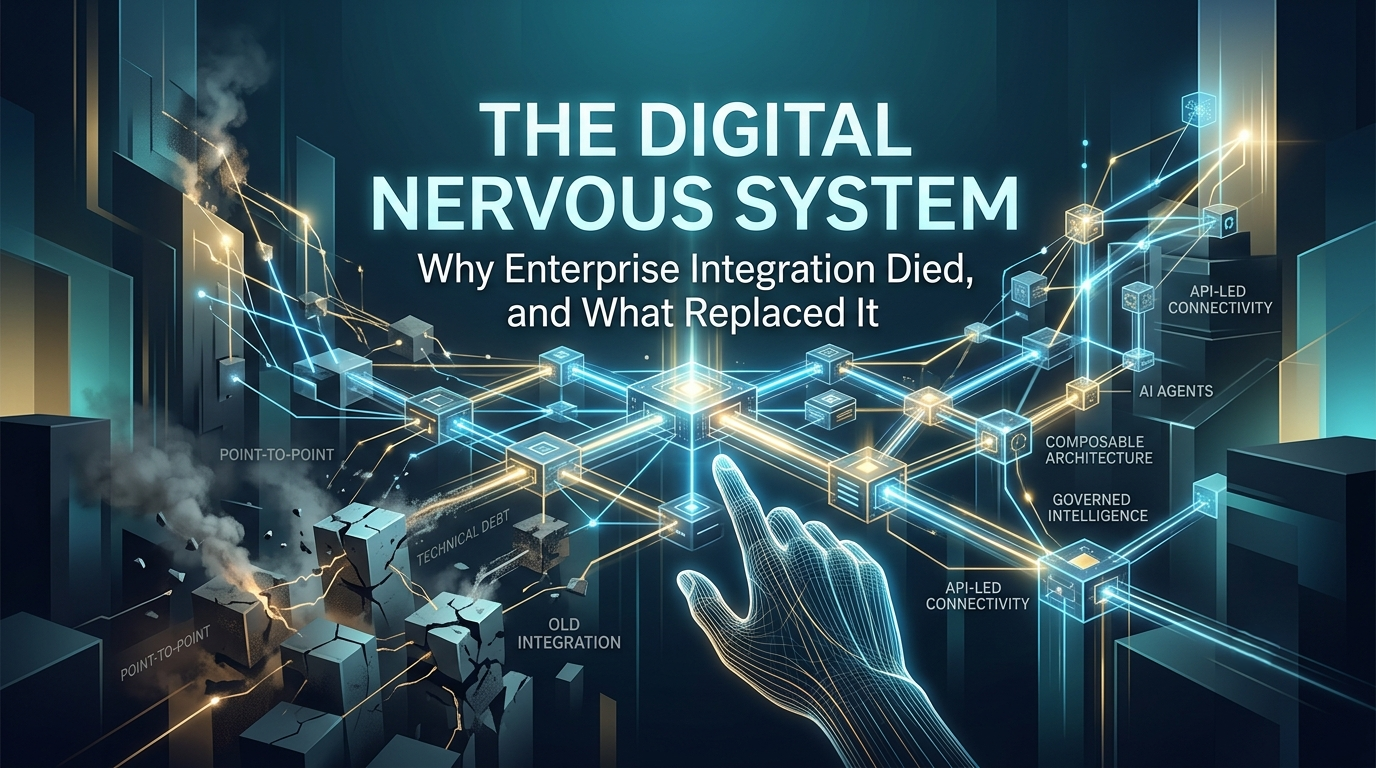
The Digital Nervous System: Why Enterprise Integration Died, and What Replaced It
Last updated on Aug 19, 2026
The Reliability Risk of Unmonitored System Failures In a decoupled enterprise environment, system failures may happen without any alerts regarding the failure from the infrastructure. For example, when a legacy Customer Relationship Management (CRM) system cannot talk to an Order Management System (OMS), the network monitoring tools will report normal uptime, provided that each server is operational and has not gone offline yet, while the process of data transmission fails, thereby leading to the silent disturbance in operations.
These disturbances affect the business process lifecycle in the following ways:
Transactional Disconnect: The payment systems process the payments made by the customers; however, billing confirmations are not delivered to the warehouse systems.
Data Inconsistency: Orders disappear from the list in the warehouse system, while the inventory remains unallocated and there are payments in the customers’ accounts.
Cascaded Failures due to Technical Debt: Fixing the scripts related to point-to-point integrations may lead to problems in the whole accounting, inventory, and reporting systems due to their strong dependence on the legacy connections.
The reliance on undocumented custom scripts is a source of major operational fragility.
2.The Legacy Trap: Spaghetti Architecture and Point-to-Point Debt
Most businesses don’t deliberately create a disorganized technology infrastructure. Dysfunctional architectures come from growth, acquisitions, and immediate operational demands. Let’s take the example of a growing business over the course of a decade:
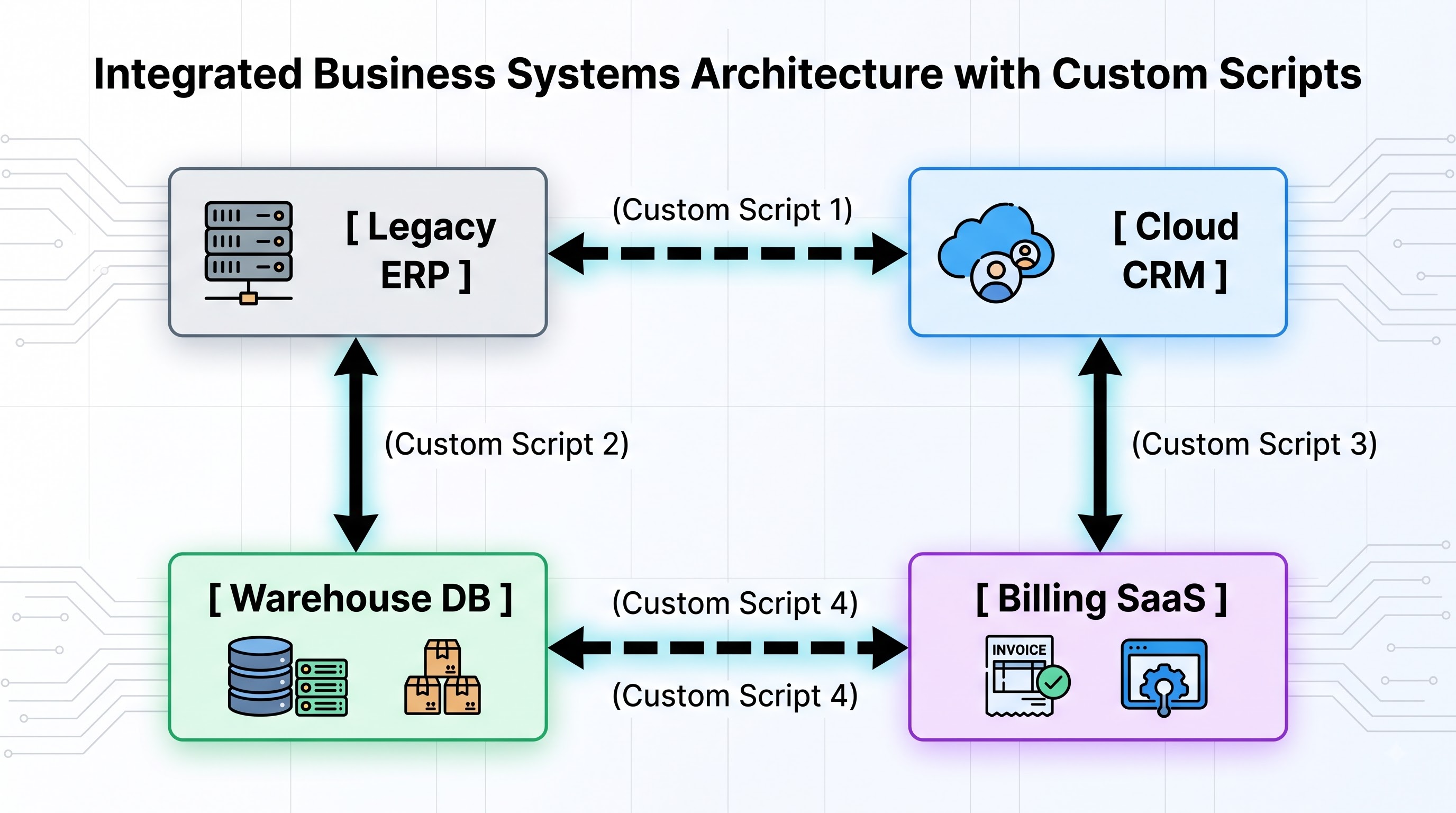
Marketing decides it needs a new analytical tool so the engineer makes a simple Python script for pulling the data directly from the CRM.
When finance uses a new cloud billing system, another engineer sets a custom ETL tool to connect the old ERP.
After logistics implements an automated solution for warehouses, somebody puts together a Java socket connection for synchronization of the inventory counts.
This seems like a fast and cheap way to achieve the goals in quarterly terms. At the same time, the system slowly turns into something that enterprise architects refer to as Spaghetti Architecture.
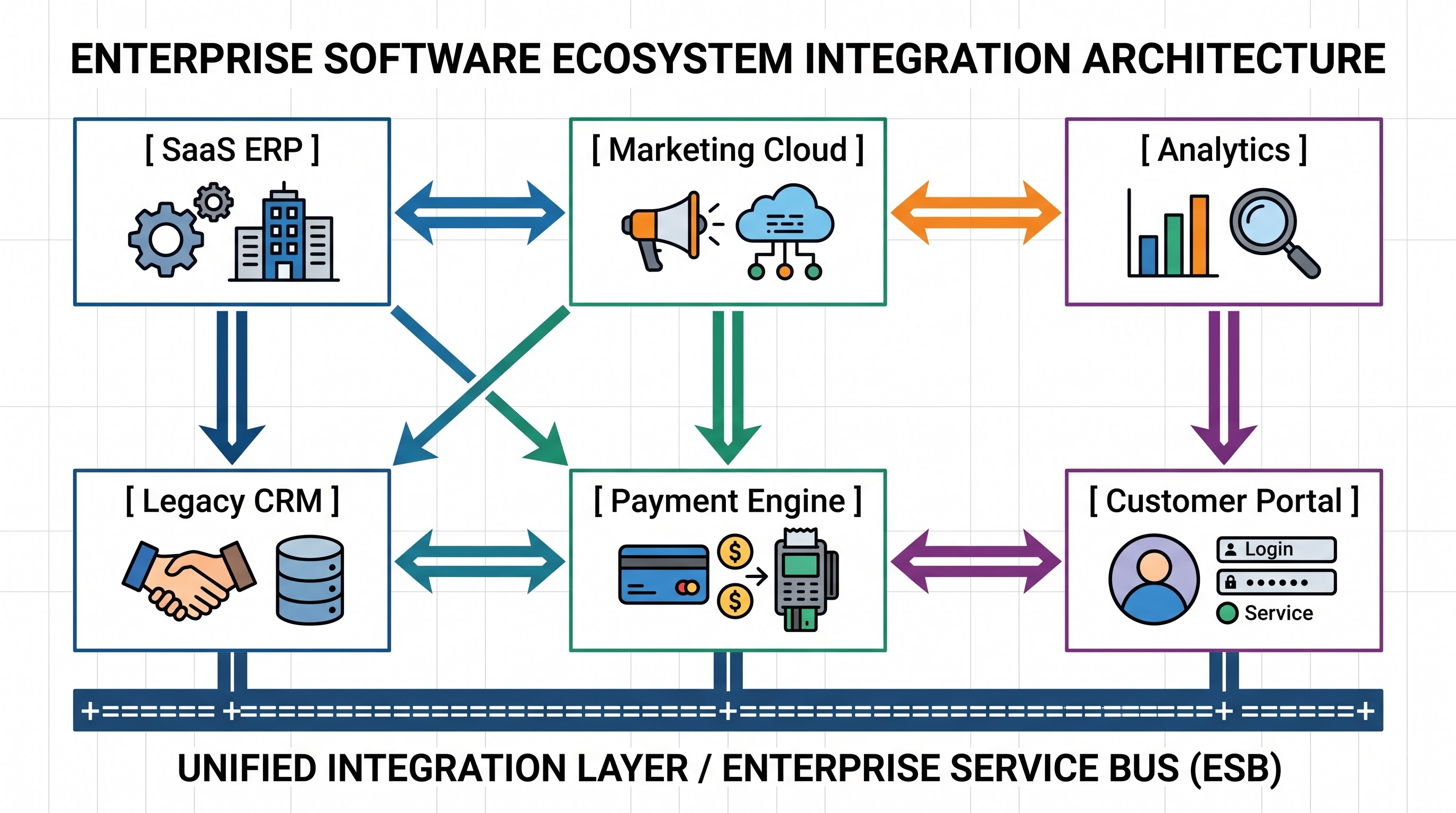
The Hidden Costs of Direct Integration
Brittle Connectivity and Downtime: When systems are keeping in touch through custom scripts, one change in the schema of one system can cost downstream applications. This structural weakness causes unintended consequences such as lost data, system downtime, and lengthy recovery.
High Maintenance Costs and No Room for Improvement: Senior developers spend around seventy percent of their time maintaining, fixing, and repairing legacy integration scripts. Sending engineering resources to routine maintenance prevents any development from proceeding, leading to burnout among development teams.
No Reusability and Increasing Cost: As direct connections are created for particular and isolated cases, each SaaS system and internal application requires new custom integration programming. The absence of reusable items increases engineering costs and makes it impossible for new products to come to the market quickly.
Low Levels of Control and Regulatory Risks: The implementation of custom channels makes data movement unclear. Security teams do not have the full control of the movement of sensitive records, such as personal data and payment information, making them non-compliant with GDPR, HIPAA, and CCPA.
3. The API-Led Paradigm Shift: How MuleSoft Restructured the Stack
The fundamental mistake of point-to-point integration was treating every data connection as a custom bridge between two specific endpoints. To break this cycle, platforms like MuleSoft pioneered API-Led Connectivity—a design philosophy that abstracts raw data sources into standardized, reusable building blocks. Instead of connecting System A directly to System B, API-led architecture divides integrations into three distinct operational layers:
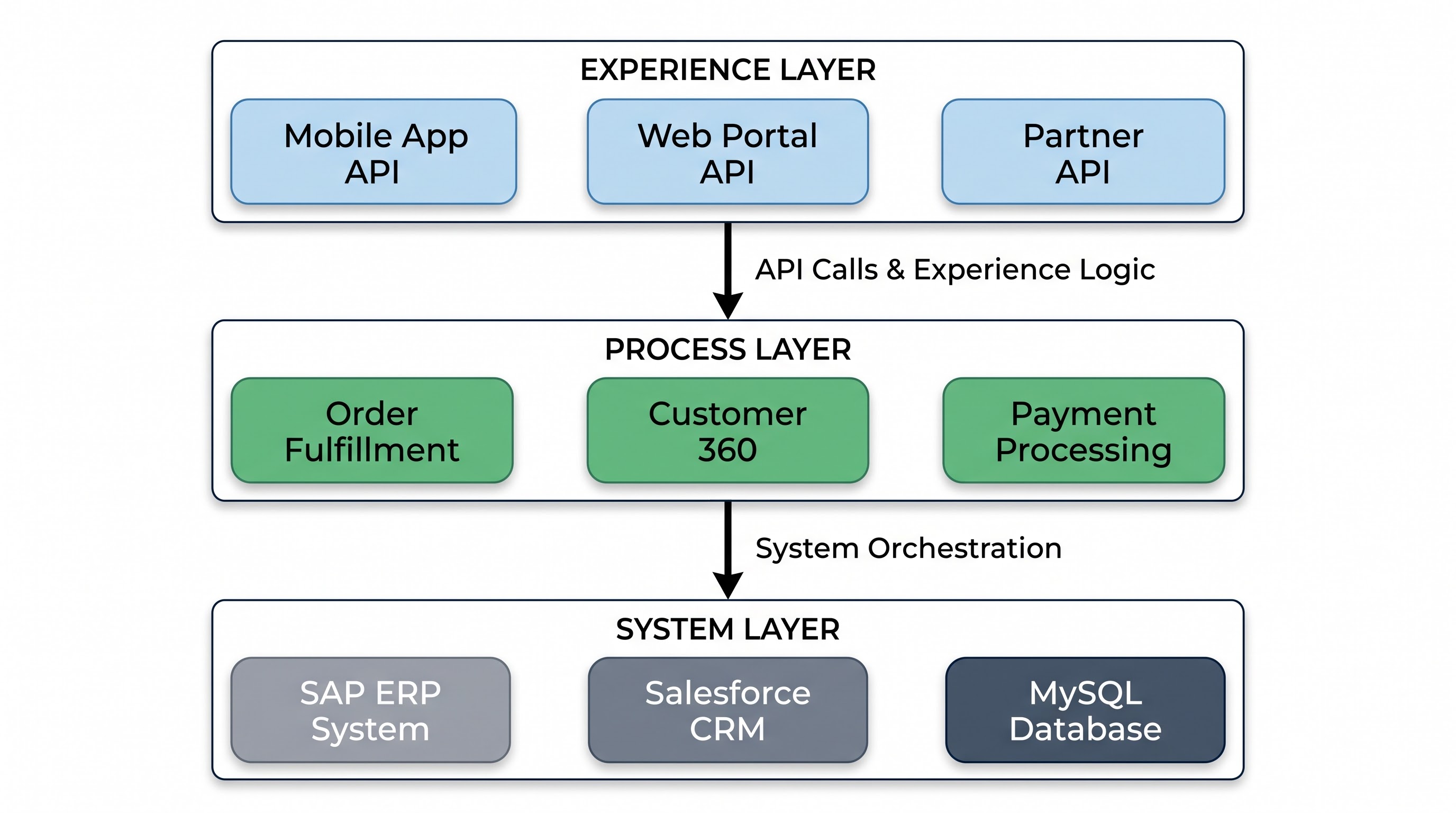
Deconstructing the Three Layers
1. System APIs (The Foundation)
System APIs sit directly above core assets—legacy ERPs, mainframe databases, billing systems, and SaaS applications. Their job is to unlock raw data securely without exposing underlying infrastructure complexity or sensitive operational code.
Example: A Get-Customer-Record System API exposes customer data from an on-premises DB2 database using standardized RESTful endpoints, regardless of how complex the database schema is.
2. Process APIs (The Business Logic)
Process APIs sit above System APIs. They consume raw data from multiple System APIs, perform data transformations via DataWeave, combine business logic, and shape the information into core business processes.
Example: An Orchestrate-Order Process API calls the Customer System API, Inventory System API, and Payment Gateway API simultaneously to execute a single transaction.
3. Experience APIs (The Delivery Mechanism)
Experience APIs take the aggregated logic from Process APIs and format it for consumption by specific end-user interfaces or external channels.
Example: A mobile app needs lightweight JSON payloads formatted specifically for small screens, while a B2B partner portal requires a broader XML payload. Both consume the exact same Process API, but distinct Experience APIs format the payload for each target.
Structural Benefits of Reusability
By enforcing this abstraction layer, systems stop being fragile traps and start operating like modular Lego blocks. When the backend database is upgraded or migrated to the cloud, developers only need to update the System API. The Process and Experience APIs remain untouched, eliminating cascading system failures across the enterprise. Mastering these abstraction patterns through a comprehensive mulesoft course equips architects to build decoupled systems that easily accommodate future database migrations without breaking downstream applications.
4. The Agentic AI Shift: Governing Autonomous Intelligence in 2026
While API-led architecture solved traditional data silos, enterprise technology reached another critical inflection point. Modern IT departments are no longer just connecting static SaaS applications—they are governing and feeding autonomous AI agents.
Organizations are rapidly deploying AI agents across every department:
Customer Service: Autonomous agents that process claims, handle order cancellations, and modify subscriptions directly.
Sales & RevOps: Agents that analyze buyer behavior, update CRM records, and generate custom contracts.
Supply Chain: Agents that autonomously monitor inventory levels and issue purchase orders to external suppliers.
This rapid rollout introduces a structural problem known as Agentic Sprawl.
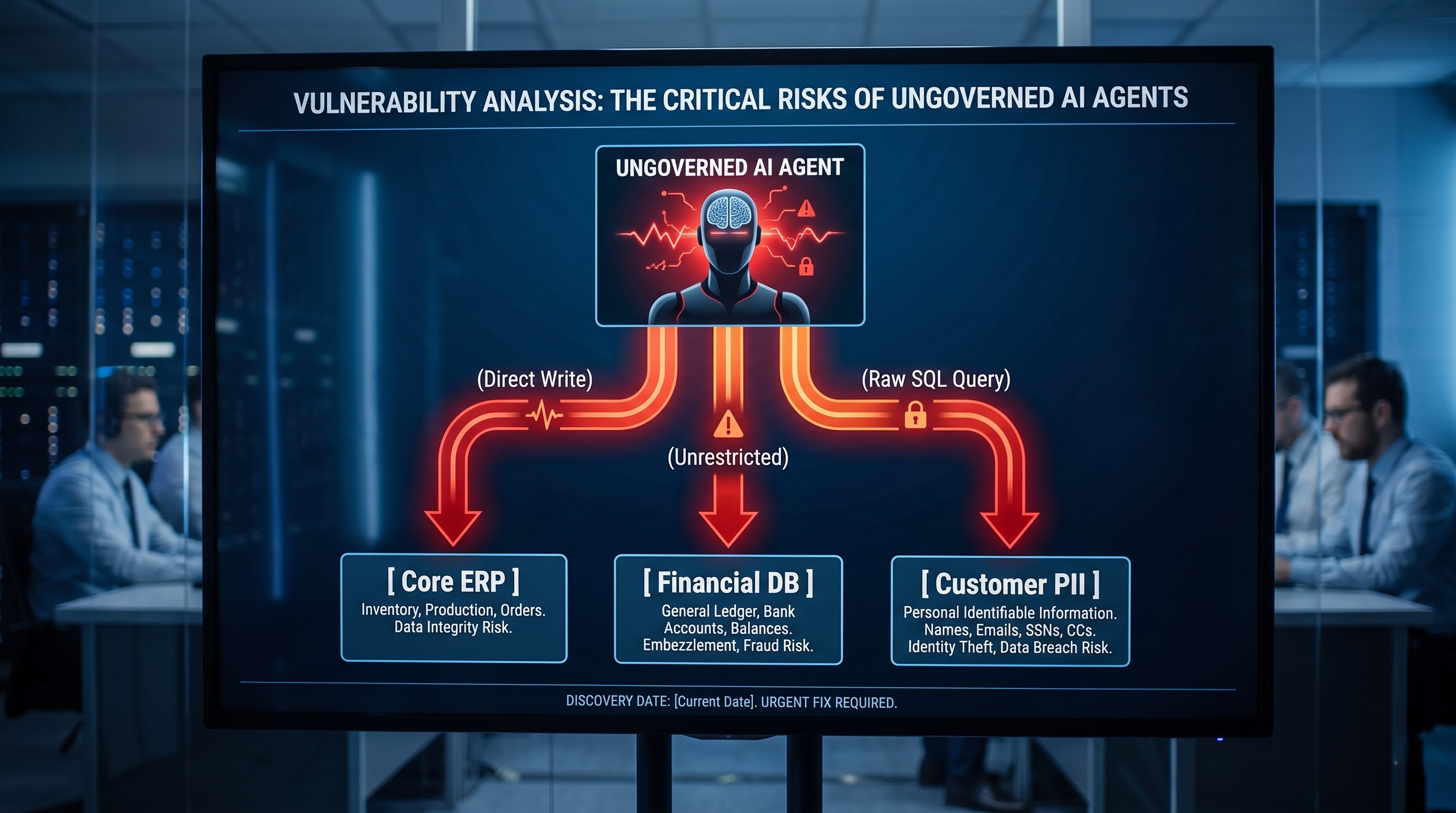
The Pitfalls of Ungoverned AI Agents
Context Starvation & Hallucinations: An AI agent is only as accurate as the context provided to its Large Language Model (LLM). If data resides in disconnected silos, the agent acts on stale or incomplete information, hallucinating destructive decisions.
The Security Black Hole: When an autonomous agent acts on behalf of an employee, legacy infrastructure often fails to track who initiated the action. If an agent executes a raw SQL query or updates a financial record directly, traditional audit logs treat it as an anonymous background call.
Execution Hazards: Without deterministic guardrails, an AI customer service bot might misinterpret a user prompt and issue an unapproved $10,000 refund across backend billing platforms.
5. MuleSoft Agent Fabric and MCP serve as the Engine for Autonomous AI
Modern platforms have transformed into active governance machines in terms of AI, so as to avoid instabilities in businesses surrounding this deployment.
MuleSoft introduces the Agent Fabric, the central system
Main Architecture Elements
1. The Model Context Protocol (MCP) Bridge
Rather than allowing AI agents to generate arbitrary code or execute raw database queries, MuleSoft leverages the Model Context Protocol (MCP). The MCP Bridge converts existing, tested MuleSoft APIs into standardized, agent-ready tools.
An AI agent does not write to the database directly; it calls a governed MCP tool that executes an underlying MuleSoft Experience API.
2. Agent Scanners and Centralized Registry
Agent Fabric continuously scans cloud environments (Salesforce, AWS Bedrock, Azure OpenAI, custom Python stacks) to detect rogue AI agents. It registers every agent into a central catalog, identifying its owner, cost profile, underlying LLM, and risk posture.
3. Semantic AI Gateways & PII Guardrails
When an AI agent requests enterprise data, the request routes through a MuleSoft AI Gateway. The gateway evaluates the request in real time:
Redacts sensitive PII (Social Security Numbers, credit cards) before sending payloads to external LLM providers.
Enforces token limits and rate caps to prevent runaway API spend.
Verifies identity tokens to ensure the agent has permission to access the requested data domain.
4. The Deterministic Agent Broker
Probabilistic LLM models can produce inconsistent outputs. For high-risk enterprise actions (such as wire transfers or inventory write-offs), Agent Fabric offloads orchestration to a Deterministic Agent Broker. The AI agent decides what action needs to occur, but the MuleSoft Broker enforces fixed, policy-based workflows to execute the transaction safely.
6. Real-World Case Study: Modernizing Global Logistics
To understand how API-led integration and AI governance function in practice, consider Global Transit Logistics (GTL)—an international freight operator managing 40 maritime ports and 12,000 daily container movements.
The Legacy Problem GTL relied on legacy mainframes to track cargo status and separate custom scripts to notify customs brokers. When unexpected port congestion hit, customer service teams were swamped with over 15,000 manual status calls daily. Database servers frequently crashed under the load of redundant queries.
The Solution Architecture
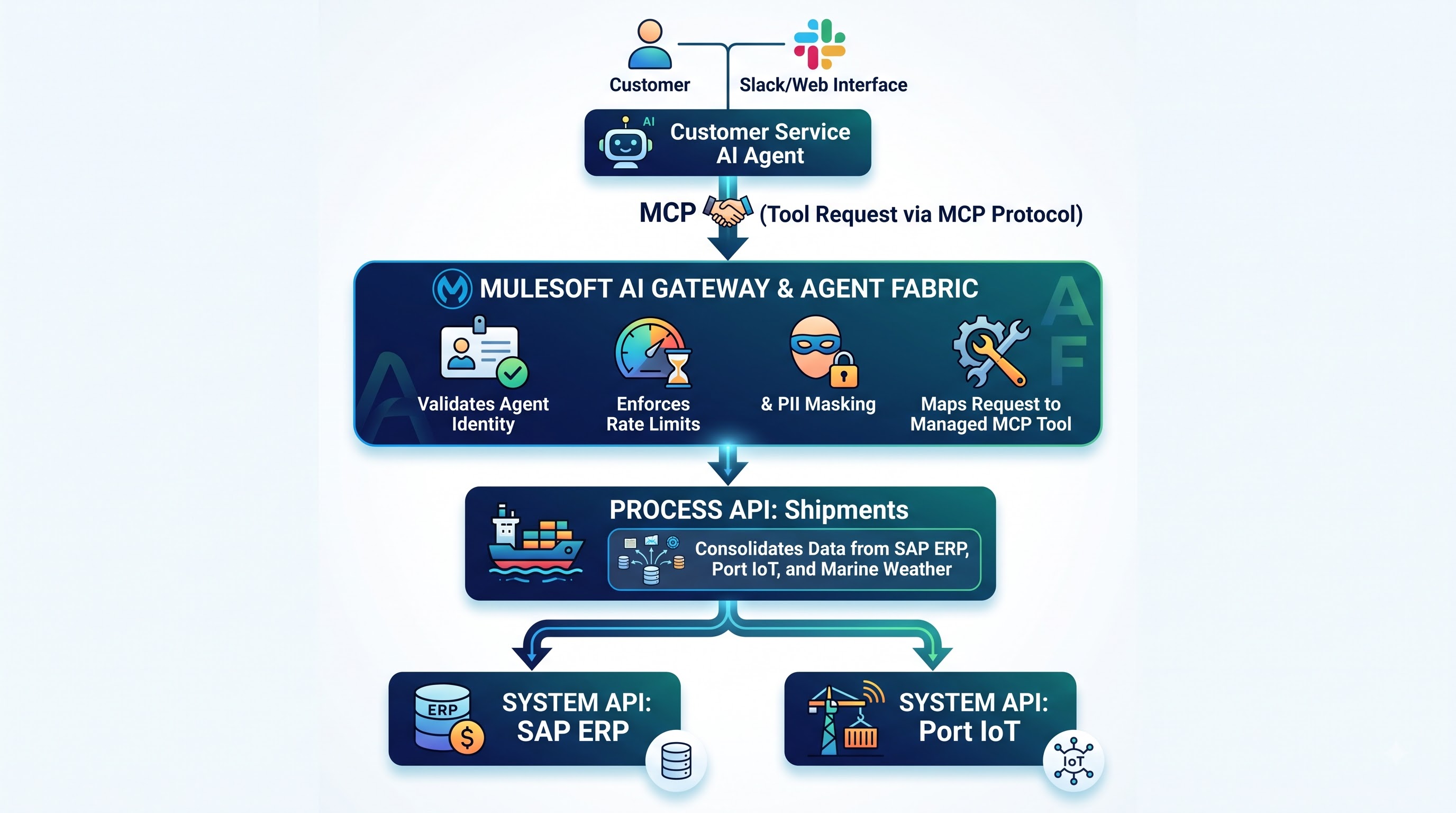
System Layer: GTL built System APIs over their legacy SAP ERP, port IoT tracking sensors, and weather reporting streams.
Process Layer: They created an Aggregate-Shipment-Status Process API that unifies sensor data, location telemetry, and invoice records into a single payload.
AI Integration: GTL deployed an autonomous Customer Service Agent to answer status inquiries automatically. Instead of giving the agent direct access to backend systems, they exposed the Aggregate-Shipment-Status Process API via an MCP Bridge. Engineering teams trained on these enterprise integration patterns through mulesoft online training were able to safely configure the MCP Bridge and ensure seamless communication between the autonomous agent and backend infrastructure.
Operational Results
Drastic Reduction in System Outages: Transitioning from custom point-to-point scripts eliminated critical downtime entirely. System failures dropped from 4–6 major incidents per quarter to zero critical integration outages over a 12-month period, ensuring continuous operational stability.
Accelerated Customer Inquiry Resolution: Routing customer requests through a governed AI agent connected directly to backend Process APIs reduced average resolution times from 18 minutes down to under 45 seconds, significantly improving service efficiency.
High API Reusability and Faster Development: By replacing rigid single-use connections with modular, reusable building blocks, API reusability jumped from 0% to 68%. Engineering teams now build the majority of new features using existing APIs rather than starting from scratch.
Enhanced Data Governance and Compliance: Implementing centralized gateway policies and automated PII masking completely eliminated security vulnerabilities. Data compliance alerts fell from 12 annual PII leak incidents to zero recorded policy violations.
7. The Blueprint for Enterprise Integration Strategy
Building a scalable, AI-ready integration architecture requires a structured execution roadmap:
Phase 1: Audit and Categorize Technical Debt
Map every point-to-point connection, cron job, and custom script currently running across production systems.
Identify high-risk systems prone to failure or high maintenance costs.
Catalog all rogue AI agents operating within line-of-business applications.
Phase 2: Establish API-Led Governance
Adopt the three-tier API model (System, Process, Experience APIs).
Enforce standardized API contracts (OAS/RAML) across all engineering teams.
Deploy an API Gateway to handle centralized authentication, rate-limiting, and telemetry tracking.
Phase 3: Prepare Infrastructure for AI & MCP Tools
Wrap core Process APIs in Model Context Protocol (MCP) interfaces to convert business logic into structured tools for AI consumption.
Implement an AI Gateway to sanitize prompts, redact sensitive PII, and monitor LLM token usage.
Establish deterministic execution workflows for high-risk operations to prevent unvetted AI actions.
Phase 4: Skill Development and Upskilling
Building decoupled, reusable, and AI-ready enterprise systems requires specialized technical expertise. Designing resilient architectures demands deep knowledge of governance frameworks, DataWeave transformations, event-driven topologies, and security policies. Bridging this skills gap through structured mentorship, practical experience, or specialized mulesoft training ensures engineering teams transition from maintaining legacy scripts to designing scalable digital ecosystems.
8. Conclusion: Building Infrastructure That Outlasts the Next Hype Cycle
Modernizing an integration layer is rarely about purchasing software to keep pace with industry trends. It is a strategic effort to insulate core business operations against complexity, scale, and unforeseen technical changes. When systems rely on fragile point-to-point connections, every new technology—whether a cloud migration, a SaaS tool, or an AI agent—threatens operational stability. Conversely, when architecture is built on clean, modular, and governed primitives, new capabilities can be integrated smoothly into the existing ecosystem.
By replacing brittle connections with an API-led, agent-ready digital foundation, organizations stop reacting to midnight outages. Instead, they gain a resilient, adaptable architecture built to power the future of enterprise intelligence.