
The Employee Journey: Recruitment & Talent Management with Workday HCM
Last updated on Sep 28, 2026
Recruiting an employee is the end of a process. Not the end of the employee's journey within the organization, though, just a small step. After accepting an offer, the organization has to onboard, develop, evaluate, engage, and retain the employee. Modern human capital management trends are pushing for an awareness of the complete employee lifecycle and the connection between recruitment activities and the post-hire stage.
Workday HCM unifies recruitment and talent management within a connected cloud-based human capital management environment, enabling companies to effectively manage key processes while retaining a bigger picture of employee information, skills, performance, learning, and career development. But what does that mean for the people in the workplace? Think of an individual who applies for a job in your organization today. Their journey within your company would likely start by applying for a position, have interviews, an onboarding process, performance evaluations, learning opportunities, potential promotion, and finally move into another role.
Each step can create or use information, valuable for the next phase. And that is the concept of the connected talent management: to unify the lifecycle of the employee with the purpose of improving the employee journey.
What Is The Employee Journey In Workday HCM?
The employee journey refers to different stages a person experiences while interacting with an organization, ranging from becoming a candidate to developing a career. While each stage may exist separately in a traditional human resource environment (different systems for recruitment, onboarding, learning, performance, and others), the information between these stages can be siloed, disconnecting HR and line managers, as well as employees.
Workday HCM enables a connected approach to managing employees. The employee lifecycle can be seen as a series of stages, including:
Recruitment → Hiring → Onboarding → Performance → Learning → Career Development → Internal Mobility → Retention
With information relevant from one stage flowing into another, the traditional view of separate talent management activities is transformed into a continuous employee journey.
Recruitment: Where The Employee Journey Begins
Recruitment is usually the beginning of the employee journey. When a company needs to fill a vacant position, HR teams have to identify the requirements of the role, find suitable candidates, assess them, and hire the most suitable individual. While it may seem like a simple process, recruitment has a tremendous amount of information attached to it. The hiring process involves several stakeholders, and depending on the complexity and level of the position, recruiters, hiring managers, interviewers, candidates, the compensation team, and various administrative bodies can be engaged.
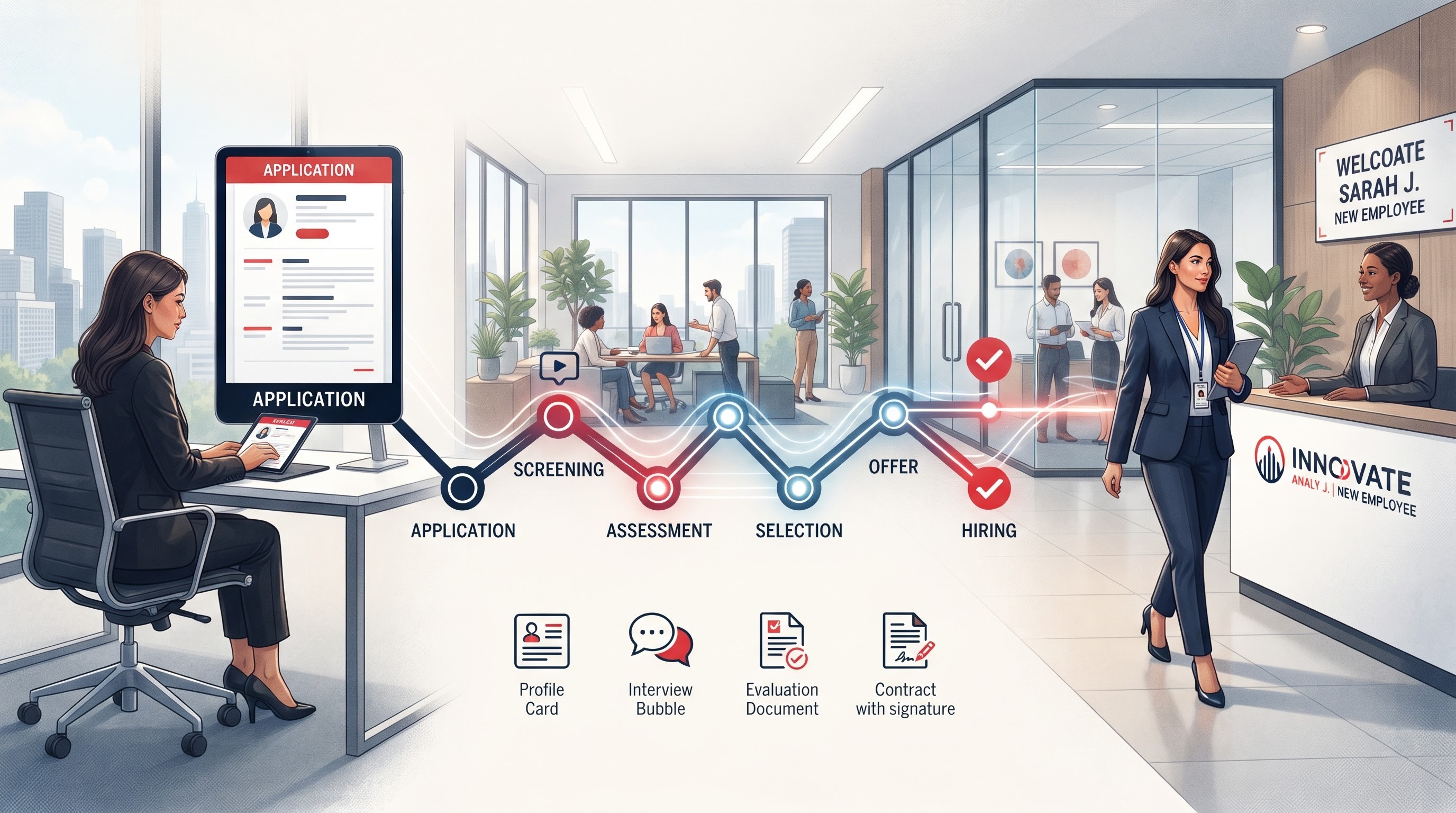
With the information scattered around different communication channels and systems, tracking the progress and having a complete overview of the process can be challenging. Workday HCM can help an organization unify the recruitment process in a connected environment of human resources management. The recruiters can focus on job requisitions and candidates, while hiring managers can be engaged in the selection process. Hiring the employee is only the beginning, and the information does not become unnecessary after the new-hire paperwork is signed and the candidate moves from potential to actual employee.
This is a crucial point, as the mindset of recruitment is changing significantly, from filling vacant positions to bringing in the right capabilities to support the needs of the organization and career development of the employee.
Why Recruitment Data Matters Later
Let's imagine that a company was looking for a marketing expert and specifically requested experience in content strategy, analytics, and campaign management. The capabilities of the employee will not disappear after they are hired, and the company has to consider if these skills can be utilized for other purposes. For learning, performance, future roles, and internal mobility. This is why recruitment should not be considered a separate function that only exists to fill positions - it has to be connected to the bigger picture of talent management.
From Candidate To Employee: The Importance Of Onboarding
Getting the candidate to sign the paperwork is only the end of one stage. After the offer is accepted, the employee journey moves into onboarding. While the new employee may know what they are going to do, they now have to understand who they are going to work with, how they are going to work, learn, meet the company's goals, and complete various administrative tasks.
A proper onboarding process helps to unite the new employee with the company's requirements and goals. Like other processes, onboarding can be both disconnected and unified. Disconnected onboarding can cause issues because the new employee is now trying to understand everything about the company through emails or repeated submissions of information.
A connected approach will allow the company to provide the necessary information at the appropriate time. Imagine an organization that employs a new technology professional and has various requirements for the candidate prior to the start of employment. Before their Day 1, the candidate might have to complete certain paperwork, and during the first week, they might have to learn the basics of the business, complete an IT security test, and have their onboarding discussions with the manager to identify goals and objectives for their time in the company.
Instead of looking at these actions as separate and administrative, the organization can unite them as part of the greater employee journey. After being recruited, the new employee now has to move towards becoming productive. A successful onboarding now answers the question of what should a newly hired employee should know and experience to become a productive member of the company.
Talent Management Begins After Hiring
Hiring an employee is part of the recruitment process, but talent management starts after the new person becomes an official employee. Now the company has to understand what their needs are, what skills the employee possesses, and how these capabilities can potentially evolve. Talent management usually refers to the processes of managing employee performance, capabilities, development, and career.
It can include a variety of different functions:
Performance management
Employee development
Skills management
Learning
Career development
Succession planning
Internal mobility
But the ultimate goal is not simply to keep track of employees and their careers, but to see potential contributions to the business now and in the future. For example, the company may hire a junior business analyst, and after working on several projects, the manager identifies that the employee demonstrates strong analytical skills and has leadership qualities. If the company can see that, it will be able to influence the employee's career development and potentially move them into a more senior position. Otherwise, the employee's talents will go unused. The importance of this perspective demonstrates why unifying different stages of the employee's career is so crucial.
From Hiring People To Developing Talent
This, in fact, is where one of the biggest differences between the traditional approach to recruitment and a connected talent management approach manifests. Recruitment tends to ask the question: Who should we hire? Talent management tries to answer: How can we develop this person? And it is the development of the employee where the value of the employee journey becomes exponentially more important.
Skills Are Becoming Central To Talent Management
Job titles can only tell us so much about the employees of the company. If two people have similar job descriptions, chances are that they will likely have different capabilities, interests, and potential career paths. Some employees may excel at analytics, while others may have strong interpersonal skills. Or have a completely different set of skills that can be utilized elsewhere in the organization. This is why more and more companies are now looking at managing employees through the paradigm of skills rather than their titles. Workday HCM can help the organization rethink their approach to managing and developing employees by leveraging the capabilities of the current and future workforce.
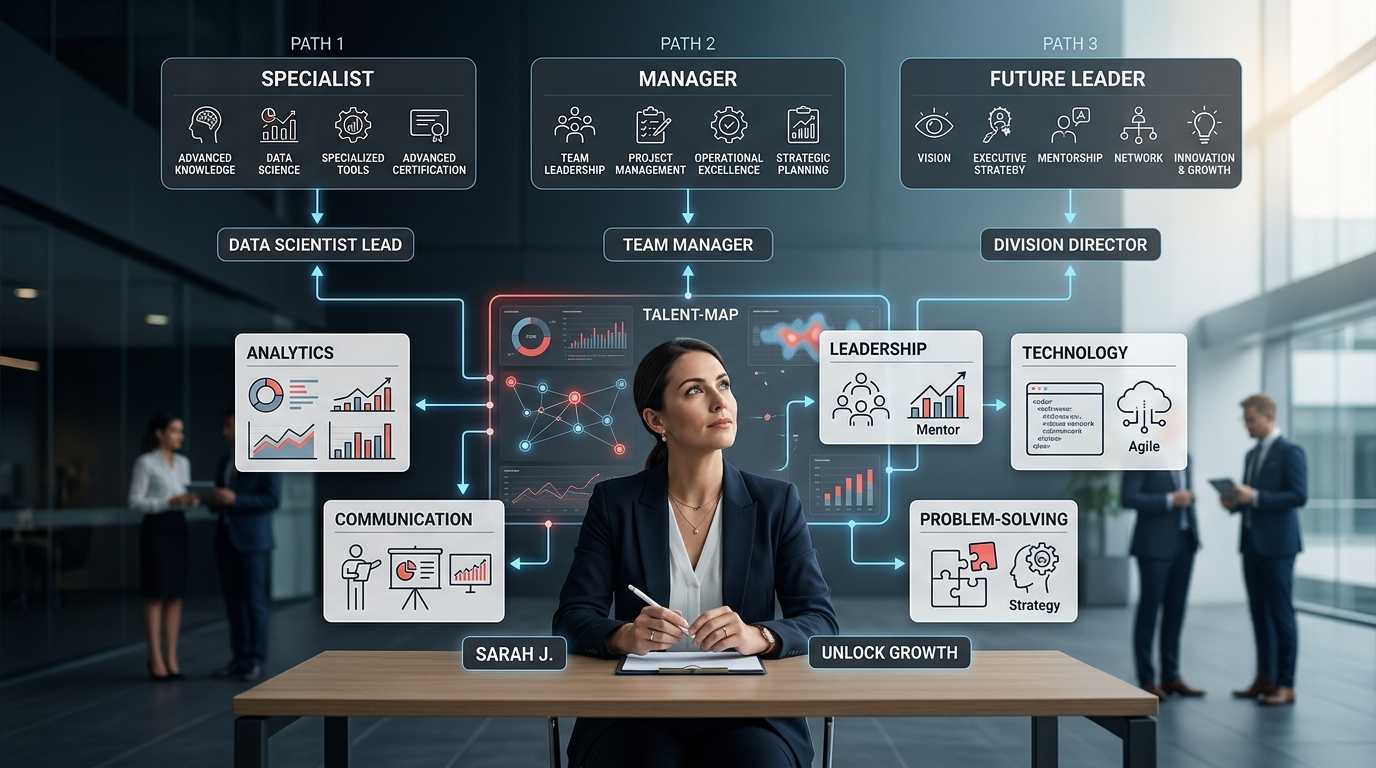
For example, a company may want to pursue digital transformation and require employees with capabilities in automation, analytics, cloud technologies, and other digital fields. The company has two options: immediately start hiring people with the necessary skills or look at their current workforce to see if there are people whose skill sets can be expanded.
By identifying what skills the workforce currently has or will need in the future, the company can better plan for the future and potentially utilize the existing employees for the new projects instead of immediately resorting to headhunting. Instead of asking: Who do we need to hire?, the organization can now also consider the question: What skills do we have, and how can we possibly develop them?
Performance Management: Turning Goals Into Growth
Performance management is another critical aspect of the employee journey and a large part of talent management. For many years, performance management was directly linked to the appraisal process, which usually occurred once a year. But the performance of the employee rarely remains static, and neither do the goals and objectives of the company. Employees take on new projects, acquire new skills, receive feedback, and move into new roles. A connected view of the employee's journey now allows the organization to see what the employee is doing, what their contributions are, and how this can potentially impact their performance.
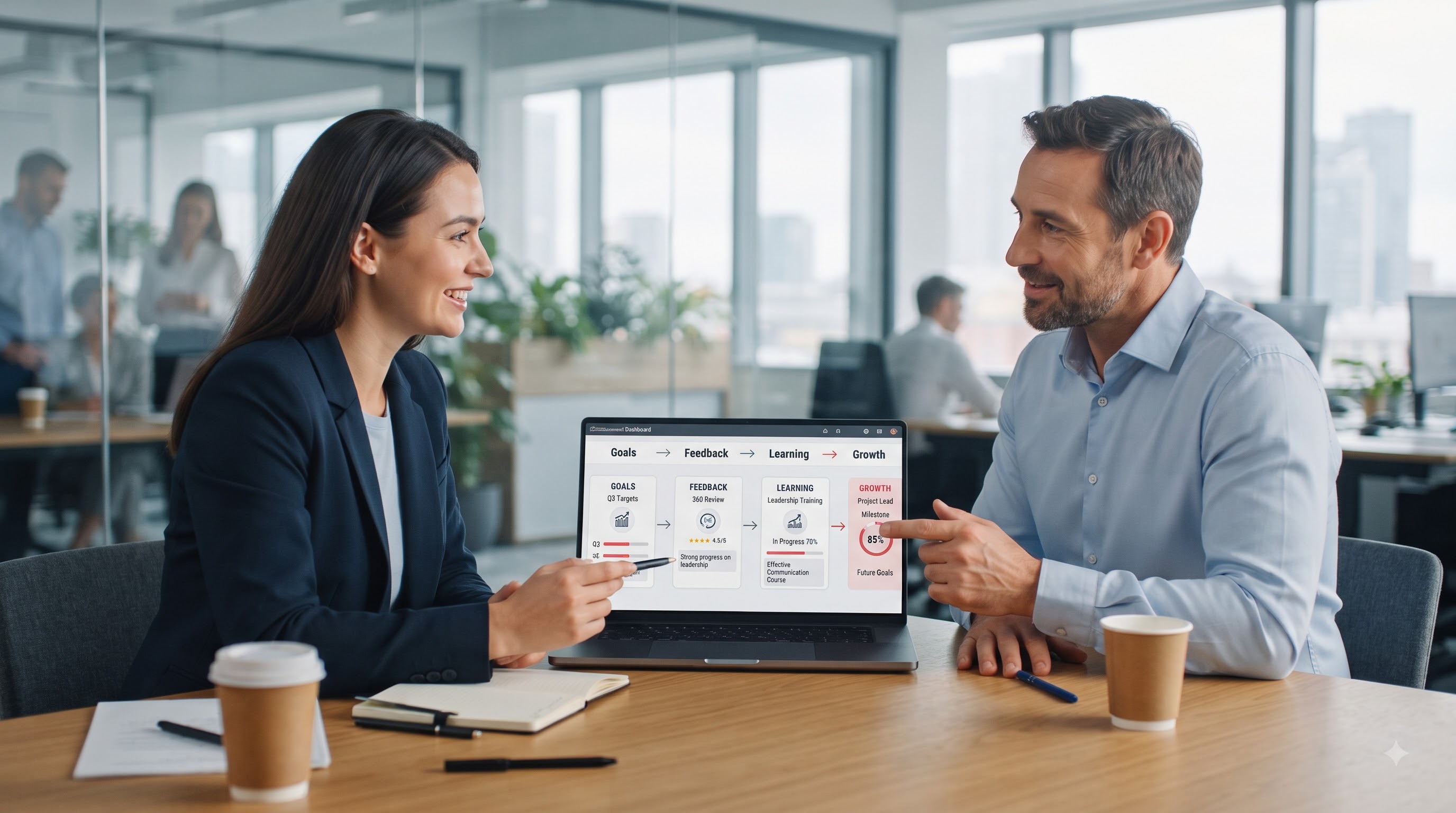
Workday HCM can help an organization connect the performance management process to view the employee's progress, goals, feedback, development, and the potential influence on their future career. Imagine an employee who has to improve their project management capabilities. During the performance review, the manager discusses the employee's current skill set and identifies that they will benefit significantly from further experience with managing cross-functional projects. The performance conversation is thus directly linked to development opportunities, such as additional training, mentoring from more experienced colleagues, or new assignments.
A crucial point to understand about performance management is that it should now be viewed as something that does not just happen once a year - it can be a continuous process influencing the employee's contributions to the company's goals.
Performance Should Answer Three Questions
A performance process should help the employee answer three questions:
Where am I now?
What am I expected to achieve?
What do I need to attain to move forward?
When these three aspects are connected, the performance of the employee now directly impacts their potential impact on the business.
Learning Connects Current Skills With Future Goals
Learning is most effective when the employee knows how it connects to their career. Having a library of learning resources is great, but it is unlikely to be utilized to the fullest extent if the employees just randomly select courses. The person interested in a leadership role will need to develop communication, decision-making, delegation, and other skills. The analyst aiming to become a data scientist will need a completely different set of knowledge and experience. This is why learning should be connected to the employee's potential or desired career path.,Workday's broader human capital management environment can help the company connect the learning of the employees to the bigger picture of their career.
For professionals interested in working with Workday, workday hcm training can help to develop a strong foundation of the different areas of the system, including recruitment, employee data, talent management, learning, and related processes. But the key to successfully utilizing learning is to ensure it is connected to the employee's needs. The best learning opportunities are those that match a person's current skill set, are relevant to their potential or desired role, and provide the experience necessary to successfully fulfill the responsibilities of the position.
Internal Mobility: Looking For Talent Within
Sometimes the best candidates for a new position, project, or career path change are already employed by the company. Internal mobility enables the organization to see the possibilities for employees to move between roles and departments. For the employees, it can be an advantage to continue developing within a familiar environment, learning new skills, and being exposed to different projects and teams.
Consider an example of a customer support agent who is very technically knowledgeable and interested in moving into more product-focused areas. Their current role rarely utilizes their analytical skills, and their job title rarely reflects their capabilities. If the organization can identify this, it can provide the employee with opportunities to move laterally within the company, pursuing more product-oriented tasks and responsibilities. This is where the connected view of the employee's journey can identify opportunities for internal mobility.
Instead of Join → Work → Leave, the employee can now have Join → Learn → Perform → Move → Grow.
This not only supports the professional development of the employee but can also help the organization retain talent and utilize their expertise.
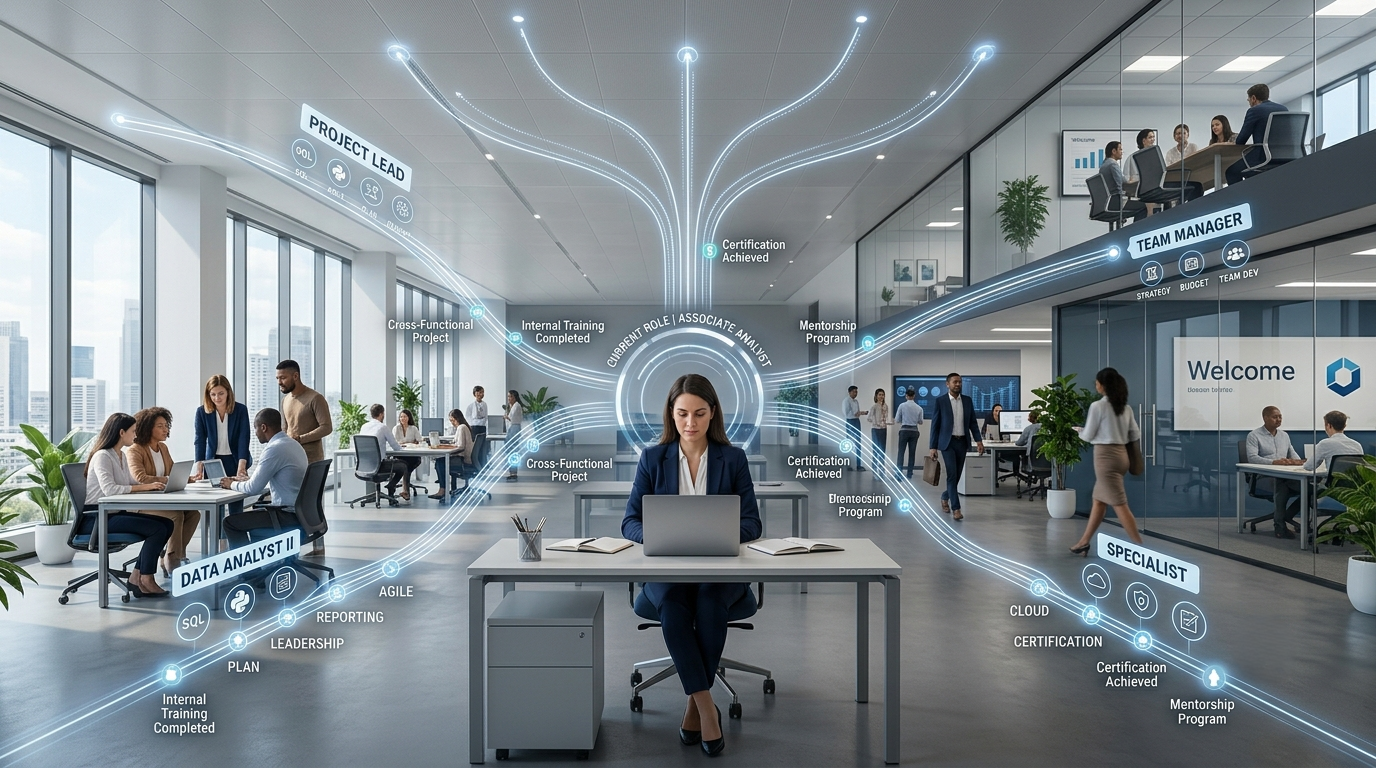
Recruitment And Talent Management Should Work Together
Recruitment and talent management are separate but closely connected processes. Recruitment brings people to the company, and talent management looks at what the company can do for these people after they get here. Looking at one employee can demonstrate how these two areas are connected The company recruits a graduate with excellent analytical skills. During the onboarding process, the employee learns about the different processes of the company. After a year of working with the organization, their manager reviews the performance and identifies the strong problem-solving capabilities of the employee. The employee continues to take learning courses, and over time, they start to take on more responsibilities.
Eventually, the organization identifies that the employee can potentially move into a senior analyst position. The employee journey demonstrates how the information from different stages can be utilized. Recruitment identified the skills of the employee, performance management discovered additional capabilities, and learning built upon these strengths, allowing for improved career development opportunities.
How Workforce Data Supports Better HR Decisions
Employee data is one of those crucial pillars that unite recruitment and talent management.
The human resource department has to answer questions such as:
Which roles are becoming difficult to fill?
What skills does the workforce lack?
Which employees need additional development?
Where are the opportunities for internal mobility?
What skills will the workforce require in the future?
Having this information in silos makes it challenging to create a realistic view of the employee needs of the company.A connected view of employee-related information helps HR departments make better-informed workforce planning decisions. But it should also be noted that having data does not guarantee good decisions. The accuracy of information, the effectiveness of processes, and the expertise of the people reviewing everything are equally important.
A connected approach to human capital management does not ensure that every decision will be better but provides the organization with an improved perspective of their needs. For someone learning the platform, a workday hcm course can help develop a broader view of different HR processes and their connection to employee data. But the ultimate objective should always remain understanding the processes behind the technology.
What Happens When HR Processes Are Disconnected?
The value of having a connected employee journey becomes more apparent when we look at the alternative. The candidate applies through an online platform. The recruitment team keeps track of the candidate in another system. The onboarding is done through email. The learning records are in yet another place, and the performance reviews happen in yet another tool or process.
While each of these activities may have a purpose, the overall journey of the employee is fragmented, disjointed, and difficult to control or improve. The human resource department may know when the candidate was hired but have little understanding of how recruitment fits into the bigger picture of the employee's journey. The manager may know the performance of the employee but have limited insight into the learning and overall skills of the person.
The employees themselves may struggle to see the connection between the services they receive as part of their career within the company. A disconnected journey leads to a siloed view of the workforce.A connected journey attempts to reduce these barriers by bringing different processes and information closer together.
Why Workday HCM Knowledge Matters For HR Professionals
Understanding Workday HCM is not simply about individual elements. A strong professional grasp of the system requires an understanding of the processes within the company. An HR or Workday professional should be able to see how the requisition becomes a new employee. What factors are relevant when moving from one stage of the employee journey to another, and how do different pieces fit together? How can the onboarding process support the employees in their performance management? How can skills be utilized for learning and career development? How can performance contribute to talent management and workforce planning?
These are the types of questions that a professional working with Workday should be able to answer, which demonstrates a proper understanding of the technology beyond simple features. For those who are just starting to learn the system, workday hr training can help develop their grasp of the different elements of human capital management, including the employee lifecycle, recruitment, and processes and information relevant to managing the workforce.
The best way to learn is by performing practical activities, where the learner can follow the journey of a fictional employee and see what happens at each stage. That way, every element of Workday becomes meaningful, as it contributes to a greater process.
The Future Of The Employee Journey
The employee journey is changing and becoming increasingly complex. Employees can move between roles without resigning, have more development opportunities through learning, take on more responsibilities, move into other departments, and prepare themselves for jobs that have not even existed when they were hired. At the same time, organizations have to respond to the needs of the future workforce. This is where the connected view of talent management becomes even more useful. Recruitment on its own is no longer sufficient, and learning alone is not the answer to workforce planning. Performance management, internal mobility, skills, career development, and workforce planning all contribute to ensuring the organization has the right people with the right capabilities at the right time. Workday HCM enables the organization to make better decisions by unifying different aspects of human capital management within one platform, providing an improved view of the employee journey.
The future of human resource management is not about simply having more data about the workforce. It is about utilizing that information to make the right choices at the right time.