
The Next Evolution of Enterprise Cloud Architecture
Last updated on Sep 10, 2026
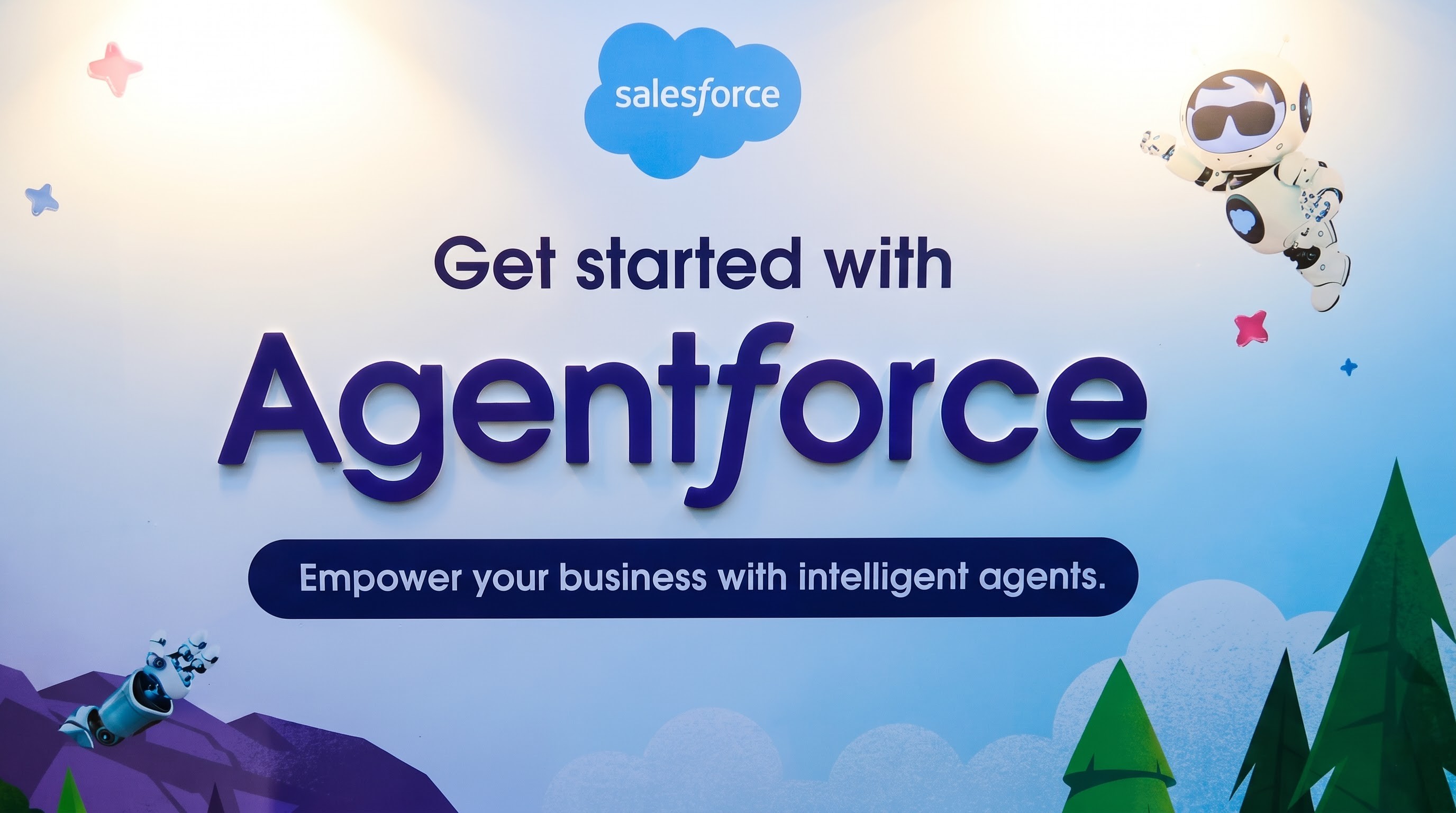
The modern enterprise tech ecosystem is undergoing its biggest structural shift in over a decade. For years, custom development meant writing heavy background logic, crafting custom database triggers, and configuring sprawling rules to automate basic business processes. Today, that era is closing. The current landscape is defined by intelligent, context-aware platforms that do not just store data or react to simple user commands, but dynamically analyze, act, and reason in real time.
At the center of this revolution is a completely reimagined approach to enterprise software design. Platforms are no longer passive databases wrapped in custom user interfaces. Instead, they operate as living ecosystems powered by autonomous orchestration, unified data streams, and event-driven architectures. This shift has fundamentally changed what it means to build scalable enterprise solutions. Engineering custom workflows today is less about writing repetitive structural code and far more about system design, data architecture, security boundaries, and cross-platform orchestration.
The traditional boundary between low-code tools and custom software development has effectively dissolved. Modern platforms allow teams to deploy sophisticated digital tools at unprecedented speeds, provided the underlying architecture is built on clean data models, resilient API integrations, and robust governance framework. For professionals looking to navigate this new era, mastering these structural paradigms is the ultimate key to staying relevant and valuable in a highly competitive market.
The modern ecosystem prioritizes orchestrating complex workflows, enforcing data trust, and connecting disparate enterprise systems into a unified customer experience. Understanding this shift requires looking beyond basic platform administration and exploring the sophisticated, forward-looking concepts shaping the future of enterprise software engineering.
The Shift to Autonomous AI Agents and System Orchestration
For over two decades, enterprise CRM systems operated on a purely reactive framework. A human user clicked a button, updated a record, or imported a file, which then triggered a deterministic sequence of background actions. While efficient, this model always required explicit human initiative to kick off any complex process. The modern enterprise landscape has completely broken away from this limitation by shifting toward autonomous agentic architectures.
Agentic systems introduce autonomous digital workers capable of making decisions, evaluating multi-step tasks, and executing multi-system actions without continuous human supervision. Instead of relying on hardcoded logic paths, these intelligent systems use semantic reasoning models to evaluate an incoming business request, determine the necessary steps to fulfill it, and interact directly with system APIs to complete the work.
This change fundamentally alters the core responsibilities of modern technical teams. Rather than spending hours building static conditional flows, developers now focus on designing the guardrails, security parameters, and action boundaries within which autonomous agents operate. The primary engineering challenge is no longer writing the step-by-step logic, but defining precise topics, context boundaries, and executable actions that allow an autonomous agent to securely assist employees and interact with real-world customers.
Building these systems requires a deep understanding of natural language understanding context, API payload structures, and dynamic execution policies. When an autonomous agent handles a complex request—such as resolving a billing dispute, issuing a product return, or re-routing a delayed shipment—it must pull data from multiple locations, reason through business policies, and invoke specific transactional services safely. Engineering these capabilities demands a rigorous focus on system safety, deterministic fallbacks, and auditing mechanisms to ensure that autonomous actions consistently align with enterprise rules and regulatory compliance standards.
Anyone serious about mastering these advanced system architectures and leading high-value digital transformations should consider enrolling in a comprehensive salesforce development course to gain practical, real-world skills.
Real-Time Data Fabric and Unified Customer Intelligence
An enterprise platform is only as smart as the data backing it. Historically, large organizations struggled with data fragmentation. Customer information, transactional histories, web telemetry, and operational logs lived in isolated databases, legacy enterprise resource planning platforms, and third-party cloud tools. Traditional data integration relied on overnight batch processing, scheduled ETL jobs, or custom point-to-point web services that were slow to run, fragile to maintain, and constantly out of sync.

The modern standard solves this problem through real-time data engines and zero-copy data architectures. Rather than moving massive volumes of sensitive information across systems using custom data pipelines, modern data engines can harmonize data directly at rest. By indexing and mapping data across disparate cloud platforms into a unified identity model, enterprises create a single, real-time source of truth for every customer profile without paying the massive storage and compute penalties of traditional data duplication.
For platform architects and technical builders, this real-time data fabric completely changes how data models are designed. Instead of building static custom objects for every piece of transactional telemetry, developers now design identity resolution rules, streaming data streams, and calculated insights. High-frequency data—such as live website clicks, mobile app telemetry, IoT sensor outputs, and point-of-sale events—can be ingested instantly, mapped to standard data schemas, and evaluated in real time to trigger immediate automated workflows.
This architectural shift enables true real-time hyper-personalization. When a customer interacts with a mobile app or calls customer support, the platform dynamically computes their lifetime value, recent engagement score, and predicted churn risk on the fly. Autonomous agents and human operators alike instantly gain access to complete situational awareness. Designing systems capable of handling this volume of real-time data requires a firm grasp of streaming architectures, non-relational data patterns, and unified schema modeling.
To build the hands-on expertise needed to design these complex streaming data pipelines and high-throughput architectures, structured salesforce dev training provides the exact technical guidance required.
Asynchronous Architecture and Event-Driven Ecosystems
As enterprise software systems scale to serve millions of daily interactions, traditional synchronous request-response patterns hit a wall. When a user updates a record, triggering five different API calls to external billing, shipping, and inventory platforms while waiting for a single screen to refresh, performance suffers and system limits are quickly exhausted. Modern enterprise development avoids these performance bottlenecks by adopting fully asynchronous, event-driven architecture patterns.
In an event-driven framework, application components communicate by publishing and subscribing to discrete state changes, known as platform events. When a key event occurs—such as an order being approved or an account tier changing—the platform instantly broadcasts an event notification to a central event bus. Decoupled subscriber services, both internal to the platform and operating across external cloud platforms, listen for these events and process their respective tasks independently without blocking the main thread.
This decoupled design drastically improves system resilience, fault tolerance, and horizontal scalability. If a third-party warehouse management platform goes offline for scheduled maintenance, the main platform continues processing orders without timing out or failing transactions. The event bus simply holds the published messages securely until the external subscriber service recovers and catches up on the processing queue.
Furthermore, event-driven designs support modern real-time user interfaces. Web applications built on modular web components can subscribe directly to these backend event streams, dynamically updating dashboard widgets, live chat feeds, and status indicators without requiring manual page refreshes. Mastering event streams, change data capture, and API-first integration patterns has become a fundamental requirement for senior enterprise developers building modern software ecosystems.
If you are eager to master asynchronous architectural patterns, enterprise integration standards, and hands-on system customization, enrolling in an industry-aligned
sales force developer training program is the smartest next step for your technical career.
Modernizing Engineering Roles: Brownfield Evolution and Governance
The rapid evolution of cloud platforms, low-code tools, and generative AI has fundamentally redefined the day-to-day role of the enterprise developer. The era of spending weeks writing simple data CRUD operations or basic interface forms is over. Modern development tools and intelligent assistants now generate boilerplate code, write test routines, and construct baseline application structures in seconds.

However, this shift has increased, rather than reduced, the demand for highly skilled software engineers. The core responsibility of today’s developer has shifted from code generation to system architecture, brownfield quality engineering, and cross-system governance. Most real-world enterprise development does not happen in a clean sandbox. Developers operate within inherited legacy enterprise instances containing years of accumulated technical debt, undocumented configurations, complex security sharing models, and intricate integration boundaries. In these complex environments, generating code quickly is actually dangerous if the developer does not understand the underlying architecture, execution orders, and platform limits. Modern engineers serve as strategic gatekeepers who evaluate automated suggestions, refactor legacy configurations, and enforce strict performance, security, and compliance standards across the platform.
Furthermore, as low-code visual tools empower business analysts and operations teams to build customized workflows, professional developers must establish clean release governance pipelines. This involves implementing modern DevOps practices, automated version control systems, scratch org environments, and continuous integration pipelines. By creating robust testing frameworks and deployment guardrails, developers ensure that decentralized business teams can innovate rapidly without breaking core production stability or compromising data security.
Enterprise Trust, Zero-Data Retention, and Modern Platform Security
As platforms open up to dynamic AI agents, streaming third-party feeds, and cross-cloud integrations, the surface area for security risk expands. Modern enterprise customization is no longer just about feature delivery; it must also establish an unyielding, zero-trust security perimeter around critical business assets. At the center of this protective framework is the concept of stateless AI execution and zero-data retention. When autonomous system models generate responses or process record context, enterprise-grade platforms enforce strict cryptographic masking and dynamic grounding. Sensitive customer identifiers—such as social security numbers, banking details, and personal contact information—are stripped or obfuscated before ever leaving the trust boundary. Once processing completes, third-party model providers retain no cached telemetry or training logs, ensuring compliance with strict global standards like GDPR and HIPAA.
For system architects, securing modern environments requires a multi-layered defense model:
Field-Level Encryption & Shield Audit Trails: Enforcing hardware-backed key encryption at rest while capturing granular event logs for real-time anomaly detection.
Strict Least-Privilege Execution: Restricting automated agent permissions to exact record scopes, preventing privilege escalation during complex cross-system transactions.
Phishing-Resistant Authentication: Requiring hardware security keys and session-level verification for elevated admin roles and mass data export workflows
By embedding zero-trust principles directly into release pipelines, technical teams ensure that rapid innovation never comes at the cost of operational security or regulatory compliance.
Building a Future-Proof Tech Career
The landscape of cloud-based enterprise platforms is evolving faster than ever before. The transition from traditional reactive CRM systems to autonomous, event-driven, real-time data ecosystems represents a massive technological leap forward. Success in this era requires a commitment to continuous learning and a deliberate focus on high-value architectural skills.
Engineers who thrive in this new paradigm will be those who combine deep platform knowledge with broad system design capabilities. By mastering autonomous agent orchestration, real-time data integration, asynchronous system communications, and enterprise governance, developers position themselves at the absolute forefront of modern cloud engineering. The future belongs to technical leaders who can bridge the gap between intelligent technologies and complex business realities—transforming raw platform capabilities into secure, scalable, and impactful enterprise solutions.