
What Problem Does ServiceNow Actually Solve?
Last updated on Sep 30, 2026
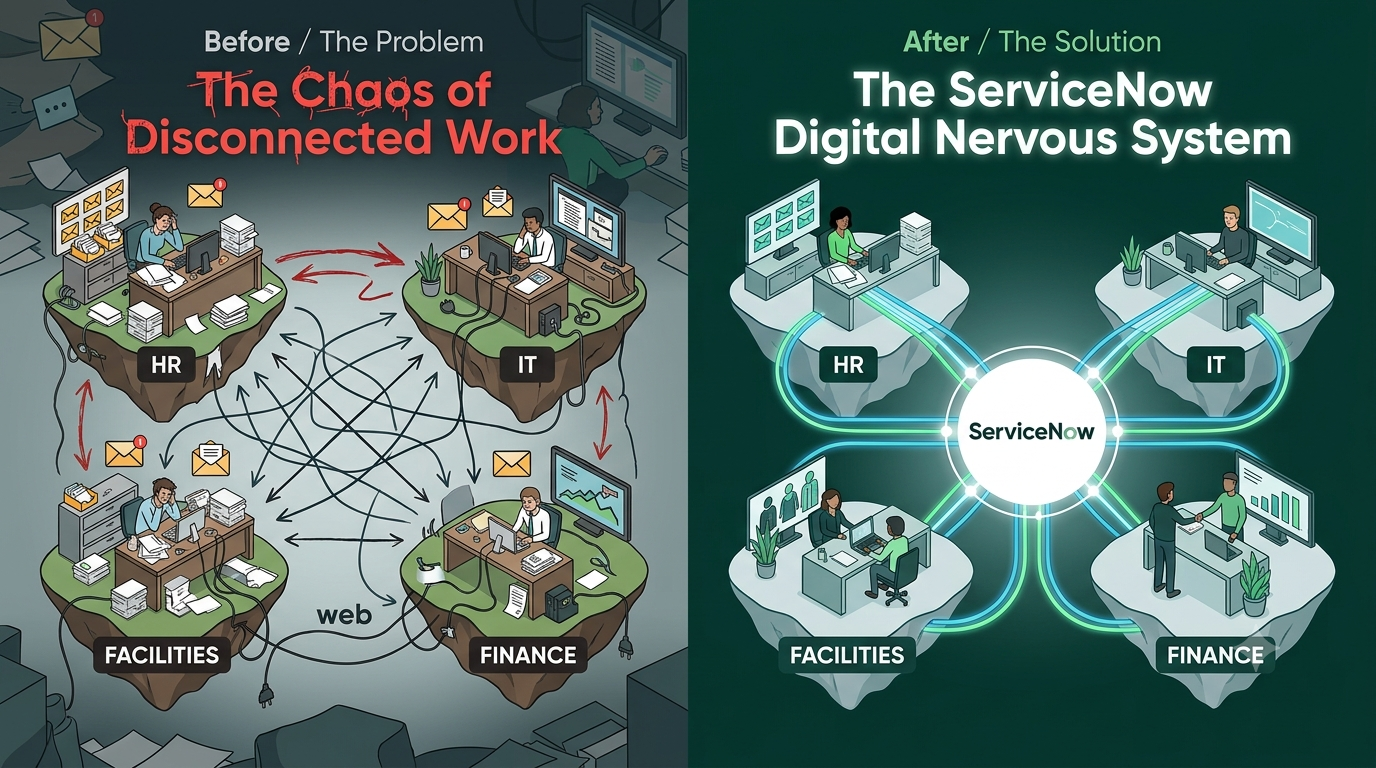
Every morning, thousands of employees turn on their computers, open their emails, and groan in unison. There's a new hire that started today, but their laptop is still in a box in the IT department's closet. An urgent software license request from the sales team has languished in a manager's inbox for three days. An HR manager copies and pastes information from one spreadsheet to another, into another, deeper spreadsheet, in an enterprise database, hoping against hope that there are no copy-paste errors that will later cause payroll issues.
This is the toll of disconnected, disorganized work. This is the price that every modern company pays. In the last 20 years, software development has failed to deliver on its promise to make work easier. It has, in many ways, made work harder by creating an environment in which the same task has to be performed in dozens of different ways across different departments. Every function now has its own set of specialized tools: HR has one system, IT has another, customer service has a database, facilities has an email alias, and so on. When these areas need to collaborate, the process is inevitably slowed down by email threads, text messages, sticky notes, or even printed paper.
And that brings us to the central question: What problem does ServiceNow solve?
ServiceNow solves the problem of disconnected, laborious work processes by acting as a digital nervous system that ties together disparate, multifunctional tasks and makes them faster and more efficient.
The Hidden Bottleneck in the Modern Workplace
To understand why a platform like this is necessary, you have to look at how work flows inside a business. In a business with five people, communication is easy. You turn around in your chair. Ask a question.. When a company grows to hundreds or thousands of employees, simple tasks become surprisingly complex.
Take an enterprise scenario: Onboarding an employee.
On paper, hiring someone sounds like an HR task. In reality, bringing a person into a company requires a synchronized dance across at least four distinct departments. Human Resources must process tax documents, background checks, and benefits forms. Information Technology must provision a laptop, set up security permissions, create email accounts, and grant access to tools.
Facilities must assign a desk, configure a security badge and organize building access.
Finance must set up the deposit parameters and allocate the hardware budget.
Without a platform, this process is pure chaos. HR sends an email to IT asking for a laptop. IT forgets to reply because they are drowning in password reset tickets. Facilities never receives the notification that the employee works in the Chicago office, so no badge is printed. The new hire shows up on Monday morning, sits at a desk without a laptop, and spends their first week feeling completely ignored.
This isn't an inconvenience; it costs companies millions of dollars in lost productivity, wasted hours and employee turnover. ServiceNow eliminates this bottleneck. By sending emails back and forth the entire onboarding process is kicked off by a single request. The system automatically creates sub-tasks, assigns them to the teams, triggers automatic alerts when steps are delayed and gives managers a single dashboard to track the progress from start to finish.
The Architecture of Getting Things Done
At its core ServiceNow follows an idea: work should move as smoothly as a package delivered to your front door. When you order something online you do not call the warehouse and send an email to the delivery driver. Text the regional dispatcher. You place one order, get a tracking number and see how automated systems move your package through the supply chain until it arrives at your doorstep.
ServiceNow brings that user experience to internal business operations through four main functional areas:
IT Service Management and Operations – IT departments are usually overwhelmed by emergency situations. Server outages, forgotten passwords, software bugs and hardware requests come at once. ServiceNow keeps this chaos in order by sorting requests putting network problems ahead of simple software updates and sending tickets to the right technical specialists who can fix them.
Customer Workflows – When a customer calls with a problem, the support agent on the phone rarely knows all the answers. Solving the problem often needs help from engineering, billing, or supply chain teams. ServiceNow connects the front‑office customer service rep with the back‑office technical teams, letting them work together on one record until the customer's problem is fully resolved.
Employee Workflows – Employees should not have to know which department fixes a problem. If a worker needs to monitor a copy of a tax form or an update on parental leave, they should not have to guess whether to email IT, Payroll or HR. A central employee portal gives staff one search bar to find answers, submit requests, and track progress.
Low‑Code Customization – Every business has internal processes that do not fit into standard software templates. Instead of spending months writing custom code from scratch, teams can use built‑in drag‑and‑drop workflow tools to make digital versions of special tasks, such as tracking vendor approvals or managing facilities maintenance.
Reasons Why Enterprises are in High Demand for Administrators Essay
As more and more companies begin to adopt complex platforms in the cloud to re-engineer their operations, an unexpected challenge arises the management of the platform itself. A product such as ServiceNow is not a ‘black box’ that can be deployed and forgotten it requires extensive customization to reflect the inner workings of the organization that uses it, such as its security protocols and hierarchical organization.
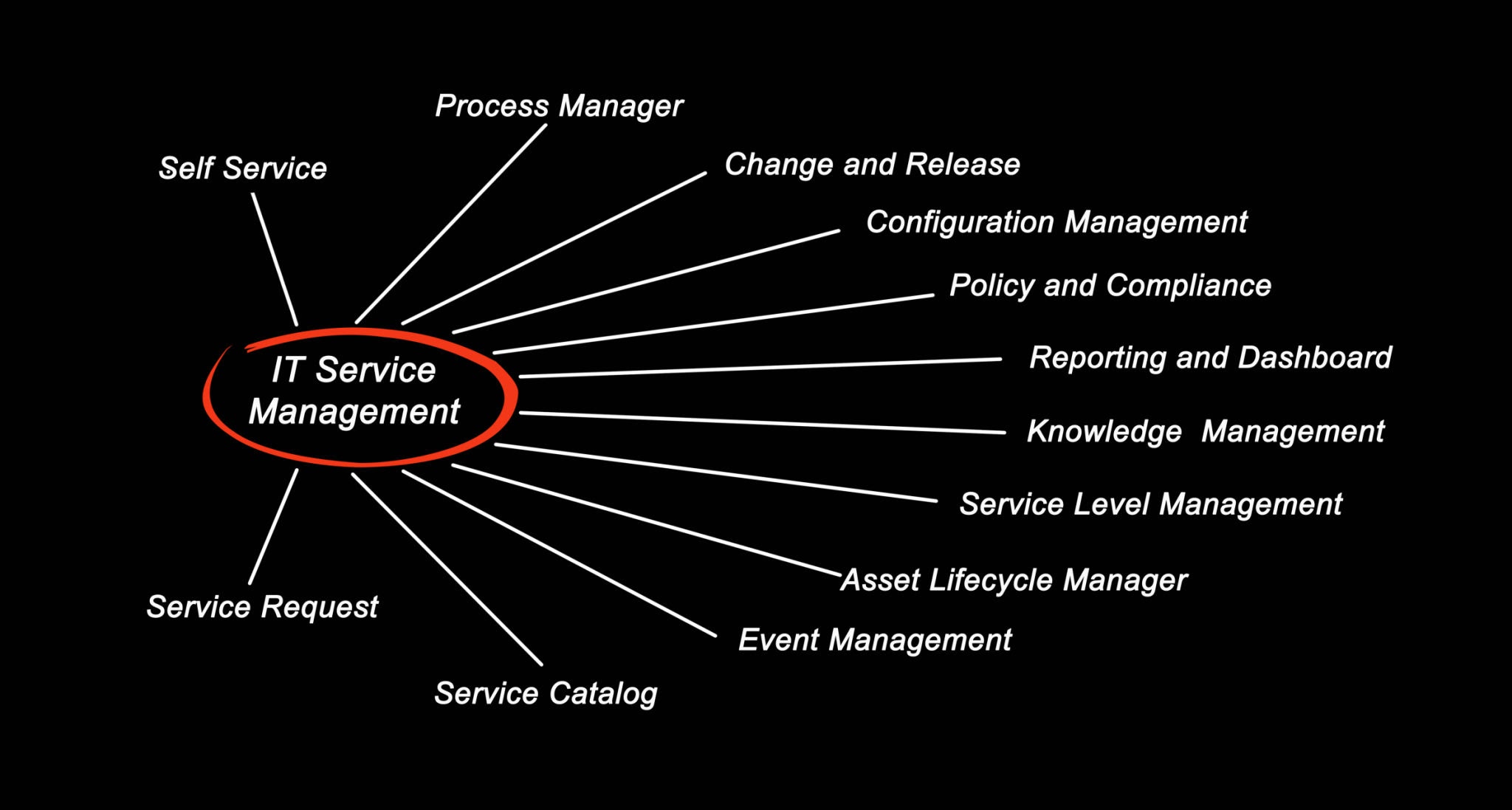
This has led to a scarcity of experts who can configure these systems and keep them running as well as ensure the safety and integrity of the data they hold. Students who wish to enter the field often take up a servicenow administrator course to learn the fundamentals of the software, such as setting up users and permissions, creating forms and logic, and analyzing real-time statistics. An administrator serves as the bridge between business leadership and the software. When HR wants to redesign the internal request portal, or when IT needs to change how high-priority incident tickets are escalated, the administrator configures the system to make
those operational changes happen without breaking existing business rules.
Understanding the Financial and Career Commitment
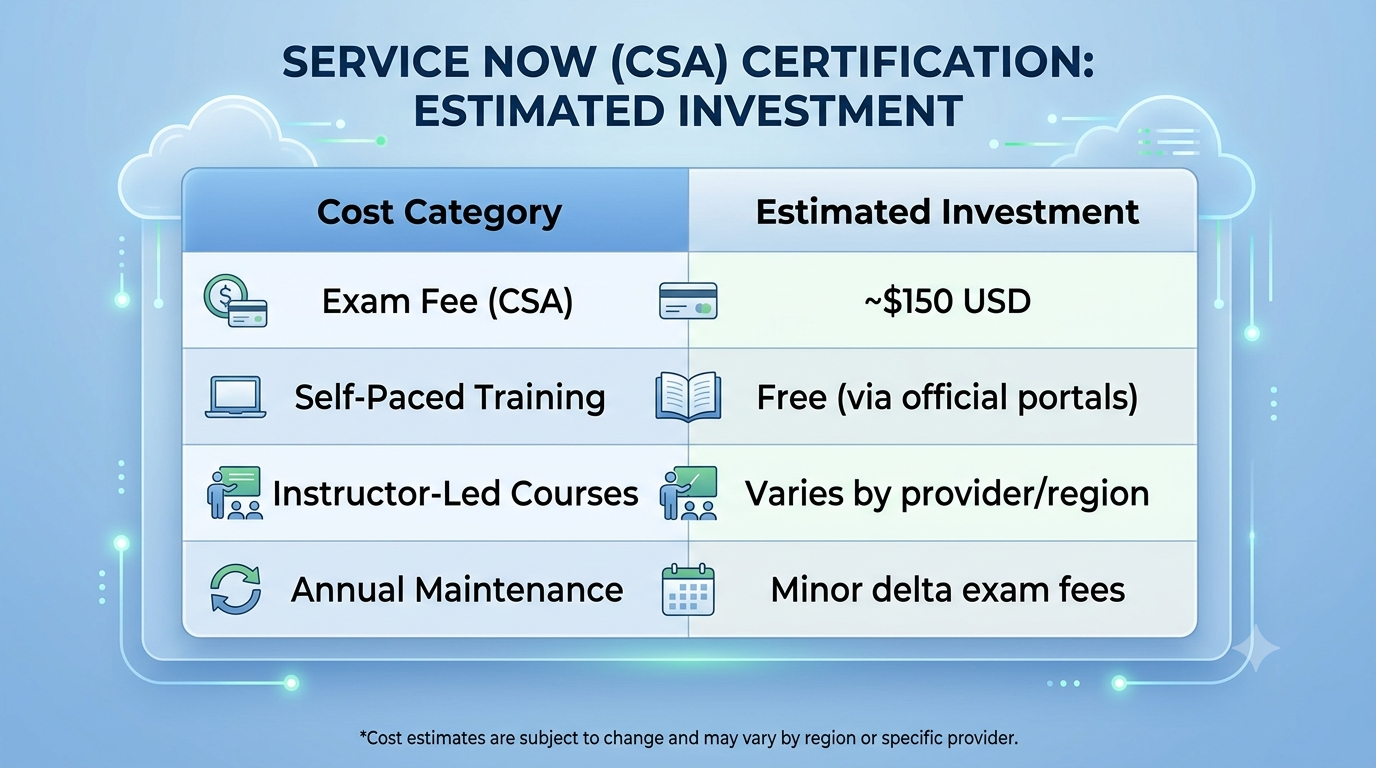
The IT expert, System Coordinator and technical career-changer are presented with the most reliable career options in the contemporary corporate world. However, it is essential to comprehend the extent of the initial investment required. In terms of assessing the training's value, many aspiring candidates usually research the servicenow administrator certification cost. The certification landscape generally involves a baseline exam fee of approximately $150 USD for the Certified System Administrator (CSA) test, though total preparation expenses can vary depending on whether an individual chooses self-paced learning resources or comprehensive instructor-led training modules.
Investing in official validation demonstrates to enterprise employers that a candidate doesn't just understand basic concept theory, but actively knows how to structure tables, configure access controls, manage update sets, and build reliable automation flows inside a live production environment.
What You Actually Learn in Admin Training
To successfully run an enterprise environment, administrators must master a wide variety of practical technical skills. The learning curve moves from basic platform navigation to deep system architecture. Taking a comprehensive service now admin course equips professionals with hands-on capabilities across several essential domains:
User and Access Control: Structuring roles, groups, and permissions to ensure employees only see the data relevant to their job functions.
Database Management: Understanding how backend tables interact, how data forms are designed, and how field dependencies are structured.
Process Automation: Utilizing visual flow builders to set up conditional logic, automated email notifications, and task generation rules.
Service Catalog Creation: Designing intuitive, user-friendly request forms that allow non-technical employees to easily order hardware or request services.
Reporting and Dashboards: Configuring visual charts that give executive leadership real-time insights into system health and departmental response times.
Mastering these core skills shifts a technical professional from being a simple support worker to becoming a strategic operational asset within an organization.
The Big Picture: Achieving Operational Maturity
At the end of the day, platforms such as ServiceNow exist to solve a fundamental business problem: human friction. By reducing the amount of time spent chasing down approvals in email, copy-pasting information between spreadsheets, and increasing overall operational efficiency, businesses can free up time for their employees to actually do the work they were hired to do, not to mention the flexibility and robust infrastructure a centralized and organized set of processes offers to growing operations
Whether you are an executive looking to break down internal silos or an IT professional looking to future-proof your skills, learning the ropes on these sets of processes will be one of the most useful investments of your time.