
Why Azure DevOps Skills Are in High Demand: Career Paths, Salaries, and Course ROI
Last updated on Jul 30, 2026
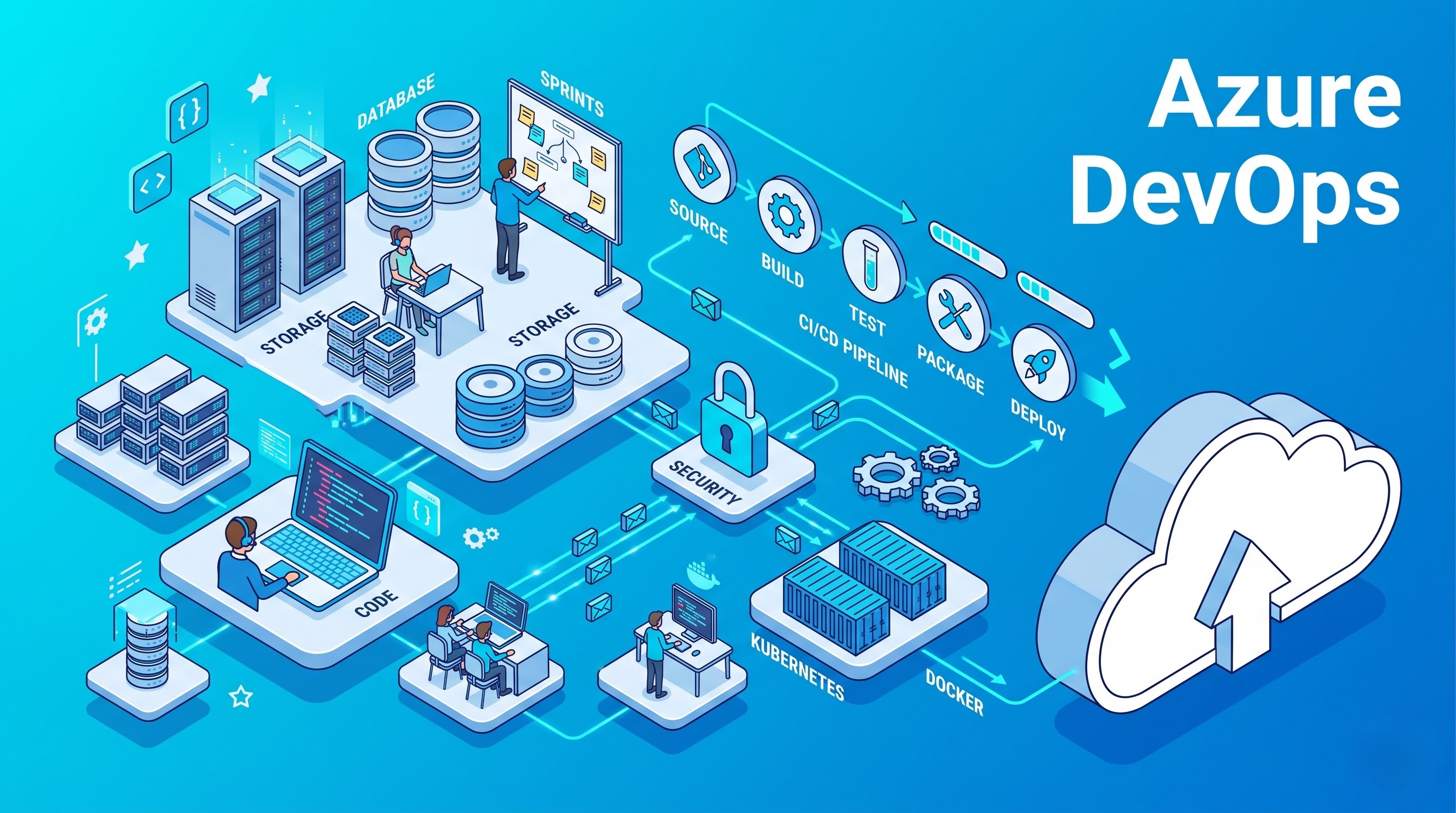
The current paradigm of software engineering can be encapsulated in one simple parameter – speed without any trade-offs in terms of security or stability. Today’s businesses cannot afford to take months to deploy code through a slow process of passing it from isolated development to operations teams. Business agility in today’s highly competitive environment depends entirely on the rate of deployment and speed of entry into the market. The worldwide trend towards continuous delivery, along with cloud migrations of enterprises, has made DevOps a central element of enterprise IT strategy.
In such a scenario, Microsoft Azure DevOps has emerged as an important and enterprise-grade set of tools. With Fortune 500 companies and financial organizations as well as rapidly growing start-ups using the Microsoft Cloud infrastructure, the demand for Azure DevOps Engineers has exceeded supply.
Why Enterprises Choose Azure DevOps
Open source build systems allow you to adapt them for your needs, but they also add additional maintenance overhead. With Azure DevOps you get an integrated platform that combines project management, source control, automatic deployment, package management and testing.
Integrated Toolchain: Reduces the need for a separate stack with services like Azure Boards, Azure Repos, Azure Pipelines, Azure Artifacts, and Azure Test Plans.
Part of a Larger Ecosystem Has native support for Microsoft Entra ID (Active Directory), Visual Studio, and Azure Key Vault for governance and security functions.
Multi-Cloud: Not just Azure, but also native application deployment on AWS, Google Cloud, or on-premises Kubernetes.
Pipeline-as-Code: It supports YAML based pipelines that allow versioning of the application and infrastructure hierarchy code.
Impact on Career and Monetary Gain
An Azure DevOps engineer is right at the intersection of application development, cloud computing, system administration, and security engineering. The core skills required are Infrastructure as Code (IaC) with Terraform or Bicep, containerization with Azure Kubernetes Service (AKS), and security in CI pipelines.
“Enterprise Migration to Azure DevOps”
In order to explain why Azure DevOps engineers are entitled to top dollar, one has to look into reasons behind the preference of this system by enterprises.
Even though such open-source options as Jenkins, GitLab, and custom scripts provide more flexibility, they might be costly in terms of engineering efforts necessary for maintenance, integration, and securing them. Azure DevOps provides an integrated solution to all the listed components mentioned above.
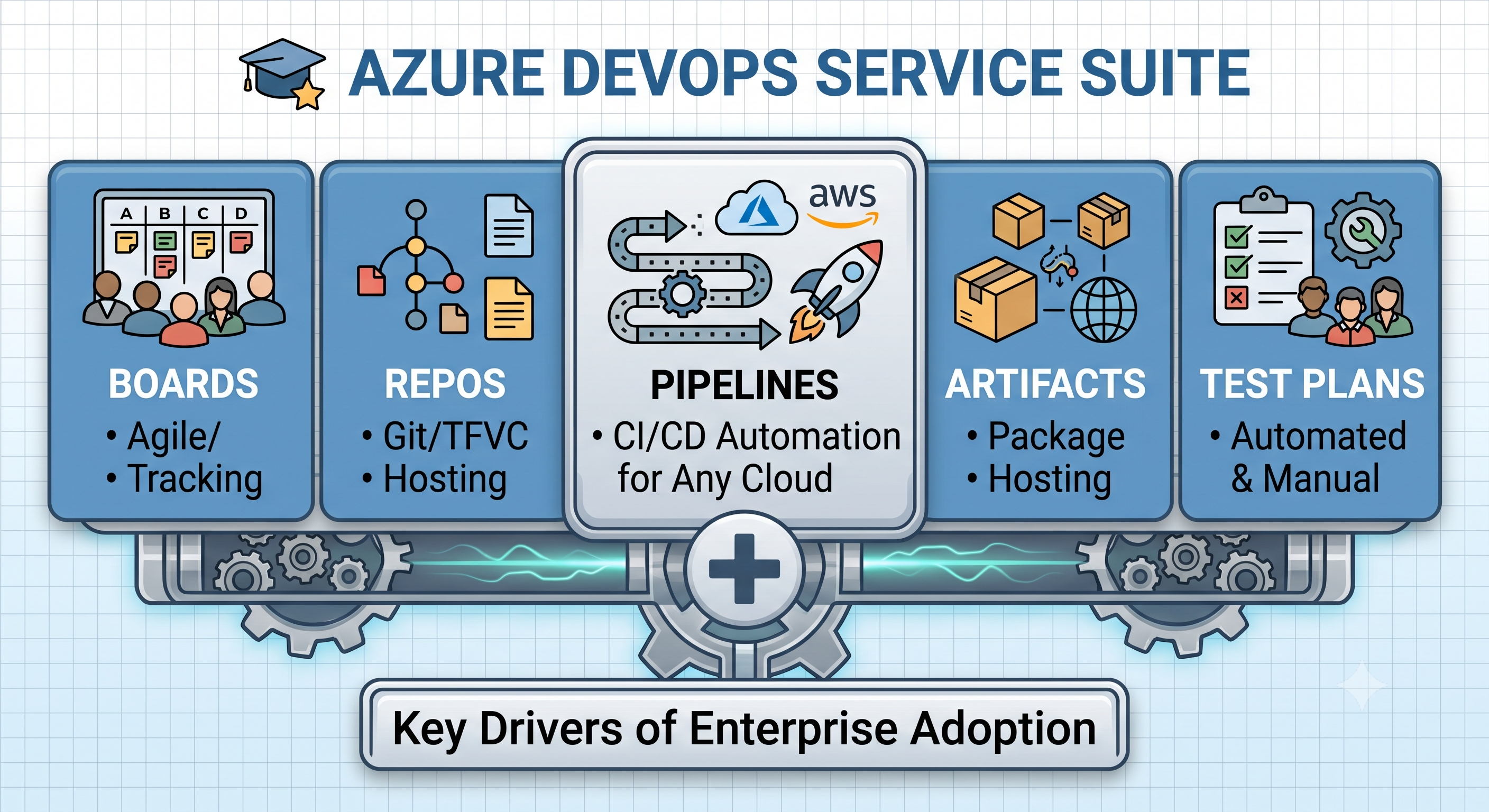
Main Factors of Enterprise-Level Adoption
Integration into Microsoft Ecosystem: Enterprises leveraging Azure Cloud, Active Directory (Entra ID), Office 365, and Visual Studio will be able to deploy Azure DevOps with ease. Identity management and RBAC capabilities will comply with enterprises' compliance requirements right away.
Multi-Cloud & Hybrid Capabilities: One of the misconceptions about Azure DevOps is its ability to deploy only to Microsoft Azure Cloud. In contrast, Azure Pipelines can deploy to different servers such as AWS, GCP, and on-premises data centers, and also to multi-cloud Kubernetes clusters with no problem.
Enterprise governance: audit logs, built-in approval gates, secret management with the help of Azure Key Vault, and regulations compliance will comply with strict requirements of governance in financial, healthcare, and government sectors.
Developer experience: pipelines in a YAML format can let you check infrastructure and app process as well as app code by means of reviewing, auditing, and using version control.
The Composition of Azure DevOps Professional
Azure DevOps Engineers need to have an in-depth knowledge of application development, cloud architecture, system administration, and security engineering. Apart from having Azure DevOps interfaces skills, engineers should master a particular technology matrix.
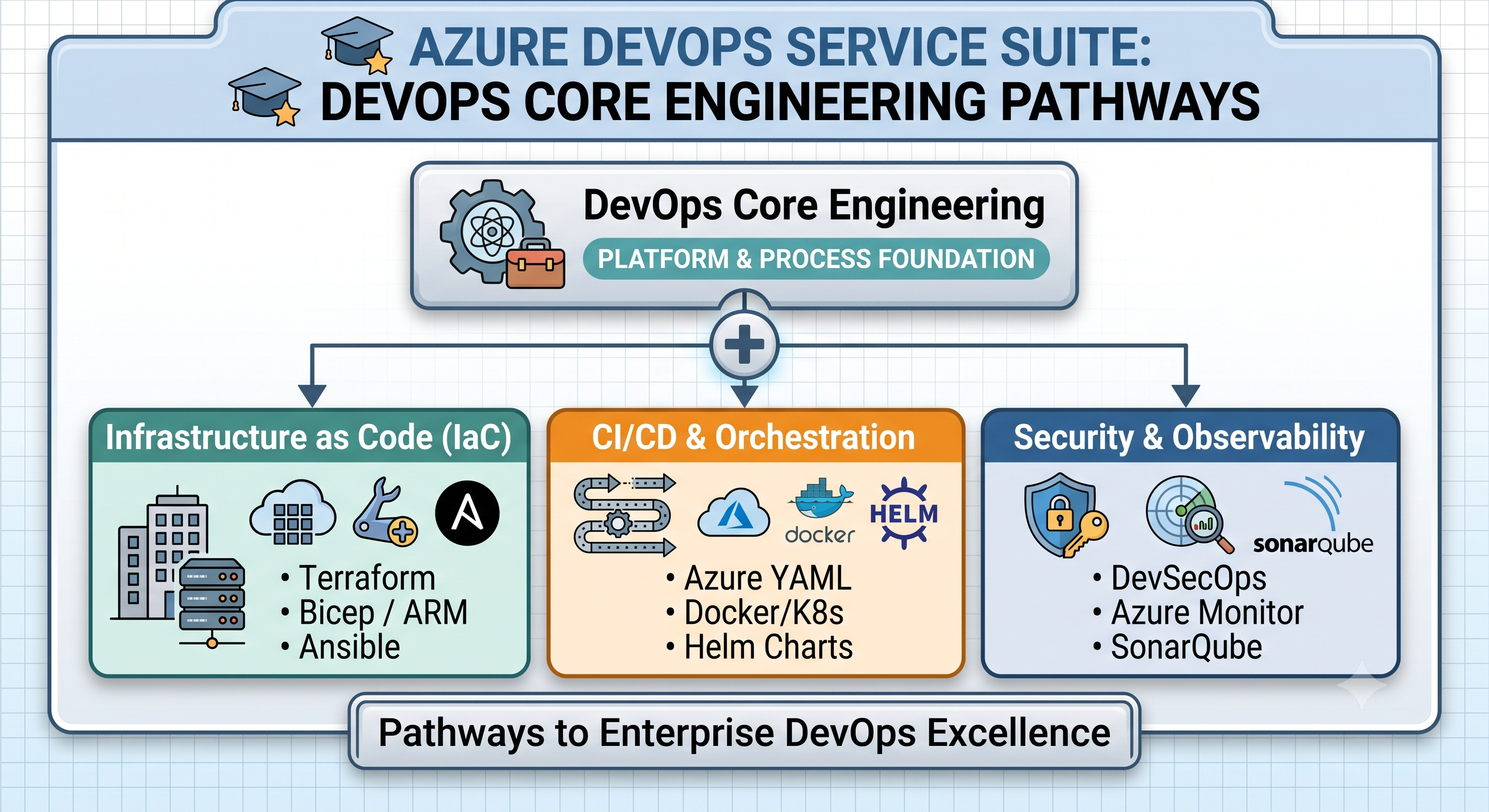
Key Skill Set Summary
Infrastructure as Code (IaC): Today's operations require automation of all cloud configurations. Engineers should automate the configuration using Bicep, ARM templates, and vendor-independent tools such as Terraform.
Pipeline Orchestration: Create declarative YAML pipelines for building, testing, deploying, and conditional triggering.
Containerization & Orchestration: Use Docker to containerize applications and Azure Kubernetes Service (AKS), Azure Container apps or Docker Swarm to deploy them.
Integration of Security in DevOps Delivery Pipeline (“shifting left”): Integration of Static Application Security Testing( SAST), Software Composition Analysis( SCA), docker vulnerabilities scanning, secret detection tools within build.
Application Insights, Azure Monitor, logging, telemetry to inspect state of system. Observability & Feedback Loops.
Career Options & Trajectories
DevOps profession provides flexible career growth opportunities due to multiple skills involved. Because DevOps specialists work with coding, infrastructure, management, and security, their skillset shifts quite easily to management or some specialization areas.
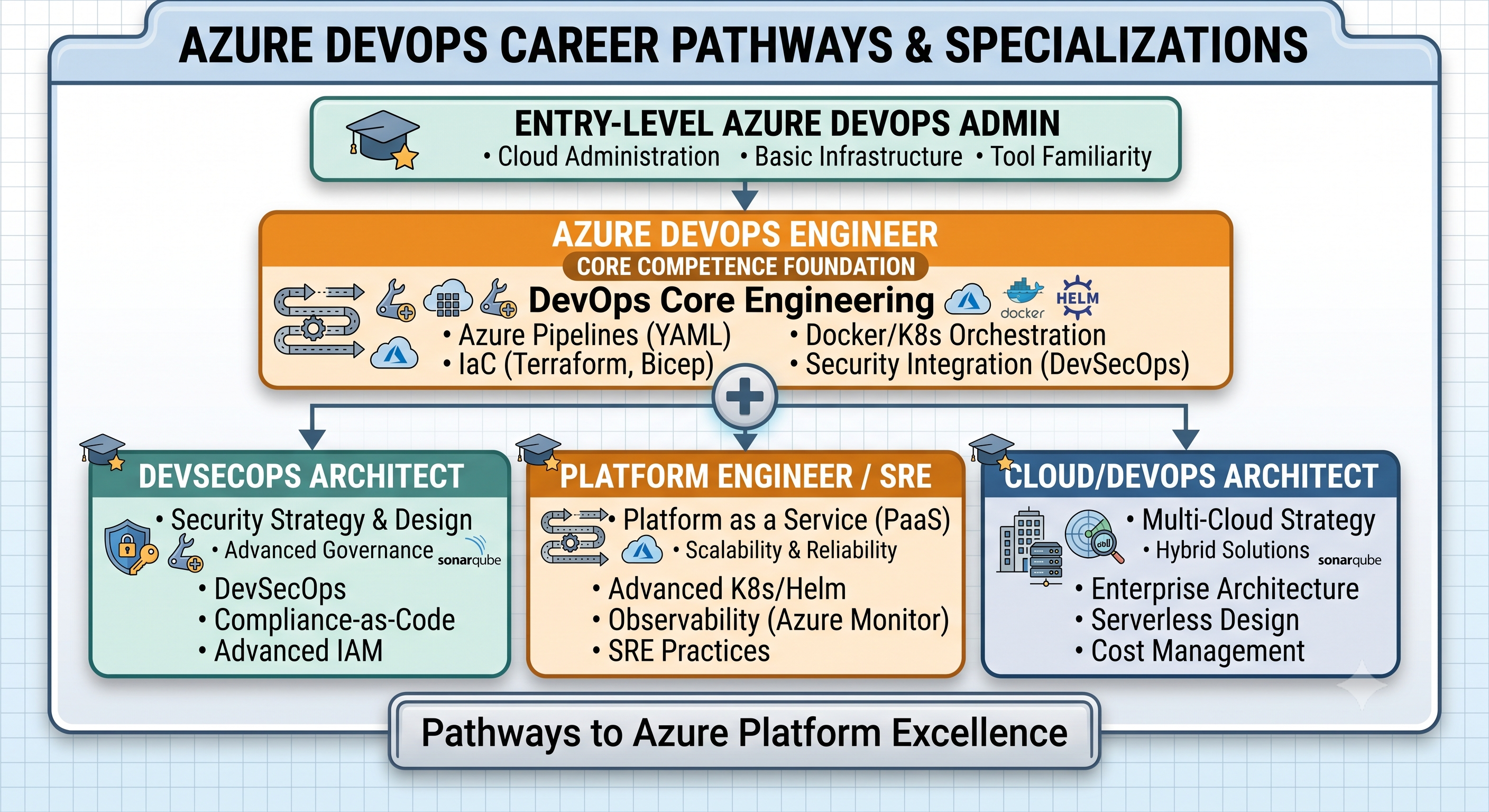
Roles & Responsibilities
1. Junior Cloud/DevOps Engineer – Fresher Level
Key Responsibilities: Ensure build pipelines run smoothly, troubleshoot and fix build failures, manage target deployment environments, manage user permissions, and automate operations.
Focus Areas: Git processes, YAML pipeline basics, shell scripting (PowerShell/Bash) and Azure admin basics.
2. Azure DevOps Engineer (Mid-Level)
Key Responsibilities: Design full CI/CD implementations, build repeatable pipeline patterns, provision infrastructure with IaC, define branch policies, and artifact management.
Focus Areas: Advanced YAML pipelines, Terraform/Bicep modules, Docker containers, Kubernetes integration, release approval process, testing automation.
3. Specialist: DevSecOps Engineer
Key Responsibilities: Embed security controls into SDLC, configure vulnerability scanners in build pipelines, manage compliance requirements in cloud environments, and secrets management.
Focus areas: SonarQube, Mend (formerly WhiteSource), Azure Key Vault integration, container scanning for security vulnerabilities, compliance as code (Azure Policy)
4. Technical Senior: Site Reliability Engineer (SRE) / Platform Engineering
Major accountabilities: focus on platform reliability, uptime, scalability and self service. SREs do the same thing but with operational problems and Platform Engineers build IDPs using Azure DevOps.
Areas of interest: SLI/SLOs, error budgeting, telemetry, chaos engineering, cluster management, internal platform tools.
5. Strategic Leadership: Cloud & Devops Architect Lead
Key Responsibilities: Define cloud architecture and engineering standards for the organization, driving digital transformation, toolchain selection, cloud cost management and engineering team building.
Areas of expertise: Enterprise Architecture, Failover architecture for regional availability, Cloud Economics (FinOps), Compliance frameworks and Organizational Change Management.
Global Remuneration and Salary
Since Azure DevOps engineers have direct impact on time-to-market and infrastructure reliability, remuneration reflects high business value in these positions. The salary will differ depending on geographical area, seniority, technical skills, and certified AZ-400.
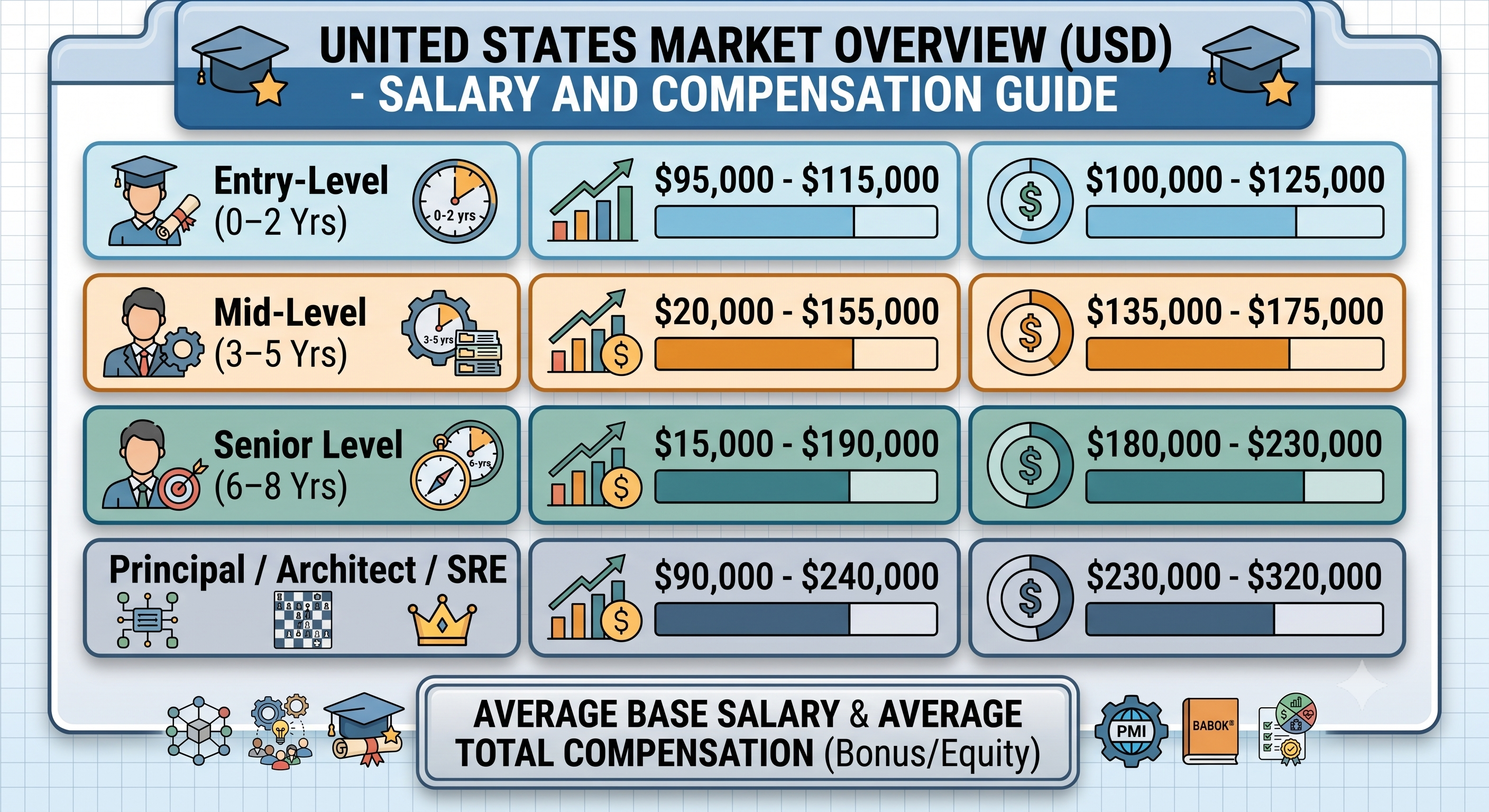

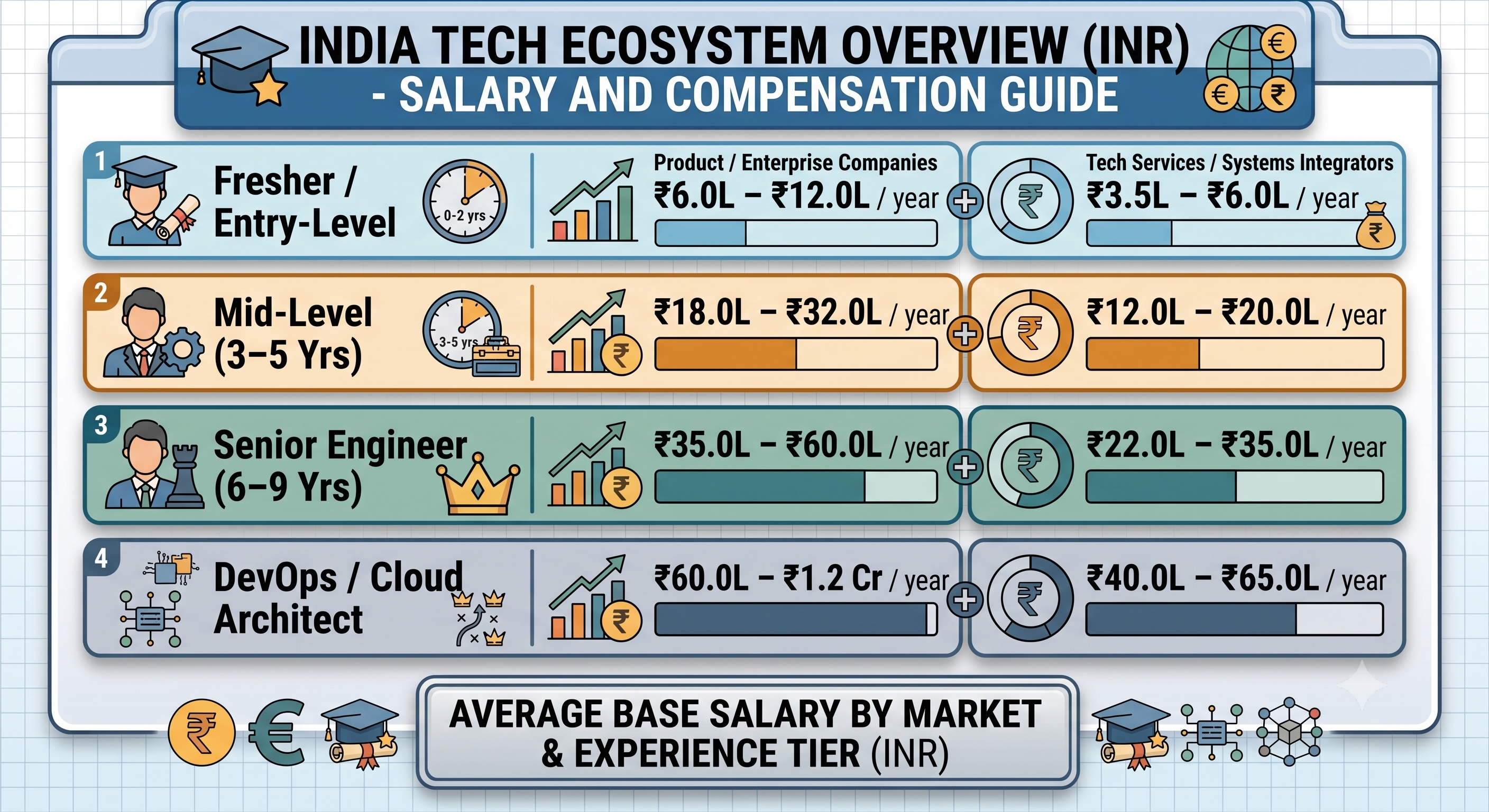
Course ROI: Measuring the Return on Investment
An effective professional training course is meant to be an investment that is intended to reduce the difference between theoretical basics and engineering knowledge required for production. The tuition cost is one of the factors when measuring the Return On Investment (ROI) of an azure devops course.
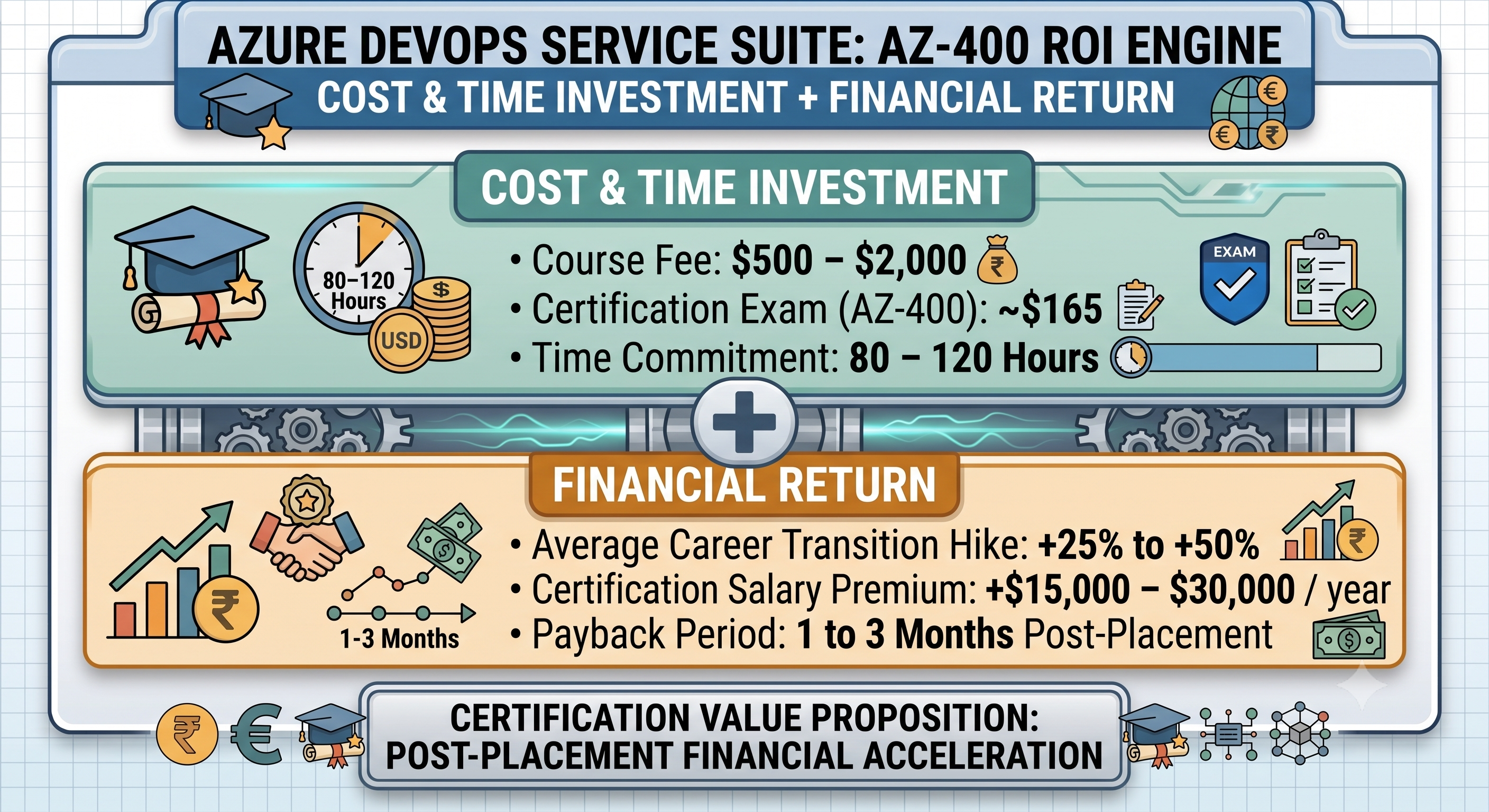
How to calculate your ROI
Imagine a mid-level IT specialist, such as a system administrator or a regular developer, who earns $85,000 per year.
Direct Costs:
Premium Structured Azure DevOps Course $1,000
Certification Fees (prerequisite AZ-104 and AZ-400 expert certification): $330
Cloud sandbox usage costs: $170 for practice labs
Total cost: ~$1,500
Career Switch:
The step up into an Azure DevOps Engineer position will pay an average mid-level salary of $130,000.
Additional Gross Annual Salary: $45,000
Return of Investment:
It will take only less than two weeks after the new job starts to cover the cost of $1,500 after changing the salary.
Self-learning vs. Structured Learning
While self-learning with free materials is possible, it is often not enough as it misses some practice perspective.
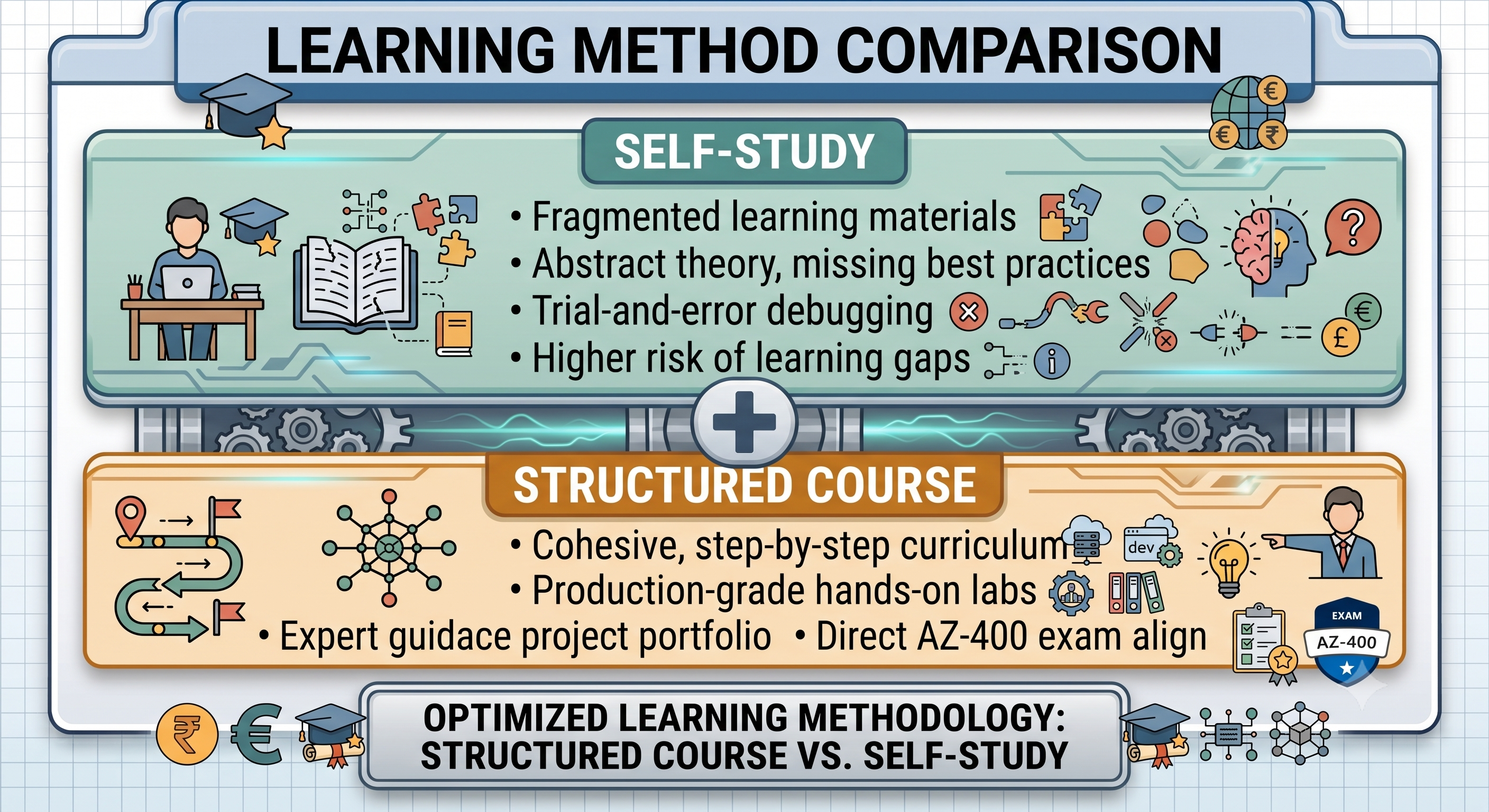
Real World Implementation Project
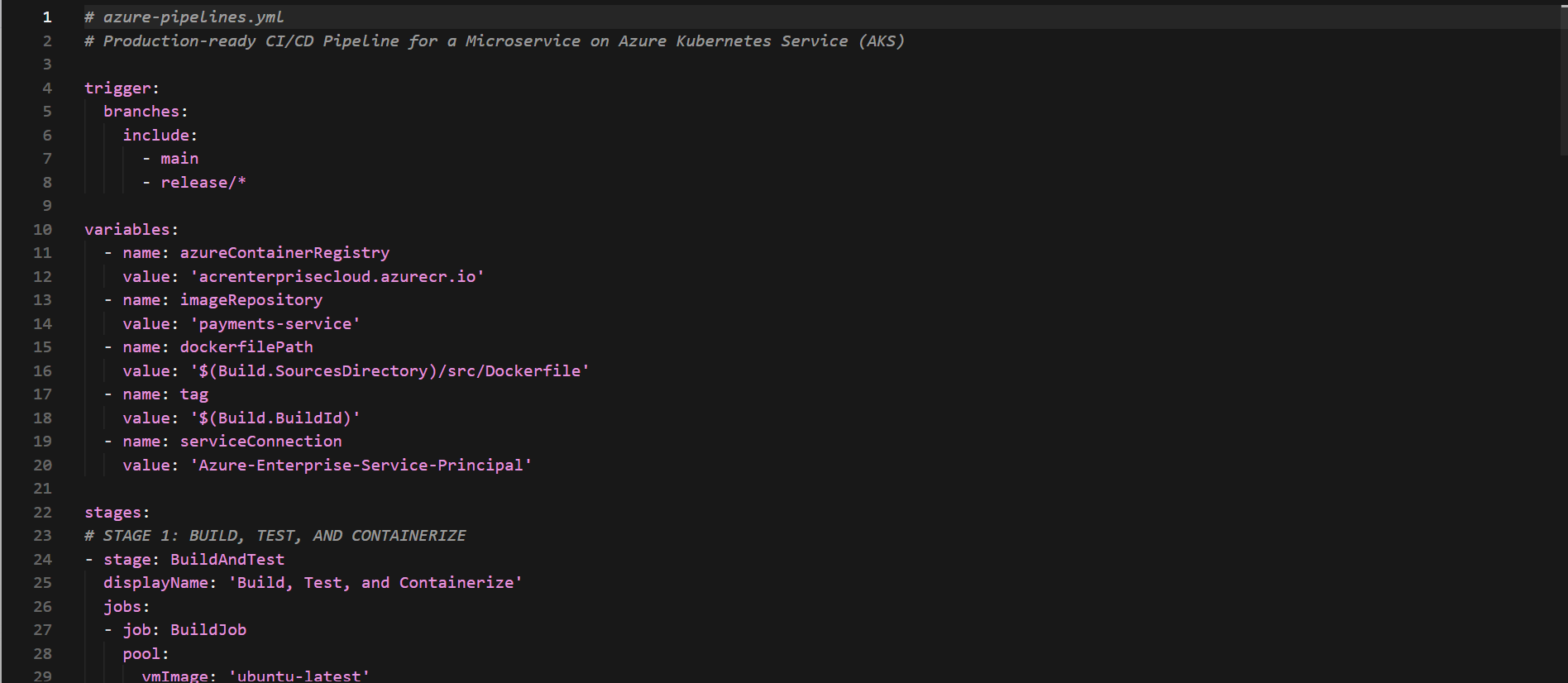
As an illustration of the practical implementation of the aforementioned skills, below is presented a fully functional YAML definition for the multistage deployment pipeline of Azure DevOps.
This particular example shows how continuous integration (container building and test execution) and gating release management works in practice.
Selecting the Best Azure DevOps Training
To get maximum value out of your azure devops training, take into account the following considerations when selecting the right course:
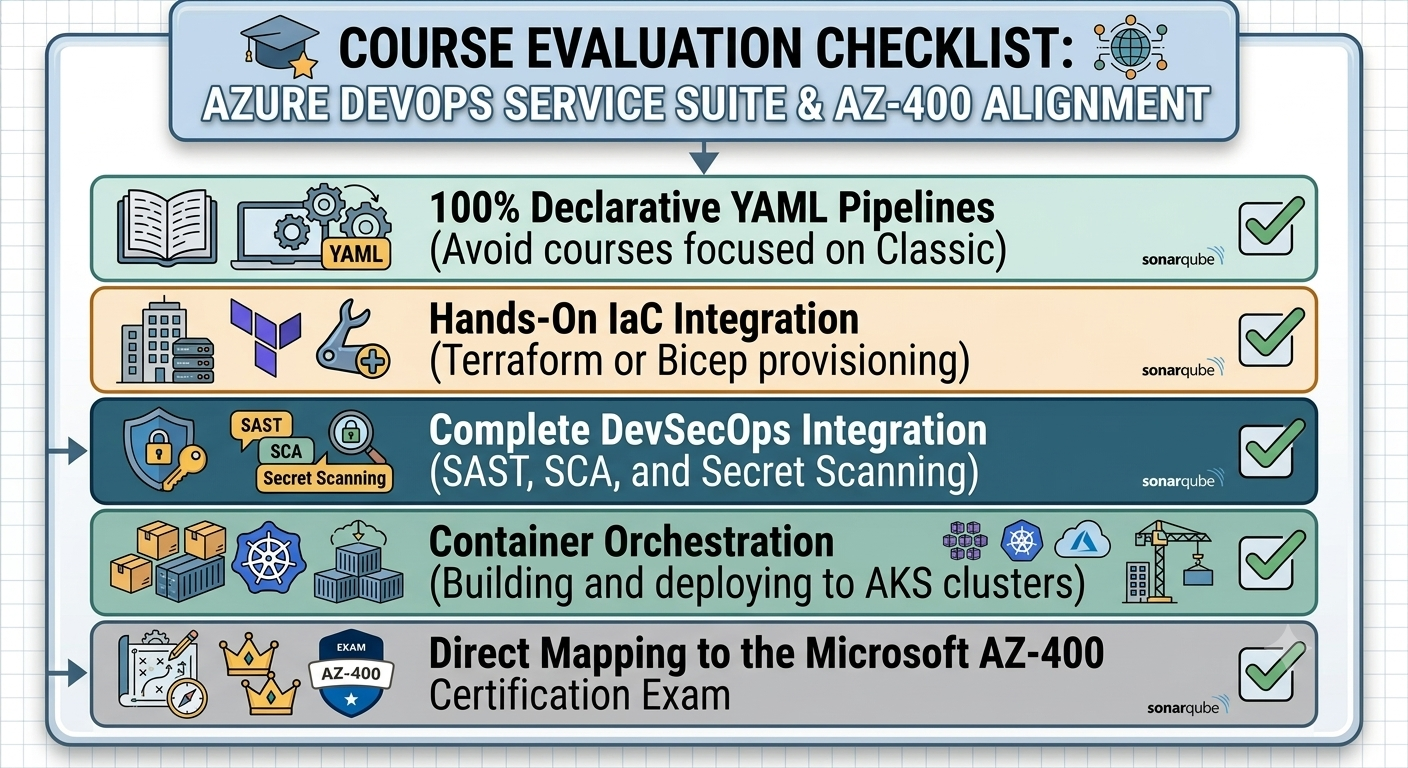
Transition to Coding of Pipelines from GUIs Ensure course is all about coding of YAML pipelines and not about using Classic UI designer which is considered deprecated.
Integration with Infrastructure as Code The course should cover lessons on how to do automated cloud provisioning with Terraform or Bicep in Azure Pipelines.
Efficient DevSecOps practices: Make sure that the course covers DevSecOps topics that demonstrate how to integrate solutions like SonarQube, Trivy or Mend into your build pipelines.
Project Portfolios in Practice Find a course where you will have real-world projects to showcase at the end of it, such as implementing microservices in Azure Kubernetes Service.
Certifications: The course should fulfill the requirements to appear in the AZ-400 exam.
Conclusion and Next Steps
The high global demand for Azure DevOps is due to a simple business reality – companies migrating to or scaling on Microsoft Azure need a particular skill set to design, secure, and operate their ecosystems of automated software delivery processes. The combination of DevOps knowledge and practice makes the individuals who have it valuable in terms of high salaries globally because DevOps is right in the middle of application development, cloud infrastructure, security governance, and business strategy.
A quality devops azure course will create a vital bridge for you between basic cloud understanding and professional engineering excellence. Master declarative YAML pipelines, Infrastructure as Code (IaC) with Bicep and Terraform, and DevSecOps automation for the fast track to a prosperous engineering career.
Action Roadmap
1. prerequisites & foundations
Before we go into the technical details of advanced pipeline architecture, make sure you have rock solid foundation skills in cloud management and version control. You need to know shell scripting (PowerShell or Bash), git branch structure and basic Azure Administration. By earning foundational or associate certifications like AZ-900 (Azure Fundamentals) or AZ-104 (Azure Administrator Associate) you’ll be ready to take on the pre-requisites to learn advanced DevOps concepts.
2. Choose a Project-First DevOps Course
Choose an azure devops training online where the emphasis lies on scenario labs rather than simply listening to lectures on video. Make sure that the course syllabus focuses on declarative YAML pipelines as opposed to outdated GUI-based pipelines; Infrastructure as Code (IaC); containerization with AKS and security tools such as SonarQube or Azure Key Vault.
3. Develop Enterprise-Scale Portfolio
Showcase your practical skills by building and deploying CI/CD pipeline projects on public GitHub or Azure Repos repository. Projects to be highlighted are:
Infrastructure automation with Terraform or Bicep modules.
Implementation of multistage CI/CD pipeline with automated unit tests, secrets management and environment approval gates.
Static security scanning Container vulnerability scanning on pull request events.
4. Aim for AZ-400 Certification
Demonstrate your practical skills by aiming for the Microsoft Certified: DevOps Engineer Expert (AZ-400) certification. This certification includes the main components of designing the instrumentation strategy, creating SRE plans, implementing security and compliance processes, and managing CI/CD pipelines. The certification allows you to demonstrate your technical expertise to future employers.
Major Implementation Milestones
Weeks 1–3: Developing Cloud and Git Skills
First you build a strong base of knowledge in cloud and Git skills.
The process begins with building a solid foundation of cloud and Git skills knowledge
The process starts with creating a robust base of cloud and Git skills knowledge. Within three weeks, your focus will be on developing your knowledge of fundamental Azure infrastructure-related topics, which is similar to that covered in the AZ-104 (Azure Administrator Associate) curriculum, along with Git branching strategy, such as GitFlow and trunk-based approach. By the end of this period, you will become completely proficient at working with Azure infrastructure, developing your own Bash/PowerShell scripts, and source code repository management.
Weeks 4–7: YAML Pipeline Development and Infrastructure as Code (IaC)
The next stage involves the development of the core capabilities of pipeline automation and infrastructure management. Within this period, you move from cloud management tasks to developing declarative YAML-based pipelines for builds and deployments in Azure DevOps. At the same time, you develop the ability to deploy and manage cloud infrastructure through Bicep or Terraform. The main result of this stage is an automatically deployed target cloud environment when infrastructure code is committed to your repository.
Weeks 8-10: DevSecOps & Container Orchestration
You’ve built deployment pipelines, and now you’re moving into enterprise security, testing, and containerization. In weeks eight through ten, you will add security concepts to your pipelines using tools like SonarQube for static code analysis, Azure Key Vault for secure secrets management, and dependency vulnerability scanners. At the same time, you get to experience first-hand containerizing applications, creating Docker images for microservices, and then deploying to Azure Kubernetes Service (AKS).
Weeks 11-12: Completing the Personal Repository & Exam
You will prepare for your career advancement over the next two weeks. Finish the preparation for the certification exam and complete your portfolio. In this sprint, you will prepare specifically for the exam and take the Microsoft Certified: DevOps Engineer Expert (AZ-400) exam. At the same time, you will finalize your personal repository by sharing production-grade YAML templates, Terraform modules, and architectural drawings publicly in GitHub or Azure Repos.
Taking all these steps will help you turn your demand in the market into concrete career advancement.
Here are the Top 10 interview questions mostly asked in Azure DevOps Engineer interview with basic technical concepts as well as real-time scenarios:
1. What are the main components of Azure DevOps and their functions?
Azure DevOps has five core integrated services:
Azure Boards – Agile planning tool for tracking user stories, tasks, backlogs, and Kanban boards.
Azure Repos Git source code management with version control
Azure Pipelines CI/CD Build, test, and deploy with any language, platform, or cloud.
Azure Artifacts – Integrated package management system in Azure (npm, NuGet, Maven, Python etc.)
Azure Test Plans - Tools for manual and automatic testing of your software
2. What is the difference between Classic Pipelines and YAML Pipelines in Azure DevOps?
Answer: Classic Pipelines – Built using the visual drag-and-drop user interface in the browser. They are easier for beginners but neither clonable nor version-controllable.
YAML Pipelines – Defined in the azure-pipelines.yml file in the repo. It is built on the Pipeline as Code methodology. Version history Code review in pull requests Reuse between branches YAML is the default for enterprises
3. What is the difference between Microsoft Hosted Agent and Self Hosted Agent? When would you use one vs. the other?
Answer: Microsoft-hosted agents: Microsoft-hosted virtual machines that are created for the job and then deleted. Great for normal app builds, no management, fast to scale.
Self-hosted agents: VMS or physical computers you set up and manage yourself. Needed for pre-installed custom software, access to internal corporate network/VNet, build caching.
4. How can you use it to manage secrets or sensitive information in Azure Pipelines?
Do not store secrets within YAML files or code repos.
Connect to Azure Key Vault using variable groups
use secret variables in pipeline definitions (automatically hidden in build log).
Use service-to-service connections with Workload Identity Federation (Managed Identities).
5. How do you implement Infrastructure as Code (IaC) with Azure Pipeline?
Answer The tools that will be discussed can be Bicep, ARM templates or Terraform.
If it is a multi-stage pipeline, the terraform plan (or bicep build) will run in the pull request/validation stage.
Manual approvals are required before running terraform apply to deploy/change cloud infrastructure in target environments (Staging/Production).
6. how to bake DevSecOps into your CI/CD pipeline?
The concept behind DevSecOps is the notion of “shifting security left” in the build pipeline.
Static Code Analysis (SAST): Utilize tools like sonarQube to analyze source code for quality and vulnerabilities.
Software Composition Analysis (SCA) – Run Mend/Dependabot to check for CVEs in 3rd party dependencies.
Container Security: Scan the docker images with Trivy or Aqua Security before push to ACR .
Secret Scanning: Avoid committing passwords/API keys in plain text.
7. What Branching Strategies do you have & what mechanisms do you have to enforce code quality via Branch Policies?
Branching Strategies : Common ones are Trunk based development (where feature branches are regularly merged into main) or GitFlow .
Branch Policies: Enforce on main or release branches to ensure:
Allow set number of reviewers on a Pull Request(PR’s).
Passes CI build. Passes Unit Tests.
All comments in PRs must be resolved before they are merged.
8. How to minimize down time with Azure DevOps deployment strategies?
Blue-Green Deployment Active environment (Blue) Passive environment (Green) Switch Traffic immediately with Traffic Manager or Azure App Service Deployment slots .
Canary Deployment: Deploy change to a small group of users, monitor health metrics, and then deploy to all users.
Rolling Deployment: updating an instance of a cluster in parts (often used with Azure Kubernetes Service).
9. What is the difference between Azure DevOps Server and Azure DevOps Services?
Microsoft offering on the cloud is Azure DevOps Services. It is a SaaS, updated weekly and there is no need to maintain the underlying infrastructure.
Azure DevOps Server (formerly TFS): On-premises solution running on your own infrastructure.
10. Situation based Question: Deployment pipeline breaks in between during production phase. What are you going to do?
In such case, the first thing I would do is to investigate the root cause of the problem immediately. This would mean looking at logs, looking at dashboards and working with the team to identify where the failure happened. Once the cause is identified I would work to resolve the issue as quickly as possible to minimize down time. “If a critical bug breaks the pipeline, I would fix it immediately.” If it is a less critical issue, I would document the problem and schedule a fix for the next cycle. During the process, I would inform the team on the status/progress of the issue resolution. In these situations it is important to communicate to make sure everyone is on the same page and to prevent any misunderstanding. Finally, once the problem is fixed, I would do a full investigation of the reasons for the failure and put in place steps to stop it from happening again. It could be improving our deployment processes, adding more robust error handling, improving our monitoring and alerting systems.
Stabilize - Start rollback of automation or redeploy latest artifact/tag that passed testing
Where did the pipeline fail ? Check the logs for the pipeline , deployment and tasks . See for yourself. pull request (PR) and testing to isolate & fix replicate issue on staging environment
Post Mortem Analysis: Do RCA and add automation tests / validations in pipeline.