
Workday HCM: How Does It Transform Modern HR Operations and Build Career Opportunities?
Last updated on Aug 22, 2026
Human resources has changed significantly over the last decade. HR teams are no longer responsible only for maintaining employee records, processing requests, or handling routine administrative work. They are increasingly involved in workforce planning, employee experience, organizational change, talent development, compliance, reporting, and strategic decision-making.
As organizations become larger and more distributed, managing all these activities through spreadsheets, disconnected applications, and manual approvals becomes increasingly difficult. Employee information can become fragmented, processes can slow down, and HR leaders may not have a reliable view of what is happening across the workforce.
This is where Human Capital Management platforms become important.
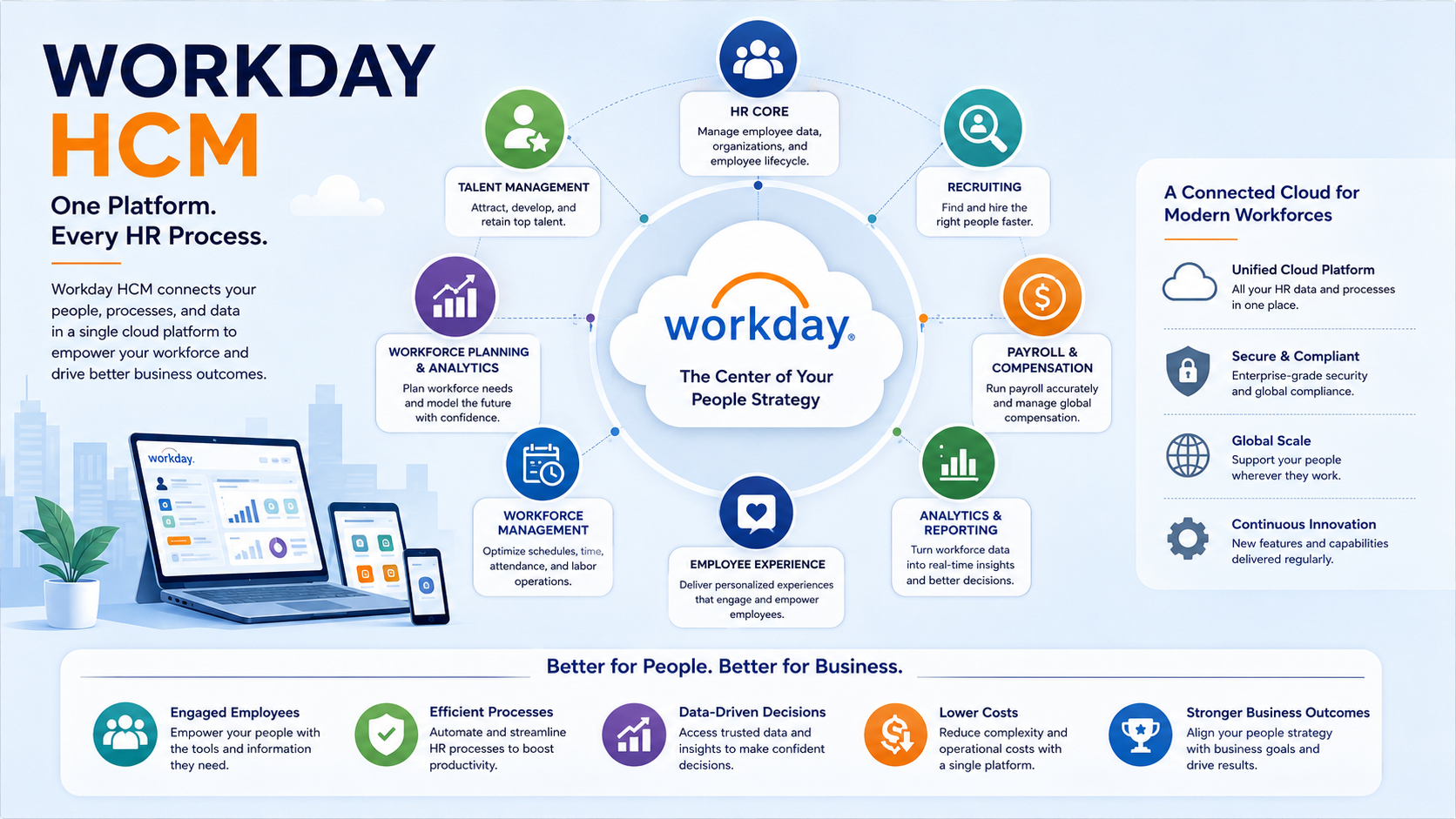
Workday HCM provides a cloud-based environment that connects workforce information with organizational structures, HR processes, reporting, talent-related capabilities, workforce planning, and other areas of human capital management. Workday currently positions its HCM platform around capabilities including Core HCM, talent management, workforce planning and analytics, workforce management, and employee experience.
However, understanding Workday HCM is not simply about knowing what each module does. The more valuable skill is understanding how an organization's HR requirement becomes a practical system solution. For example, if a company wants to change its hiring approval process, a Workday professional needs to understand who initiates the transaction, who should approve it, what conditions affect the workflow, what security is required, what information should be reported, and whether another system depends on the resulting data.
That is what makes Workday HCM more than an employee database.
What Is Workday HCM?
Workday HCM, or Human Capital Management, is an enterprise cloud platform used to manage workforce information and HR-related processes. At its foundation, an HCM platform needs to answer basic questions about employees: who works for the organization, where they work, who manages them, what position they hold, and how their employment has changed over time.
Those questions become much more complicated inside a large organization. A global company may have thousands of workers across countries, business units, supervisory organizations, locations, job profiles, compensation structures, and different employment arrangements.
A single employee transaction can also affect multiple areas. An employee moving from one department to another may experience changes to their manager, organizational assignment, security access, reporting relationships, compensation eligibility, and downstream integrations.
This is why an enterprise HCM platform needs to understand relationships between workforce information rather than simply storing individual records.
Workday describes its HCM platform as a connected system supporting areas such as Core HCM, talent management, workforce planning and analytics, workforce management, and employee experience.
The central idea is therefore connected workforce management. Instead of treating every HR activity as an isolated task, organizations can connect people, structures, processes, data, and decisions within one enterprise environment.
Why Has Workday HCM Become Important for Enterprises?
Imagine a company preparing for rapid expansion. It needs to hire hundreds of employees, create new positions, establish teams, assign managers, update organizational structures, manage compensation, onboard employees, and provide leadership with accurate headcount information. If those activities are handled through disconnected systems, the organization can quickly encounter inconsistencies. Different teams may maintain different versions of employee information, approvals may depend on email conversations, and reporting may require manual consolidation. A connected HCM environment approaches the same challenge differently. Employee and organizational information can be maintained within a common system while configured business processes determine how transactions move through the organization.
This becomes particularly important when many stakeholders participate in a single HR process. A hiring transaction, for example, may involve a recruiter, hiring manager, HR partner, compensation team, finance stakeholder, and other participants depending on the organization's requirements. The value of Workday therefore is not simply automation. It is the ability to create a structured and connected approach to managing workforce operations.
What Does Core HCM Actually Cover?
Core HCM forms the foundation of many other workforce processes. It focuses on the people, jobs, positions, organizations, and employment information that other HR activities depend upon. In practical terms, Core HCM may involve worker information, supervisory organizations, staffing models, positions, job profiles, locations, employment changes, worker history, contingent workers, skills, and organizational assignments.
The importance of these components becomes clear when an employee changes roles or departments. What looks like a simple record update can influence management relationships, organizational reporting, security, business processes, and other connected systems. This is why learning Core HCM should not be reduced to memorizing configuration screens. A professional needs to understand why an organization is structured in a particular way and what consequences that structure has for other processes.
How Do Workday Organizations and Supervisory Structures Work?
Organizational structure is one of the most important concepts for anyone learning Workday HCM. Organizations do not operate as flat lists of employees. They have departments, business units, teams, locations, management structures, and reporting relationships. Supervisory organizations are particularly important because they help represent management structures and group workers according to reporting relationships.
A technology organization with separate engineering, cybersecurity, data, and infrastructure teams. Each team may have its own manager and employees while remaining part of a larger organizational structure. Now suppose an employee moves from engineering to cybersecurity. The change is not simply a department update. The employee's manager, organizational assignment, business-process routing, security context, and reporting relationships may also need to reflect the change. This is why organizational design has a direct relationship with other parts of Workday, particularly business processes, security, reporting, and workforce planning. For a functional professional, understanding these relationships is often more valuable than memorizing individual configuration options.
How Does the Workday Business Process Framework Work?
One of the most important concepts in Workday HCM is the Business Process Framework. A business process can be understood as a structured workflow that determines what happens when an HR event occurs. Instead of simply recording a transaction, the system can guide that transaction through actions, approvals, notifications, integrations, and other required steps.
A simplified hiring process might look like:
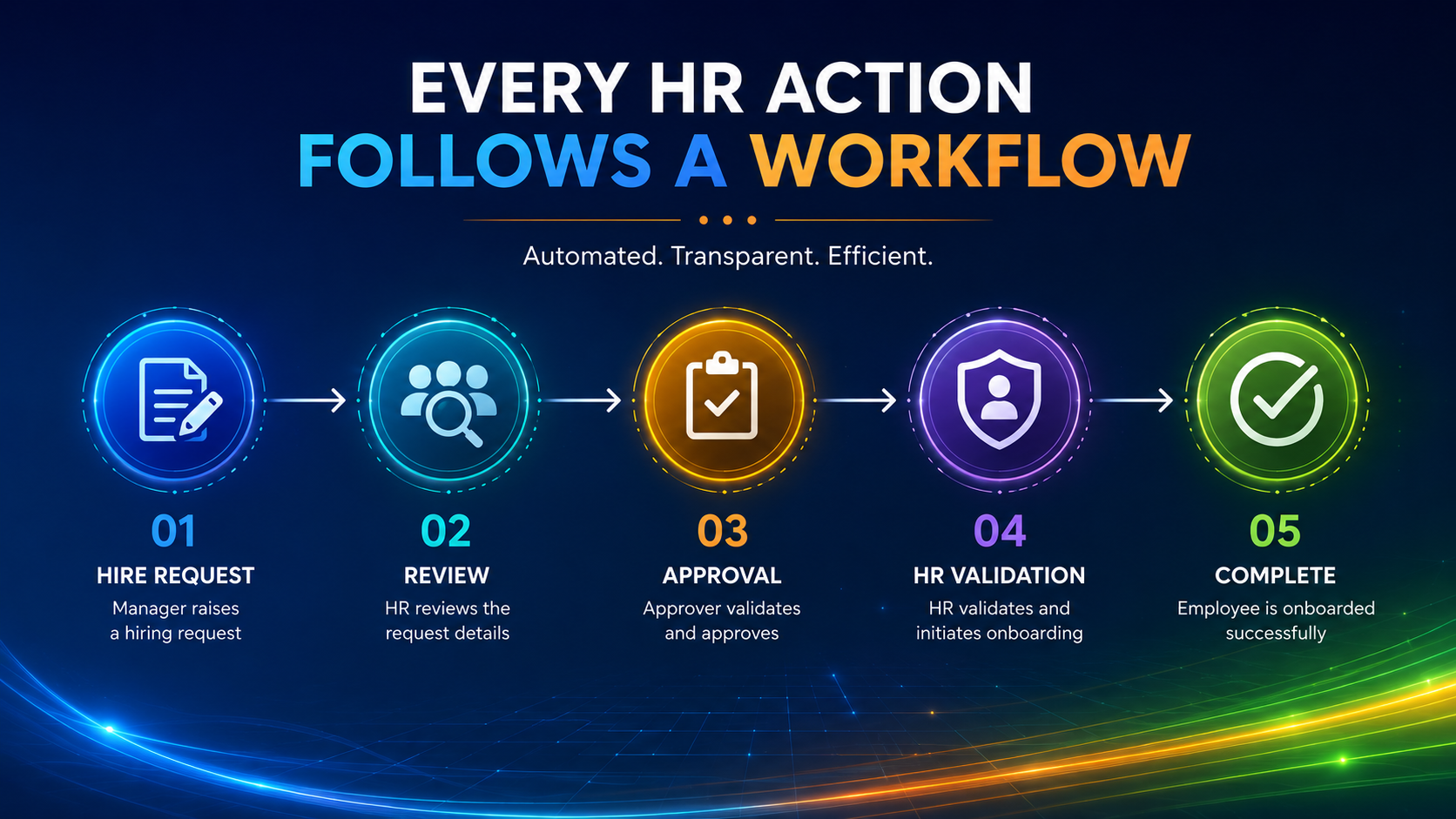
In an enterprise environment, however, workflows are rarely that simple. An organization may require additional approval for senior positions, compensation review for certain jobs, or different routing depending on location or organizational structure. Workday's Business Process Framework supports different types of process steps, including actions, approvals, notifications, integrations, reports, and to-do activities. Conditions can also determine how a process behaves in different situations. This means that a Workday consultant is often solving a workflow problem rather than simply entering information.
For example, a business may say that standard hires require manager approval while senior hires require additional HR and compensation approval. The consultant must translate that requirement into system logic and then test both scenarios.
The important thinking process is:
Business Requirement → Process Design → Configuration → Security → Testing
That is where functional Workday expertise becomes valuable.
Why Is Security So Important in Workday HCM?
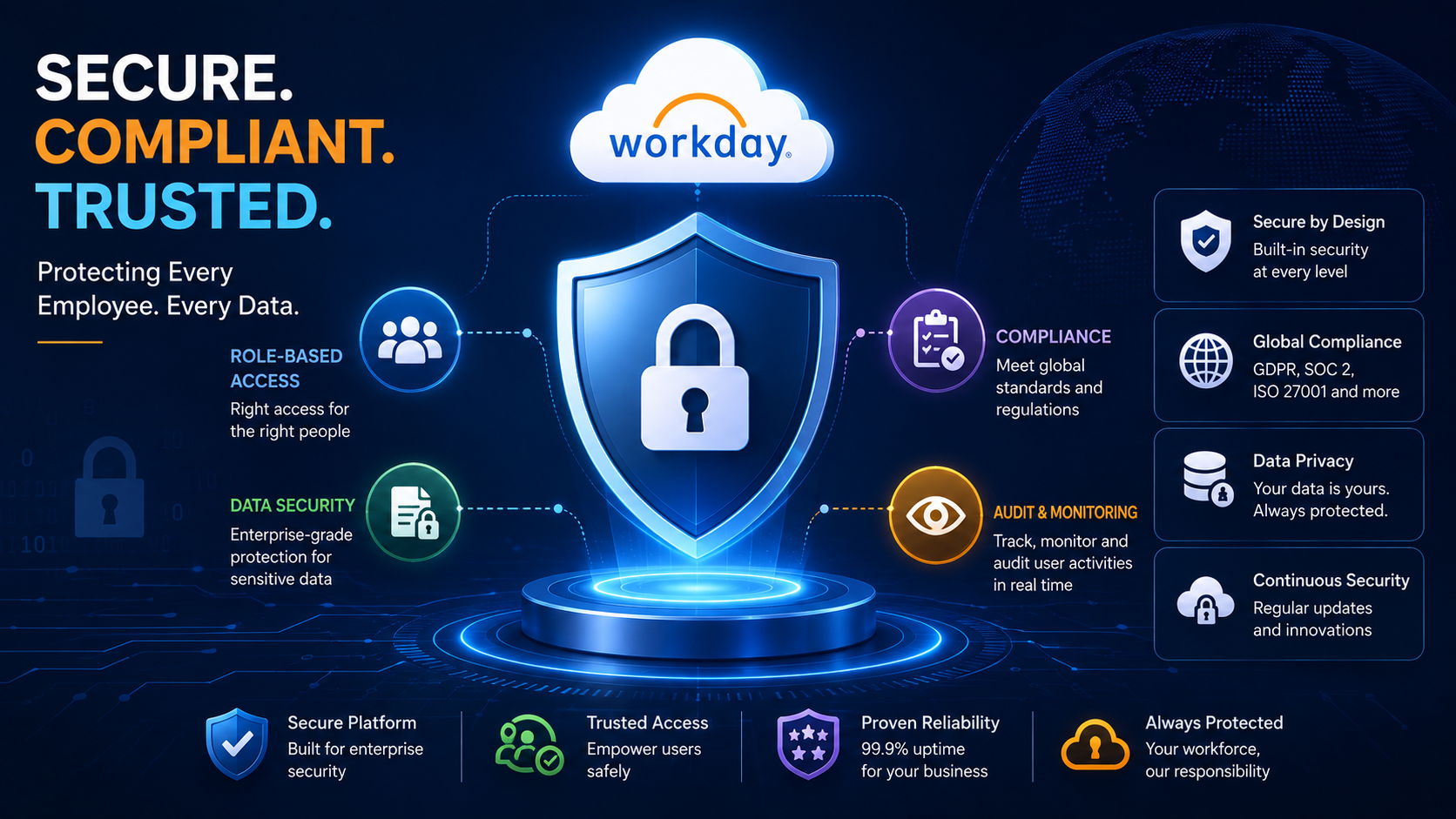
HR systems contain some of the most sensitive information within an organization. Employee records may contain personal information, compensation details, employment history, performance information, and organizational data. Therefore, an HCM implementation cannot focus only on functionality. It must also determine who can access information and what actions different users are allowed to perform.
Workday uses configurable security mechanisms involving domains, business processes, and security groups. Security policies help determine what users can view or act upon, while business-process security controls participation in workflows. For example, an HR partner may require broad access across an organization, while a manager may need access primarily to employees within their management structure. Both users work within the same system, but their access should not necessarily be identical. This is why security should be considered during solution design rather than treated as a final implementation step.
How Does Workday Reporting Turn HR Data Into Business Insight?
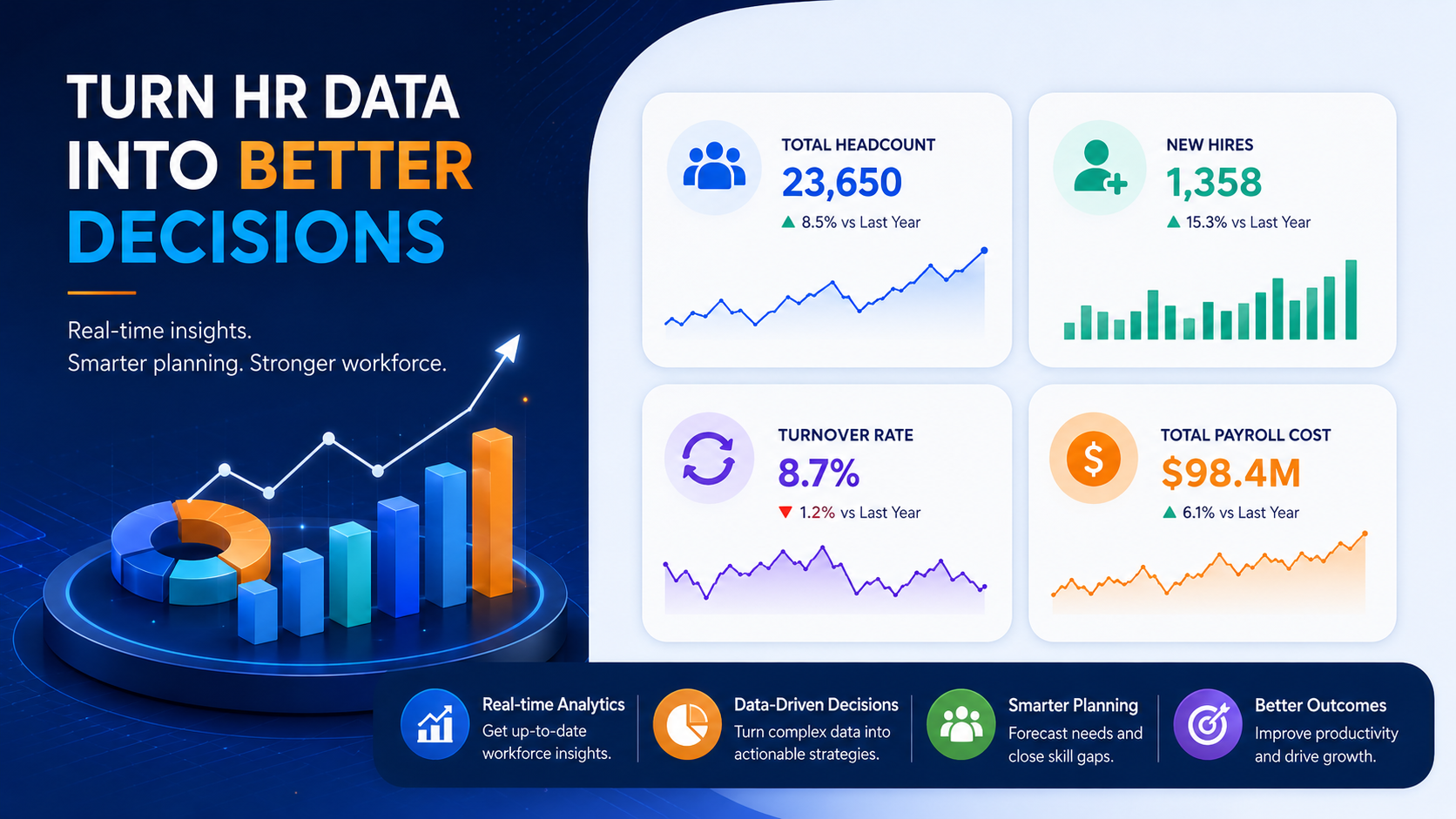
An organization can have a huge amount of workforce data and still struggle to make effective decisions. The problem is often not a lack of data but a lack of meaningful interpretation. HR leaders may want to understand how quickly headcount is growing, where turnover is concentrated, which departments are expanding, what skills exist across the organization, or where future workforce gaps may appear.
Workday provides reporting and analytics capabilities that allow organizations to analyze workforce information within the same environment where many HR transactions occur. Its reporting capabilities include configurable analysis, dashboards, workforce analytics, custom reporting, and role-based access.
This creates an important relationship between workforce data and business decisions. A manager asking for a headcount report, for example, may actually be trying to understand active employees, open positions, contractors, organizational growth, or future hiring requirements. The best report is therefore not necessarily the report with the most columns. It is the report that answers the business question clearly.
What Role Does Security Play in Reporting?
Reporting and security are closely connected because HR reports can contain sensitive employee information. A user being able to run a report does not necessarily mean they should see every piece of information included in it. Different users may receive different results depending on their security access.
This means a Workday reporting professional needs to understand more than report construction. They need to consider how the data source, report logic, calculated fields, security configuration, and user access work together.
A useful way to think about this relationship is:
Data → Report Logic → Security → Appropriate User Access
A report that works correctly for an HR administrator may return different information for a manager because the two users have different permissions.
How Does Workday HCM Support Talent Management?
Modern HR is increasingly focused on employee capabilities rather than simply employee records. Organizations want to understand which skills they already have, where capability gaps exist, how employees can develop, and what capabilities they will need in the future. Workday's talent capabilities connect areas such as talent acquisition, learning, skills, and employee development. Workday also currently emphasizes skills as an important part of its talent and workforce strategy.
This changes the way organizations can think about workforce planning.
Instead of asking only:
"How many employees do we have?"
organizations can increasingly ask:
"What capabilities do we have today, and what capabilities will we need tomorrow?"
That is a more strategic HCM question. It also explains why professionals entering the Workday ecosystem can benefit from understanding the relationship between employee data, skills, talent, and workforce planning instead of learning Core HCM as an isolated subject.
Why Are Integrations Important in Workday HCM?
Large enterprises rarely operate entirely within one application. A company may use Workday for HCM while relying on other platforms for payroll, finance, identity management, benefits, recruitment, learning, analytics, or data warehousing. This creates the need for integrations.
A simplified employee lifecycle might look like:
Recruitment System → Workday → Identity Platform → Payroll → Data Warehouse
When an employee is hired, information may need to move to other applications. When an employee leaves, downstream systems may need to receive information so that access or other processes can be updated. Workday business processes can incorporate integration steps as part of workflow execution, allowing automated activities to interact with external systems. This is why integration knowledge can become especially useful for professionals who want to move from functional HR work toward more technical Workday roles.
What Does a Workday HCM Consultant Actually Do?
The title "Workday consultant" can represent several different career paths. A functional consultant generally works with business requirements, configuration, process design, testing, and stakeholder communication. A technical professional may focus more heavily on integrations, data movement, reporting, security, or related technical components. An HRIS analyst may work between HR stakeholders and technology teams.
A typical implementation or enhancement project may move through several stages:
Requirement gathering
Solution design
Configuration
Testing
Issue resolution
User acceptance testing
Deployment
Post-production support
The consultant's work does not end once configuration is completed. They need to understand the problem being solved, identify the process owner, determine approval requirements, consider exceptions, evaluate security, understand reporting requirements, and identify possible downstream impacts. This is what separates configuration work from genuine enterprise solution design.
What Skills Should You Learn for a Workday HCM Career?
People often approach enterprise platforms by asking which tool they should learn first. A better question is which combination of skills will allow them to solve real business problems.
For a Workday HCM career, the most useful foundation includes:
HR and HCM fundamentals — Understand hiring, onboarding, transfers, promotions, terminations, compensation, organizational structures, and the employee lifecycle.
Workday functional knowledge — Understand Core HCM, organizations, staffing models, business processes, security, and reporting.
Business process thinking — Learn how to translate a business requirement into triggers, conditions, roles, actions, approvals, and notifications.
Reporting and data analysis — Learn how workforce information can answer practical business questions.
Security fundamentals — Understand why different users require different levels of access.
Testing and troubleshooting — Learn how to validate normal scenarios, exceptions, approvals, security behavior, and downstream effects.
Communication — Develop the ability to explain technical solutions in business language.
For someone who is still exploring the ecosystem, free workday training resources can be a useful starting point for understanding terminology, HCM concepts, and the broader HR technology landscape before moving into deeper practical learning.
Is Workday HCM Training Useful for Beginners?
For someone entering the ecosystem, structured workday hcm training can provide a useful framework because Workday contains many interconnected concepts. The biggest challenge for beginners is usually not the volume of information. It is understanding how the different components connect. For example, learning supervisory organizations separately from business processes may seem straightforward. But understanding how organizational structure affects workflow routing, reporting, security, and management responsibilities is much more valuable.
A sensible learning progression would be:
HCM Fundamentals → Organizational Structures → Core HCM → Business Processes → Security → Reporting → Testing → Real-World Scenarios
This approach encourages system thinking rather than simple memorization.The goal should be to move from knowing what a feature does to understanding why an organization needs it and how it affects other parts of the system.
What Should You Look for in a Workday HCM Course?
Not every learning experience provides the same level of practical understanding. A strong workday hcm course should explain both the platform and the reasoning behind configuration decisions. For example, rather than simply demonstrating how to configure an approval, useful training should explain why the approval is required, who should participate, what condition controls the routing, how security affects the process, what happens when the transaction is rejected, and how the final configuration should be tested.
Hands-on scenarios are especially useful because they force learners to think through a requirement. A realistic exercise could ask a learner to design a hiring process where standard employees require manager approval while senior hires require additional HR and compensation approval. The learner then needs to determine how the requirement should be represented within the system.
This type of exercise develops problem-solving ability because it resembles the reasoning required during actual Workday projects.
Can HR Professionals Move Into Workday?
An HR background can provide a useful starting point for a Workday career because many HR professionals already understand the business processes behind the technology. Someone who has worked with employee lifecycle activities may already understand why a transfer requires manager involvement, why termination information is sensitive, why organizational structures matter, and why employee data needs to remain accurate. The technology layer is often the missing piece.
An HR professional can therefore gradually build:
HR Knowledge + Workday Concepts + Configuration + Reporting + Security + Business Process Understanding
IT professionals can approach the transition from the opposite direction. They may already understand systems, data, testing, integrations, and technical troubleshooting but need to strengthen their understanding of HR processes. The most effective professionals can eventually operate between both worlds.
What About Workday HR Training for Existing HR Professionals?
For experienced HR professionals, workday hr training can be useful when the goal is to understand how familiar HR activities are represented within an enterprise technology platform. The objective does not necessarily need to be turning every HR professional into a technical consultant. Instead, platform knowledge can help HR teams communicate more effectively with HRIS teams, consultants, and technology stakeholders.
An HR manager who understands business processes can describe requirements more precisely. An HR analyst who understands reporting can identify which workforce metrics are actually useful. A functional consultant who understands HR operations can design a solution that fits the organization's working model instead of simply creating something technically possible. That shared understanding can make collaboration much easier during implementations, enhancements, and ongoing system support.
What Does a Real Workday HCM Project Look Like?
Consider a company reorganizing its technology department.The organization wants to create new teams, move employees between managers, introduce new positions, update reporting structures, and establish different approval requirements. At first glance, this looks like an organizational change. In Workday, however, it can affect multiple areas at the same time.
The organizational structure needs to represent the new business model. Positions and staffing structures may need to be reviewed. Business processes may require updated routing. Security groups may need to reflect new responsibilities. Reports may need to be tested because management hierarchies have changed. Integrations may also need testing if downstream applications depend on organizational data.
Finally, users need to validate the changes before deployment. The example demonstrates why Workday should not be viewed as a collection of completely independent modules.The real skill lies in understanding the relationships between them.
How Is AI Changing the Future of Workday HCM?
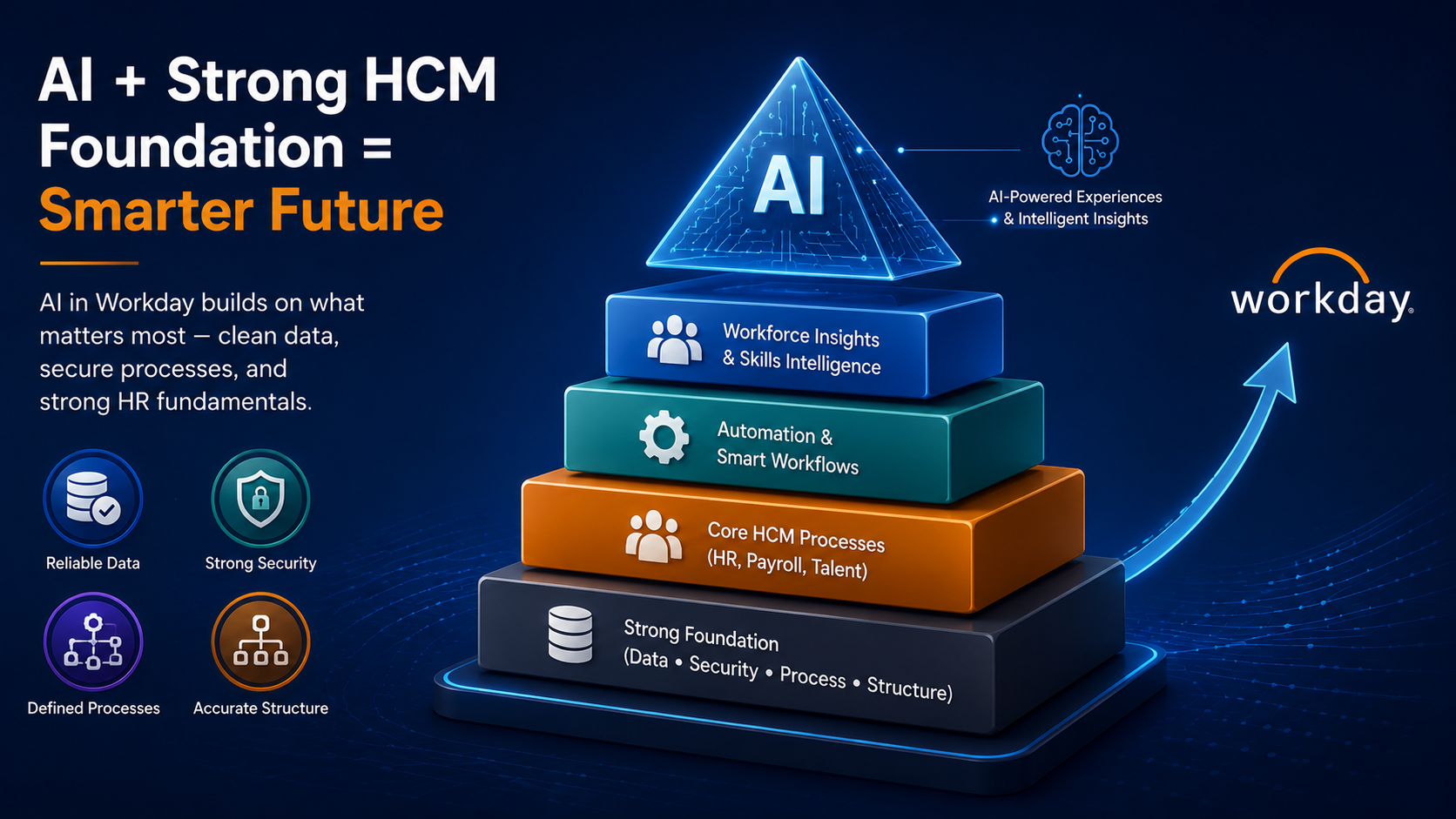
AI is becoming an increasingly important part of enterprise HCM. Workday's current product direction includes AI capabilities, skills intelligence, workforce insights, automation, and AI-supported experiences.
However, AI does not eliminate the need for strong HCM fundamentals. In many ways, it makes those fundamentals even more important. AI-driven capabilities still depend on reliable workforce data, appropriate security, clearly defined processes, and accurate organizational structures. If employee data is inconsistent or security is poorly designed, intelligent automation cannot solve the underlying problem by itself.
Future Workday professionals should therefore not think about AI as a replacement for HCM knowledge. Instead, AI should be viewed as another layer built on top of strong HR processes, data, security, and platform fundamentals. Professionals who understand both the business foundation and emerging technology will be better positioned as the ecosystem continues to evolve.
What Makes a Workday HCM Professional Valuable?
The strongest Workday professionals are not necessarily those who memorize the largest number of configuration options. They are the people who can understand a problem from several perspectives. They can listen to an HR stakeholder describe a business issue, identify the underlying requirement, understand its employee impact, translate it into Workday concepts, recommend or configure a solution, test different scenarios, and explain the result to non-technical stakeholders.
That requires a combination of:
HR knowledge + Workday expertise + analytical thinking + communication + problem solving
This combination is what makes enterprise application skills valuable across different projects and organizations.
Where Can a Workday HCM Career Lead?
Workday-related careers can develop in several directions depending on a professional's experience and interests.
Common paths can include:
Workday HCM Analyst
HRIS Analyst
Workday Functional Consultant
Workday HCM Consultant
Workday Reporting Analyst
Workday Security Analyst
Workday Integration Consultant
Workday Technical Consultant
Workday Solution Architect
HCM Project or Program Roles
Career progression does not have to follow one fixed route.
Someone might begin in HRIS support, develop strong Core HCM knowledge, move into implementation consulting, specialize in reporting or security, and eventually progress toward architecture or solution leadership. Another professional may begin in HR and gradually transition into functional consulting. The important principle is to build depth before attempting to learn every part of the ecosystem simultaneously.
The Bigger Picture: Workday HCM Is About More Than HR Software Workday HCM is often described as an HR platform, but its impact can extend well beyond the HR department. Workforce information influences finance, planning, operations, security, payroll, compliance, talent strategy, and organizational decision-making. That is why HCM technology has become an important enterprise discipline. The platform provides the technology, but organizations still need professionals who understand how the business operates.
They need people who can translate:
Policies → Processes → Configurations → Data → Decisions
That is the real career opportunity behind learning Workday HCM.
Final Thoughts
Learning Workday HCM should not be approached as a race to memorize modules or collect certificates. The stronger approach is to understand the logic behind the platform. Start with HR and HCM fundamentals. Learn how workers and organizations are structured. Understand business processes and approval routing. Study security because workforce information requires controlled access. Learn reporting because organizations need more than stored information—they need useful insight.
Then move into integrations, talent, workforce planning, skills, and emerging AI capabilities. The course overview you provided follows a similar progression, moving from foundational organizational configuration toward business processes, security, reporting, and practical enterprise skills.
For beginners, the goal should be to move from:
"I know what Workday is."
to:
"I understand why an organization would configure Workday this way."
For HR professionals, the opportunity is to connect existing HR knowledge with enterprise technology.
For IT professionals, the opportunity is to combine technical thinking with HR domain knowledge.
For experienced Workday professionals, the next step may be deeper specialization in areas such as architecture, integrations, analytics, security, skills, or AI-enabled workforce transformation.
Ultimately, Workday HCM is valuable not simply because it automates HR activities, but because it provides organizations with a structured environment for managing workforce information, processes, security, and decisions at enterprise scale. The professionals who understand that bigger picture will be better prepared not only to work with the platform, but also to solve the business problems behind it.