
Workday HCM Trends Every HR Leader Should Know in 2026
Last updated on Jun 17, 2026

Human resources will no longer be a traditional administrative role by 2026. It has become a strategic business enabler impacting workforce planning, employee experience, organizational agility, and long-term growth. As companies continue to adapt to hybrid work models, digital transformation, talent shortages, and AI-driven operations, modern HR leaders are increasingly turning to intelligent technologies to remain competitive.
Workday HCM is one of the most significant solutions driving this transformation of workforce management and HR innovation, among the top platforms reshaping this change. Organizations across the globe are deploying Workday Human Capital Management capabilities to improve efficiency, enhance employee engagement, and make data-driven decisions.
Students, HR professionals, and business leaders need to know where Workday HCM software is going. If you are looking to advance in your HR career or take an online Workday HCM course, knowing what trends are coming can give you a big edge over the competition.
This article investigates the top Workday HCM trends HR leaders should be aware of in 2026 and why learning about these technologies is more crucial than ever for future professionals.
Why is Workday HCM increasingly important to understand?
Before we dive into the trends coming up, it's important to know why Workday HCM is being adopted all over the world. Workday Human Capital Management is a cloud-based solution that manages the entire employee lifecycle. Organizations have a single system to manage human capital from recruitment and onboarding to performance management, workforce planning, payroll, learning, and analytics.
Modern companies choose Workday human capital management software because it offers the following:
Workforce insights in real-time
Cloud Native Architectures
Analytics and reporting progressed
AI-assisted decision support
Better employee experience
Effortless global team management
Comprehensive security & compliance controls
As organizations are becoming more data-driven, the role of the Workday HR management system continues to expand beyond traditional HR operations.
AI-Powered Workforce Intelligence Hits Main Street
One of the biggest game-changers for HR tech in 2026 will likely be AI. Organizations are moving from basic automation to intelligent workforce planning. Workday HCM is at the forefront of this shift, embedding AI capabilities into a wide range of HR processes.
AI-powered features help organizations:
Forecast employee turnover risks
Identify skill gaps
Enhance hiring decisions
Suggest customized learning paths
Improved succession planning
Optimize labor deployment
HR leaders can now use predictive insights to proactively make decisions rather than relying solely on historical data.
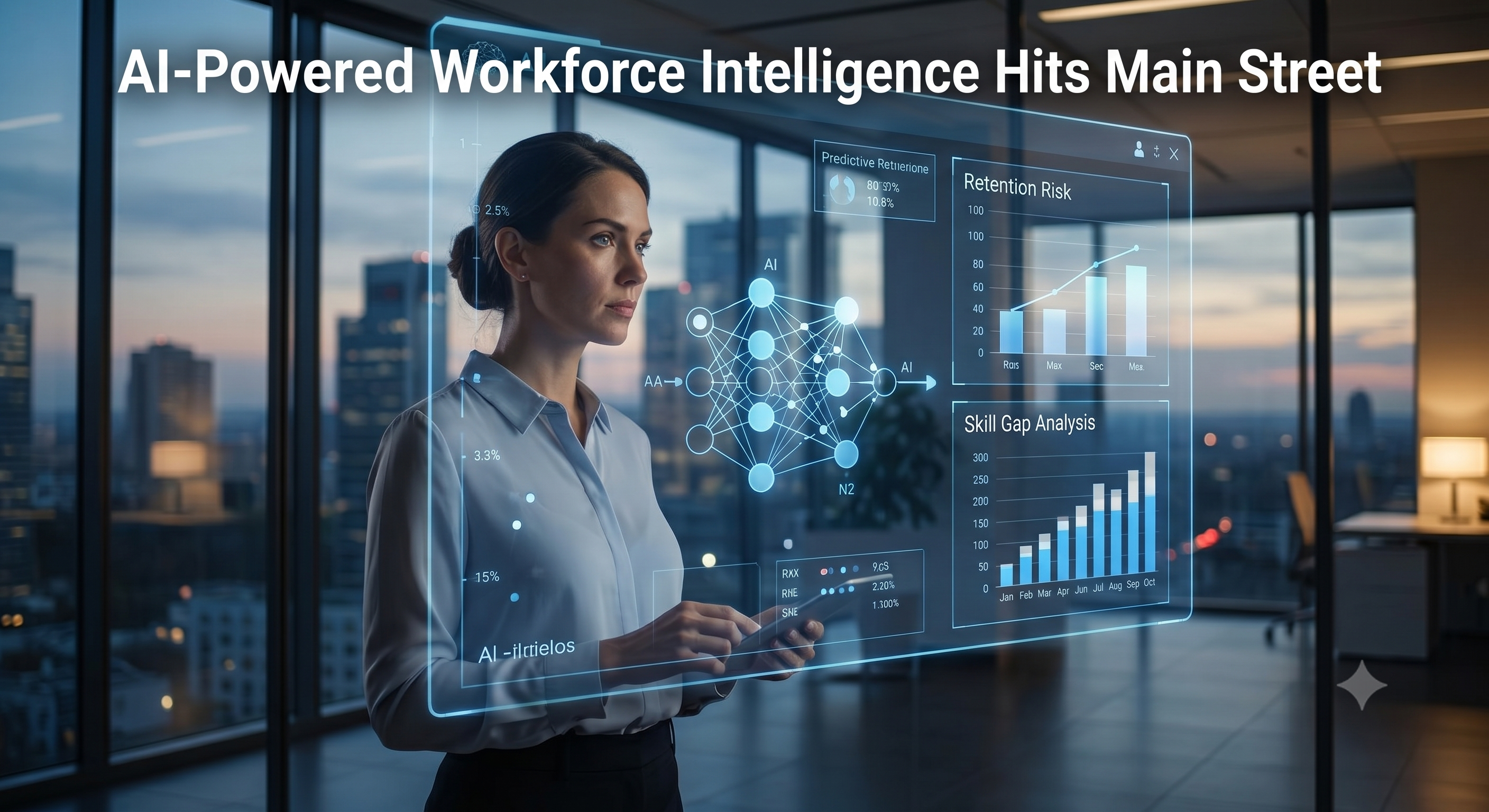
For students looking for future-ready skills, knowing how AI works within Workday Human Capital Management environments can go a long way toward making them more employable. That is why many professionals are opting for a Workday HCM course to get practical exposure to AI-powered HR processes.
AI is being embedded in enterprise HR systems, and those who learn Workday HR with AI fundamentals will be in demand in global job markets.
Traditional Job Structures Will Be Replaced By Skills-Based Talent Management
One of the most significant changes in workforce strategy is the shift from job-centric models to skills-centric organizations. In 2026, companies will focus more on identifying employee skills than on job titles and academic qualifications. Workday HR software with sophisticated skills management frameworks will support this transformation.
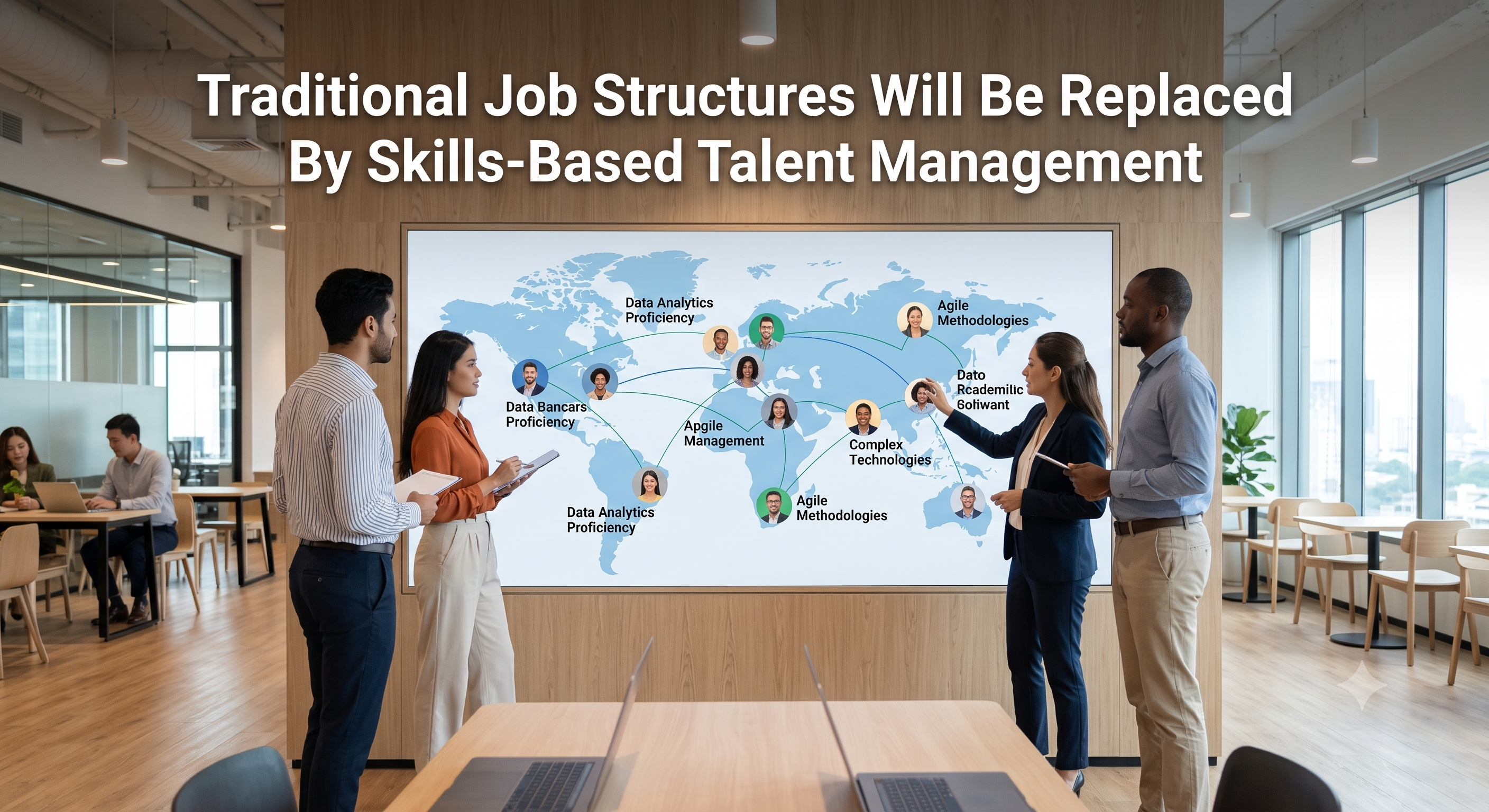
Organizations can:
Develop comprehensive skills inventories
Map skills of employees
Identify the workforce needs for the future
Refer to internal job opportunities
Create customized development plans
This trend allows companies to become more agile and helps employees find growth opportunities within their organizations. Workday’s HR management system delivers visibility into workforce capabilities, helping leaders better align talent strategies with business objectives. Students learning Workday HCM gain exposure to these innovative workforce planning methods and become valuable assets to modern HR teams.
Hyper-Personalized Employee Experience: What is HR Success?
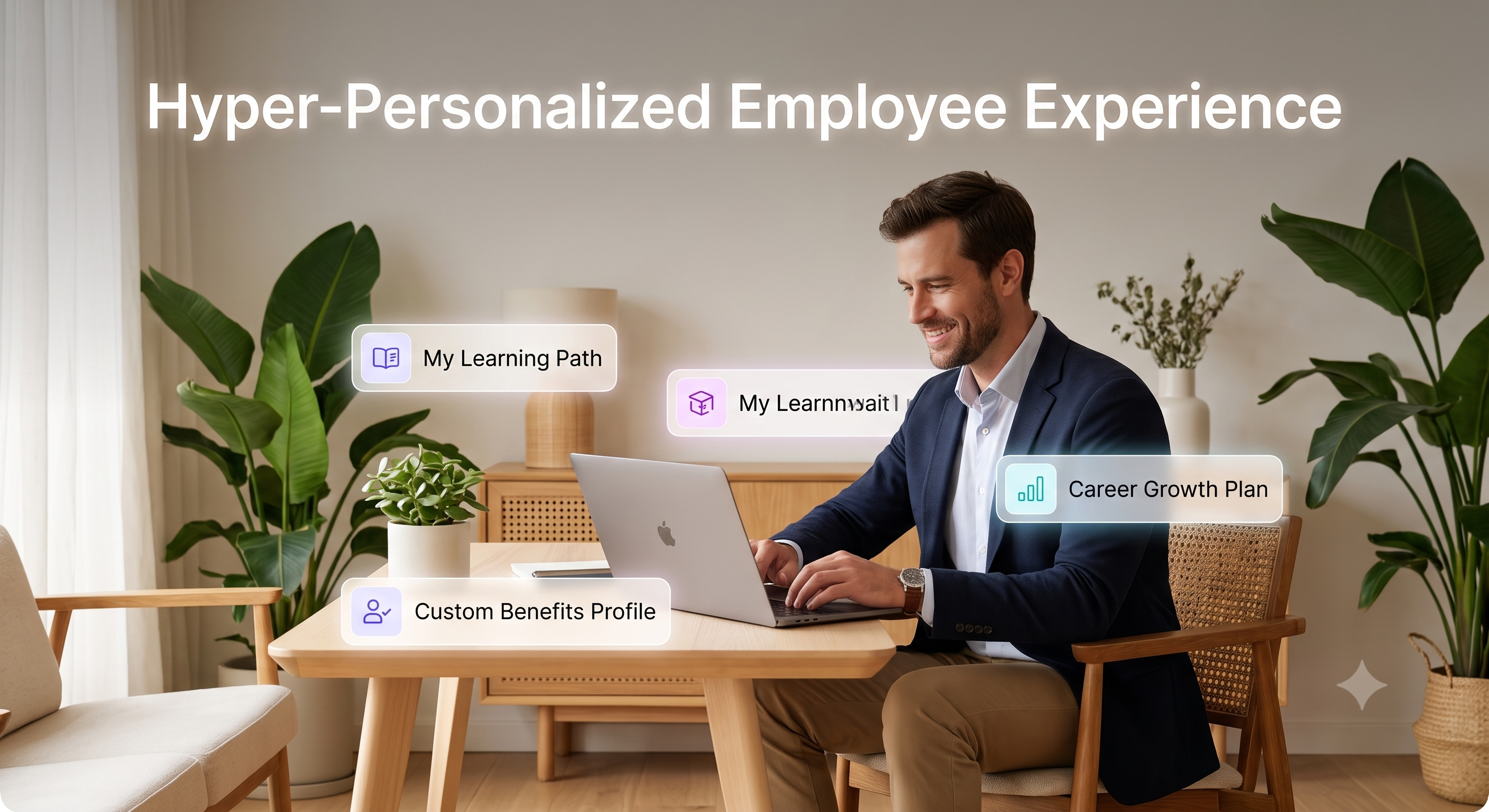
There’s a shift in employee expectations. Modern workers expect personalized experiences as they get them from consumer technology platforms. HR departments are using Workday human capital management capabilities to tailor employee journeys in response.
Personalization can include:
Personalized learning suggestions
Customized career development plans
Tailor-made benefits offerings
Individualized performance goals
Adaptive onboarding experiences
The future of Workday Human Capital Management is about knowing employees as individual people, not the workforce as one group.
Organizations that deliver outstanding employee experiences tend to see the following:
Increased levels of engagement
Higher retention rates
More productive workers
A stronger employer brand
Workday HCM online courses guide professionals in learning to configure employee experience features to help organizations succeed.
Workforce Analytics to Become a Strategic Imperative
Data-driven decision-making is no longer a choice. By 2026, HR leaders will be required to deliver measurable insights into the workforce that directly affect business performance. Analytical capabilities within Workday HR software are becoming more sophisticated.
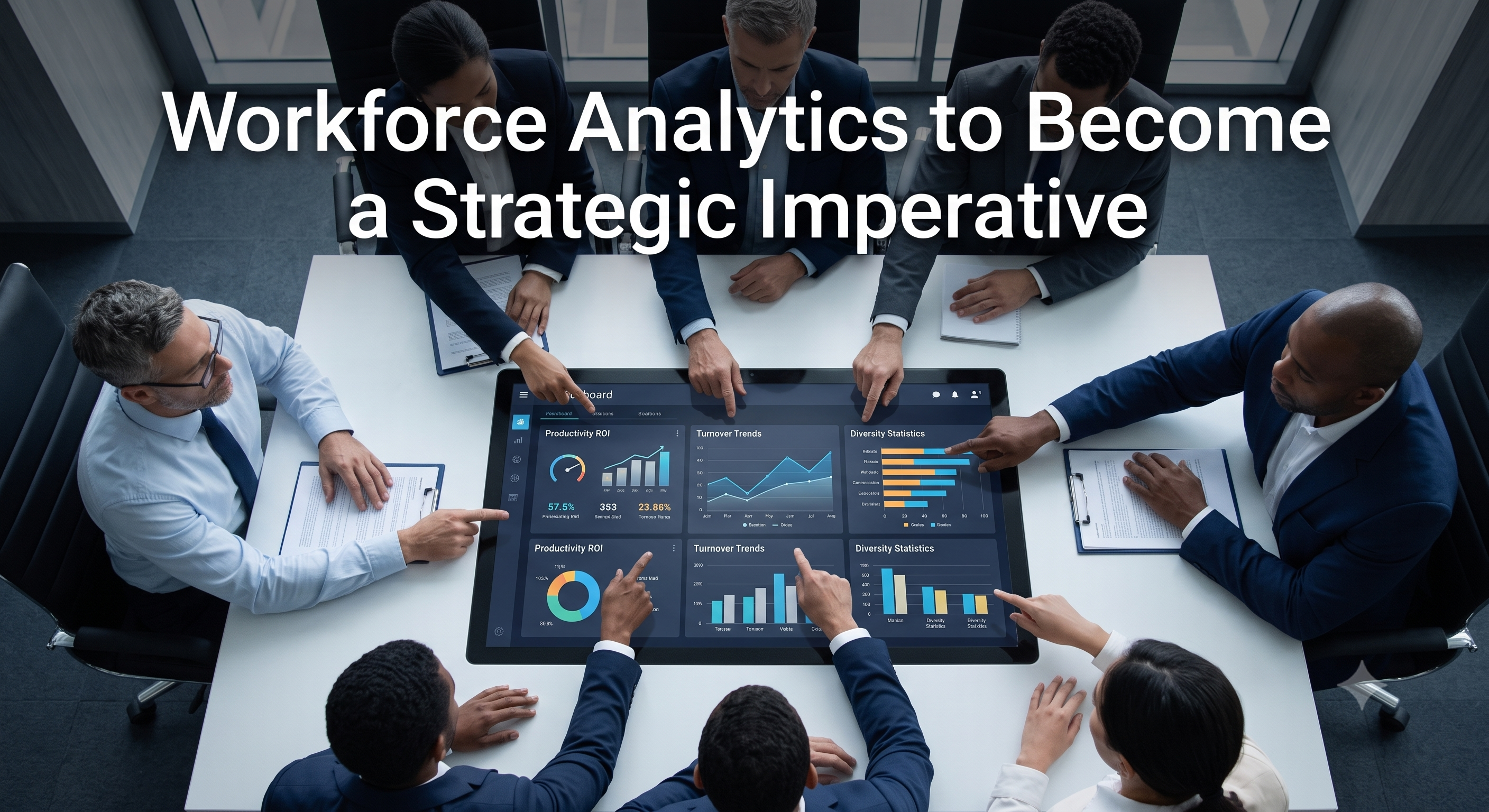
Organizations are using workforce analytics to track the following:
Employee commitment
Trends in turnover
Diversity statistics
effectiveness of recruitment
Learning outcomes
Performance measures
Employee Productivity
Advanced dashboards and real-time reporting help executives make informed decisions quickly. Workday HR management enables organizations to turn raw data about their workforce into actionable intelligence.
Analytics is becoming a core competency for HR, and students who learn Workday HCM with a focus on reporting and data interpretation will have better career prospects.
Continuous Learning Ecosystems Will Expand
The rapid pace of technological change is creating unprecedented demand for workforce upskilling.
Organizations understand that future competitiveness depends on continuous employee learning and development. As a result, Workday Human Capital Management platforms are increasingly integrating learning management capabilities directly into everyday workflows.
In 2026, organizations will prioritize:
Continuous skill development
Personalized learning journeys
Microlearning programs
Internal mobility initiatives
Certification tracking
Career path planning
Rather than viewing learning as a separate activity, companies are embedding development opportunities directly into employee experiences. For aspiring professionals, enrolling in a Workday HCM online course is becoming an effective way to understand how enterprise learning ecosystems operate. Students who learn Workday HR/HCM gain valuable knowledge about workforce development strategies that are increasingly relevant across industries.
Internal Talent Mobility Will Become a Business Priority
Hiring external candidates is becoming pricier and time-consuming. To address talent shortages, organizations are focusing on internal mobility programs. Workday HR/HCM enables businesses to identify internal talent and connect employees with relevant opportunities.
These initiatives may include:
Internal job marketplaces
Career path recommendations
Skill-based project assignments
Leadership development programs
Succession planning frameworks
Internal mobility offers significant advantages:
Reduced recruitment costs
Faster hiring cycles
Improved employee retention
Stronger workforce engagement
The intelligent capabilities within Workday HR software help organizations uncover hidden talent and maximize workforce potential. For professionals entering HR technology careers, understanding internal mobility frameworks within Workday Human Capital Management environments is becoming increasingly important.
Enhanced Workforce Planning Through Predictive Modelling
Traditional workforce planning methods often rely on historical trends. In contrast, modern organizations are embracing predictive workforce planning powered by advanced analytics. The latest Workday HR/HCM innovations allow HR leaders to model future workforce scenarios and prepare for potential challenges before they occur.
Predictive planning can help organizations:
Forecast staffing requirements
Anticipate talent shortages
Plan succession strategies
Estimate workforce costs
Evaluate expansion scenarios
This capability enables organizations to align human capital strategies with long-term business objectives. As predictive technologies continue to mature, professionals who learn Workday HR or HCM will need to understand how forecasting models support strategic workforce decisions.
Global Workforce Management will Keep Evolving
Businesses are more and more working across multiple countries and regions. Managing a global workforce requires sophisticated HR technology that can support a wide range of regulatory requirements and cultural differences. Workday’s HR management system is building out its global workforce management capabilities.
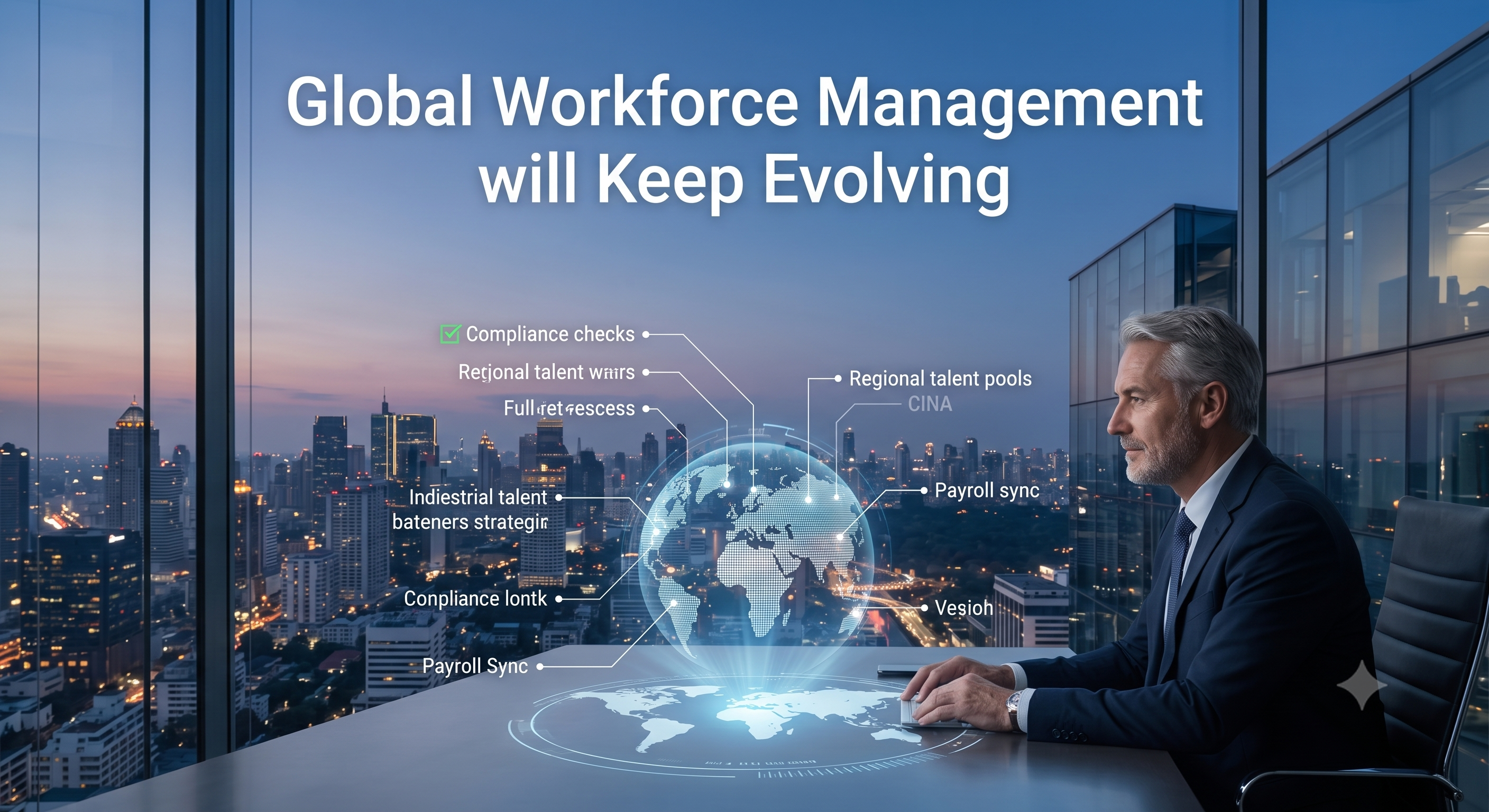
Main areas of focus are:
Global Compliance Management
Managing employees across multiple countries
Global Payroll Integrations
Localization support
Transnational movement of talent
They need platforms that can provide consistent workforce experiences and can be flexible to regional requirements.
This increased complexity is creating a demand for professionals skilled in Workday human capital management and global HR operations. Completing Workday courses online, specifically the HCM helps students position themselves for opportunities with multinational organizations seeking Workday expertise.
Employee Well-Being Will Become an HR Core Metric
The welfare of employees is now a top priority for organizations. By 2026, HR leaders will increasingly monitor well-being indicators in addition to traditional performance measures. HCM software today includes employee listening programs and workforce sentiment analysis.
There are a few things that organizations look for:
Work and life balance
Employee satisfaction
Burnout risks
Engagement in the workplace
Indicators of Mental Wellness
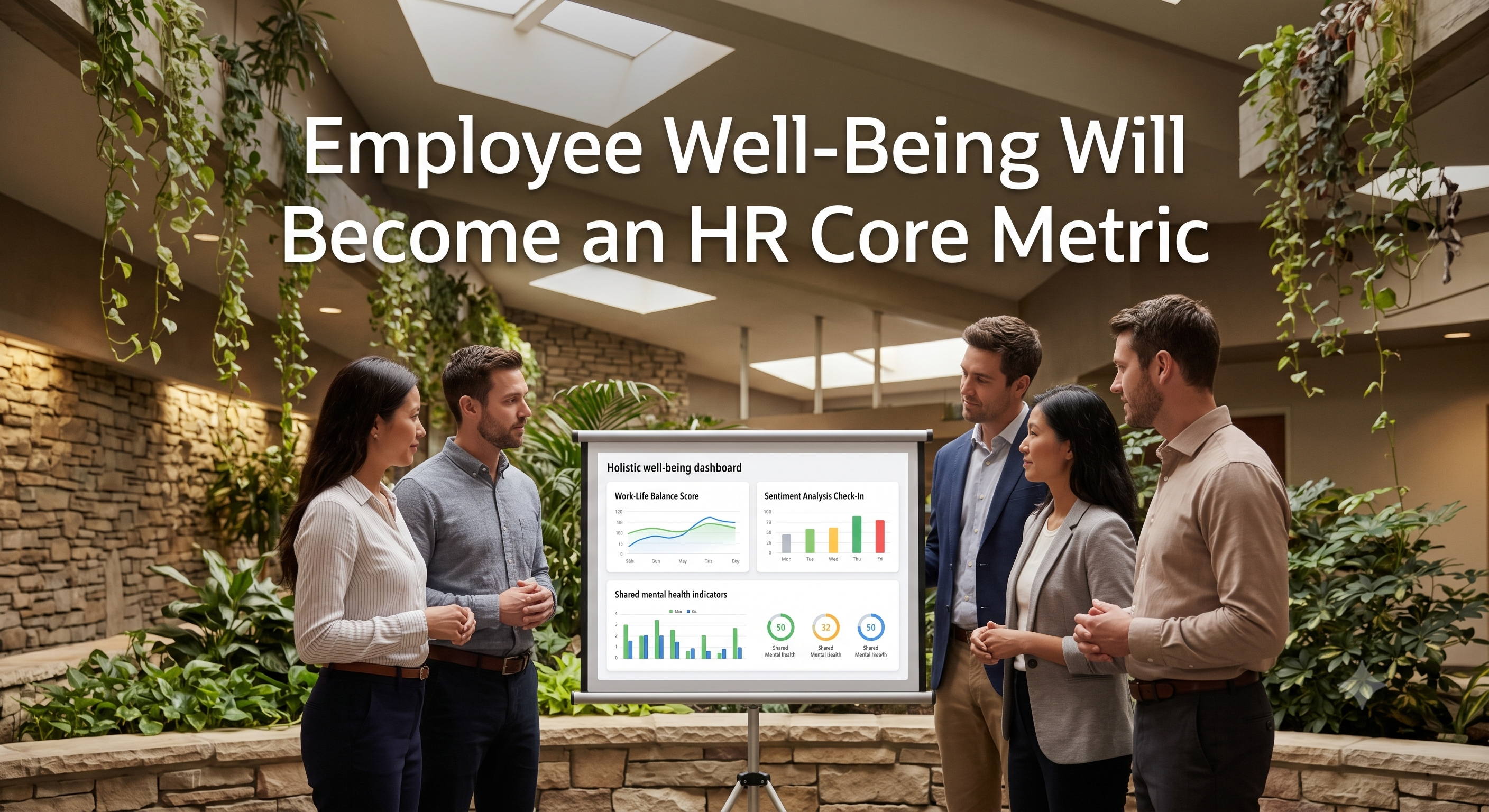
These insights can help organizations build healthier work environments and improve retention outcomes. The future of Workday HCM isn’t just about managing workforce processes—it's about enabling total employee experiences.
Workday HRMS training helps professionals get exposure to the modern workforce well-being strategies that are shaping the future of human resources.
Automation Will Continue to Re-Define HR Operations
Automation continues to be one of the biggest drivers of HR transformation. Organizations are increasingly automating repetitive administrative tasks to improve efficiencies and reduce errors.
The Workday HR management system facilitates automation across several functions, including:
Employee onboarding
Benefits administration
Managing absence
Workflows for approval
Performance evaluations
Payroll procedures
Automation helps HR teams to focus on more valuable strategic initiatives rather than routine administrative tasks. As digital transformation becomes more and more a part of organizational culture, there is going to be a dramatic ramp-up in the demand for professionals trained in Workday HR/HCM software implementation and optimization.
Why Should Students Learn Workday HCM in 2026?
There continues to be a global demand for Workday professionals. Workday human capital management solutions are in high demand across industries, and organizations are investing significantly to create strong career opportunities for talented professionals.
Students who choose to learn Workday human capital management could find themselves in roles like these:
Workday HCM Consultant
HR Tech Analyst (HR Tech Analyst)
Workday Functional Consultant
HR Systems Specialist
Workforce Analytics Specialist
Talent Management Consultant
HR Transformation Consultant
A full Workday HCM online course can help students to understand the following:
Core HCM ideas
Business processes setup
Workforce Management /
Reporting & analytics
Security management
Talent management process
Organisational structure
Workday HCM skills are in demand across all industries, allowing learners to pursue diverse careers in technology, healthcare, finance, manufacturing, retail, and consulting.
The Future of Workday HCM: What HR Leaders Need to Know
Going forward, Workday HR or HCM will evolve into an intelligent workforce platform, blending artificial intelligence, automation, analytics, intelligence skills, and employee experience management.
The most successful HR leaders of 2026 will be those who embrace the following:
AI-enabled workforce insights
Talent strategies based on skills
Workforce planning predictive
Learning ecosystems in a continuous fashion
Employee-centric experiences
Workforce Analytics Advanced
Capacity for global workforce management
Organizations that can take advantage of these innovations with Workday HCM software will be better positioned to attract, develop, and retain the best talent.
Future Workday HCM Job Opportunities in 2026 and Beyond
The growing trend of cloud-based HR platforms has created a high demand for professionals with expertise in Workday HR/HCM. Not only are organizations adopting the platform, but they are also extending its functionalities in areas like talent management, workforce planning, analytics, payroll integration, and employee experience initiatives.
So companies are searching for people who know both HR processes and the functionality of Workday human capital management.
The demand is particularly for:
IT consulting company
Global capability centers (GCCs)
Human Resource Outsourcing Firms
Enterprise software consultancy firms
Transnational corporations
Health Care Organizations
Financial bodies
Business manufacturing
E-Commerce and Retail Companies
Professionals skilled in Workday HCM can tap into an expanding global job market as the demand for specialized Workday skills continues to rise.
Most In-Demand Workday HCM Jobs in 2026
The Workday HR software ecosystem has expanded significantly. Organizations need specialists across all levels to manage implementation, support, optimization, reporting, and business transformation projects.
Here are some of the top Workday HCM jobs:
Workday HCM Consultant
A Workday HCM consultant is a person who helps an organization to configure and implement Workday solutions based on business requirements. If you love a combination of HR skills and tech savviness, then this is the role for you.
Main duties and responsibilities:
Business process model
Formation of organizational structure
Security configurations
Testing & validation
Customer support and user education
Functional Consultant Workday
Functional consultants are working on translating the business requirements into Workday configurations. Their work includes:
Requirement elicitation
Gap analysis
Process improvement
Creating Functional
User acceptance testing
Many Workday Human Capital Management solution implementers add functional consultants to help ensure successful project delivery.
Business Analyst Workday
Business analysts act as the bridge between HR stakeholders and technical teams. Among their work:
Business requirements documentation
Workforce process analysis.
Creating reports
Implementation project support
Increasing user adoption
This position is a particularly good fit for someone with strong analytical and communication skills.
Workday Reporting Lead
Specialized reporting professionals are needed for data-driven HR functions.
A reporting analyst usually works with:
Workforce dashboards
Tailored reports
Reporting on compliance
Workforce Analytics Executive
Performance indicators
As organizations rely more on workforce intelligence, reporting specialists in the Workday HR management system environment are becoming more valuable.
Workday Security Administrator
Security professionals manage user access and compliance controls in Workday HR software. They serve the following functions:
Security configuration by role
Access control
Audit conformity
Troubleshooting Security
Managing risk
As cybersecurity concerns rise, security administration is emerging as a crucial part of enterprise HR technology.
Workday Integration Consultant
Many organizations connect Workday to external applications. This is a technical role requiring an understanding of business processes. Integration consultants do:
Payroll integrations
Integration with external systems
Data migration projects
API implementations.
Connectivity for enterprise applications
Workday Talent Management Expert
One of the most strategic areas within Workday Human Capital Management remains talent management.
Specialists are focused on:
Recruitment process
Performance management
Planning for succession
Career progression
Staff participation
As companies look for top talent, the demand for talent management professionals continues to grow.
Why are Workday HCM Jobs Growing Fast?
There are several drivers behind the growth of the Workday jobs market.
More cloud adoption
Organizations are moving from legacy HR systems to cloud solutions. This change creates a steady demand for Workday experts.
Digital Transformation of HR
Key trends include automation, analytics, and AI-powered tools to modernize HR functions. These initiatives are centred around the Workday HR management system.
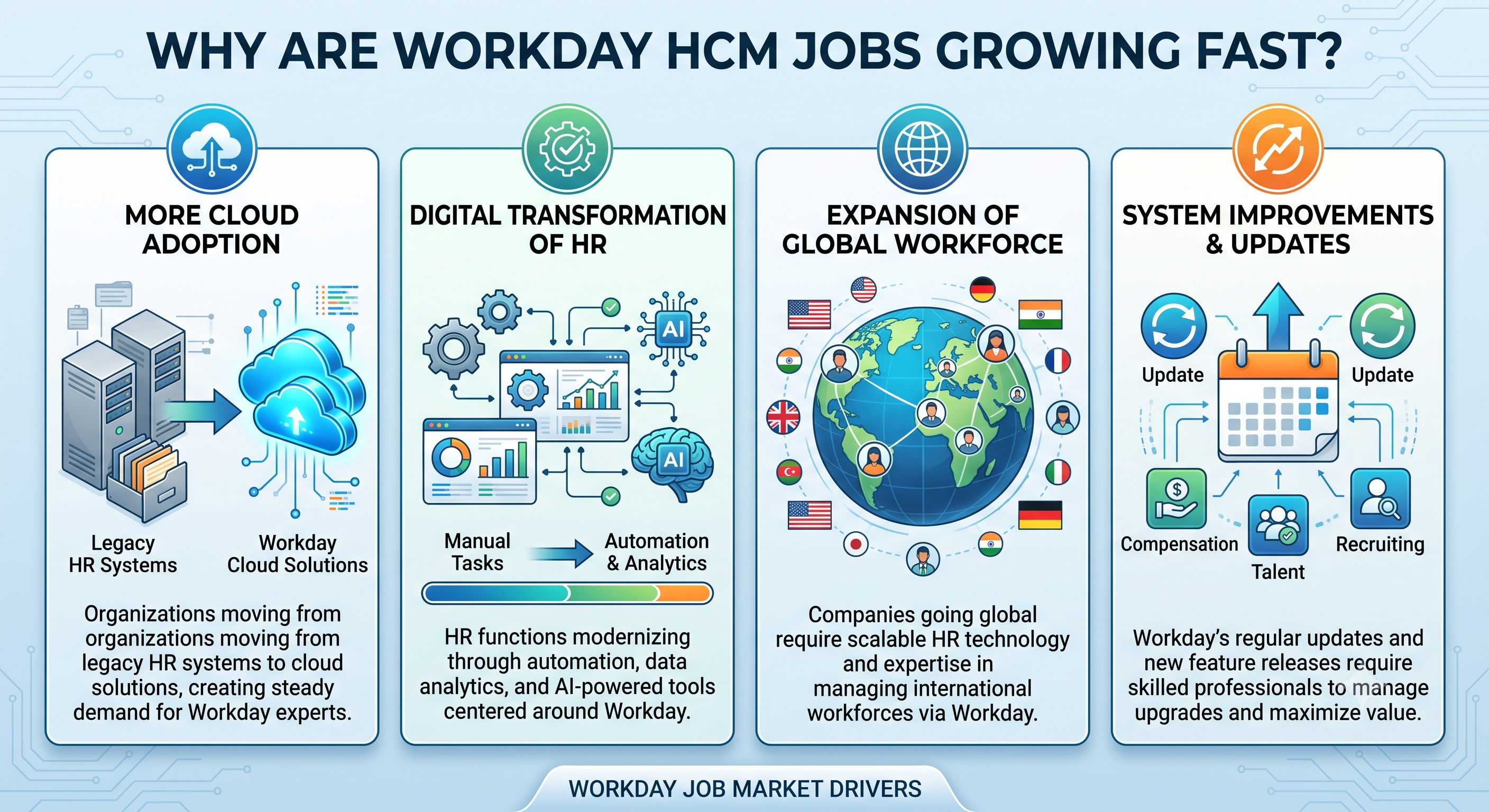
Expansion of Global Workforce
When companies go global, they need scalable HR technology and practitioners with expertise in managing the international workforce.
System Improvements
Workday sees regular new features and updates. Businesses need skilled professionals to manage upgrades and maximize platform value. Such trends ensure that professionals learning Workday human capital management will be relevant in the changing technology landscape.
Workday HCM Salary in India
One of the major reasons students choose to study Workday HCM training is the attractive salary potential of Workday careers. Let us understand that the Workday HCM salary in India is based on experience, certifications, type of employer, and project exposure.
Entry-level Professionals
Professionals who complete a Workday human capital management online course may work in these roles:
Junior Consultant
Associate Analyst
Functional Associate HCM Support Executive
Average salary range: ₹4 LPA-₹8 LPA.
Mid-Level Professionals
Typically, those with two to five years of Workday experience work in the following roles:
Business Analyst Functional Consultant
Reporting Specialist and Security Admin
Average salary range: ₹8 LPA–18 LPA.
Experienced Professionals
Experienced consultants and solution experts can command substantially higher pay.
Typical positions are the following:
Functional Lead Consultant
Senior Consultant
Workday Solution Architect
Practice Lead
Average salary range: ₹18 LPA to ₹35 LPA or more.
Those with multiple modules and implementation experience can command premium compensation packages.
Workday HCM International Salary
Huge earning opportunities have been created even outside India due to the global demand for Workday human capital management professionals.
The U.S.
Salaries are very competitive for Workday professionals in the United States.
Typical salary ranges are as follows:
Junior Consultant: $70,000-$100,000 annually
Functional Consultant: $100,000 - $140,000 per year
Senior Consultant: $140,000-$180,000+ per annum
Canada
Workday HR software is a continuous investment for organisations in Canada. Some typical annual salaries are:
Entry Level: $65,000-$85,000
Average Salary: CAD $85,000–$120,000
Senior Level: CAD 120,000-160,000+
United Kingdom (UK)
The UK remains one of the strongest Workday markets in Europe. Average annual earnings include the following:
Junior Roles: £35,000-£50,000
Consultant jobs: £50,000–£85,000
Senior Consultant Positions: £85,000-£120,000+
Australia
Workday continues to grow its footprint in Australia. Typical salary ranges are as follows:
Entry-Level: AUD 75k - AUD 95k
Mid-Level: $95,000 – $140,000AUD
Senior-Level: AUD $140,000–$200,000+
Workday professionals who acquire skills and experience in implementations tend to have good international career mobility.
How to get ready for a Workday HCM job?
To have a successful career in Workday HR or HCM, you need more than just theoretical knowledge. Employers are increasingly searching for candidates who can demonstrate real skills and an understanding of business.
Learn Core HR Concepts
Before candidates can start working with Workday, they should know:
Recruitment procedures.
Organizational structure
Managing compensation
Performance and Management
Education and training
Workforce planning
With a solid HR foundation, you will better understand how Workday Human Capital Management helps the business.
Complete a Structured Workday HCM Online Course
A Workday online course in HCM is an extensive program that enables learners to acquire industry-relevant knowledge. Structured training speeds up learning and readies you for the job.
Find programs that have:
Core HCM Module
Business processes
Security Principles
Reporting & analysis
Organizational structure
Practical cases
Develop Skills in Reporting and Analytics
Workforce data is the lifeblood of modern HR departments.
Candidates will learn:
Creation of custom reports
Development of the dashboard
Analysis of workforce metrics
Analyzing the data
Pattern identification
Reporting skills add a lot of value to professionals working on the Workday HR management system.
Gain hands-on project experience
What often separates successful candidates from other applicants is experience. Students shall:
Join for free training projects:
Develop sample business scenarios
Settings for process practice
Find reporting exercises
Explore real-world implementations
Hands-on exposure confirms readiness for workplace challenges.
Business Process Configuration Training
Business process knowledge is one of the top skills in the Workday ecosystem. What you need to know as a candidate:
Approval processes
Recruitment processes
Transfer procedures
Workflows for promotion
Dismissal procedures
Procedures for change management
Organizations prize professionals who can optimize these workflows in Workday Human Capital Management software.
Top Skills Employers Seek in Workday HR/HCM Professionals
It’s not just technical knowledge. Recruiters are increasingly looking for both technical and professional competencies.
Highly valued skills are:
Technical Know-How
Setting up Workday
Reporting & Analytics
Security management
Data governance
Design of business processes
Staffing planning
Business Skills
Understanding the HR Process
Troubleshooting
Stakeholder management
Process improvement
Communication Skill
Documentation & Presentation skills
Students who learn Workday HR software and also develop these complementary skills often stand out in the recruitment process.
Certifications That Can Boost Your Career Day-To-Day
Professional certifications can be a way to demonstrate your competence and dedication to continuous learning. Many learners pair a Workday HCM online course with hands-on project experience to build a competitive professional profile.
The benefits of preparing for certification are:
Deep technical expertise
Improved understanding of platform capabilities
Better credibility
How to improve your interview skills
Additional jobs and careers
Industries that Hire Workday HR or HCM Professionals
There is a lot of demand for Workday expertise across many industries. Workday Human Capital Management supports organizations of all sizes. There are many industry environments available to professionals.
Industries that are hiring Workday professionals are:
Information Technology
Financial Services
Medical Care
Pharmaceuticals/
Production
Telecoms
Retail
Education
Logistics
Professional Services
HCM and the Future of Your Career
Automation, artificial intelligence, workforce analytics, and digital transformation will define the future workforce. Organizations need professionals who understand how modern HR technology underpins these changes.
By opting to study this course, you are exposed to one of the world’s most widely adopted enterprise HR platforms. With more and more companies continuing to work with Workday HR software, the opportunities for consultants, analysts, admins, and implementation specialists will only increase.
For students, graduates, and working professionals seeking long-term career development, an online Workday HCM course can be an important initial step. The demand for Workday HCM jobs is growing rapidly, with opportunities expanding both domestically and internationally from year to year.
Conclusion
We’re seeing a major change in the HR landscape, with Workday human capital management at the forefront. From AI-powered decision-making and predictive analytics to skills-based talent management and personalized employee experiences, the platform is transforming the way organizations manage their workforce.
For HR leaders, understanding these trends is essential for maintaining their organizations' competitiveness in a more complex business environment. For students and aspiring professionals, now is the time to join Workday HR Training and become an expert in one of the most widely adopted HR technology platforms in the world.
A quality Workday HCM online course provides you with the hands-on knowledge you need to understand modern workforce management strategies and prepare for the future of your career. As organizations continue to invest in Workday Human Capital Management solutions and broaden their use of the Workday HR management system, professionals with strong Workday human capital management software skills will remain in high demand in global markets.
Join OnlineITGuru today to advance your HR career.