
Introduction to Enterprise Containerization and the Rise of OpenShift
Last updated on Aug 22, 2026
The landscape of deploying enterprise applications has experienced a real transformation in the past 20 years. In the early days of computing, companies were heavily reliant on using physical servers and assigned machines to individual software applications, which made this technique inefficient and slow to use as the result of low hardware utilization. When a new technology called hardware virtualization was introduced, it solved some of these issues, as it allowed the simultaneous functioning of many virtual machines that were working on the same hardware. However, this technology did not help to overcome the problem of expensive operating system use and large memory sizes occupied by virtual machines.
The development of containerisation brought up a new challenge for businesses. Thanks to their capacity to separate processes of the application in user space but make use of one and the same operating system kernel, the use of containers is fast and efficient. However, being adopted massively by enterprises, containerisation provoked a new problem, which was previously solved when working with traditional applications.
Although open-source Kubernetes has become the standard orchestration engine for the issue at hand, standard Kubernetes is still a basic engine and not a comprehensive enterprise platform. Kubernetes supplies the building blocks such as pods, services, replica sets, and ingress controllers. However, one still needs to find separate solutions for many aspects of Kubernetes use such as identity management, developer workflow, container registry, continuous integration, delivery mechanism, and monitoring, along with security measures.
The purpose of Red Hat OpenShift is to overcome these restrictions. It is the only solution that allows experienced specialists to gain a deep knowledge of this platform due to the specialized red hat openshift course of OpenShift. It integrates a special Linux operating system, container runtime, networking system, security regulations, developer tools, and automated process management into a single independent software. With OpenShift, enterprises gain the opportunity to introduce and maintain modern cloud-compatible applications that can be launched in any private, public, or multi-cloud environment.
OpenShift Technological Foundations: Kubernetes and Red Hat Enterprise Linux CoreOS
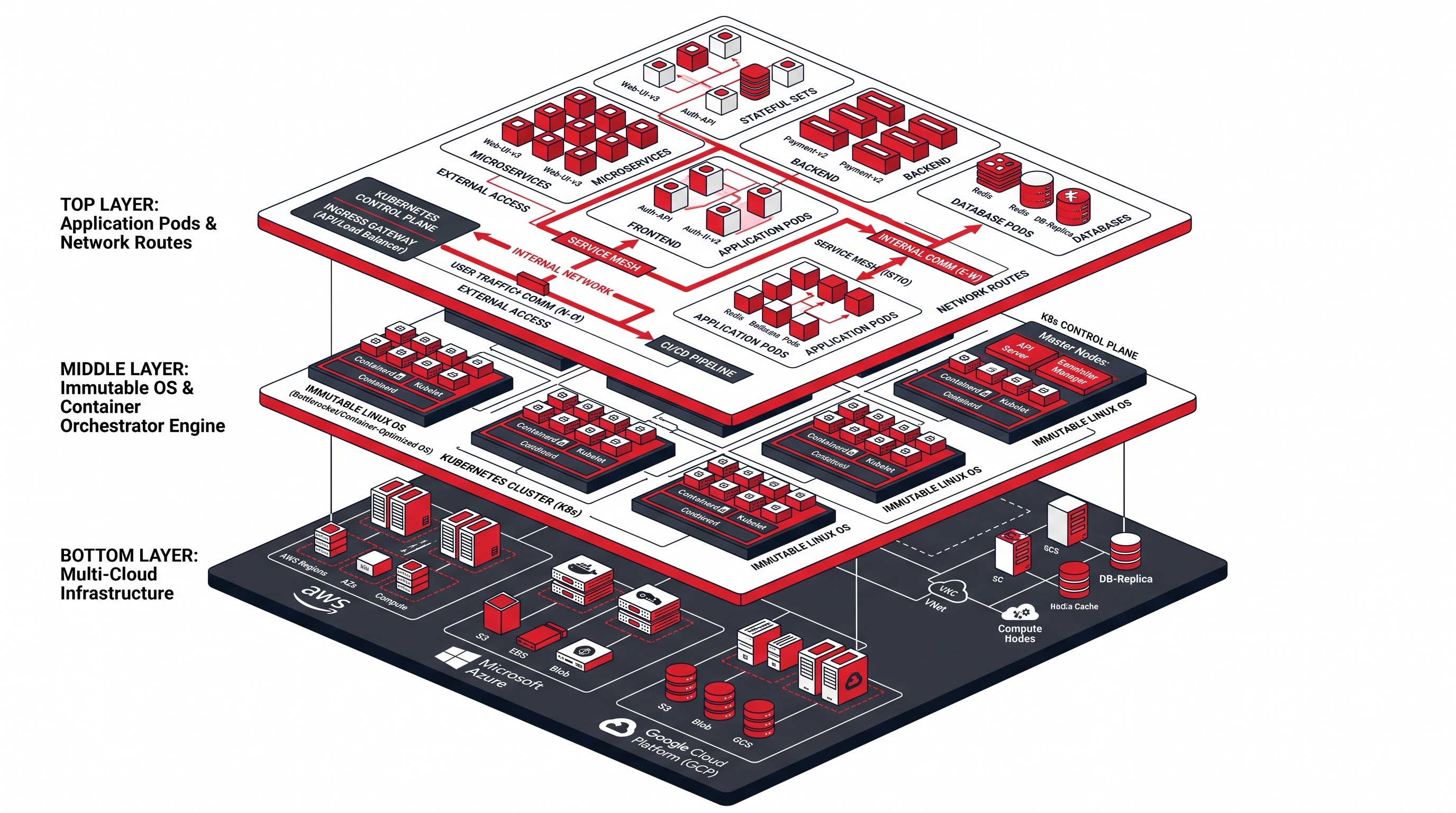
OpenShift uses a hardened version of upstream Kubernetes as its technological basis. In order to fully understand OpenShift, it is critical to get an idea of the strong relationship between the orchestrator and the operating system.
Red Hat Enterprise Linux CoreOS
OpenShift is characterized by being built on Red Hat Enterprise Linux CoreOS. Unlike traditional general-purpose Linux distributions, CoreOS operates as a container-optimized operating system that has been designed for safely and efficiently running container workloads.
Immutability means that the root filesystem is mounted in read-only mode during normal operation. Administrators and developers do not need to log into individual cluster nodes to utilize package managers, perform kernel updates, and change system configuration files. Instead, system configuration, kernel tuning, systemd service configuration, and security parameters are defined through custom resources managed by the OpenShift controller.
The Machine Config Operator is responsible for managing the updates as well as the state changes at the OS level. When a system update happens to an OpenShift cluster, the platform delivers the new OS image in one transactional update and records it in a new partition while rebooting the node under this new state. If an update fails, the system allows automatic rollback to the previous working state. Thanks to this design, the issue with configuration drift is eliminated across thousands of nodes, operational risks are reduced, and installing OS updates becomes comparable to deploying containers.
Control Plane and Node Topologies
The Control Plane in OpenShift operates like the brain of the cluster, meaning that it is responsible for ensuring the desired state, scheduling the workloads, and doing all the routes for the apps during the life cycle of the cluster. The Control Plane has several very important components:
The API Server works as the main center of command for executing all kinds of admin and operation requests. All requests – initiated whether by the platform admin, autonomous CI/CD pipeline, software engineer, or internal cluster controller – are checked, proved, authorized, and processed through the API server.
etcd – a distributed key-value storage – keeps the official state and configuration history of the cluster. The fact that etcd provides strong consistency guarantees that OpenShift can return to normal operation in case of node failure.
Controller Manager is responsible for constant monitoring of the state of cluster objects by comparing their true operational statuses with desired configuration and carrying out the process of reconciliation.
The role of the Scheduler is to assess pod resource need, node affinity, taints, toleration, and resource quota in order to properly delegate the workloads to the required worker nodes in the cluster.
Worker nodes represent the real execution environments of business apps. Each one operates a container runtime, a kubelet that communicates with the master control plane, and a networking proxy that manages intra-cluster communications. OpenShift builds upon the basic Kubernetes objects by increasing platform level abstractions enabling security, usability, and efficiency.
Projects and Multi-Tenancy
In Kubernetes, the namespaces are the main means of allocating the resources among various users or app teams. OpenShift takes it further as it has the concept of Projects. Project is a Kubernetes namespace with many other features like multi-tenancy controls and access policies.
When a user creates an OpenShift project the system will implement regular security context constraints and create role bindings as well as network isolation at the project level. Thus, tenants that are sharing the same cluster cannot see each other’s resources or the network traffic.
Routes and ingress traffic control
Managing traffic from the outside into a container cluster is essential for web applications. Normally, in Kubernetes, this is done by means of ingress-based resources which implies busy work for admins. They would need to find ingress controllers, set them up, and do necessary maintenance.
The idea of routes was born in OpenShift before ingress specifications were finalized in Kubernetes. OpenShift offers complete route management.
The route gives an application access to the outer world. The route implies providing a hostname.
There are several ways to terminate TLS:
Edge termination means that TLS encryption happens at the OpenShift routing layer and no need for developers to deal with certificates.
Passthrough termination means that the encrypted traffic goes straight to the application and the application itself is responsible for its own encryption.
Re-encryption termination implies decrypting traffic at the cluster edge, inspecting routing headers, applying policies, and encrypting traffic again before sending it via the internal network.
Cluster Ingress and Software-Defined Networking
OpenShift uses a sophisticated software-defined networking fabric based on Open Virtual Network and Open vSwitch. This new networking approach allows for network micro-segmentation using Kubernetes NetworkPolicies, and egress IP management, supports IPv4 and IPv6 dual-stack addressing, and runs IPsec or WireGuard for encrypted traffic transfer between nodes.
Thanks to detailed network policies, security experts can set specific firewall rules inside the cluster. By way of illustration, a database pod can be programmed to receive connections only from the specified backend application pods while refusing to process any incoming traffic from frontend web pods or outside networks.
The Operator Framework in Day-2 Operations
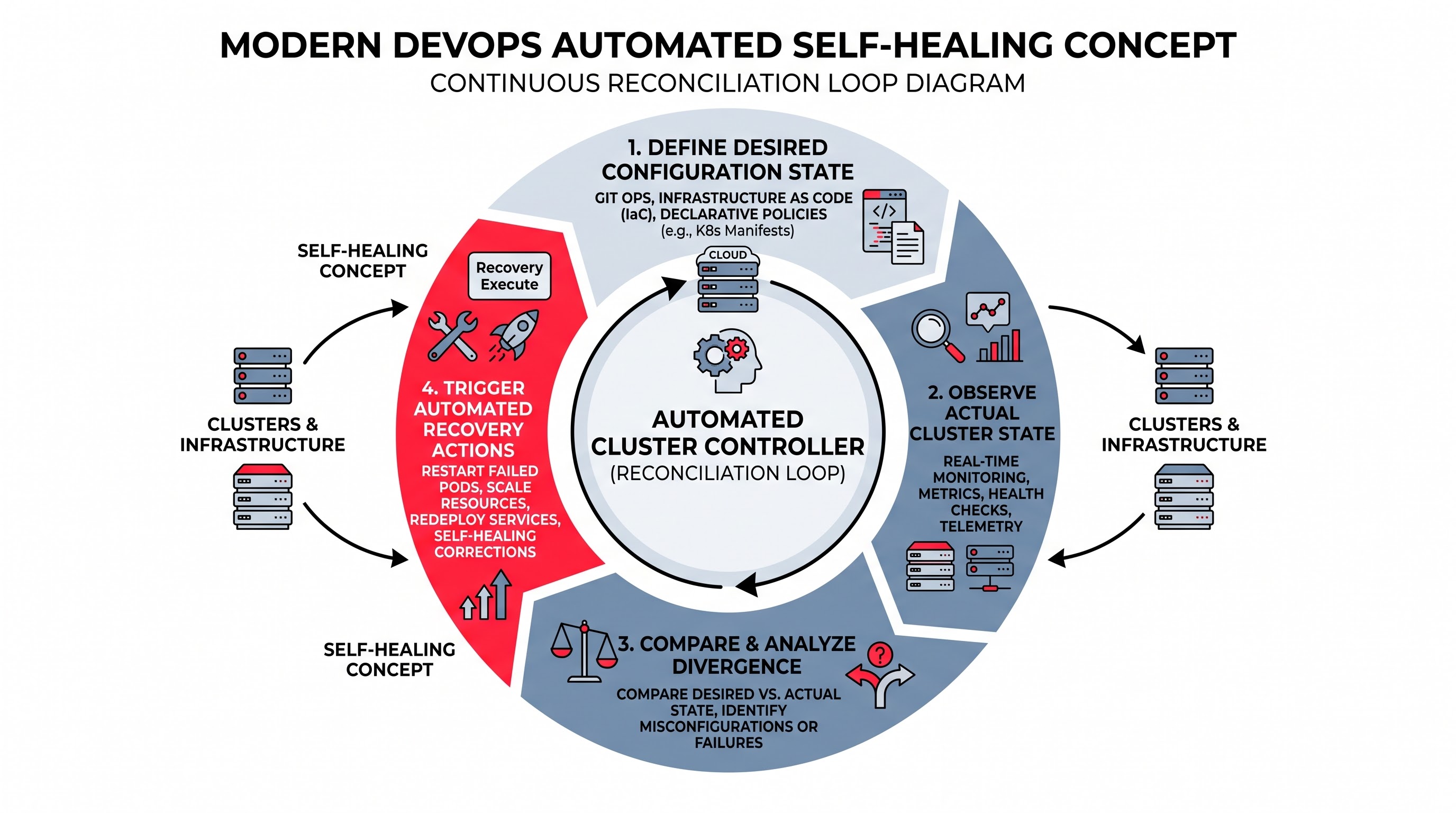
The intricate operational activity associated with managing stateful distributed systems like databases, message brokers, caching tiers, and monitoring stacks in a containerized setting has led to the birth of the Operator pattern. Red Hat played a key role in the emergence and standardization of this framework and OpenShift was almost entirely created around this pattern.
About the Operator Pattern
Generally, human cluster administration involves deep domain knowledge about how to install, back up, restore, scale, patch, and recover a sophisticated software application. The Operator pattern encodes this human expertise into software controllers that operate on the cluster.
The Operator uses custom resource definitions and a specific control loop. The custom resource states the desired state of the application while the control loop is responsible for constantly observing the state of the cluster and performing automatic compensating actions to ensure that the real state corresponds to the custom resource.
In case of a database replication lag or database replica failure, the Operator manages to identify the issue, provision a substitute pod, connect the required persistent storage volume, synchronize the database transaction logs, as well as reintroduce the node to the database cluster without involving human interaction.
Platform and Application Lifecycle Management
The Operator Lifecycle Manager directs the lifecycle of platform components and third-party applications used by OpenShift. The whole OpenShift platform is deployed and supported as a set of autonomous Operators starting from networking components, logging stacks, storage orchestrators, web console, etc.
Thus, this architecture makes the automation of Day-2 operations possible: upgrades are done smoothly. The cluster version operator downloads the release payload after the administrator has initiated the upgrade and makes sure that the version is verified and component signatures are correct before carrying out the upgrade of the control plane operators, worker node operators, and OS packages level by level.
Infrastructure that heals itself makes sure there is constant uptime. If something goes wrong with a platform or an OS configuration file changes unexpectedly, a controller can see that something is off and revert everything back to the validated baseline.
With OperatorHub, you get the benefit of having a great number of different operators from different sources, thus enabling enterprise development teams to create observability systems or systems for managing all kinds of data without worrying about lifecycle problems.
Developer Experience and App Modernization
A factor contributing to the superiority of OpenShift over basic K8s is its focus on ease of use for developers. Various engineering groups attend formal openshift online training in order to address this disparity, since developers frequently have to devote considerable time creating complex deployment manifests, configuring CI, and solving container networking issues instead of paying attention to writing code. OpenShift is designed to minimize this cognitive burden thanks to the availability of dedicated developer interfaces, automated build pipelines, and app abstraction frameworks.
Architecture Source-to-Image (S2I)
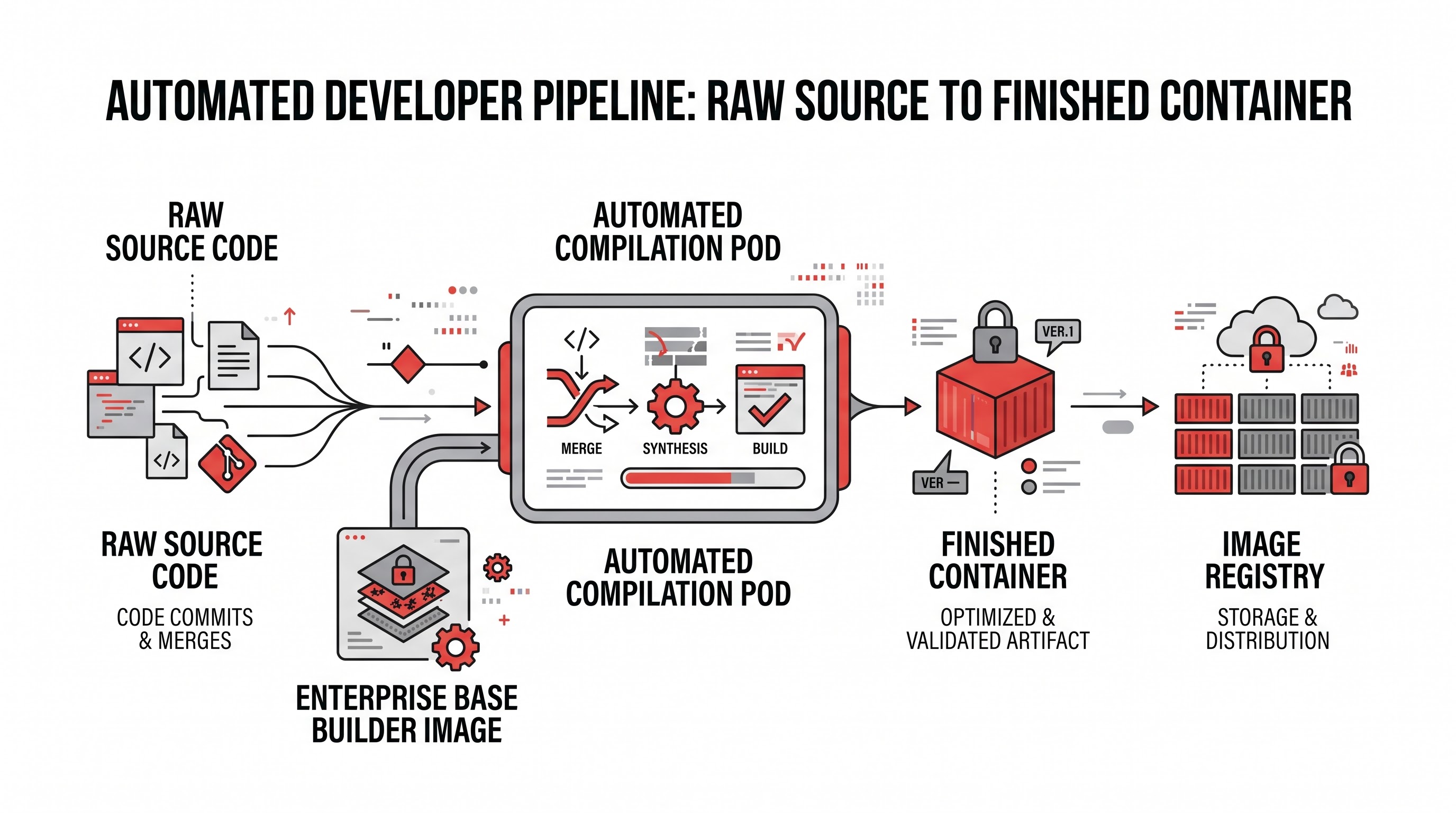
The Source-to-Image technology is an OpenShift technology that allows programmers to cluster software from specific version control systems and convert it to operational container images without any prior knowledge about creation of containers or the necessity to write a docker file.
When a programmer uses Source-to-Image, the first thing to be done is to indicate the location of the repository along with the chosen base builder image, which can be a Java/Python/Node.js/Go environment pre-issued by a certain company.
As soon as the data is given, the OpenShift system creates temporary building pod that downloads the codes, runs the right building tools like Maven, npm, pip, compiles the code, gets the executable code to the hardened layer, and pushes the final image to the OpenShift Container Registry.
The mentioned process ensures that all application containers fully meet the enterprise security requirements, use allowed runtime libraries, and are reproducible.
OpenShift Pipelines offers Serverless Operations
Modern cloud-native applications heavily depend on standardized integrated systems for running their processes. OpenShift is built with the required capabilities as part of the core architecture:
OpenShift Pipelines are powered by the open-source Tekton technology. Typically, traditional Continuous Integration and Continuous Delivery (CI/CD) relies on external build servers. With the OpenShift Pipelines technology, the entire operations take place as separate container pods in the same cloud cluster. It implies that each step of the Pipeline is implemented in a separate container, and each container is created or destroyed based on the workload requirements.
OpenShift Serverless is built on the foundations of the technology developed in the Knative project. By means of this technology, applications created by developers behave like event-triggered applications since they can scale based on the current amount of requests and can even scale down when no requests come.
Tools for Developers and Developer Interface
OpenShift has a custom Developer Interface in its web user interface. This interface provides information about application topology, current health statistics, status of workload builds, and makes it easier for development teams to track logs. Besides the web user interface, OpenShift command line interface and tools designed for developers help developers to work on their products right from local development environments.
Security and Compliance Measures for Enterprises
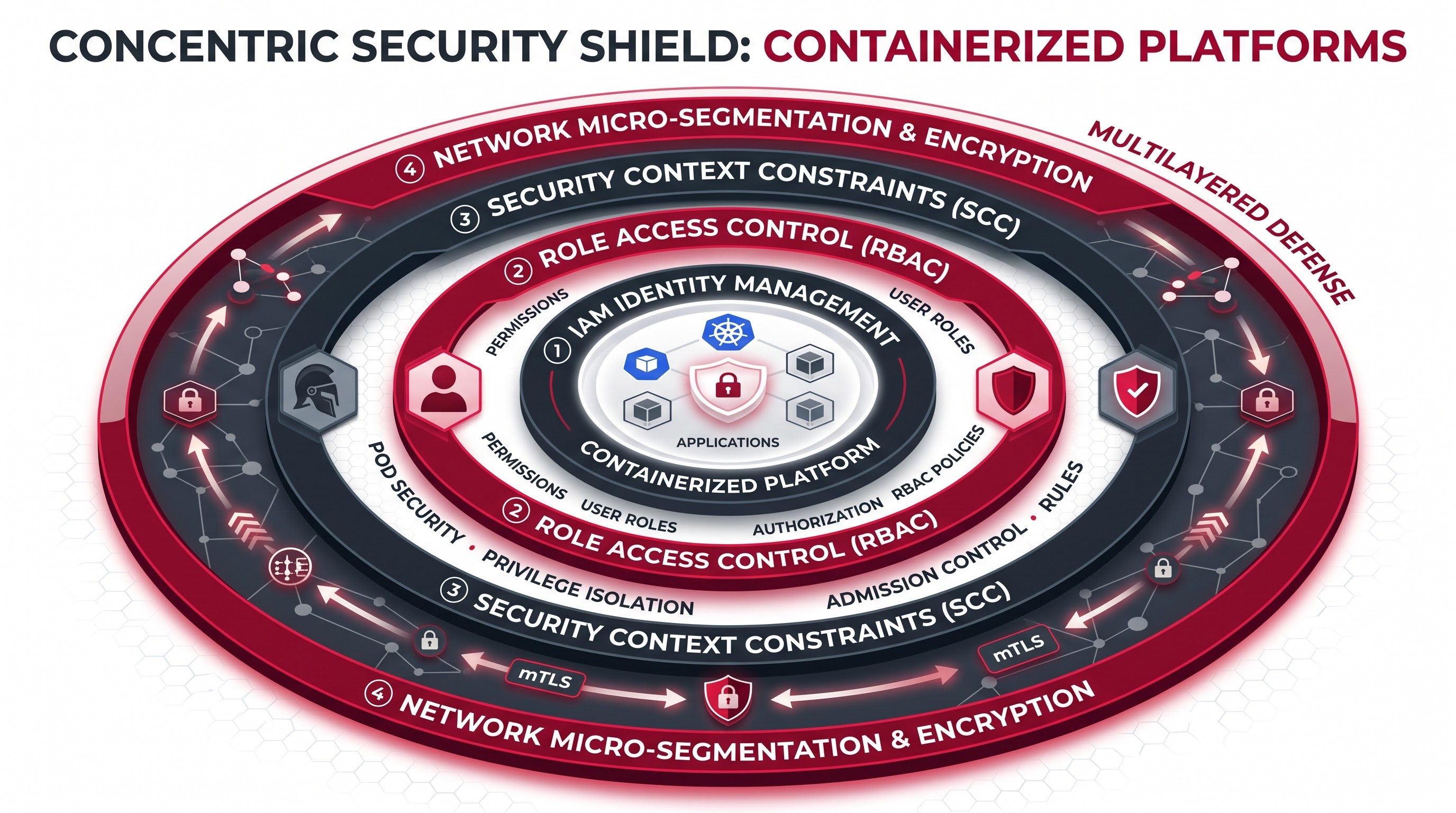
Entering the world of container technology means complying with corporate standards, legislative regulations, and operational risk management strategies. Security measures are embedded into the architecture of OpenShift and not treated as an additional element of its design.
Security Context Constraints
The use of standard Kubernetes systems limits the capabilities of pods. OpenShift was the first product to create the concept of Security Context Constraints, which is still considered one of the most powerful technologies when it comes to policy application to containerized workloads.
Security Context Constraints enable administrators to establish stringent security limitations regarding what actions a container can and cannot perform on a host node. As the default method, OpenShift forbids containers from operating through the root user by dynamic allocation of a non-privileged randomly generated user ID from a predetermined range once a pod is submitted to the system. Besides, some limitations prevent containers from accessing privileged capabilities of the host, mounting file paths of the host, or connecting to the host's network.
The default nature of this security helps minimize the number of threats from container escape vulnerabilities making sure that the compromised container will not have an opportunity to seize control over the host OS.
Identity and Access Management are incorporated into a general architecture of the platform by applying identity providers for ensuring proper authentication of users and their entitlements.
Lightweight Directory Access Protocol (LDAP) as well as the Active Directory platforms.
OpenID Connect (OIDC) associations and OAuth2 identity providers.
Enterprise identity federation systems based on SAML.
Once the process has been authenticated, the permissions allocated to the user are based on a Role-Based Access Control system that has an extremely high granularity. Cluster administrators can apply very specific role assignments, such as cluster-admin, admin, edit, view, etc., across both global cluster options as well as specific project settings.
Improved Cluster Security and Encryption Hardening
Firms having strict legal requirements (like those in financial services, healthcare, and government sector) may rely on OpenShift's impressive security features.The Red Hat Advanced Cluster Security is based on the StackRox engine and it provides continuous vulnerability management, runtime threat detection, compliance audits and automatic risk scoring.
Federal Information Processing Standards (FIPS) validation has been provided on the platforms as well as on the operating systems.
The integrated image scanning of container images along with signature checks ensures that only the images that are cryptographically signed and come from secure repositories with no vulnerabilities can run on the nodes of the cluster.
Storage orchestration and OpenShift Data Foundation
Development of the applications in containers inevitably leads to the fact that they become stateful, which require high-speed, long-lasting storing solutions for running databases, message brokers, artificial intelligence and machine learning streams, and analytics.
Integrating with CSI
OpenShift is a fully compliant Kubernetes Container Storage Interface meaning that it can work seamlessly with any enterprise storage systems including SAN, NAS, and public cloud storage.
The developers interact with the storage through Persistent Volume Claims that describe the required capacity and access patterns of storage along with its performance category. The storage layer will create and attach the storage volume only when it is needed by the app.
OpenShift Data Foundation
OpenShift Data Foundation is an integrated, software-based storage system which was created with Ceph and Rook technologies. This allows for organizations to operate their data storage with the help of this software.
The OpenShift Data Foundation consolidates hard drives from the various nodes in a cluster to make an advanced, safe and efficient storage system which provides data storage both on the level of files, blocks and objects.
These features include the following ones:
Dynamic gateways for multi-cloud object storage and smart data placing technology.
Ability to manage critical situations connected with data storage.
Ability to use encryption tools specifically designed for persistent volumes.
Multi-Cloud Approach, Hybrid Deployments, and OpenShift Architectures
Contemporary enterprises do not frequently run in just one computing environment. In fact, their IT practices include not only on-premises, old-fashioned data centers but also cloud-based services on a regional basis and various cloud providers. OpenShift plays the role of a common hybrid cloud abstraction layer which guarantees the same operating and developer results regardless of the infrastructure.
Deployment Models
OpenShift offers a large number of deployment models meeting diverse business needs: by means of Self-Managed OpenShift, enterprises install the platform on the bare-metal servers; use VMWare vSphere technology; Red Hat OpenStack; AWS; Microsoft Azure; or Google Cloud Platform, or IBV Cloud together with automatic-user installed infrastructure.
Managed Cloud Services, namely Red Hat OpenShift Service on AWS (ROSA), Azure Red Hat OpenShift (ARO), and Red Hat OpenShift on IBM Cloud, are designed, managed, and supported by Red Hat together with their service provider. This approach takes away the management of the operating system patching, control plane activities, and infrastructure scalability helping businesses concentrate on delivering software as a service.
OpenShift Virtualization empowers companies to deploy and maintain vintage virtual machines as well as modern containers on the same OpenShift platform, operating with similar networking, storage, and lifecycle tools. Built on KubeVirt, OpenShift Virtualization lets organizations implement infrastructure improvement gradually and avoid using expensive legacy virtualization platforms.
The Edge and the Single-node topologies can help OpenShift be deployed in environments with limited resources like manufacturing floors, retail branches, towers of telecommunications companies, or faraway field installations. Single Node OpenShift integrates the control plane and worker components in one physical server, thus providing a full set of container orchestration solutions while taking minimum physical space.
As the adoption of the enterprise grows, organizations have to move from single, big cluster management towards managing many (even dozens or hundreds) of distributed clusters. Red Hat Advanced Cluster Management for Kubernetes helps to centrally govern, manage, and orchestrate the lifecycle of these distributed clusters.
Using a single control console, the administrators are able to:
Set up and scale clusters on different public clouds and bare metal data centers via one unified interface.
Apply declarative governance policies to all clusters so that networks, security baselines and RBAC policies remain the same.
Conduct intelligent workload distribution and global application routing, allowing to direct app deployments and user traffic to the right cluster according to the criteria of capacity, latency and geographical compliance.
To compare OpenShift and Vanilla Kubernetes
When one wants to realize the significance of OpenShift, he or she cannot do without comparing it with self-assembled Vanilla Kubernetes in some practical and architectural aspects.
Installation, assembly and integration.
When it comes to Vanilla Kubernetes installation, it is necessary for the engineering organization to take a number of crucial architectural decisions like an operating system selection, a container runtime choice, network plugin configuration, ingress controller installation, image registry mounting, identity provider integration and monitoring platform building.
OpenShift is a complete platform that combines all the components of the software ecosystem into one solution without requiring separate integration efforts. It is simple for administrators and engineers to learn how to work with the enterprise deployment process once they take a comprehensive openshift course online.
Summary and Future Outlook
Red Hat OpenShift has established itself as an enterprise standard for hybrid cloud container orchestration. Thanks to its combination of upstream Kubernetes, secure and immutable operating system, native developers' workflows, operator-based operations, and multi-cluster management, OpenShift allows for effective digital transformation.
With the development of cloud-native architecture, the OpenShift platform is extending its functionalities to work with AI and machine learning tasks by introducing OpenShift AI. Taking a practical redhat openshift course gives IT teams the abilities they require to succeed in the competitive global environment by providing solutions to the issues posed by the use of modern hybrid and multi-cloud infrastructures.