
Java Developer Career Path: What You Should Know To Be Employed
Last updated on Jul 21, 2026
Nevertheless, the job market for software engineers requires people who have skills to design highly scalable, maintainable and reliable systems. Despite the popularity of the Java platform in powering the financial, e-commerce, cloud and enterprise systems around the world, there has been a shift in the requirements of junior and intermediate positions. Syntax of the language and object-oriented programming would no longer be enough in order to be employed.
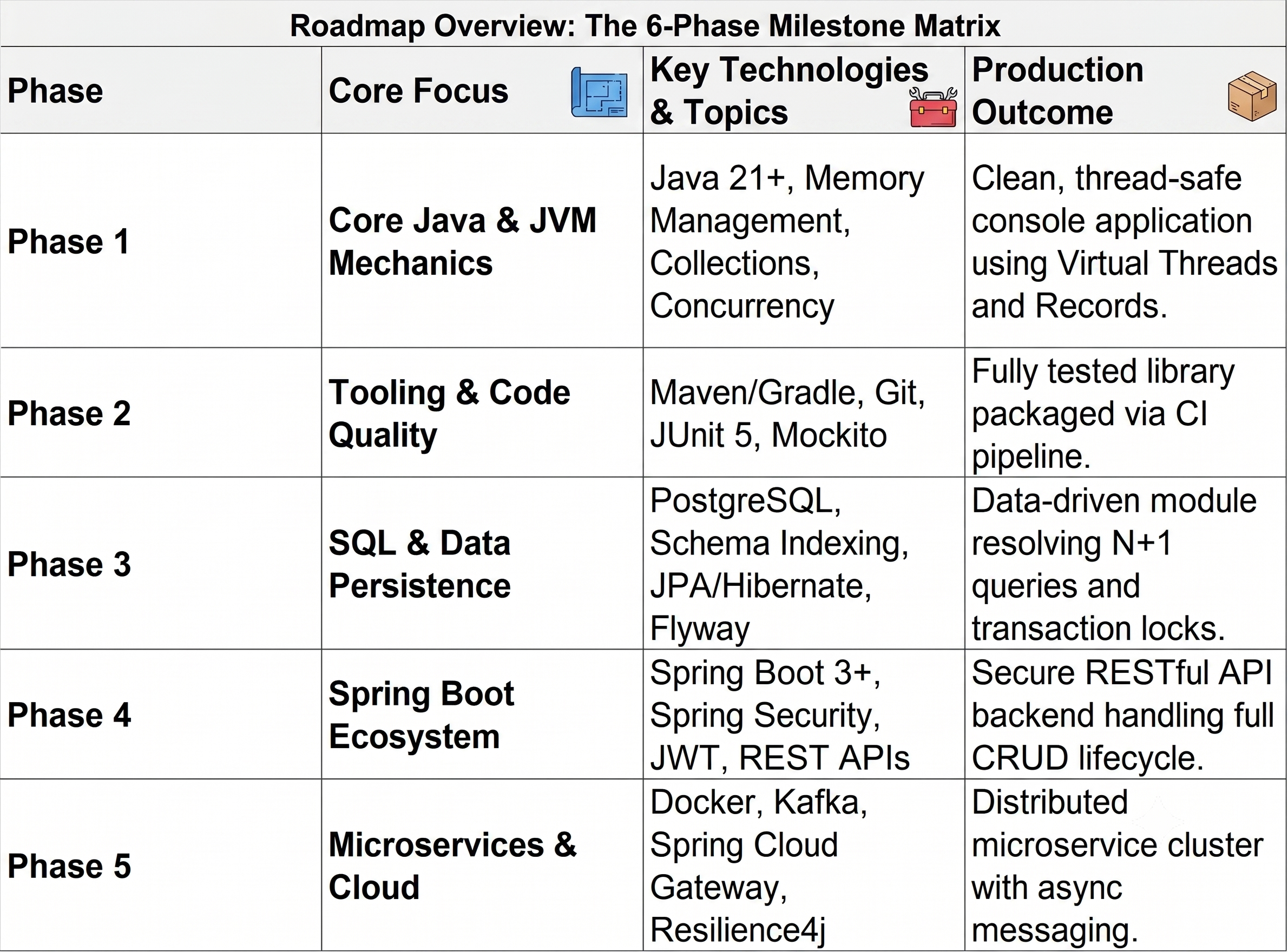
The full roadmap for Java developers will enable you to have guidance on mastering all the following subjects: Java, Spring Boot 3+, database storage, and cloud deployment patterns. If you require a more structured approach in your learning process, joining an java online course can greatly benefit you.
Language Foundation & OOP
First get a solid grip on the basic structure of the language before moving into complicated systems. It will be extremely beneficial for you to take an java programming course online in order to learn about:
Principles of OOP: Move beyond basics of inheritance. Prioritize composition over inheritance, encapsulation, interface segregation and polymorphism.
Modern Language Features:
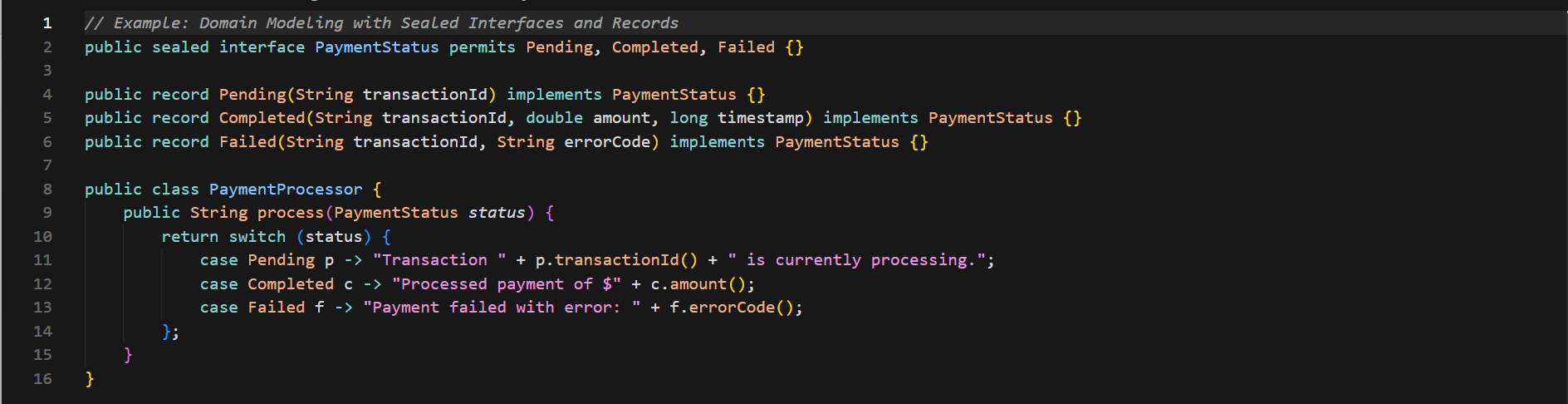
Records: Classes used to store immutable data and eliminate the amount of code related to getter methods and equals() and hashCode() methods.
Sealed Classes: Restrict the set of classes or interfaces that may extend or implement those classes and interfaces. It helps to perform pattern matching on domain objects.
Pattern Matching for switch: Type testing without unsafe casting.
Java Collections Framework
During technical assessments, interviewers evaluate your knowledge of collections framework in detail. You have to know what underlying data structures is used, its capacity, load factor, and time complexity ($O(1)$ vs $O(n)$ vs $O(\log n)$):
List: ArrayList (dynamic array) vs LinkedList (doubly-linked list).
Set: HashSet (hash table), LinkedHashSet (ordered), TreeSet (red-black tree, sorted).
Map : HashMap : bucket array + linked list (bucket count > 8, replaced by red-black tree) ConcurrentHashMap : lock-free bucket operations at segment/node level
Functional programming and the Streams API
Ability to write declarative pipelines, not imperative code:
Intermediate operations (map(), filter(), flatMap(), distinct()) vs Terminal operations (collect(), reduce(), findFirst()).
Streams lazy evaluation.
Optional<T> : Remove potential NPE.
4. JVM & Memory Management
Understanding how code is executed in JVM is a plus compared to a junior developer:
JVM Architecture: ClassLoader, Runtime Data Areas (heap, stack, metaspace, thread registers), Execution Engine.
Stack vs Heap allocation : primitive types and references are stored in Stack whereas objects are stored in Heap.
Garbage Collection (GC) Generation based garbage collection (young/eden/survivor generations vs old generation). G1GC and ZGC (ultra low pause garbage collector).
5. Multithreading and Concurrency
Effective usage of threads is critical in today’s high throughput systems:
Old style concurrency: thread, Runnable interface, synchronized methods/locks, volatile variables, concurrent collections, contention for locks.
ExecutorService & Thread Pools: usage of fixed or cached thread pools instead of raw thread creation.
Virtual Threads (Project Loom, starting from Java 21): light-weight threads managed by JVM instead of OS threads. Allows to have millions of virtual threads running on top of a small number of carrier OS threads and eliminates need in blocking syntax in most web applications.
Build System, Version Control & Testing
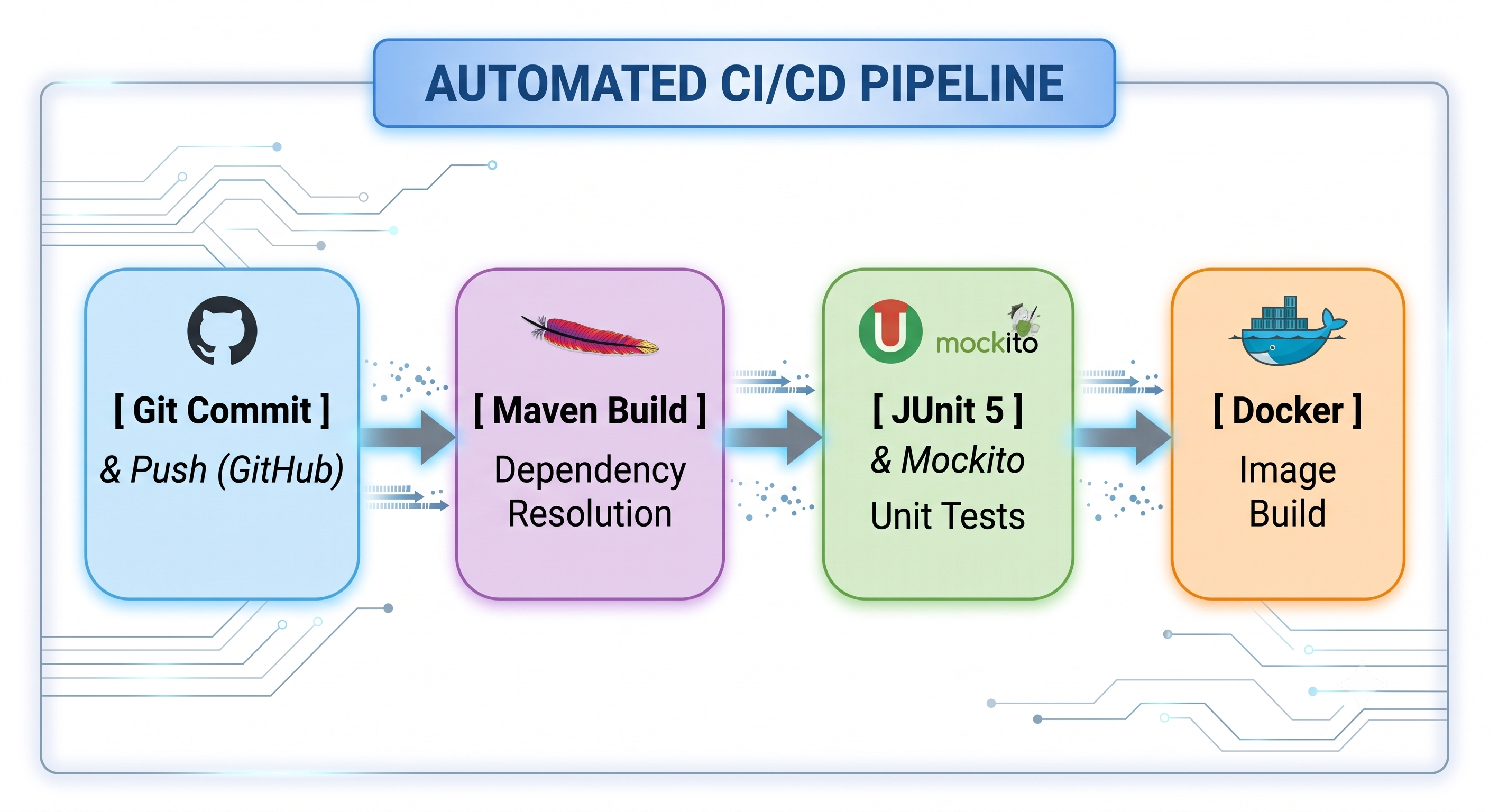
The process of development in enterprises is a team play. Standard packaging and testing pipelines are required.
1.Build Tools (Gradle, Maven)
Project Object Model (pom.xml / build.gradle)
Dependency scope (compile, provided, test, runtime), versioning, transitive dependencies.
Installation of maven, maven plug-ins and their role in the build cycle (cleaning, compiling, testing, packaging, and installing).
2.Version control (Git as well as group work)
Advanced git commands, including rebase as well as merge but also cherry-pick, stash, and solving conflicts.
The implementation of the feature branch model and trunk-based development.
3.Automated testing using JUnit 5 in conjunction with Mockito
Automated testing must necessarily take place when working with production code.
Assertions, parameterized tests along with annotations (beforeEach() and beforeAll()) in JUnit 5.
Mocking calls using Mockito.
Goal: achieve 80% line coverage of domain business logic.
SQL, Relational Databases & ORM
Back-end applications are built around the database. Nothing is worse than a developer who has no idea about database design and indexing.
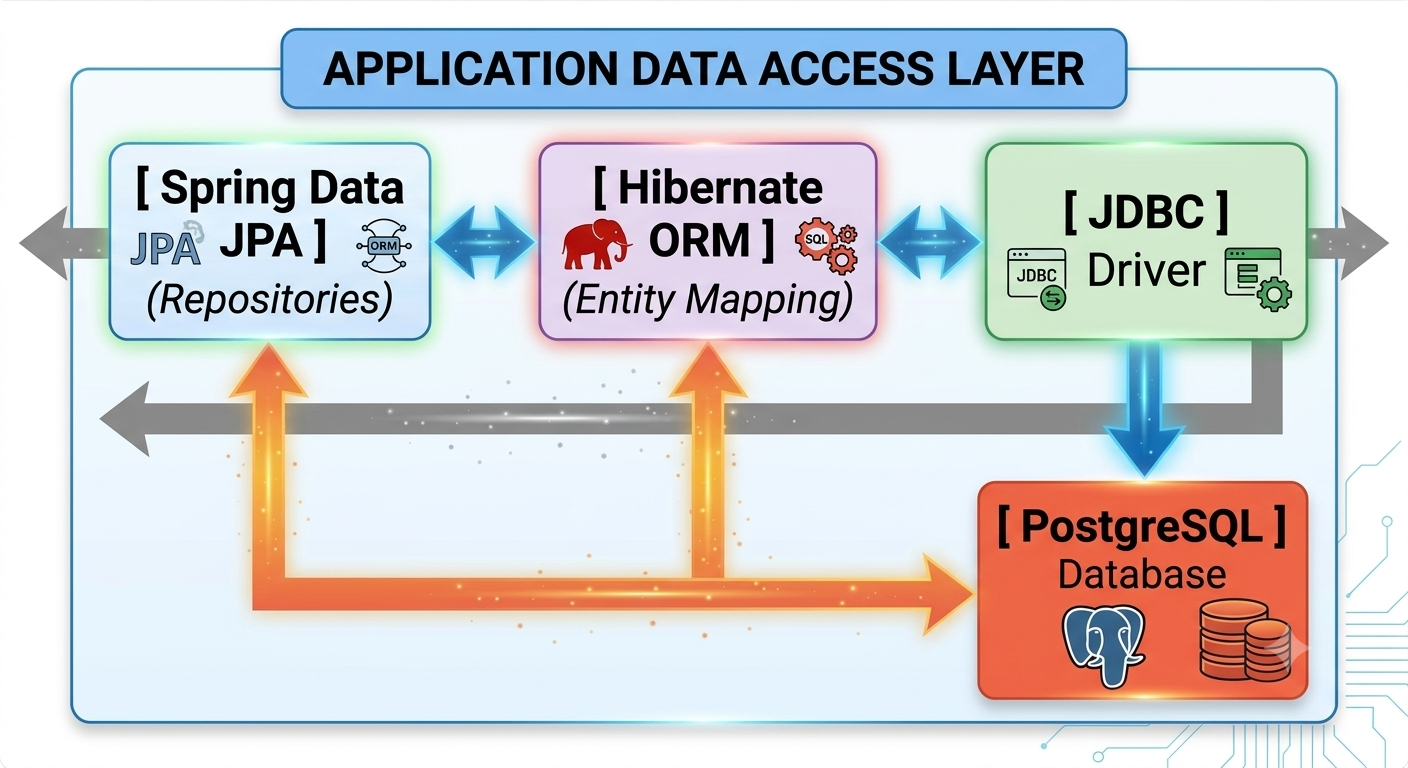
Relational database management system (PostgreSQL / MySQL)
SQL basics: JOINs (INNER, LEFT, RIGHT, FULL), GROUP BY, HAVING, window functions
Database design. Normalization (1NF, 2NF, 3NF). Foreign keys, cascade options.
Indexing: B-tree index operation, composite indices, query execution plan analysis (EXPLAIN ANALYZE).
ACID properties: isolation levels (Read Uncommitted, Read Committed, Repeatable Read, Serializable) Dirty reads, nonrepeatable and phantom reads should be avoided.
Object Relational Mapping (ORM - Hibernate / JPA)
"Java Persistence API (JPA)" is specification for object mapping. Hibernate is its implementation.
Relations between entities: @OneToOne, @OneToMany, @ManyToOne, @ManyToMany.
The N+1 Query Problem: why lazy loading results in N extra queries for each list of size N and how to solve this problem (JOIN FETCH queries, @EntityGraph, DTO projection).
Schema migrations – adding schema migrations tools, like Flyway or Liquibase.
Spring Ecosystem (Spring Boot 3+)
Spring Boot is the de facto standard for building back-end services and microservices.
Spring Basic Concepts
Inversion of Control (IoC) and Dependency Injection (DI) : separation of object creation and execution of business logic.
Spring Bean Life Cycle: @Component, @Service, @Repository, @Configuration, @Bean and configuration for different scopes like singleton, prototype etc.
Constructor injection: Why constructor injection is preferred over the field injection (annotated with @Autowired).
The architecture of Spring Boot 3 and REST API
Using @EnableAutoConfiguration and spring.factories/AutoConfiguration.imports for Auto-configuration in Spring Boot.
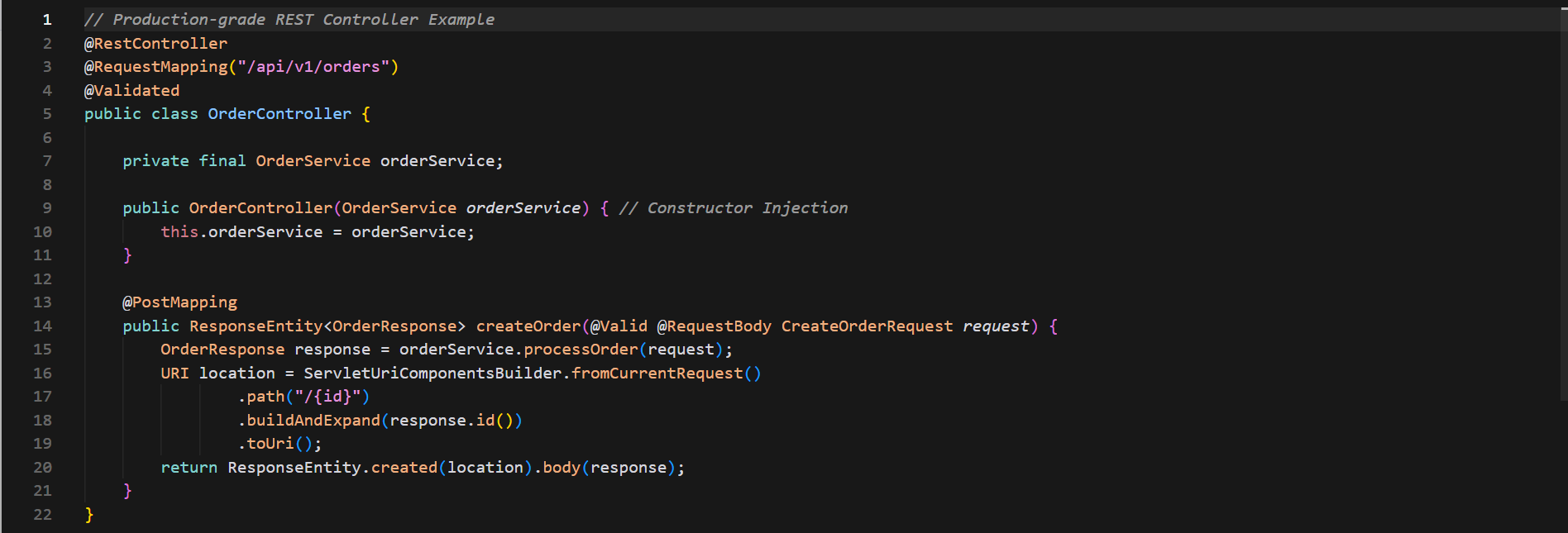
REST controllers and how to set up REST APIs using @RestController along with URL mapping using @GetMapping and @PostMapping, and implementing request payload binding using @RequestBody, @Valid annotations.
Verifying Users and Stateless Attributes with Spring Security
Protection must be cover right from the start:
Security Filter Chain: Scene up authentication managers and authorization protocols
JSON Web Tokens (JWT): Running out how stateless user sessions run with approach tokens and updtae tokens with declare verification.
OAuth2/OIDC: Using venture identity providers like for example Keycloak, Okta and Google to log in once and get access to other software.
Microservices and Cloud architecture
In order to widen isolated elements more separately and fast, organizations divide their monolithic applications into microservices.
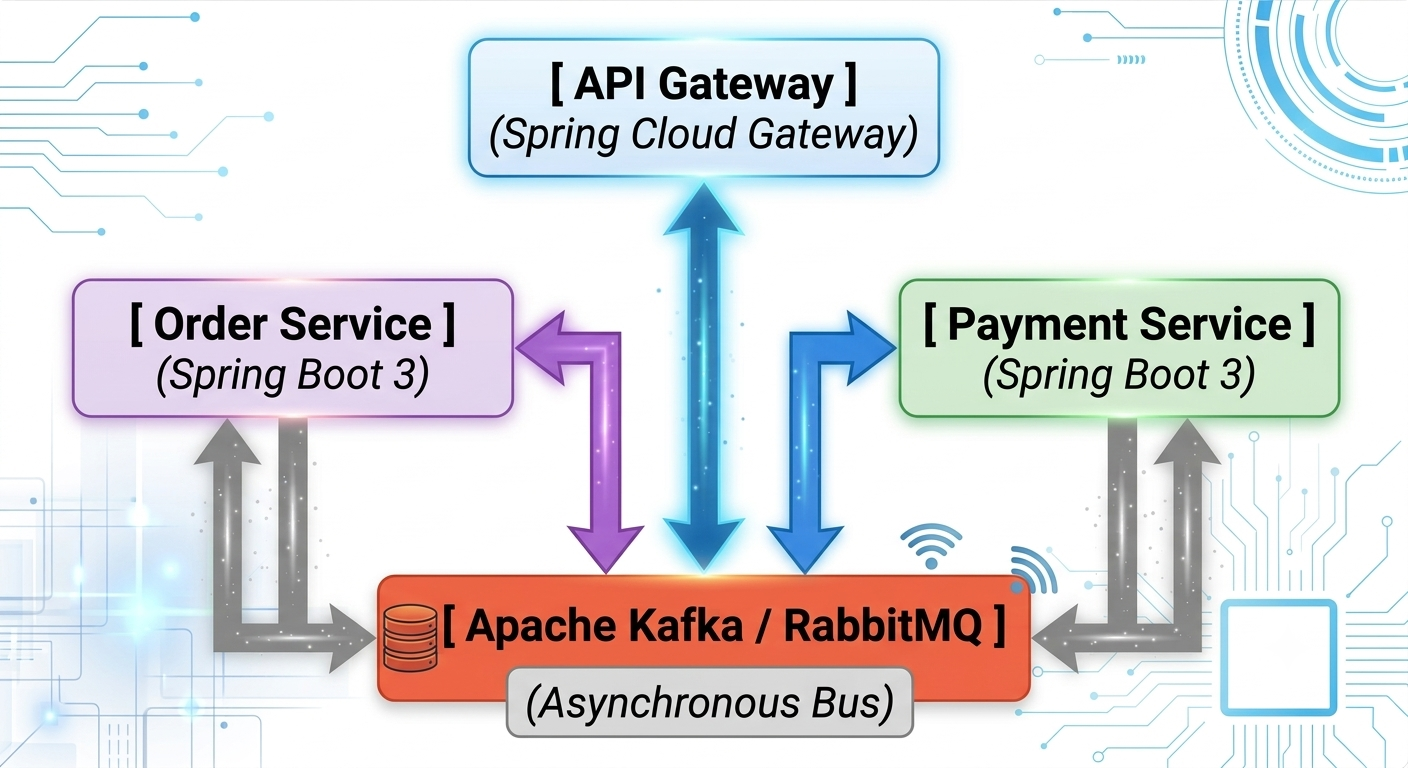
Microservice Components (Spring Cloud)
API Gateway (Spring Cloud Gateway): This is a starting entry place that takes all external request and handles throttling and processing.
Service Discovery (Eureka and Consul): It attempts to discover all available services without requiring an IP address.
Resilience patterns (Resilience4j): The Circuit breaker, Retry, and Rate precise patterns to become furnished patterns and to avoid fruitful failures.
Event-Driven Architecture and Asynchronous Messaging
The synchronous request/response API calls lead to high coupling and low fault tolerance.
Message Broker: For not occurring at the same time they use Kafka or RabbitMQ Message Broker
Patterns: Publisher/Subscriber pattern, Event Sourcing, and Transactional outbox patterns used to make it remain just as it is relational DB in manner way with the message broker.
Containerization and Basic DevOps
Docker: Multi-stage dockerfile to make images with basic JRE installation
Docker Compose: Local environment started using the command docker-compose up.
Kubernetes: acquiring knowledge of Deployment, Services, ConfigMap, Secrets, Pods, and probes.
Portfolio Projects & Interviewing Tips
Tutorials help you learn the syntax but to crack a technical interview, you need to practice hands-on with real project work and a java online course that follows industry standards.
Project ideas with maximum number of impact
Project 1: E-commerce backend with numbers holders
Technological stack: Java 21, Spring 3, Spring Data JPA, PostgreSQL, Redis, Docker.
Some features:
Authentication via the use of JWT tokens with access privilege distinction (Admin, Customer).
Redis cache to access product catalog endpoints.
Multi-tenancy due to the isolation of databases.
Database schema migrations with Flyway.
Project 2: Order processing system built on events
Technological stack: Spring Cloud, Apache Kafka, MySQL, Resilience4j, JUnit 5/Mockito
Main features:
Outbox pattern used for trustworthy text delivery to kafka in case is they give different database
Showing error handling if any case of failure gateway in payments.
Unification testing with test containers that uses PostgreSQL and Kafka make maven as docker containers.
Technical Interview Preparation Strategy
To pass technical interviews with engineering leaders, you need to be prepared in four aspects:
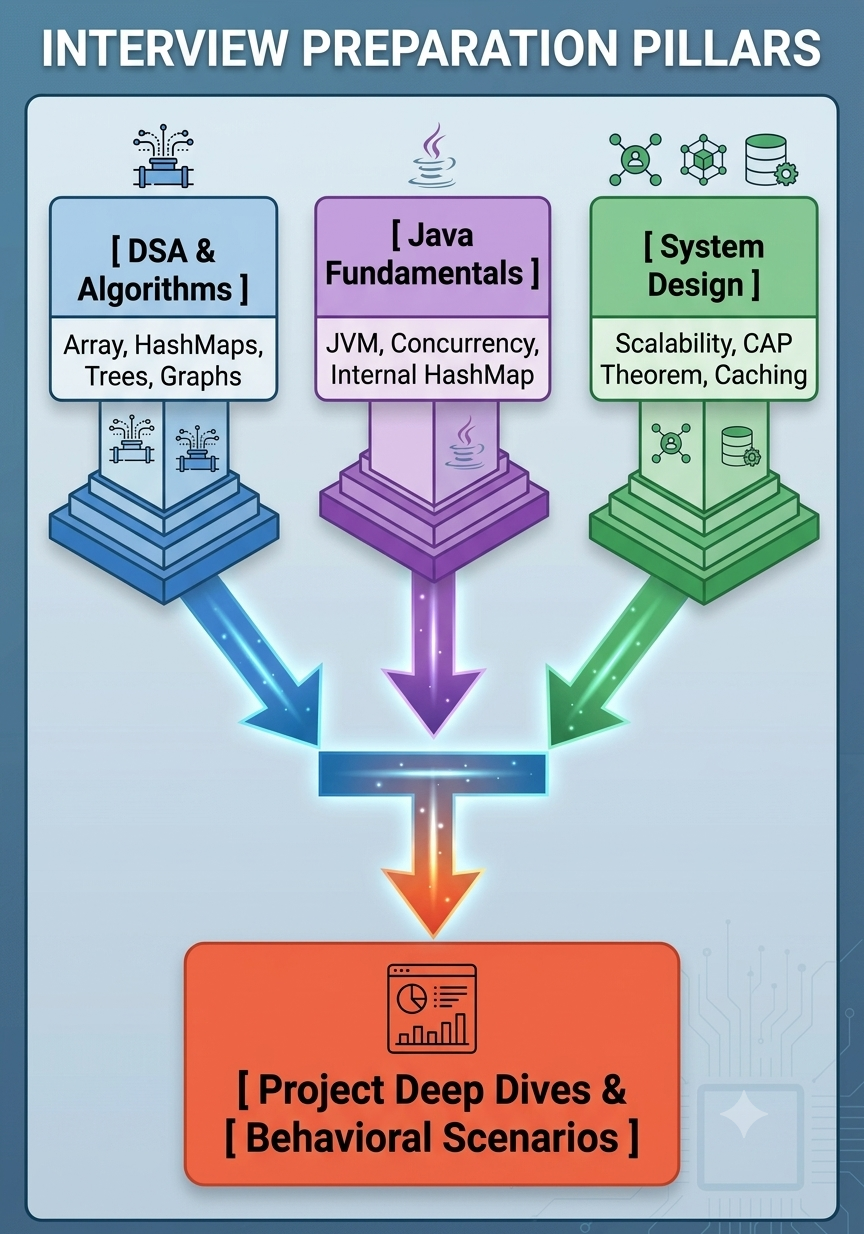
Data Structures & Algorithms (25%): arrays, strings, HashMaps, two-pointer technique, trees and dynamic programming. Ability to articulate your space and time complexity ($O(N)$).
Java Deep Dives (35%): you will need to be able to articulate mechanics of transformation of HashMap buckets, garbage collection cycles, thread states and Spring dependency injection techniques.
System Design (25%): you should practice system design questions like designing rate limiters, URL shorteners or notification engines and know trade-offs regarding CAP theorem, caching systems and databases sharding.
Behavioral & Code Walkthroughs (15%): you have to be ready to walk someone through your GitHub project line-by-line, explaining your architecture decisions, bugs and trade-offs made.
Final Thoughts: don't fall into the "tutorial hopping" trap. Build software, debug logs, write unit tests and deploy code to production servers. This is the engineering muscle memory that turns candidates into engineers.
Modern Enterprise Architectures & Advanced Java
When enterprises move further from their monoliths, the production-ready engineering team is looking for a candidate who is familiar with new performance frameworks, observability platforms and software architecture approaches.
GraalVM and Native Compiling
Traditionally, Java applications were compiled to bytecode that was interpreted on the Java Virtual Machine (JVM) through just-in-time (JIT) compilation into machine code. While this approach provides excellent peak throughput performance, it suffers from cold-start issues and large memory consumption, thus, it is not suitable for cloud-native serverless computing like AWS Lambda.
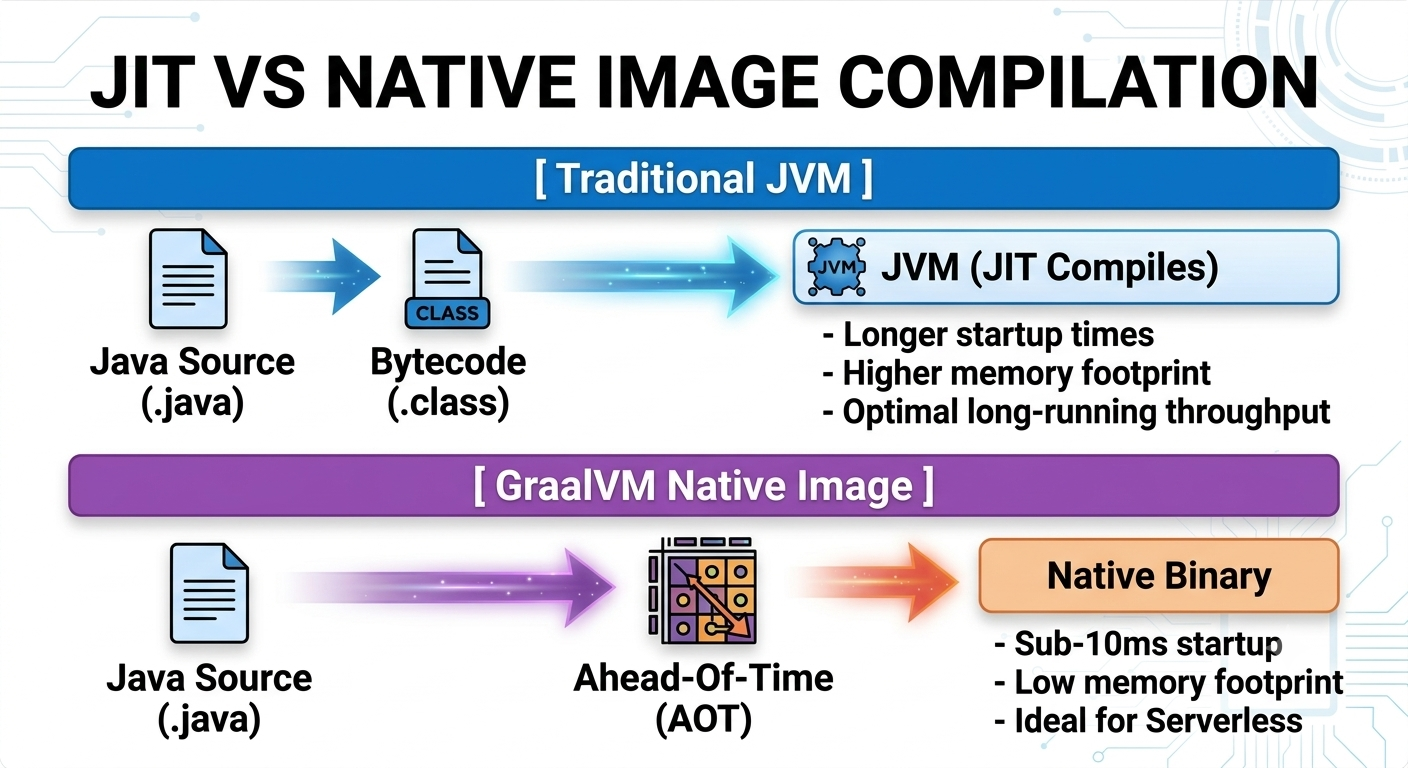
Ahead-Of-Time (AOT) Compilation
Ahead-Of-Time (AOT) compilation feature of the GraalVM Native Image compiles Java bytecode to platform-specific executables.
Fast Start-Up: application start-up time is reduced to a fraction of second.
Low Memory Footprint: no need to load full-fledged JVM instance to memory.
Spring Boot 3 Native Support: Spring Boot 3 provides native support for GraalVM AOT transformations. Instead of using reflection and proxies, Spring uses compile-time mechanisms.
Observability, Metrics & Telemetry
When dealing with distributed systems architecture, it is useless to use traditional log files on separate servers. Today, software engineers create fully observable microservices by applying The Three Pillars of Observability:
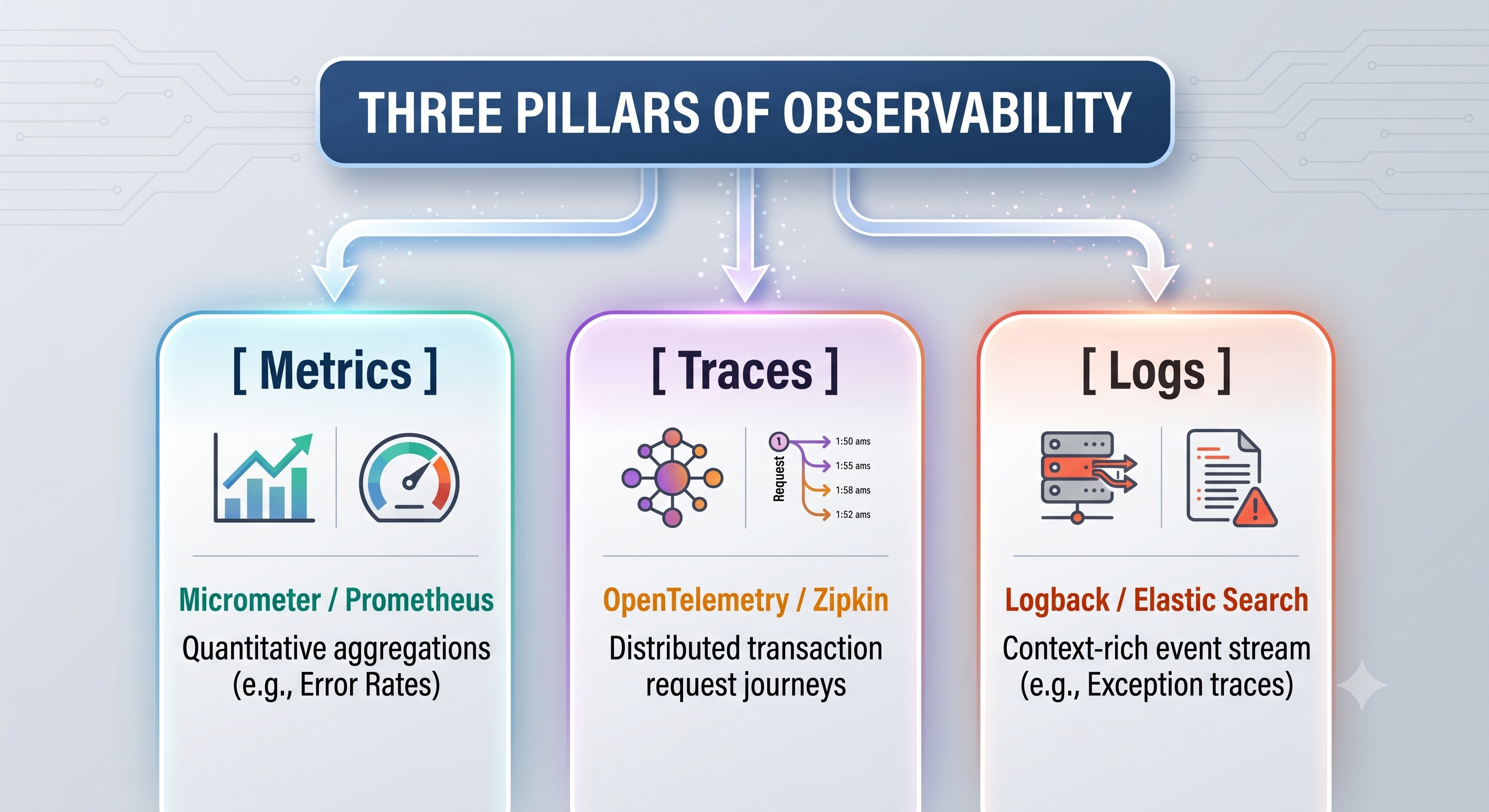
Collection of Metrics with Micrometer & Prometheus
Micrometer: serves as an abstraction layer (similar to SLF4J) that allows collecting application metrics in a vendor-agnostic way.
Prometheus: scrapes time-series data like number of requests, GC pauses and database connection pool utilization from the /actuator/prometheus endpoint of Spring Boot.
Grafana: displays metrics in real-time dashboards allowing setting up alerts on memory leaks and high latencies.
Distributed Tracing with OpenTelemetry
If the user request has gone through five microservices, then distributed tracing adds Trace ID and Span ID to HTTP headers. With the OpenTelemetry and Zipkin/Jaeger implementations, you are able to trace the same transaction across network boundaries to detect microservice problems.
Clean Architecture & Domain-Driven Design (DDD)
As the applications grow bigger, the combination of enterprise logic with database storage or frameworks becomes fragile. The purpose of clean architecture is to decouple enterprise logic from external components and frameworks completely.
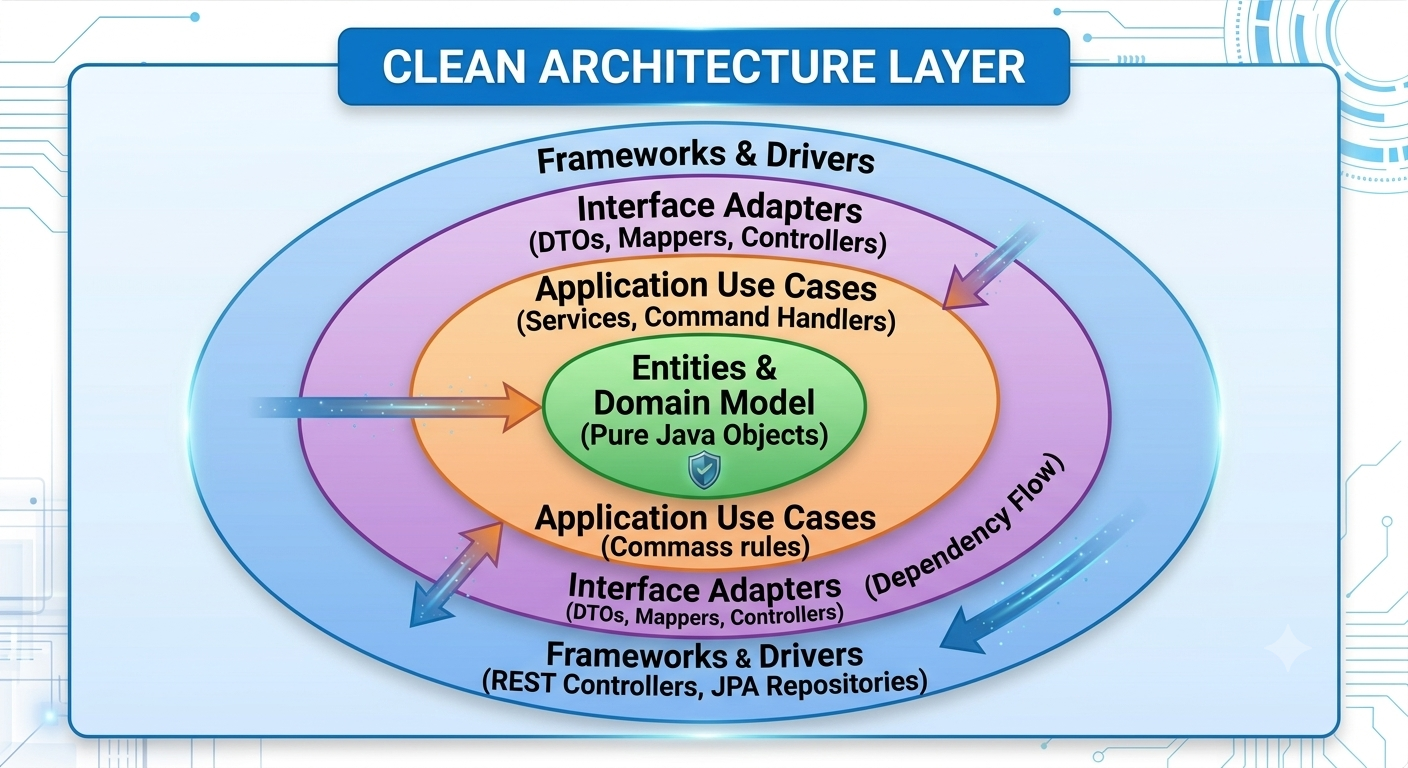
Principles of Architecture
The Dependency Rule: dependencies flow inward. The higher level abstractions (frameworks, DB drivers) have dependencies to the lower-level abstractions (use cases, entities). The core model has no dependencies to any frameworks and DB drivers (no Spring, no Hibernate).
Entities (Core): plain-old Java objects that embody business rules and core business logic.
Use Cases (Services): encapsulating of domain entities in order to implement certain user flows.
Interface Adapters: transforming incoming REST HTTP bodies to domain commands and translating domain objects to JSON representation (DTOs).
Bounded Contexts in DDD
Explicit boundaries of the domain model. The same Order object may be represented differently in the Shipping context and in the Billing one.
Clusters of Domain Objects & Value Objects: a collection of domain objects which must be changed together in order to maintain business rules.
Growth in Engineering & Mindset
Besides acquiring the technical know-how, having a career involves following best engineering practices:
Code Reviews: view code reviews as a chance for you to grow professionally. Pay attention to issues such as readability, edge-case testing, thread safety and APIs design.
Refactoring Technique: constant refactoring in accordance with automated tests safety net, not risky monolithic refactoring.
System Design: always think of trade-offs when deciding about architecture. What are the implications of CP vs AP and queue processing vs REST?
Integration of AI & Production Engineering
While companies continue to innovate their Java frameworks, two critical drivers are shaping up the new tools of the backend engineer: AI Orchestration and Production Incident Management. The best Java teams look forward to their engineers developing robust AI pipelines, handling distributed memory, and debugging difficult runtime issues.
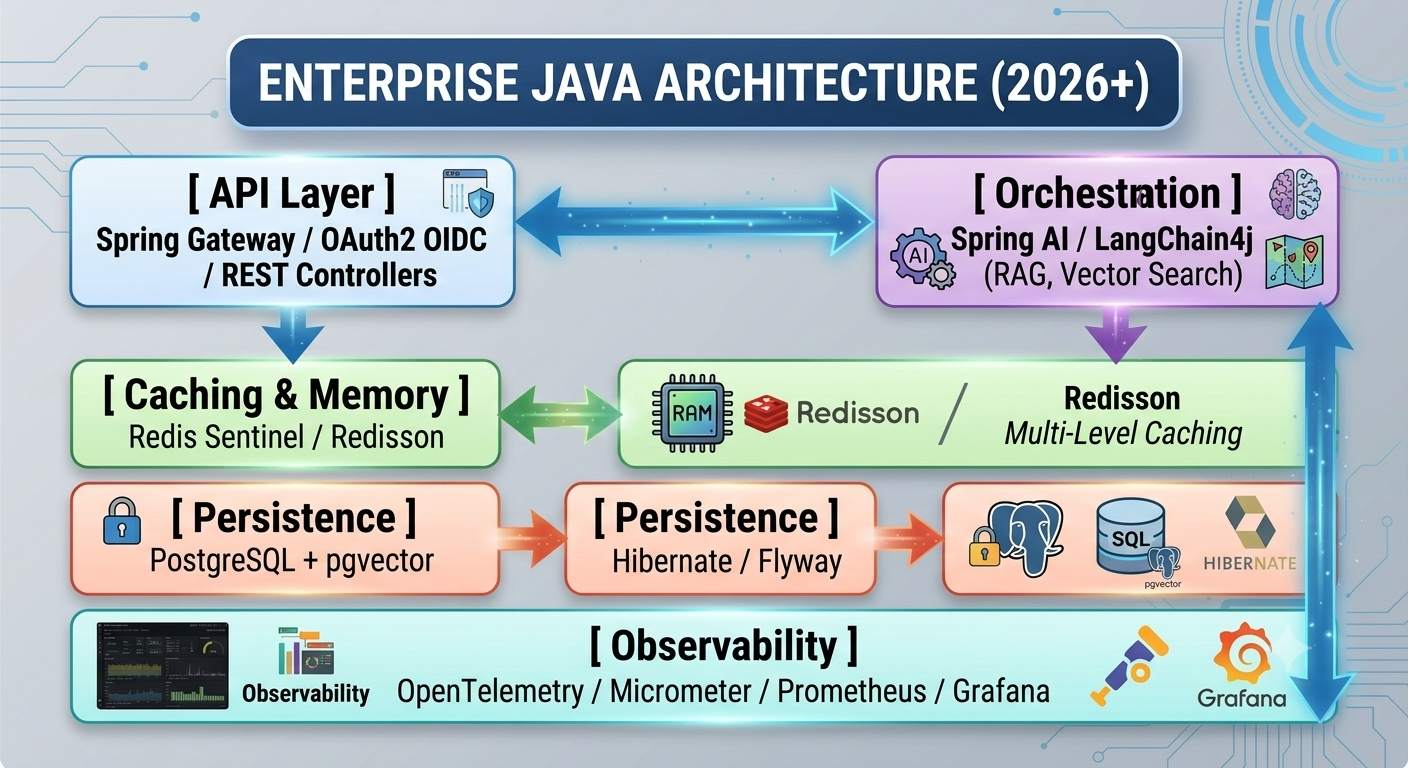
Enterprise-level AI Orchestration using Java (Spring AI & LangChain4j)
While Python has been extensively used in training AI models and executing data science tasks, the enterprise-grade backend production, where the security and performance are crucial aspects, leverages lots of Java in order to orchestrate the use of AI. Contemporary Java developers should understand how to incorporate Large Language Models (LLMs) and vector engines into the core of the business logic.
Vector Embedding & Similarity Search
Vector Embedding: A floating-point array, representing an unstructured data (text, images) generated by some models like the OpenAI text-embedding-3-small.
Cosine Similarity & Distances Metrics: Calculating similarities between user request and pieces of knowledge stored in the system using different metrics.
RAG Framework
The RAG framework is used in production Java-based applications in lieu of retraining or fine-tuning models to get proper business knowledge from vector databases and use it as a context for the prompts templates.
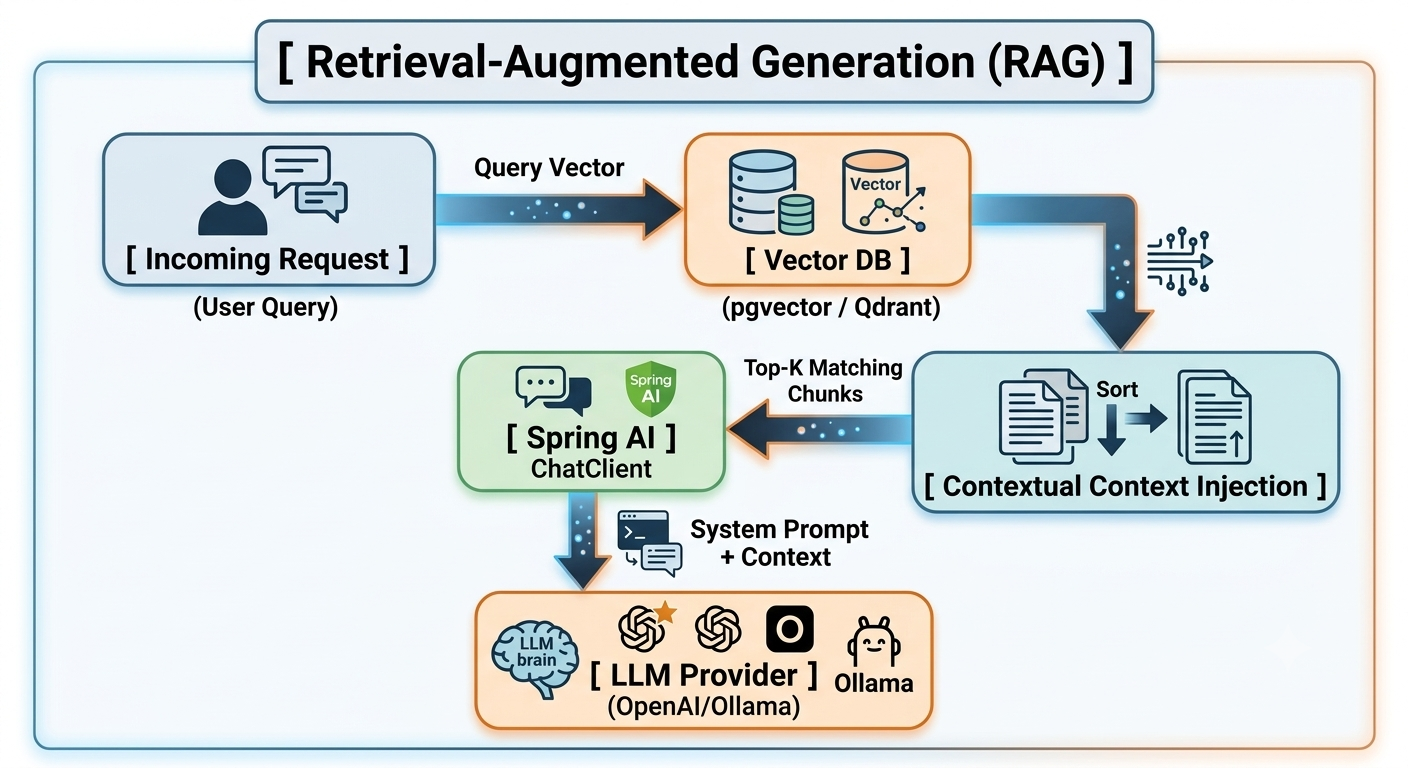
Comparison between Spring AI and LangChain4j:
Spring AI: Native extension for Spring Boot that offers unified VectorStore interface, ChatClient builder APIs, and seamless integration with Spring Security and Micrometer monitoring.
LangChain4j: Framework that provides @AiService interfaces, memory wrappers, and agent-based execution chains usable in Spring Boot, Quarkus, and pure Java environments.
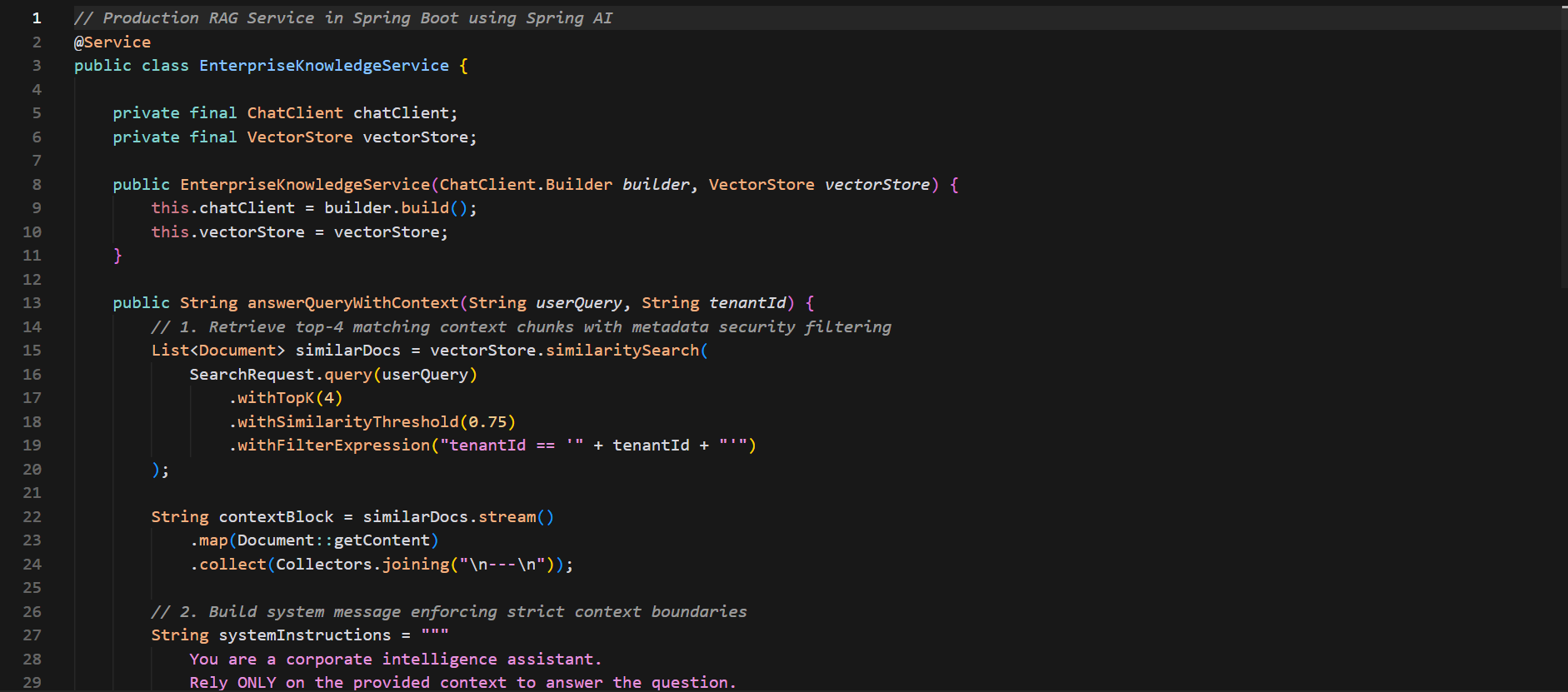
High-Performance Caching & Distributed Data Grids
In high-concurrency systems, it is necessary to keep the hit rate on relational databases low to ensure the safety of storage engines. Backend engineers develop multi-tier caching topologies based on Redis and/or Hazelcast.
Caching strategies & topologies
Cache-Aside (Lazy loading): The application tries to read from the cache first. If a cache miss happens, then the database is inquire, then immediately cache is updated, and the data is restored. This is the failure caching strategy for weigh systems.
Write-Through / Write-Behind: Writes are directed to the 2 cache. Write-Through learn data to both of them cache and database rapidly (synchronously), while the other one Write-Behind uses asynchronous which is not using on that time first they update write data to the database.
Cache Evictions Policy: TTL (time-to-live) management and memory management using LRU or LFU eviction algorithms.
Resolving Problems With Caching in Production Environment
Cache Stampede (Thundering herd problem): Thousands of concurrent threads start querying the database once a highly-popular cache key expires.Resolution: Distribute the locks between different threads with the help of Redisson or apply a probabilistic early expiration algorithm.
Cache Penetration: Requests constantly hit non-existing cache key skipping the caching and loading the database with requests.Resolution: Save null value with TTL or use bloom filter to pass keys before accessing the cache layer.
Cache Avalanche: Several cached keys expire simultaneously, causing a massive amount of database requests.
Resolution: Apply random jitter ($TTL \pm \text{random}(1..300 \text{s})$).
Production incident handling & JVM performance tuning
The importance of a production engineer can be shown in case of an outage incident. Ability to handle memory leaks, thread deadlocks, and latency degradation is crucial for enterprise position.
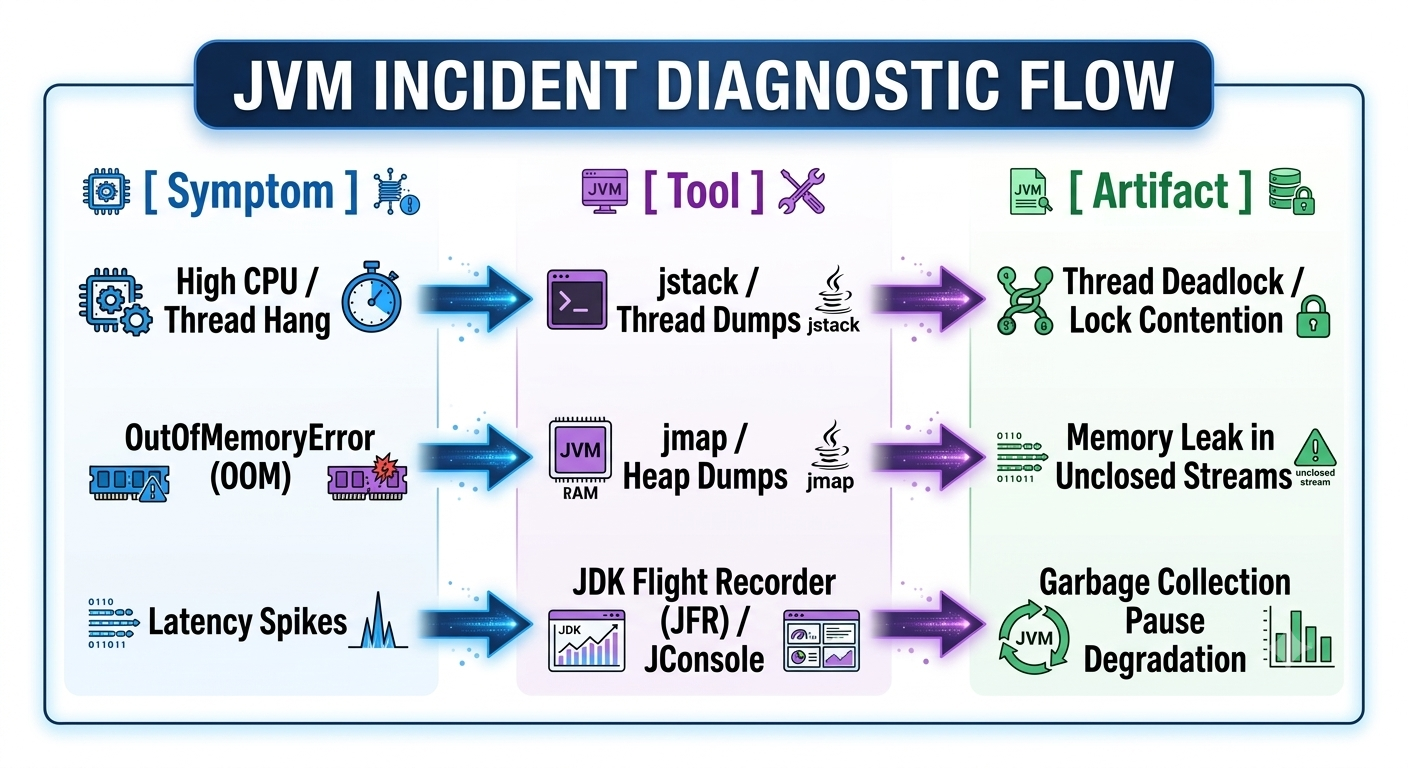
Thread Dump (jstack / jcmd): This command creates a snapshot of all call stacks of threads that are alive. Helps identify:
Deadlock situation: At least two wires pull against each other so that it can open.
Thread Starvation: All threads of the application waiting for outside connections through HTTP and database connection pool (WAITING/TIMED_WAITING state).
Heap Dump (using jmap/Automatic with parameter “-XX:+HeapDumpOnOutOfMemoryError”): It makes a binary dump of all live objects in the JVM heap using MAT.
Memory Leak Detection: Detecting static collection references, closing database cursor stream, or removing ThreadLocals with large object graphs.
JDK Flight Recorder (JFR) and JDK Mission Control (JMC): Performance monitoring capabilities of the JVM. The feature is part of the JVM kernel. This includes GC allocations, locking profiling, socket read/write latency, and native memory monitoring.
The mastery of shifting from core syntax to production incident management is only possible through constant practice and learning. The enrollment in a specialized Java programming course online will ensure that you get the guidance necessary to pass job interviews and work effectively as a backend developer in any firm.