
OpenShift in 2026: Kubernetes Is Everywhere So Why Do Enterprises Choose Red Hat?
Last updated on Oct 6, 2026

Kubernetes Won the Adoption Race. The Enterprise Problem Comes Next.
There was a time when Kubernetes itself was the goal. Companies wanted to be cloud-native; developers wanted to use containers and engineers wanted to use a way to deploy applications that did not rely on traditional infrastructure. Kubernetes addressed that problem brilliantly by providing a common orchestration layer for containers. But as adoption grew one of the interesting realities emerged: running Kubernetes is one thing, but running Kubernetes well is something else entirely. A development team can put together a cluster deploy workloads, configure services, and get an application running quickly. The difficult question comes months or years later when that cluster must support hundreds of applications, multiple teams, strict security policies, regulated workloads, hybrid infrastructure, continuous deployments, monitoring, upgrades and developers who just want to ship software instead of becoming infrastructure specialists. This is where the OpenShift conversation becomes more interesting in 2026. OpenShift is not competing with Kubernetes by replacing it; rather, it is built on Kubernetes. Seeks to turn the underlying technology into a broader enterprise application platform. The question has therefore changed from "Do we need Kubernetes?" to "How do we run Kubernetes as an enterprise platform?"
It is important to note that enterprise technology decisions are rarely driven by capability alone. An organization may already have skilled Kubernetes engineers, automation pipelines, internal tooling, cloud expertise, and a strong platform engineering team. In that context, building a customized Kubernetes platform makes sense. Another organization has thousands of developers but fewer infrastructure workers, has compliance requirements, has multiple deployment environments, and requires commercial support. In that context, the value of a platform like OpenShift can look very different. Of asking developers to understand every underlying infrastructure component, the organization can provide standardized workflows, policies, security controls, deployment mechanisms, and operational capabilities within a common platform. The real enterprise value is often not driven by adding another Kubernetes feature. In reducing the number of problems every individual engineering team must independently solve. This is also why conversations around OpenShift increasingly intersect platform engineering, DevSecOps, hybrid cloud, automation, observability and AI infrastructure.
The evolution of enterprise infrastructure has complicated the decision well. Applications are no longer necessarily living in one data center or one public cloud. Organizations may be running legacy systems on premises while deploying applications in public clouds and keeping sensitive workloads behind private environments. Some applications require proximity to infrastructure while others are benefiting from the clouds elasticity. AI workloads add another layer of complexity because they can require compute resources, data pipelines, model-serving infrastructure and careful governance. A modern enterprise platform must solve an orchestration problem. Must also solve a consistency problem. Teams need ways to build, deploy, secure observe and manage applications no matter where those applications ultimately land. This is one of the reasons OpenShift remains relevant even as Kubernetes itself has become ubiquitous.
The useful way to view OpenShift in 2026 is not as "Kubernetes vs something else." The better way to understand it is as an enterprise platform built around Kubernetes that is designed to bring more of the application lifecycle inside an operating model. That distinction is actually a more meaningful way to examine why organizations choose it. Kubernetes provides the foundation while OpenShift attempts to provide more of the platform experience around that foundation. Whether more platform experience is worth the investment depends on an organization's scale, operational maturity, security requirements, application landscape and engineering priorities. To understand it properly redhat openshift training must first look at what came after Kubernetes became mainstream.
Kubernetes Became Standard.. Now We Have a New Problem
The rise of Kubernetes popularity is probably one of the important developments related to modern infrastructure. It made organizations adopt a vocabulary around container orchestration and created a powerful ecosystem of workloads, networking, storage, service discovery, scaling, automation and deployment. Developers could package applications into containers while platform teams provided an orchestration layer that could manage those applications across infrastructure. This was an upgrade over manually configuring servers and treating every deployment as a unique event.. The success of Kubernetes also created an unexpected consequence: as soon as everyone has Kubernetes Kubernetes is no longer the differentiator anymore. Organizations now must think about everything surrounding the cluster. How will identities be managed and how will security policies be enforced? How will container images be governed and how will upgrades happen? How will applications be monitored and how will developers access the platform. How will teams maintain consistency?
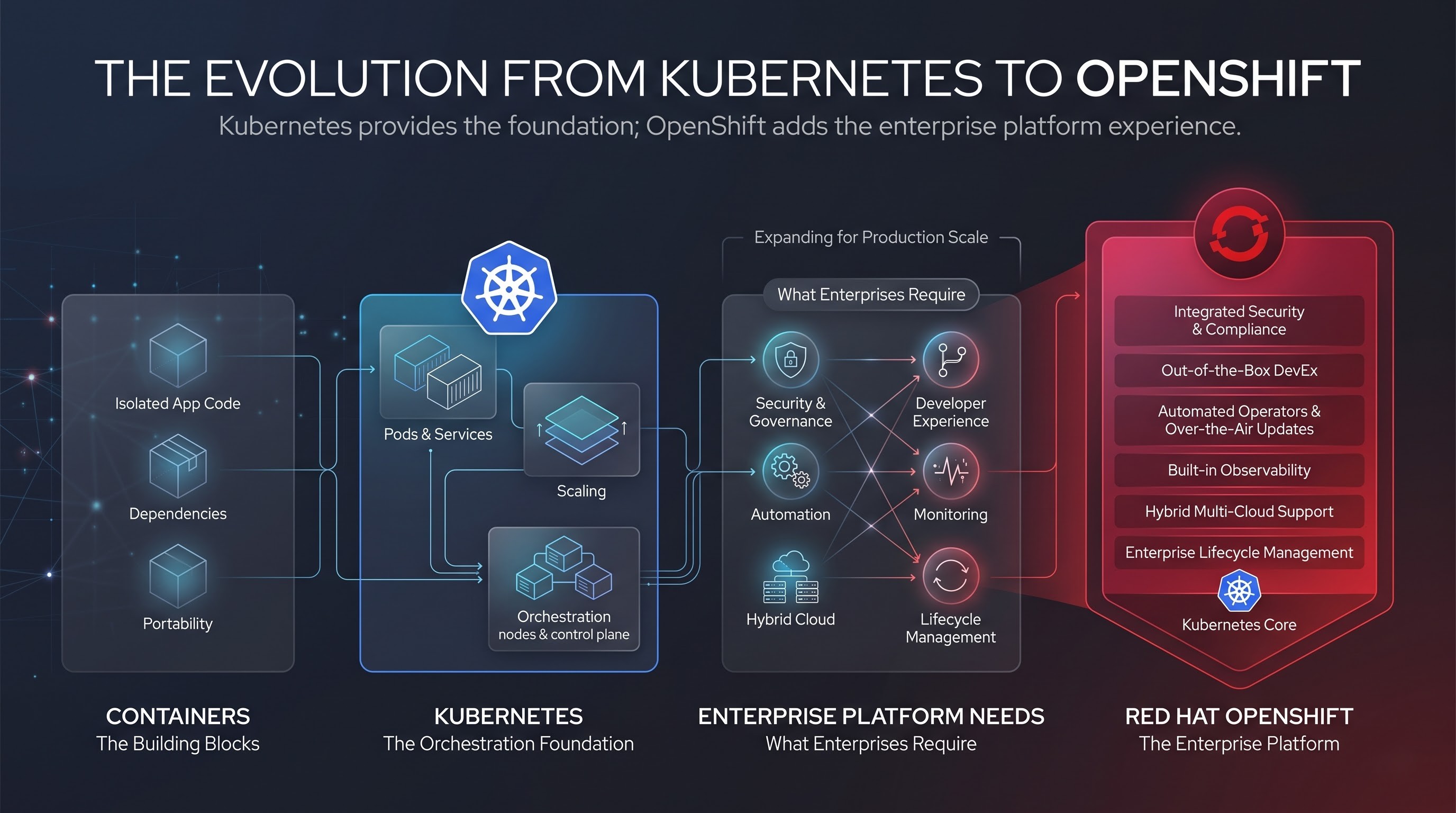
The problem becomes particularly visible when Kubernetes moves from an engineering experiment into an enterprise-wide platform. A single cluster being operated by a team is relatively manageable. Hundreds of applications running on clusters is very different because every additional application carries the potential of dependencies involving networking, storage, authentication, secrets, resource limits, security policies, logging, monitoring and deployment. Every additional team brings requirements and quirks. Kubernetes is providing primitives but organizations must still assemble those primitives into an operating model. This is also part of why enterprises discover that adopting Kubernetes is the beginning. The real engineering effort comes in as Kubernetes becomes infrastructure that other people must rely on.
The distinction between infrastructure engineering and platform engineering becomes important here. Infrastructure teams traditionally focused on keeping servers, networks, storage and other foundational systems running. Platform engineering adds another objective: create an internal platform that allows developers to consume infrastructure capabilities without understanding every underlying implementation detail. The platform becomes a product for users. Developers should be able to deploy applications retrieve information, understand failures and follow policies through standardized workflows. The success of a platform is typically based on how developers can move without being infrastructure experts. OpenShift fits into this shift well as it provides an opinionated environment rather than expecting every organization to construct its entire platform layer from individual Kubernetes components.
The result is a shift in the enterprise Kubernetes conversation because five years ago a company may have asked whether Kubernetes was technically capable enough for production. In 2026, that's a less interesting question. Kubernetes is already deeply established. The valuable questions involve operational maturity, governance, developer experience, lifecycle management, and total ownership. This is also why organizations may choose OpenShift even if they technically have the ability to operate Kubernetes themselves. The choice is frequently around engineering economics rather than technical possibility. If a company is spending a lot of engineering time building and maintaining an internal Kubernetes platform, an enterprise distribution can become very attractive because it provides an integrated start and a commercial support model.
What Does OpenShift Actually Add to Kubernetes?
OpenShift is built around Kubernetes so it is critical to avoid one of the misconceptions: OpenShift is not simply a completely different orchestration technology. Kubernetes is actually fundamental to its architecture. What changes is the amount of platform capability added around that foundation. OpenShift brings together components and workflows intended to help organizations build, deploy, manage, secure and operate applications in a more integrated environment. The distinction is not "Kubernetes can deploy containers while OpenShift can." Both can. The distinction is how much of the surrounding platform experience is integrated, standardized and supported. This matters because enterprise engineering problems rarely stop once a container has been scheduled on a node.
Think about what happens after a developer writes an application. It needs to be packaged, stored, deployed, configured, exposed to users monitored, secured, updated and eventually retired. The organization may also ask for auditability, access controls, resource policies, vulnerability management, automated pipelines and standardized deployment practices. With a DIY Kubernetes environment the organization can absolutely build those capabilities. Kubernetes is intentionally extensible. Its ecosystem contains tools for almost every requirement.. Every additional tool brings decisions around architecture, compatibility, maintenance, upgrades, integration, ownership and support. OpenShifts appeal is partly driven by reducing the number of decisions an enterprise team must make before they're delivering a usable application platform.
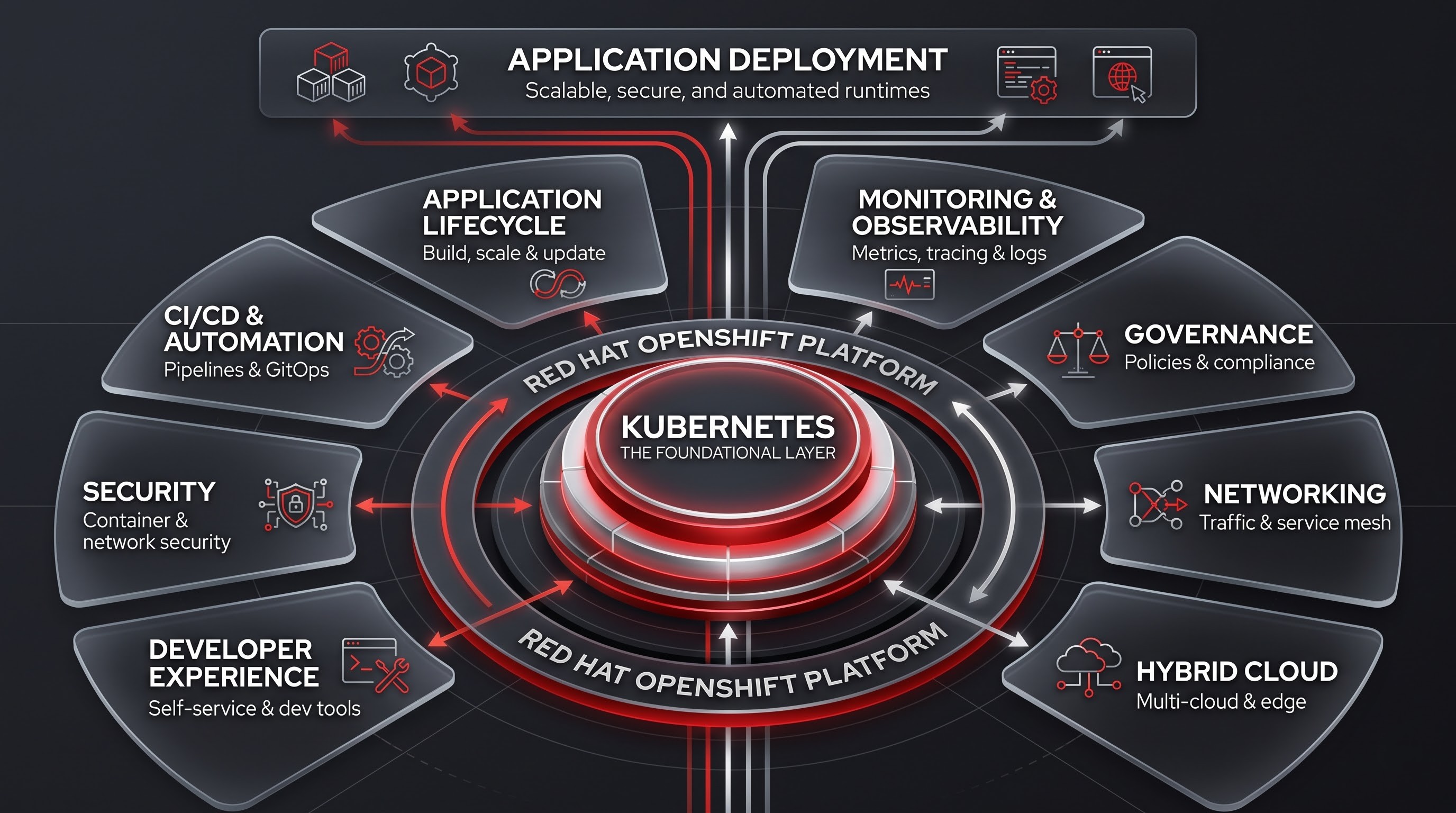
The developer experience is a part of the equation because developers generally do not want to spend their day thinking about cluster internals, node configuration, control-plane components and infrastructure troubleshooting unless their job specifically requires it. They want ways to deploy applications and understand whats happening when something fails. A platform can abstract some of that complexity while giving specialized teams access when needed. This does not mean hiding infrastructure completely. Providing the right level of abstraction for the person using the platform. Developers can focus on application delivery while platform and operations teams retain the tools to manage the underlying environment.
This is one of the reasons organizations exploring a shift training path should think beyond memorizing commands. Understanding OpenShift professionally involves understanding how Kubernetes concepts map into an enterprise operating environment. A strong learner should understand containers, pods, deployments, services, networking, storage, authentication, security, image management, scaling, monitoring, troubleshooting and application lifecycle management. The valuable knowledge comes from understanding how those pieces interact. Enterprise platform expertise is less about knowing one command and more about knowing what should happen when an application moves from source code to production.
Enterprise Advantage: Standardization at Scale
Enterprise technology can become really difficult when every team solves the problem in a different way. One development group uses one deployment approach another one builds its scripts and a third relies on a collection of manually maintained tools. Each solution may work individually. The organization eventually accumulates operational inconsistency. Security teams have to understand workflows platform engineers maintain different configurations developers receive different deployment experiences and troubleshooting becomes more difficult because there is no common operating model. Standardization is therefore not about forcing every application to behave identically but establishing patterns, around common activities.
OpenShift can be useful in this setting because a company can create a shared base layer for delivering applications. Groups can create applications using cloud-native methods while people who manage the platform set up rules for the company. This can include access rules, managing resources, security standards, image rules, deployment steps and how things are run. The aim is not to take freedom from developers but to give them a more secure starting point. A developer should not have to create authentication, deployment and how things connect from scratch for each project. Good platform engineering creates paths: developers are in charge of their applications while the platform gives reliable ways to handle common infrastructure tasks.
This is especially helpful in companies where application groups might be across departments, countries or parts of the business. A financial application and an internal tool may have different needs but both still need identity handling, secure deployment, logging, watching, controlling resources and predictable ways to manage their life. Of making completely different setups for each application a company can set up shared platform features. This will give an advantage when growing the number of applications without growing the complexity of the infrastructure at the same time.
Standardization also helps companies build knowledge. When people use ways to deploy engineers can switch between projects more easily. Troubleshooting knowledge can be used across teams. Training can be more organized and procedures can be written around common platform behavior of many different setups. This is also why an openShift course can be very helpful when seen as part of a plan for learning cloud-native methods. The benefit is not about learning a specific platform but understanding how big Kubernetes setups organize how apps are delivered, run kept safe and handled. That knowledge can be very useful for DevOps engineers, platform engineers, cloud engineers, system admins and developers working with apps in containers.
Security: The Enterprise Conversation Changes Completely
Security is one of the reasons companies use Kubernetes differently than smaller groups. A developer experimenting with a container app may mainly care if the app works. A company has to ask questions about who can put the app out which images are trusted what permissions the app has if one app can access another how secrets are handled how problems are found what happens when a security rule changes and how security teams can check that everything meets the rules across many apps. At a company security cannot stay as just advice and has to be part of how the platform works.
Container security is also more than checking images for flaws. Security has to be thought about through the app process from code and the things it uses to the images how they are set up what they do while running how they connect, identities, secrets and the base infrastructure. A problem found after the app is running may need help from developers, security people and platform admins. A good setup can help make sure there are ways to handle security so it does not depend on each developer remembering everything. This is especially important when companies have rules they must follow and need to show that rules are applied the same everywhere.
OpenShifts place as an enterprise tool becomes important here because companies often want a supported setup with security rules rather than building everything themselves. That does not automatically make an app safe. Badly made parts can create problems and how the setup is done still matters. The goal is not to make security someone Problem but to make it easier to do the right thing all the time.
This becomes more important when apps are more spread out. Microservices can bring connected parts APIs can show app functions to inside and outside users AI tasks can bring new data and model security problems and mixing different setups adds more lines between areas. In this situation security needs to be part of how thingsre set up and run instead of just a final check. OpenShifts appeal as an enterprise tool is not about "safe containers”. The bigger idea is a setup where security, who is allowed how things are managed and how apps run can all be part of the same place.
Hybrid Cloud: Where the Enterprise Reality Gets Complicated
Using cloud did not get rid of the data center. Many companies still have a lot of on-site setups because of rules, past investments, speed needs, where data is stored, hardware or how apps work. At the time they may use one or more public clouds for certain tasks. This makes a hybrid cloud situation where apps and data're in different places that can be very different. The problem is no longer just choosing between cloud or on-site. It is managing both without having completely different ways to make apps.
This is where OpenShift's role as an enterprise tool becomes very useful. If groups can use ways to build and run apps across different setups a company can reduce some of the differences between where things are run. Developers do not need to know all the details under the platform. Teams who handle the setup focus on giving features while the people who manage the actual resources take care of the rest. This creates a split between how apps are made and how the base is handled which becomes more useful as the setups get more complex.
The hybrid setup also makes the question of moving apps harder. Moving an app does not mean it can just move between places with no changes. Real apps have things they need like databases, storage, connections, identities, APIs, outside services and the base. Moving an app can still need a lot of planning.. Using common setup ideas can make some of the problems less. The goal of cloud is not perfect moving but making sure things are the same where it makes sense for the business.
This is especially helpful for companies that keep using the tech for a long time. A company may not want to change everything every time a cloud plan changes. A setup that can work in places can give an extra level of choice. This choice is valuable because decisions made today may need to last for years. OpenShift becomes part of a conversation in the company about making the setup less different while still being able to use different places for different tasks.
OpenShift and the Rise of Platform Engineering
Platform engineering has become one of the important ideas in modern software work because companies have found that just giving developers more tools does not always make them more productive. In fact giving many options can add more thinking. Developers might spend time thinking about how to deploy, setting up the base, fixing problems, managing settings and learning tools instead of making business features. The goal of open shift training platform engineering is to turn the base features into something that can be used like a product.
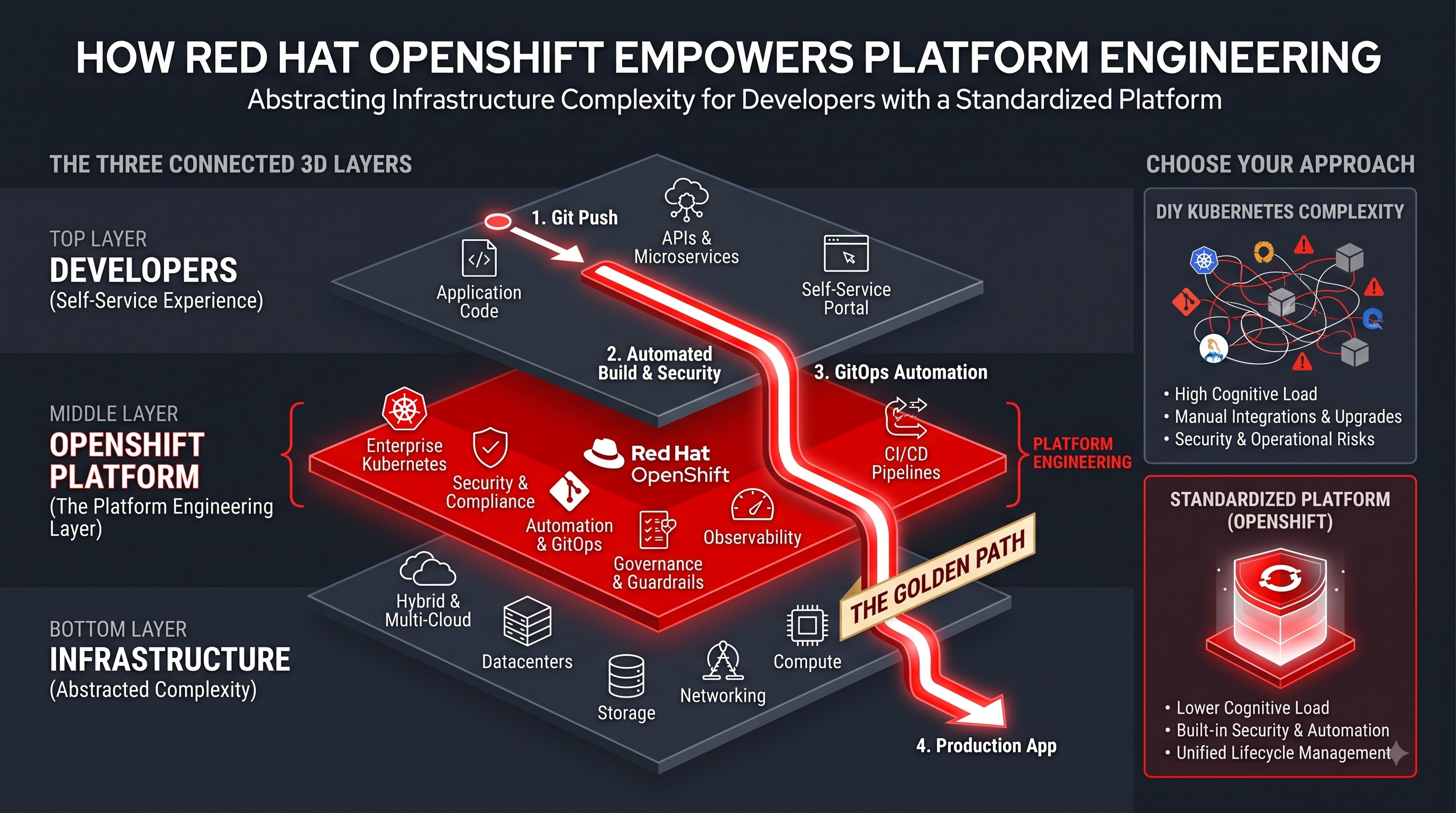
OpenShift can help with this by being a setup where companies build how developers work. Platform teams set up ways to deploy add automation, create security rules, and offer things that can be used again. Developers use the setup through steps that fit their role, while platform engineers look after the base features. The relationship is important: platform engineering should not become another group that stops developers. Its goal is to make it easy for developers to do things without depending much on the base teams.
The idea of a " path" is very important because it is basically the best way to do a common task. Of giving developers a basic Kubernetes setup and says, "build anything you want "; the platform offers a supported way with good choices. Developers can go off the path when needed. Most teams can stick to the standard way. The best platform is not the one with the features but the one that makes the right way the easiest way.
This is also changing what skills people in the base need. Modern platform engineers need more than old system admin knowledge. They need to understand Kubernetes, containers, automation, networks, security, watching how things work, how to move software, how developers work, and how the base is built. OpenShift sits at the meeting point of many of these areas. That makes it a useful tool to learn but a good way to see how these areas can fit together in big company engineering.