
Salesforce CPQ: When ‘Just Send the Quote’ is the Hardest Part of the Sale
Last updated on Sep 30, 2026
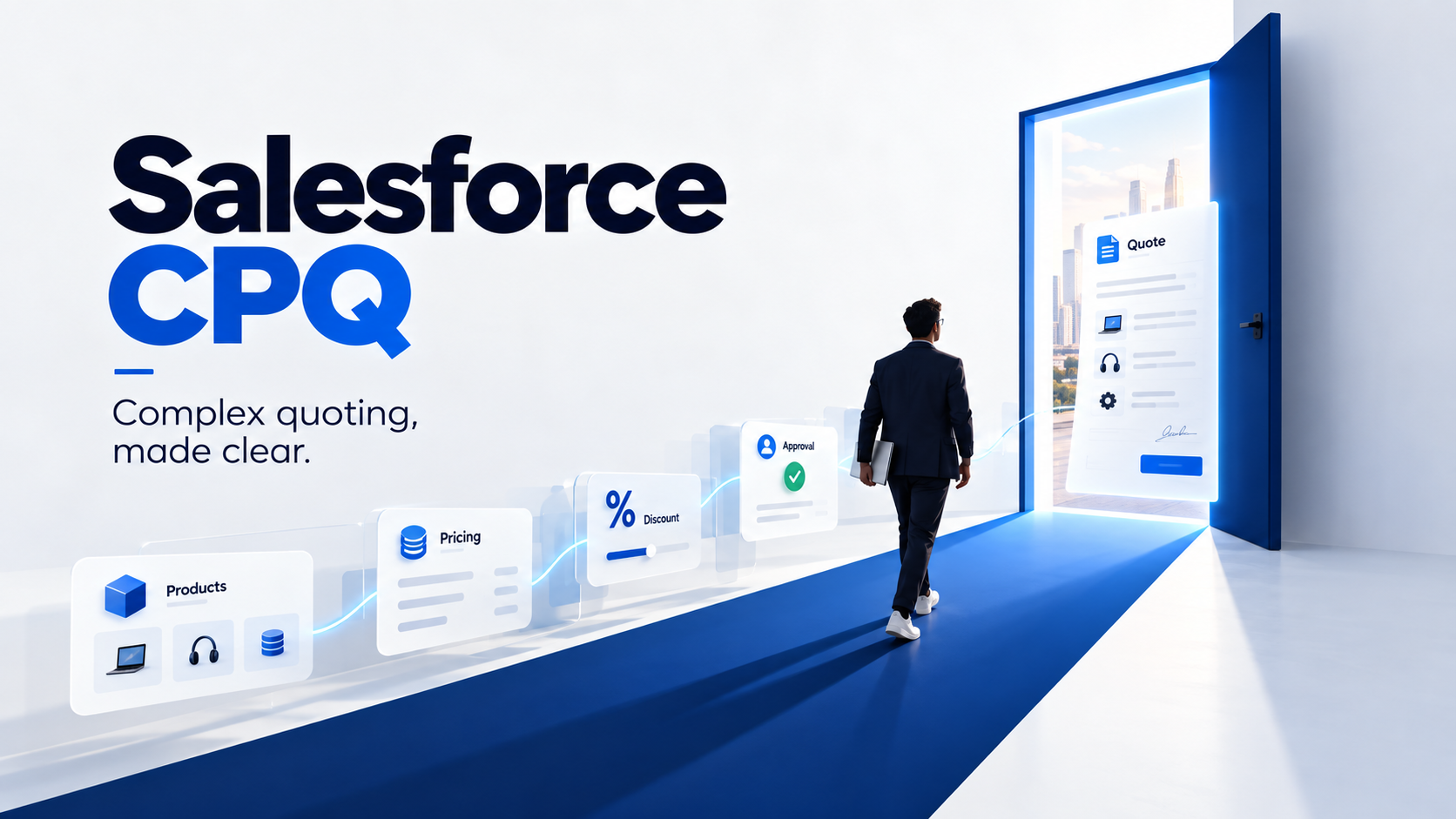
A sales representative receives a request from a customer. They need a few products, a customized package, a special price, plus perhaps a discount because they are buying in volume. On paper, that sounds like a five minute activity to create the quote.
Pick the products.
Enter quantities.
Calculate the price.
Apply the discount.
Send the document.
However, reality does not always work that way.
The moment a business involves configurable products, bundles, subscriptions, add-ons, customer-specific pricing or volume-based discounts in its operations, quoting is much more than a matter of entering numbers into a document. A salesperson has to know which products can be combined, which options are required, how the pricing should behave with quantity, how much discount they are allowed to offer, and when an exception needs approval.
The quote may be the final document the customer sees, but a surprising amount of business logic is behind the scene. This is where the value of Salesforce CPQ comes into view. CPQ (configure, price, quote) is designed to manage the complexities of product configuration, pricing, discounting, approvals, and quote generation, within a connected sales process. The value of CPQ is not simply a faster way of creating a quote. It is a way of bringing structure to the complex decisions that go before a quote arrives in front of a customer.
The Quote Was Never the Real Problem
In a simple, small business with a small product catalog, quoting can be a fairly straightforward exercise. The salesperson selects a product, checks the standard price, adds the required quantity, and sends the proposal.
More complex sales organizations face a different story.
Consider a company that sells enterprise technology solutions. The customer may well want the main platform, plus additional user licenses, implementation services, premium support, security features, training, and several optional modules. Some products may require other products to be included – or may only be available with a particular package. Pricing may also change according to quantity, customer type, contract length, or negotiated terms.
Now the salesperson is not simply creating a quote. They are solving a configuration and pricing puzzle. That is where the manual process can become hard to control. A salesperson may use an old spreadsheet to calculate a discount, consult a product document to understand compatibility, ask a manager whether an exception is allowed, and then manually pass the information onto a proposal. With each additional step, the potential for inconsistency increases. The larger the product catalog, the harder it is for the sales team to remember every rule. Salesforce CPQ provides a way of managing complexity – not as separate rules that apply to each salesperson, but as a structured process around product configuration, pricing, discounting and quoting.
Configure Comes Before Price for a Reason
The first word in the acronym is ‘Configure’ – for which there is very good reason. Before a business can calculate the correct price, it has to know exactly what the customer is buying. Consider a company that sells a complete business technology package. The customer may select the core product, then choose additional storage, support, security, integrations, and user licenses. Some choices may be optional, while others are mandatory.
If the wrong combination is selected, the price can be perfectly calculated and the quote can be commercially incorrect. Salesforce CPQ includes product configuration features such as bundles, product options, and configuration rules, to help sales representatives build the correct product combination. Instead of asking the salesperson to remember every possible relationship between products, CPQ can help guide the selection based on how the company has configured its offerings.
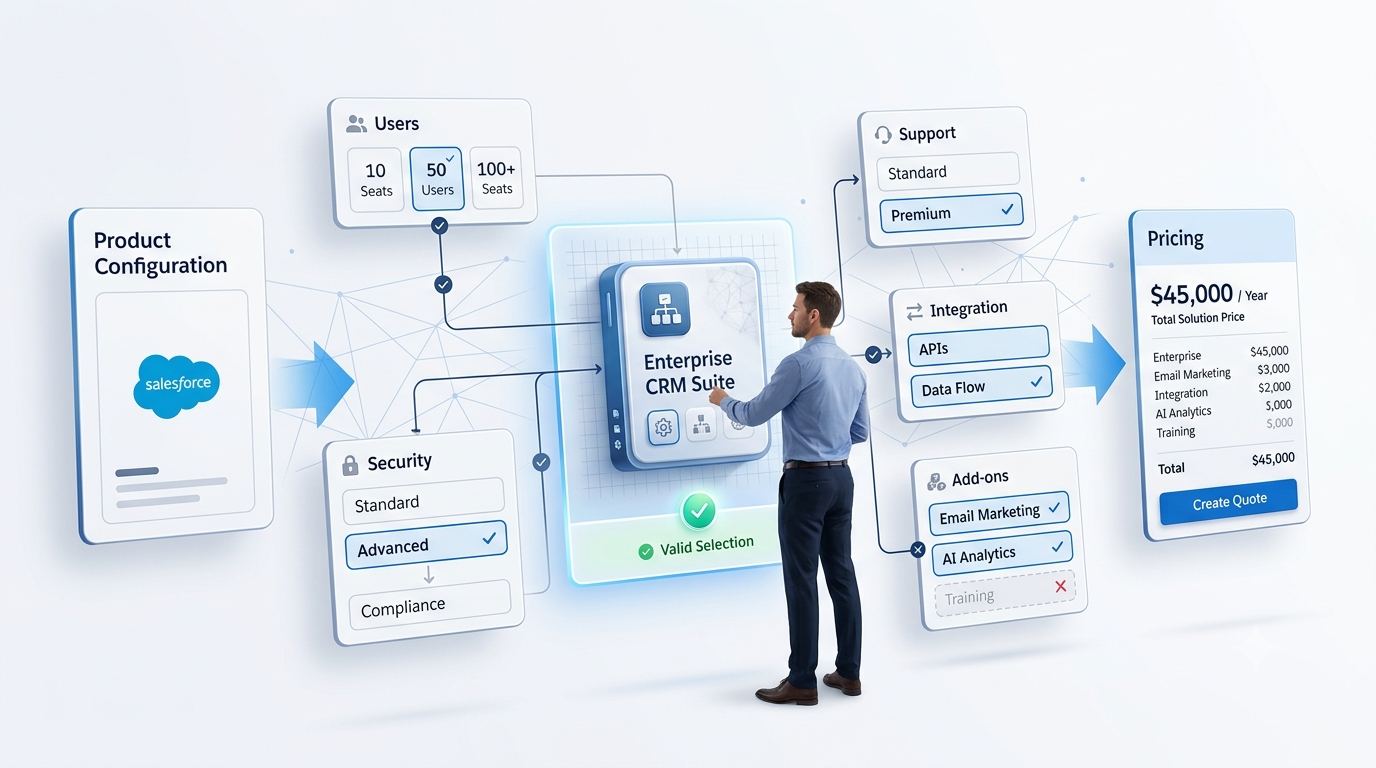
For example, by selecting a particular enterprise package, the salesperson may see compatible support plans and add-ons. By selecting one option, another option may be made required, and yet another option may be made unavailable.
It is here that a practical understanding of CPQ can be invaluable. Understanding the CPQ system is not simply about learning whereabouts one must click. It is also about understanding why a product should be required, optional, compatible, or restricted, within a particular sales scenario.Good quoting begins with getting the product combination right – not with getting the calculator right.
Product Bundles Make Complex Offers Easier to Sell
Bundles are one of the most recognizable ideas within Salesforce CPQ. A bundle allows the business to bring related products together, as a single selling experience. Instead of asking the salesforce to search for every individual component, the business can organize things around the defined offering.
For example, a company that sells office technology may create a workstation bundle that includes a laptop, a monitor, a keyboard, a mouse, a software license, and support package. The salesperson can then configure the bundle according to the customer’s requirements. The important part is not simply about seeing a group of products together – the bundle can reflect how the business actually sells its solution. That way the sales process becomes simpler to understand. It can also reduce the need for salespeople to remember which individual components belong together.
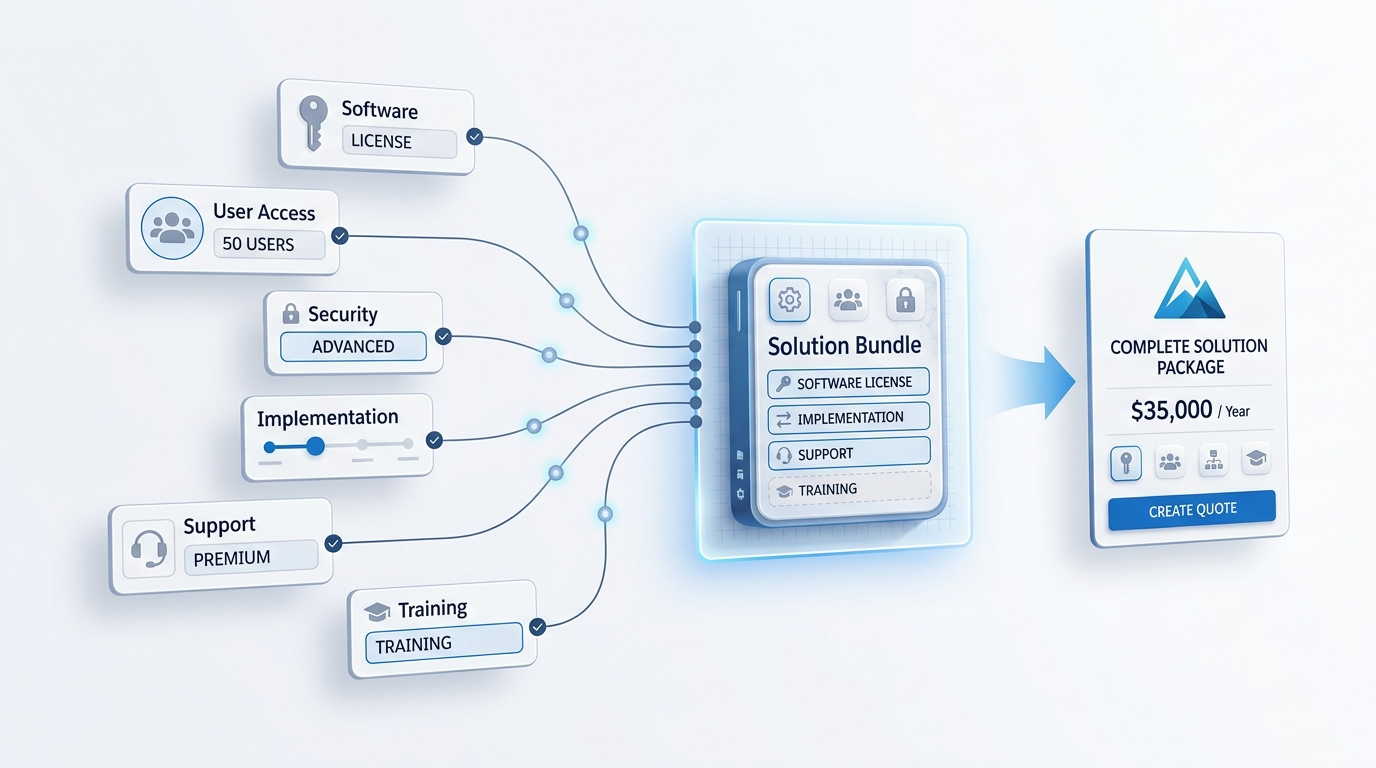
A well-designed bundle turns product complexity into a guided buying decision. That is a particularly useful time saver when a business has dozens or hundreds of products that can be combined in different ways. Rather than asking the sales representatives to become experts in every combination, CPQ can offer a more structured configuration experience. For someone learning the platform, these types of scenarios are also much more valuable than memorizing individual features. A salesforce cpq course becomes much more meaningful when the bundle configuration is connected to an actual requirement – such as building a complete technology package for a customer.
Pricing Gets Complicated Long Before the Customer Sees It
After the products have been configured, the next challenge is to apply the pricing. This is where many quoting processes begin to become uncomfortable. A product may have a standard list price, but it does not necessarily mean every customer pays the same amount. Pricing can be affected by quantity, negotiated agreements, customer-specific prices, bundles, subscription terms, discounts, or other business rules.
Take, for example, another customer ordering 500 licenses instead of 20.
The salesperson should not have to remember a complicated pricing table every time. The pricing logic can be configured so that the quote reflects the appropriate business rule. That means there is a more consistent relationship between the company’s pricing strategy and the quote that is prepared. It also means that the sales teams can see a clearer explanation of where a final price comes from.
In CPQ, pricing is not simply a single figure that is displayed at the end of the quote. It can be the result of multiple pricing decisions working together. When pricing rules are built into the process, the salesperson spends less time calculating – and more time selling. This is one reason that practical learning is so important. Someone studying a salesforce cpq training online should ideally work through realistic pricing situations, rather than just watching a demonstration. Seeing how quantity, pricing rules, and discounts work together makes the logic much easier to understand.
Discounts: Where Sales Flexibility Meets Business Control
Discounting is one of the areas where sales teams need flexibility, but businesses need control. The salesperson may be negotiating with an important customer and need room to adjust the price, while the company may have minimum margins, discount limits or approval policies that cannot be ignored. This is one of the most familiar tensions.
Sales wants speed.
Finance wants control.
Management wants visibility.
The customer wants a competitive offer.
CPQ can bring these requirements together. Pricing and discounting rules can be configured so that sales representatives have appropriate flexibility, while exceptions can be identified and routed through the right processes to get approval. That is important, because not every discount is automatically a problem – the real issue is whether the discount follows the company’s commercial rules.
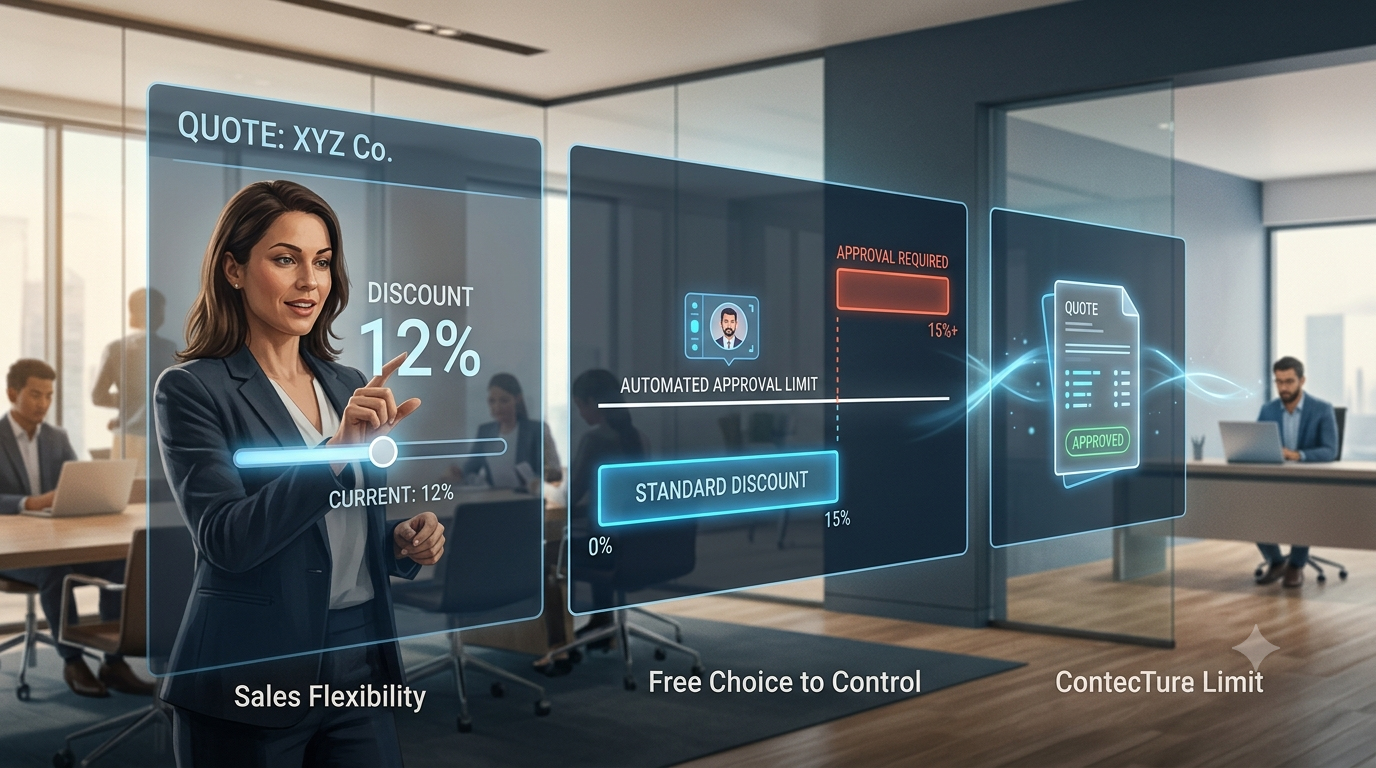
For example, the business may allow a small discount without any approval, but require management to look over a larger discount before it can take place. The system can therefore become a tool for commercial governance – not just a document-generation tool. A good quoting process does not remove sales flexibility – it gives that flexibility boundaries.
The Quote Line Is Where the Logic Becomes Visible
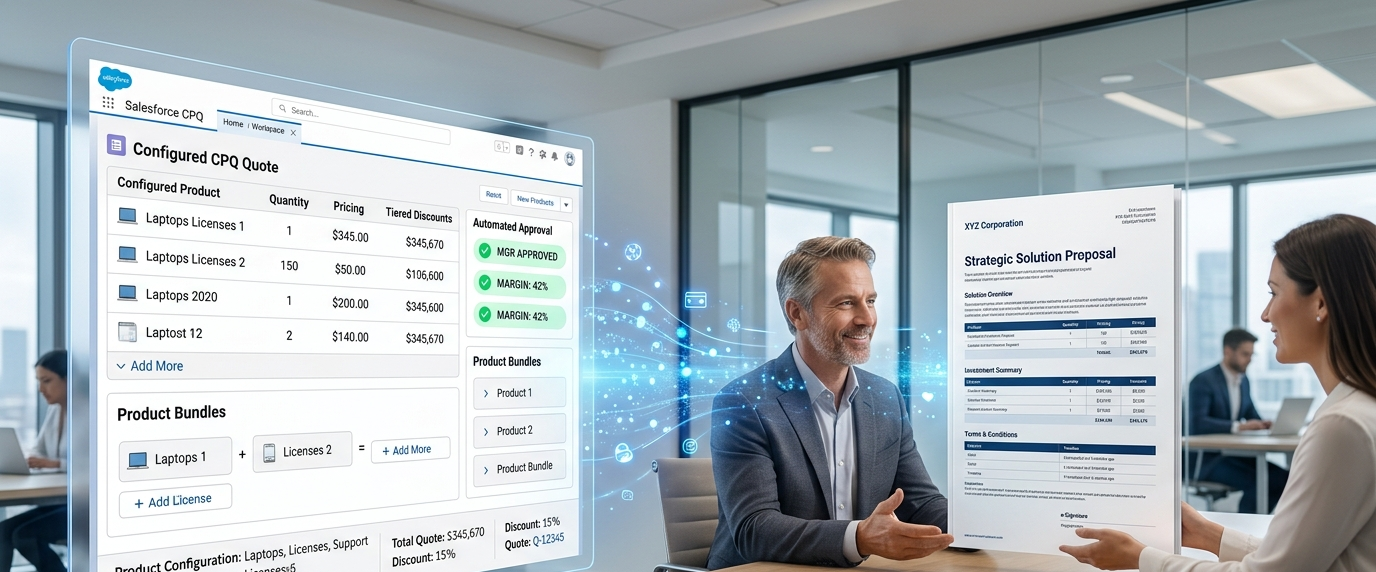
At some point, all this configuration and pricing logic has to be understandable to the salesperson. That is why the quote line experience is so important. Sales representatives need to understand the products that are being included – their quantities, the pricing information, the adjustments being made, and the resulting totals.
A structured quoting interface makes it easier to review exactly what has been configured before the proposal is presented to the customer. For example, looking at a quote that displays ten products: without context, a salesperson may see a list of names and numbers. With a structured approach, they can see the relationship between products, quantities, discounts, and final pricing more clearly. That makes the review process easier before it reaches the customer.
That review stage is important. A quoting mistake discovered internally is an inconvenience, but when it is discovered by the customer it can cause confusion and delay negotiations. The objective is not just to generate a quote quickly. It is to make the quote simpler to understand and to review before it leaves the organization.
Pricing Rules Can Handle More Than Simple Discounts
Not all pricing requirements can be satisfied by simply entering a percentage discount. Businesses tend to have more complicated commercial models. Perhaps a product’s price changes according to quantity. Perhaps an add-on is priced as a percentage of another product. Perhaps a particular combination triggers a different price. Perhaps a customer has negotiated pricing that differs from the standard price.
This is where CPQ begins to resemble a commercial decision engine.
The salesperson has the customer relationship, but the system can handle the repetitive logic in the background. That is an important distinction. Automation does not necessarily mean removing the salesperson from the process – it means removing unnecessary manual work from the salesperson’s process. A learner working through CPQ concepts should therefore focus on the logic behind pricing – not simply memorizing different pricing options. The real question is always: what business situation is this pricing rule designed to solve? The best form of automation is often the work that the salesperson does not have to think about.
Optional Products Can Change the Way a Quote Is Presented
Sales conversations tend to extend far beyond a single package. The salesperson may want to recommend an additional service, an upgraded support plan, or a different product – without requiring the customer to pay for all of it immediately. This creates an important distinction between what the customer is buying and what they are considering. Take, for example, a quote that includes a core software package as the main purchase, and premium support as an optional addition. That way, instead of presenting every possible product to the customer as if they have already agreed to purchase it, the salesperson can separate the committed solution from the additional recommendations.
It may seem like a small detail, but it can make the commercial conversation feel much more thoughtful.
This is also a good example of why CPQ should be understood as a sales process – and not simply as a quoting screen. The process is all about organizing the offer around the customer’s buying scenario.
Approval Should Happen Before the Customer Gets the Quote
One of the easiest ways for a sales process to become messy is to treat approvals as an afterthought. The sales person negotiates a large discount, sends the quote to the customer immediately, and later discovers that the discount was outside the approved range. Now the business has a problem with the customer. Changing the price after the quote is sent can prove to be an uncomfortable conversation. A better system is to identify the exceptions before the quote reaches the customer. The CPQ can be configured to meet approval requirements, so that particular pricing or quoting conditions receive the necessary review.
This is particularly relevant when organizations have formal pricing authority structures. The junior salesperson may have one discount limit, while the senior account executive may have another. An account executive may follow a different commercial policy altogether. The exact rules will be different from organization to organization, but this principle remains the same: approval works best when it is part of the quoting workflow – and not a rescue operation after the quote has been sent.
From Quote to Customer Proposal
A quote is not only a calculation – it is also a communication tool. The customer requires understanding of what they are buying, as well as the structure of the offer, the cost, and the terms that apply. This is why the transition from internal quote data to customer-facing proposal matters. A well-structured CPQ process can bring together the configured products, quantities, pricing, discounts, and relevant commercial information that form the basis of the customer proposal. Think of the process as two different perspectives. Inside the organization, the quote contains the business logic. Outside the organization, the proposal needs to tell a clear commercial story.
The customer does not need to understand every pricing rule running behind the scenes – they need to understand the final offer. Customers may never see your CPQ system, but they experience the accuracy that it brings. This is one reason that quoting technology has an impact beyond the sales department.
Salesforce CPQ Is More Useful When Sales Data Stays Connected
A quoting process becomes even more valuable when it is connected to the wider sales workflow. Rather than moving information manually between disconnected systems, the process can follow along a connected path:
Opportunity → Product Configuration → Pricing → Discounting → Approval → Quote → Contract
That creates continuity. The opportunity contains the sales context. The CPQ process defines what is being sold and how it should be priced. The approval process manages exceptions. The resulting quote represents the commercial offer. This broad connection is vital because a quote is rarely the end of a business transaction. After the customer has accepted an offer, the information may need to influence ordering, contracting, billing, renewals, or revenue operations. The more accurately the original configuration is captured, the less opportunity there is for downstream teams to reinterpret what the customer actually purchased. A connected quoting process protects the information created in the sale – instead of making every department re-create it.
The Real Skill Is Understanding Why the Rules Exist
For somebody entering the Salesforce ecosystem, learning CPQ is not simply a matter of memorizing the buttons and the screens.
The more useful skill is to understand why the configuration exists.
Why does the company use a bundle?
Why should a product be mandatory?
Why should one discount require approval, while another does not?
Why does a particular customer receive contracted pricing?
Why should an optional product remain outside the main quote total?
These questions link technical configuration to actual business operations.
This is where hands-on practice is especially important – instead of simply learning what a feature does, learners can begin by looking at the commercial problem, then ask which CPQ capability could solve it. A person who understands this connection can look at a new, unfamiliar quoting requirement much more confidently, because they are not relying on memorized steps.
Learn the business logic first and the platform becomes much easier to understand.
Why Hands-On Practice Matters
Read about CPQ and you can understand concepts. However, hands-on practice reveals exactly where concepts intersect. The learner can understand what a bundle is, but configuring a bundle introduces questions about options, features, required products, configuration rules, pricing, and the behavior of the resulting quote lines. The same type of thinking applies to pricing: it is easy to understand the phrase automated pricing, but it is much more useful to see how different pricing methods affect the final quote.
This is why a practical learning approach matters, whether somebody is studying on their own, or taking a salesforce cpq online training, or building their experience in a real Salesforce environment. An exercise could begin with a simple customer requirement and build complexity: start with a base product. Then add optional products. Then introduce quantity-based pricing. Then apply a discount. Then add an approval condition. Then look at the final quote. Suddenly, the individual CPQ concepts start to behave like parts of one system. The objective should be simple: by the end of the learning process, you should be able to look at a complicated sales requirement, and understand how it could be represented within CPQ.
The Biggest Shift: From Manual Quoting to Repeatable Selling
The most interesting thing about Salesforce CPQ is that its value is realized when the sales process becomes more complicated. A small business with ten products and one pricing model, may not have much quoting complexity.But an enterprise with hundreds of products, configurable bundles, customer-specific pricing, subscription offerings, discount policies, and approval requirements has a completely different challenge. At that point, the reliance on memory, spreadsheets, emails, and manual calculations can
become extremely difficult to scale.
salesforce cpq training provides a way of turning repeated commercial decisions into defined processes. This is not a reason to automate every decision – some negotiations will always require human judgment, and strategic customers may require customized agreements. The salespeople may need to make exceptions based on circumstances that cannot always be reduced to a simple rule. The objective is not to eliminate judgment, but to make the routine parts predictable, so that human attention can be focused where it matters. When routine decisions become rules, sales teams can spend less time managing the mechanics of a quote, and more time managing the relationship.