
Securing Red Hat OpenShift via Identity Providers, Zero-Trust Controls, and Fine-Grained Governance
Last updated on Aug 18, 2026
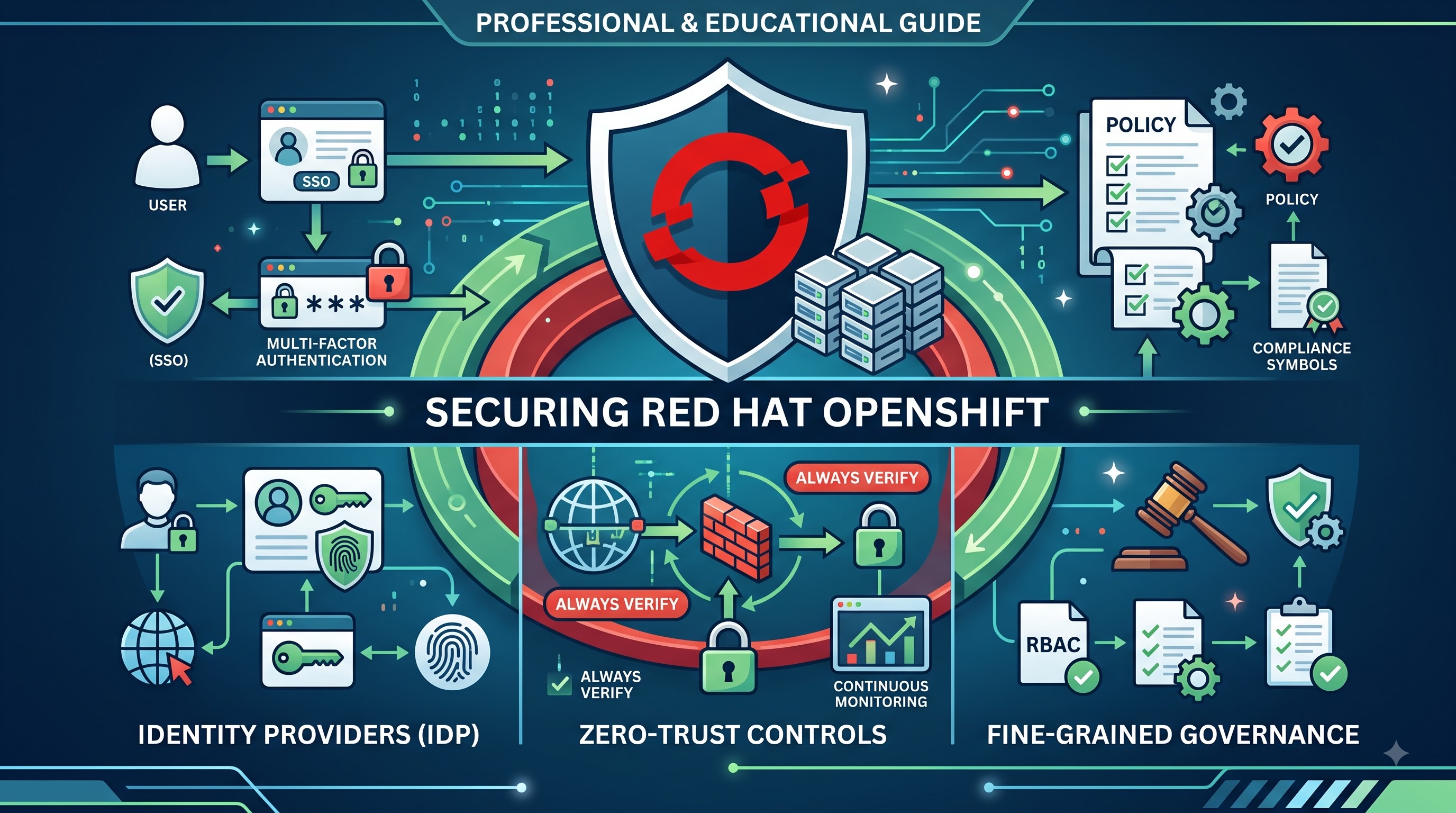
The potential of container orchestration technology is now being acknowledged in business architecture, as a result of the transformation of orchestration tools from mere deployment apparatuses to full-fledged ecosystems for software delivery. The leading company in this process is Red Hat because it successfully created its OpenShift platform as a composite layer on top of Kubernetes. However, the transition from isolated development systems to multi-tenant mission-critical platforms raises issues of access control and security. Security in OpenShift should not be solved in the way perimeter firewalls usually do, but rather needs to be considered more deeply in the universe of architecture, where identity verification and privilege authorization algorithms should be embedded in microservices, APIs, and deployment processes
At the core of security within OpenShift, there is a clear conceptual distinction between two levels, namely Authentication (the process of recognizing who has access to the system) and Authorization (the process of determining what an authorized person can perform). Rather than obliging customers to manage different user accounts within the architecture of the container technology itself, OpenShift is armed with a built-in OAuth protocol that provides the means for interaction with enterprise directories and identity providers.
The OAuth Core and OpenShift Authentication Architecture
Any command issued through the oc command-line interface, any clicks made through the OpenShift Web Console, and any deployment made through an automated CI/CD system are finally made by means of an HTTP call directed to the OpenShift API server. The API server cannot determine whether the operation is allowed to take place before it has established that the entity is legitimate. OpenShift natively has built-in what is called enterprise authentication system in its control plane that makes use of bearer tokens to deal with requests afterward.
Whenever someone tries to create a session with no credentials, the OAuth server will start a staged challenge. Instead of storing passwords and sensitive authentication information in the cluster’s internal state, the OAuth server functions as a middleman. The OAuth server issues a call to login and sends the entity to a defined backend authentication provider, evaluates the gesture received, and issues a token that is valid for the entire cluster and has been cryptographically signed.
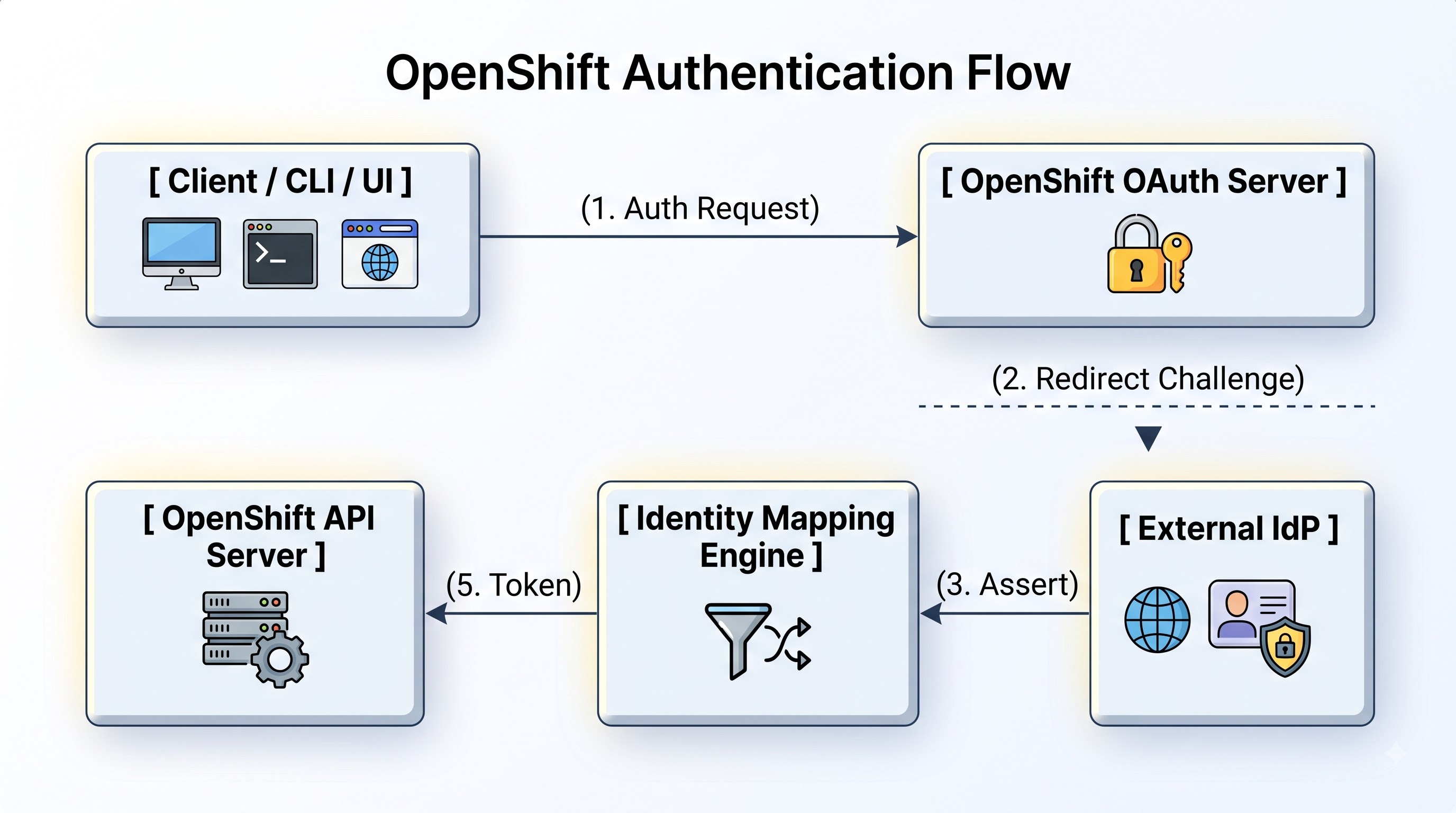
Understanding this multi-stage workflow is essential for system administrators and cloud engineers. Teams seeking to build internal expertise in these production deployment patterns frequently enroll in an openshift online training program to master cluster authentication mechanics and complex infrastructure integrations.
Breaking Down External Identity Providers
To prevent the need for separate credential databases, OpenShift combines its identity verification processes with services that the enterprises already deploy. The platform permits a variety of Identity Providers, thus empowering companies to apply uniform Single Sign-On (SSO) and Multi-Factor Authentication (MFA) strategies across their system.
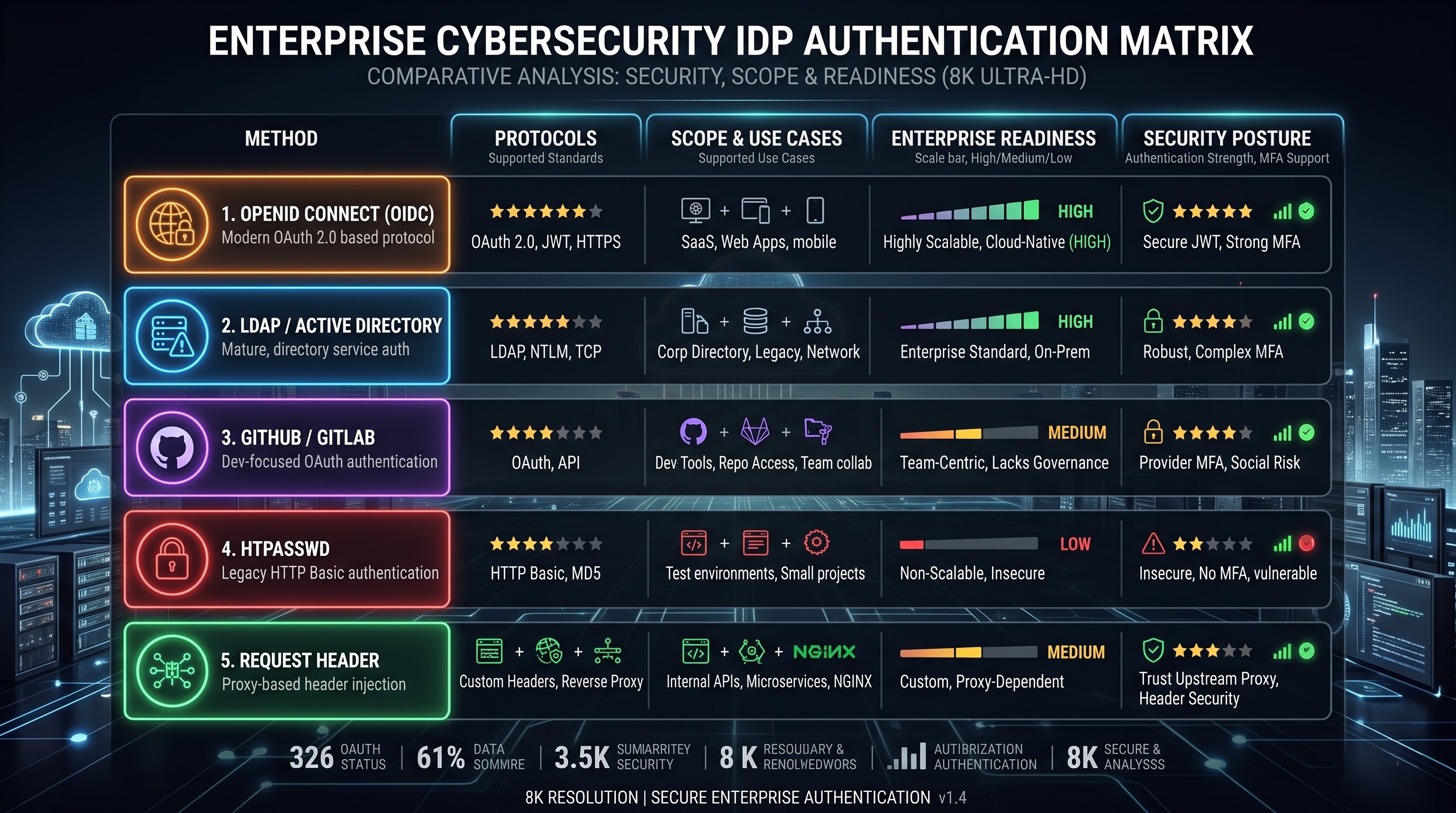
While choosing and setting up the Identity Providers, administrators need to think about mapping identity properly. There are four key ways in OpenShift to map external identities to internal cluster user identities:
Claim (Default): It is the default approach to mapping. The new User object is created if the login via the external provider is successful and the username is absent in OpenShift. If the username already exists under another provider's identity, the authentication will not go through.
Lookup: It is a strict approach that is alternatively known as the zero trust model. It means that the internal User object must exist and be previously linked to the external identity.
Generate: This option helps to avoid duplication of usernames of the existing users. The identity provider's name is put in front of the original external username, thus creating a unique internal name (e.g., okta
User, Identity, and Group Object Management
When authentication is completed, OpenShift makes use of three uniquely defined API custom resources: Users, Identities and Groups to maintain the state of sessions and their access rights.
The User resource refers to an actor operating inside the system which can be either a human developer, system administrator or an external auditor. The identity resource shows the credentials mapping received from the external IdP. One User resource may link to multiple Identity resources allowing one engineer to log in through the enterprise Active Directory during normal operation and through a backup OIDC during an outage in the directory.
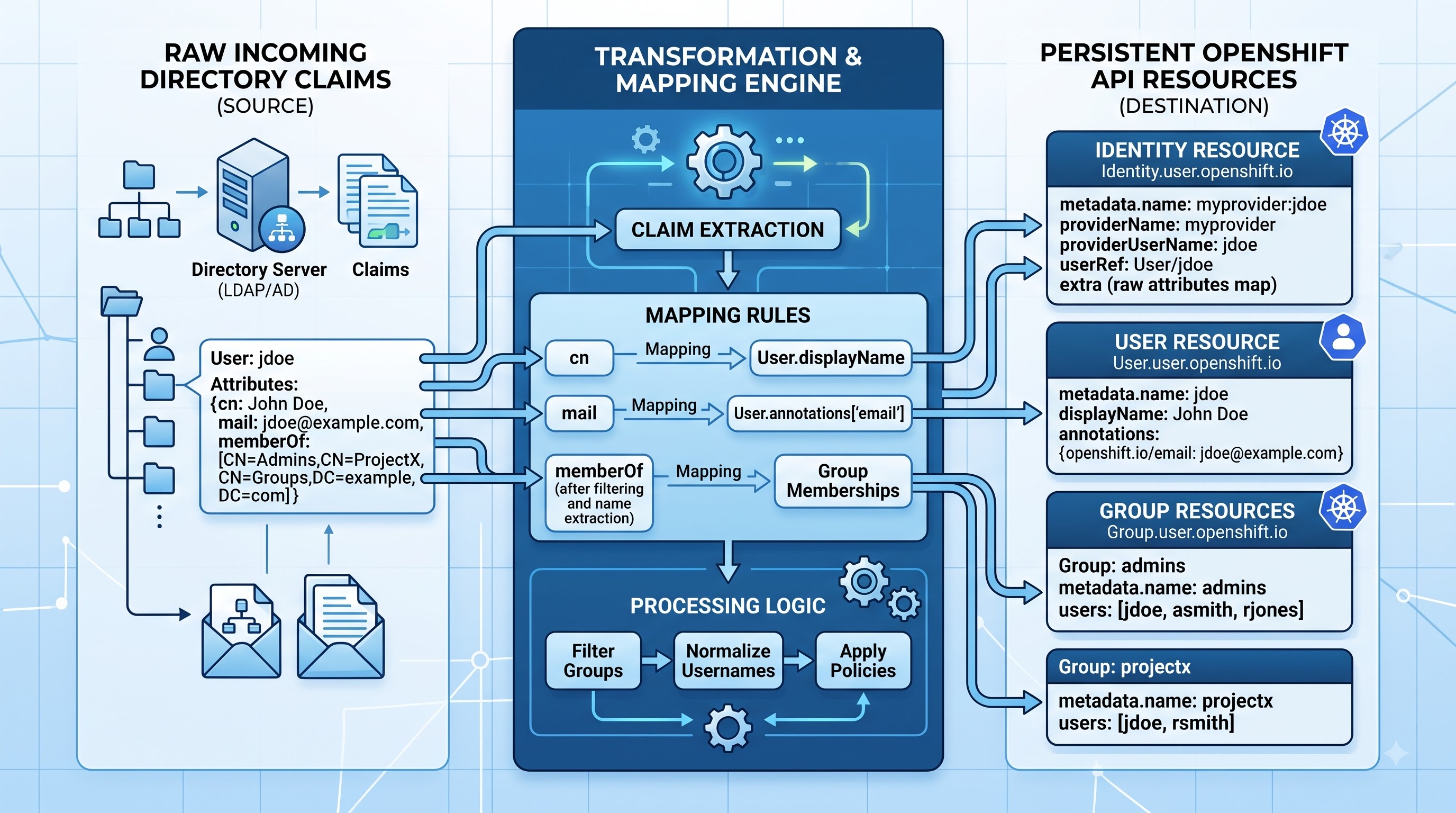
It is a cumbersome process to provide access at the individual user level calling for excessive operational effort and raising auditing risks. Therefore it is prescribed in organizations’ security policies that permissions are to be associated with Group resources and not Users anymore. OpenShift implements an automated way of synchronizing the groups in the background. Administrators can set up background controllers to frequently request information from LDAP and Active Directory servers in order to receive lists of group members for populating the OpenShift group objects automatically. Whenever an employee changes the department or leaves the company, his
Engineers aiming to master these enterprise lifecycle automation architectures often seek out structured learning paths, choosing a dedicated openshift course online to gain hands-on experience in production sync controllers and identity federation pipelines.
Service Accounts and Machine Authentication
Even though human users authenticate themselves via an OAuth system, an automated workload requires a separate identity verification system for machines. The OpenShift platform uses Service Accounts for automated interactions between machines, such as Continuous Integration and Continuous Delivery pipelines, monitoring tools, and communication between microservices.
The Service Accounts exist only in the specific namespaces and possess limited access permissions. The recent versions of OpenShift (from version 4.x and later) have done away with the long-duration service account tokens and opted for short-lived bounded tokens. The latter represent a new way of making use of Service Account Token Volume Projection technology which issues signed JWTs.
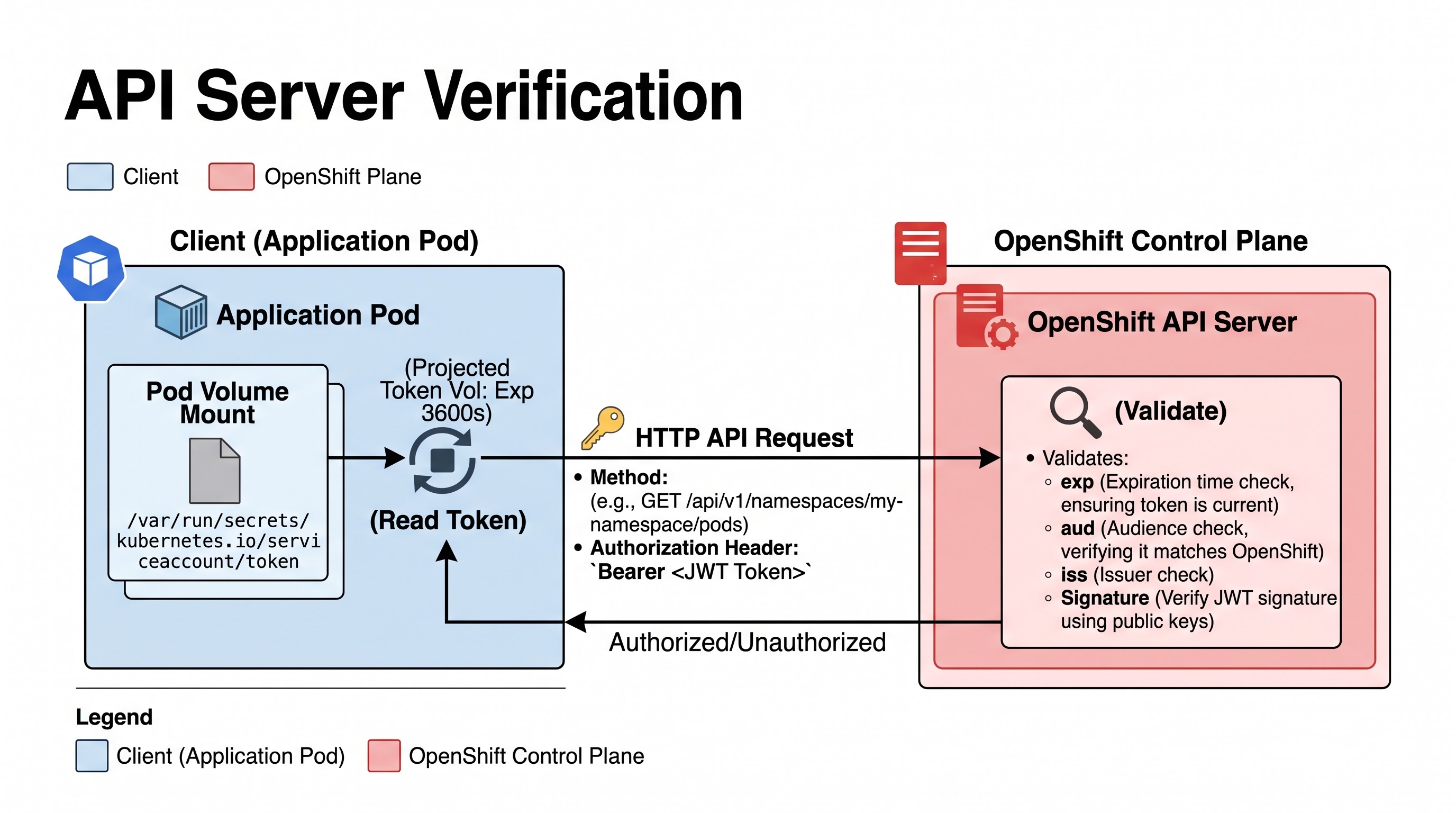
Due to the audience authorization and strict expiration time requirements, the OpenShift service accounts do not allow token hacking activities to occur. If the service account token has been stolen, but the corresponding machine is subject to an attack, the token will immediately become useless and no switching to another application instance will be made.
The Mechanisms of RBAC
When the API server confirms an identity (that could be a person or a service account), then the process of authentication goes to the Authorization mechanism. OpenShift makes use of a fine granularity RBAC mechanism to regulate access to resources of the cluster.
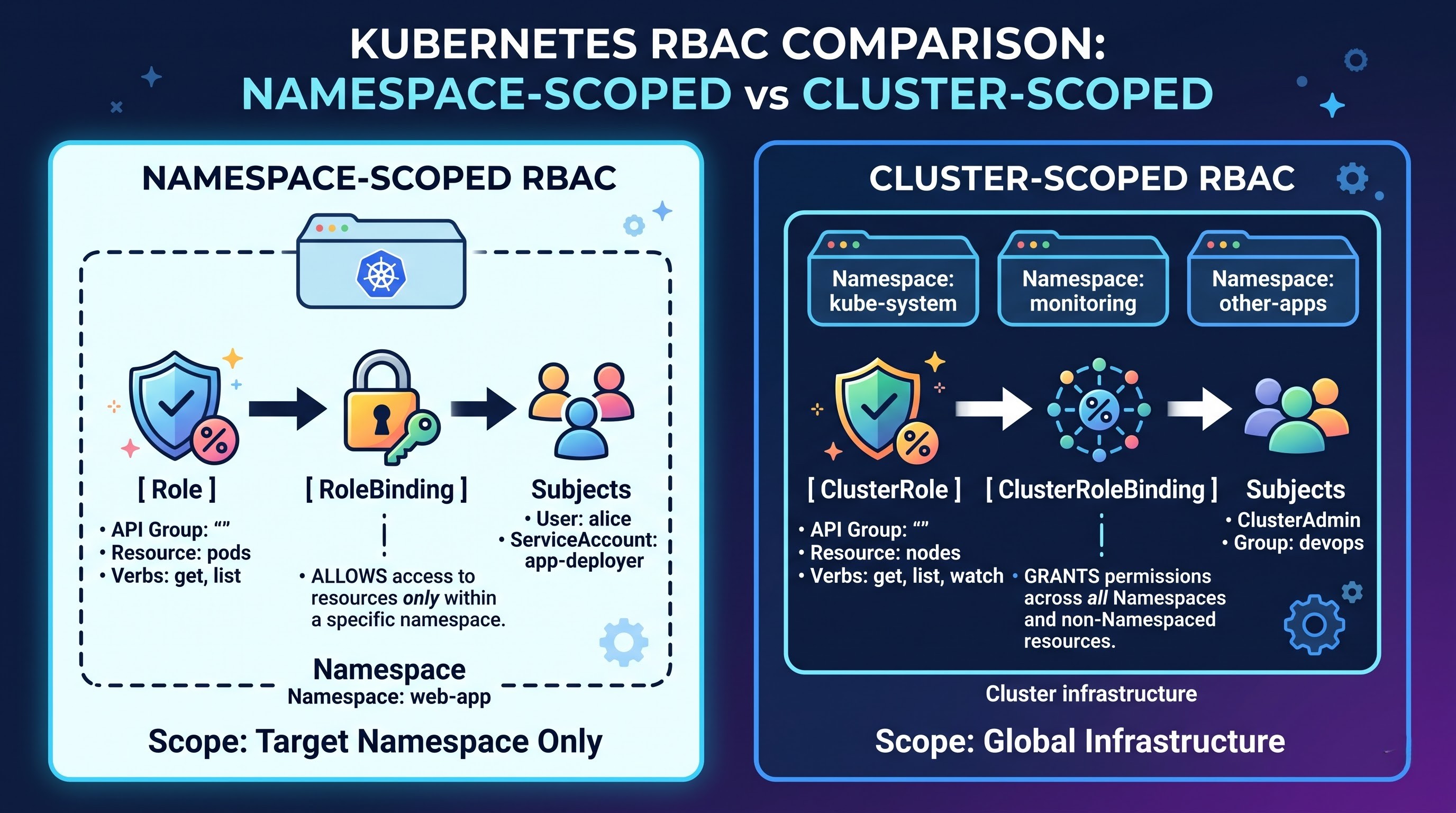
At its core, RBAC considers three elements: Subject (the entity asking), API Resource (the target object being accessed), and Verb (the action being performed). The three elements are linked through four main constructs on the API:
Roles: resources, which indicate the permissions available for specific resources.
Cluster Roles: resources that comprise all the rules for all namespaces; infrastructure resources such as compute nodes, storage classes, and CRDs are included too.
Role Bindings: declarative assignments of granting the permissions stated in a Role (or Cluster Role) for a group of subjects in one specific target namespace.
Cluster Role Bindings: declarative assignments of granting the permissions outlined in a Cluster Role to subjects across a whole cluster in all possible namespaces. namespaces.
admin: Allows for complete administrative powers within a namespace. This includes local Role Binding management and permission passing.
edit: Allows for access to the application workload resources. This includes the ability to read and write to components such as pods, deployments, services, and secrets. However, it does not allow for modification of RBAC bindings or security context constraints.
view: Allows for reading of workloads within a namespace but makes information in secrets private.
To adapt the least privilege model, the security teams should come up with customized roles. For example, developers usually do not require full edit access to secret information in production and instead, they can be given pods and deployment summaries for logs to avoid any possible errors in credential retrieval. These security configurations and administrative boundaries forms a core pillar of the official redhat openshift course curriculum, preparing platform architects to build secure, multi-tenant enterprise environments.
Security Enhancements After Installation and Zero-Trust Roadmap
Installation with default OpenShift settings does determine initial configuration accounts that should be changed before putting into production. New clusters need to follow the strict security enhancement road map.
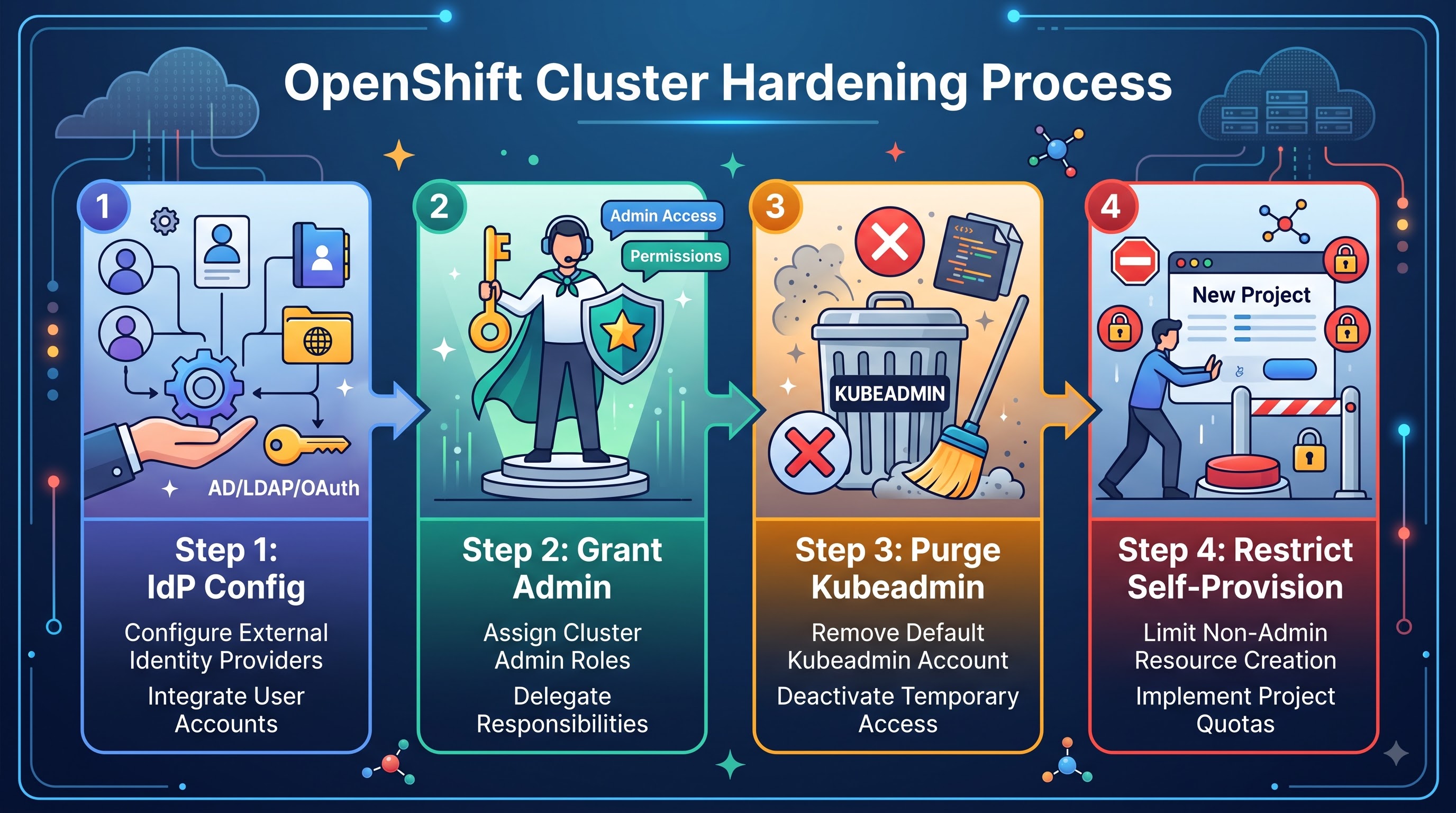
Phase 1: Canceling the Bootstrap Admin Access.
During installation, OpenShift creates a temporary administrative account kubeadmin with a static password saved in kube-system namespace. Keeping this account alive poses serious security problems since it doesn’t require MFA authentication and doesn’t provide individual identification logs for auditing purposes.
The cancellation process consists of three actions: first, to set up the enterprise Identity Provider; second, to assign the role of cluster-admin to the enterprise identity group and ensure full administrative access; third, to delete the kubeadmin secret from the cluster. Deleting this secret means that the bootstrap login endpoint stops existing. All later administrative access will be possible only through the enterprise identity authentication method.
Phase 2: Limiting Default Self-Provisioning
The self-provisioner cluster role binding permits any authenticated user to create projects and namespaces by default in OpenShift. Unrestricted project creation can result in resource depletion, uncontrolled proliferation, and untracked security exposure in enterprise-managed environments.
To address the issue, administrators must disable the self-provisioners ClusterRoleBinding from the system:authenticated:oauth group. After disabling the self-provisioning feature, all project requests will go through a ticketing system, a GitOps approval pipeline, or a special engineering account to make sure that every new namespace complies with organizational network policies.
Phase 3: Managing OAuth Session and Token Lifetime
Policies concerning token lifecycle will limit exposure from compromised developer workstations or access tokens. OpenShift OAuth tokens are usually valid for 24 hours, but security hardening requires such time to be cut shorter (for example, 8 hours to match standard working shifts or 1-2 hours in high-security conditions) and the OpenShift Web Console to be configured for absolute inactivity timeouts.
Advanced Audit Logging and Privilege Escalation Monitoring
Creating identity controls and rules for role-based access helps in fulfilling basic security needs, but effective operational security needs constant checking. By offering complicated logging systems, OpenShift avoids concerns regarding safe transactions.
The logging utility keeps track and stores every request sent to the API server. Logs are grouped into four types of policy based on the data subject to logging:
None: No logging is performed, and information concerning frequent events in the system is omitted.
Metadata: Only basic request information (user, date, resource, namespace) is logged without involving any specific request or response data. This policy is suitable for everyday routine compliance checking.
Request: Apart from receiving the same information as the previous policy, this one also includes the details about what was sent with the request.
Request Response: This policy provides full information about all operations performed, being crucial in monitoring RBAC rules, security context constraints, and secret information.
Audit logs must send to a central Security Information and Event Management (SIEM) system (for instance, Splunk, Elastic, or Datadog). Security operations teams can create auto-notifications with regards to unauthorized privilege elevation attempts, for example, users attempting to list sensitive data from the protected namespaces or triggering prohibited actions on cluster roles.
Implementation Roadmap & Operational Excellence
Transitioning from identity strategy design to continuous governance requires an actionable operational playbook. Successfully securing Red Hat OpenShift across complex hybrid environments demands structured lifecycle management, rigorous monitoring, and automated policy enforcement to eliminate security drift over time.
Phase 1: Zero-Trust Foundation & Identity Integration
Centralize Identity Authentication: Configure OpenID Connect (OIDC) through primary enterprise IdPs (e.g., Keycloak, Entra ID) to enforce Single Sign-On (SSO) and mandatory Multi-Factor Authentication (MFA).
Automate User & Group Syncing: Establish SCIM (System for Cross-domain Identity Management) synchronization to ensure role and group changes in the central identity provider immediately mirror within OpenShift RBAC permissions.
Integrate Key Management Systems (KMS): Encrypt sensitive cluster configuration data at rest using external KMS platforms (e.g., HashiCorp Vault, AWS KMS) before deploying initial workloads.
Phase 2: Fine-Grained Access Controls & Network Microsegmentation
Implement Least-Privilege RBAC: Restrict cluster admin access by defining granular RoleBindings and ClusterRoleBindings anchored strictly to team-specific identity groups rather than individual user accounts.
Deploy Default Network Policies: Establish a strict default-deny network posture across all namespaces to restrict ingress and egress traffic between isolated microservices.
Enforce Pod Security Standards (PSS): Apply built-in restricted Pod Security Admission controls cluster-wide to prevent containers from running as root, mounting host paths, or accessing privileged host namespaces.
Phase 3: Continuous Governance, Observability & Auditing
Policy-as-Code Automation: Integrate policy engine tools such as Kyverno or Open Policy Agent (OPA) Gatekeeper to continuously audit and block non-compliant resource deployments in real time.
Streamline Audit Logging: Export OpenShift API server and audit logs directly to a centralized SIEM (e.g., Splunk, Datadog) for automated security event analysis and anomaly detection.
Automate Secret Management: Replaces static cluster secrets with dynamic, auto-rotated short-lived credentials via external secret operators and service account token projection.
Conclusion
It is critical to formulate a thorough operational strategy for safeguarding Red Hat OpenShift that goes beyond simple perimeter defense. Organizations are able to create a resilient and robust multi-tenant cloud platform by separating the identity management function through corporation-wide OAuth federation, automating group synchronization, implementing well-defined and strict service account controls, and developing RBAC roles based on the principle of least privilege.
As container usage continues to increase in regulated industries, it is vital for cloud engineers, infrastructure architects, and platform security experts to understand all aspects of authentication, access control, and post-installation hardening processes.