
ServiceNow Career in 2026: Is It Worth It? Complete Guide
Last updated on Nov 16, 2026
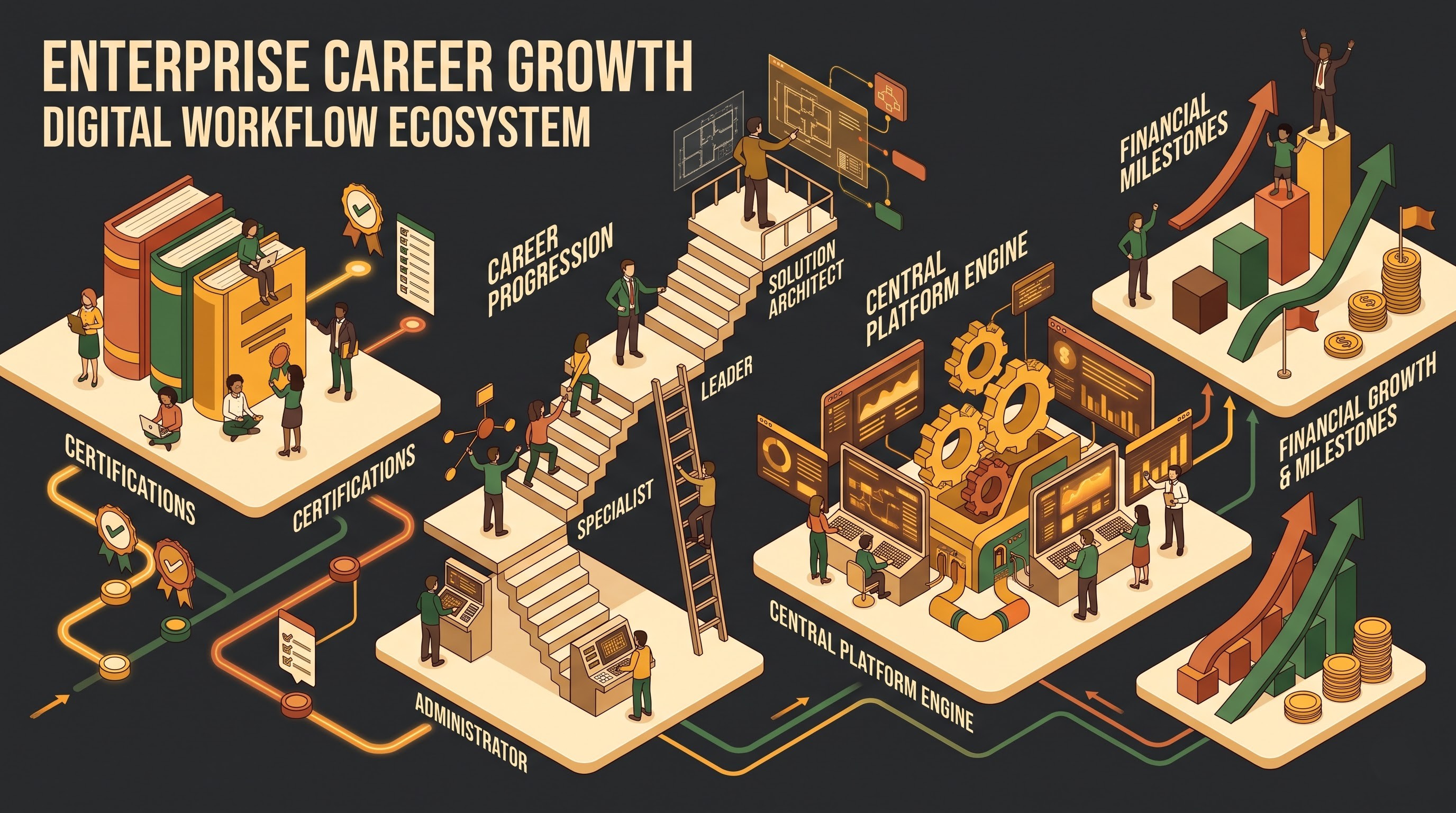
The enterprise technology landscape is constantly changing, but few platforms today provide the deep, structural integration that ServiceNow offers. More than 85 percent of Fortune 500 companies use ServiceNow to run their internal operations, workflows and digital transformation. It's become the nervous system of modern corporate IT and business ops. Subscription revenue is growing exponentially now has crossed $15.5 billion.
And for the professionals looking for their next career move, upskilling path or long-term specialisation, a platform-centric career is about looking beyond the short-term hype cycles. In this day and age when automation and artificial intelligence are advancing by leaps and bounds, it is only fair for professionals to question if platform specialisations like ServiceNow are safe, financially promising and sustainable in the long run. This comprehensive analysis encompasses all things related to a career in ServiceNow today – from market demand, salary benchmarks, core roles, future-proofing against automation and actionable steps to either enter or grow within the ecosystem.
ServiceNow Ecosystem Today

To understand why ServiceNow is still a great career choice, you need to look at its growing footprint inside enterprise organisations. Originally, ServiceNow was best known as an IT Service Management (ITSM) tool for logging incidents, managing changes, and tracking service requests, but it has since evolved into a full platform-as-a-service (PaaS) engine.
Today, organisations are leveraging the Now Platform beyond IT to automate workflows across Human Resources Service Delivery (HRSD), Customer Service Management (CSM), Security Operations (SecOps), Governance, Risk and Compliance (GRC), and IT Operations Management (ITOM. These modules dig deep into the core operations of large enterprises and therefore ServiceNow implementations are rarely skin-deep. They need to be highly customised, continuously maintained, aligned cross departments and the architecture needs to be continuously built.
This deep embedding in the enterprise creates huge “contract stickiness”.” But when a multinational corporation builds its entire employee onboarding workflow, security incident response and cloud infrastructure mapping on top of ServiceNow, it becomes economically prohibitive to rip it out or replace it. Which is why companies still hire dedicated ServiceNow professionals no matter the economy. They aren’t optional tech expenditures, but rather critical operational guardians.
Enterprise Workflow Market Evolution
The enterprise software market has seen a dramatic change in dynamics over the last decade. For decades, enterprises have been building point solutions: software tools siloed for human resources, customer relationship management, cybersecurity incident logging, and project management. This siloed approach created tremendous operational friction as teams had to manually bridge the gap between disparate databases.
ServiceNow threw itself right in the middle of all this chaos with one layer of workflow. The platform removed the complexity and allowed various corporate departments to talk to each other through a single pane of glass, saving thousands of hours of manual admin work. For career professionals, this means that ServiceNow is no longer handling IT support tickets. It’s about rethinking how modern corporations operate, communicate and scale.
Organisations that have moved beyond the first cloud migrations in their digital transformation journeys are focusing hard on hyper-automation. They want customer interactions to be tied directly to back-end engineering teams, to provision cloud infrastructure automatically as soon as an HR request is approved and to ensure absolute regulatory compliance on every automated handoff. This macro-trend means that people who know how to wire these complicated workflows together will always be in demand.
Major Careers and Career Paths
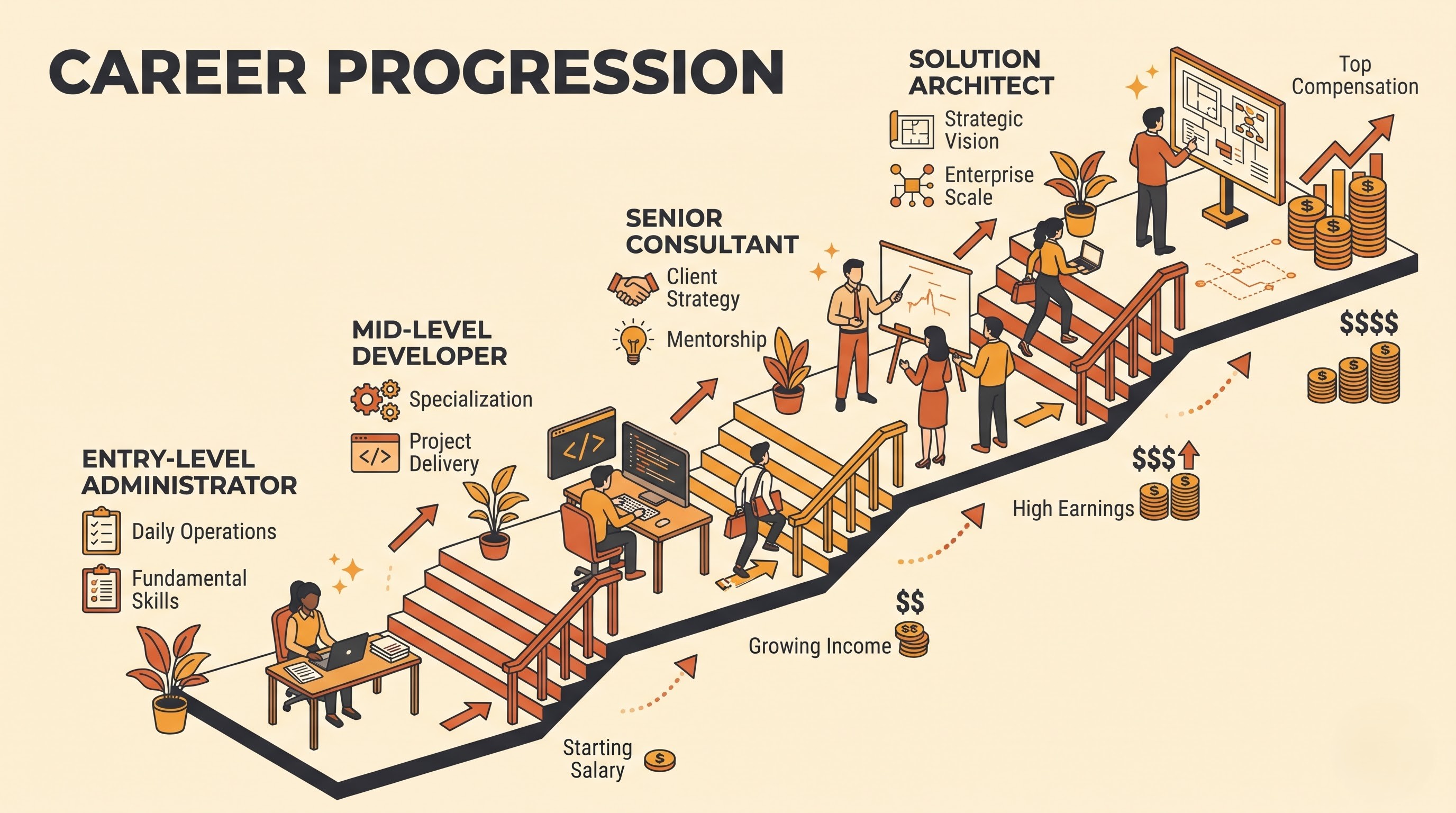
The ServiceNow ecosystem has well defined and structured paths that can be customised for different backgrounds, if you want to be a low-code platform admin, a complex software developer, a business analyst or a high-level architect.
1. ServiceNow Admin
The first point of entry is the administrator track, where many professionals come into the ecosystem. The ServiceNow Administrators are responsible for the day to day configuration of the platform, user access, role assignment, system upgrades and basic workflow maintenance. They connect the out-of-the-box platform capabilities to the business needs. Administration is very much about understanding platform logic rather than writing deep application code from scratch which makes it attractive to professionals transitioning from traditional IT support, system administration or business analysis.
2. ServiceNow Developer Vacancies
Also the developer track has a good technical engagement and better earning potential for those who are good at coding and solving problems. ServiceNow Developers create custom applications by writing business rules, client scripts, script includes and integrating third party systems using REST APIs and web services. The platform is built using its own JavaScript framework, and developers use modern web technologies to build intuitive user experiences.
3. Business Analyst & Implementation Consultant
Enterprise software rarely fails because of bad code. More often it fails because the developers and administrators don't really know what the business needs. The bridge is the Business Analysts and Implementation Consultants. They collect requirements, model business processes and convert corporate workflows into structured design specifications for the platform. These roles demand good communication, stakeholder management and an understanding of other departments and how they work.
4. Technical Architects & Solutions
At the senior level, Solution Architects and Certified Technical Architects (CTAs) are responsible for the long term architectural integrity of large enterprise deployments. They build multi-module integrations, ensure scalability, manage security compliance and counsel executive leadership on how to maximise the return on investment of their ServiceNow licenses. These are jobs that require years of expertise in many areas and pay top dollar.
Deep Explore the Niche
As the platform has matured within the corporation, sub-communities have emerged around particular functional modules. The trick is to move into these niche markets with high demand and can exponentially increase your market value.
IT Operations Management (ITOM) & Discovery
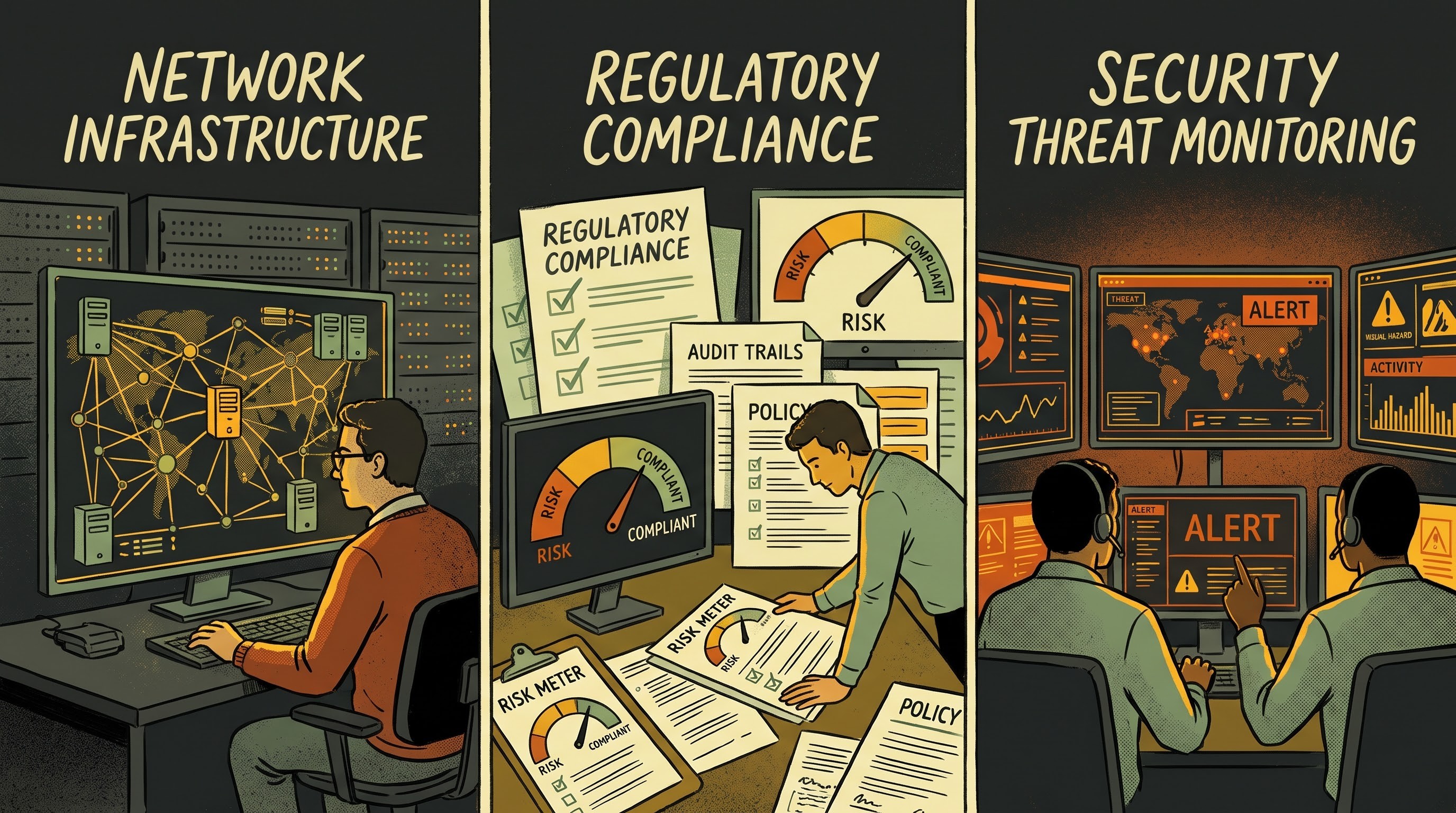
Organisations need full visibility into their physical, virtual and cloud infrastructures. ITOM specialists use Discovery and Service Mapping tools to automatically scan networks, discover devices, map application dependencies, and fill the Configuration Management Database (CMDB) with precise data. Messy CMDB data can cripple incident management and security response, so ITOM architects with CMDB skills can command premium rates.
Governance Risk and Compliance (GRC) / Enterprise Risk Management (ERM)
Regulators are increasing the heat and compliance is no longer optional in global financial, healthcare and technology sectors. GRC experts customised ServiceNow to track the regulatory landscape in real time, automate risk assessments and manage policy exceptions. Those individuals who have information about audit and compliance and cybersecurity governance and want to link technical platform configuration to compliance will be attracted towards the course.
Security Operations (SecOps) & Vulnerabilities Management
During security threats, time is very important. SIEM technology helps the SecOps team in automating threat detection and prioritizing vulnerability management by making use of ServiceNow. This session is for those people who work in the security area and wish to mitigate cyber threats using workflow engines.
Remuneration and financial advice
One of the best reasons to pursue a ServiceNow career is the strong pay structure. Compared to the general pools of software engineering or web design talent, for example, there are still relatively few certified, experienced professionals. Employers often find themselves in a fierce competition for top talent.
In Western markets like the US, the starting salary for administrators is usually between $80,000 and $100,000 and the average mid-level developer salary is between $101,000 and $135,000. Senior developers and specialised consultants who have earned multiple module certifications easily clear $150,000 and elite Solution Architects top $200,000 in base compensation.
The financial picture is equally compelling in major technology hubs across India including Bangalore, Pune, Hyderabad and Delhi NCR. Freshers joining the ecosystem can expect the starting packages ranging anywhere between Rs. 5 LPA and Rs. 9 LPA. Mid-level professionals with 2-5 years of experience can expect to earn between ₹9 LPA and ₹18 LPA. As for senior developers, module specialists and consultants with 5-8 years experience, they can earn anywhere between 15 LPA to 30 LPA. Architects and practice leads easily command above 35 LPA to 50+ LPA.
Career certificate can also be one of the methods of obtaining the extra source of income. As shown by the researches carried out within the field of the technology recruitment market, the certified ServiceNow professionals get 20% to 40% higher salaries than those who are not certified but have equal experience level.
Freelance Market: Consulting on Your Own
In addition to the corporate career path, there is the big freelance market of the independent consultants and contractors. Many senior developers and architects prefer to work as freelancers or boutique agency owners where they can capitalise on the demand from enterprises across the world for short term project deliveries, major platform upgrades and specialised module launches.
During complex platform overhauls, enterprise clients often experience talent gaps. They rely on specialised independent consultants who can parachute in, audit current configurations, implement best practices, and deliver immediate business value, instead of waiting months to hire permanent FTEs to manage temporary project surges. Senior ServiceNow independents can command hourly rates as high as or higher than the best executives in the world. If you like diversity, working with clients daily and being your own boss, it is a great career choice with huge financial independence.
Future-Proofing: ServiceNow in the Era of AI

There is trepidation in every technology sector that jobs will be usurped as artificial intelligence and generative coding assistants advance. That said, ServiceNow has a special moat around its defences against AI displacement.
AI tools are good at generating standalone code snippets, producing text or processing public data. However, enterprise software configuration requires deep contextual knowledge of proprietary business logic, corporate compliance structures, inter-departmental governance and complex data modelling. ServiceNow is the conductor, pulling together disparate enterprise systems, legacy databases and human decision makers. Artificial intelligence is not aimed at replacing ServiceNow professionals, but is being deeply embedded into the Now Platform itself to improve workflows, automate ticket resolution and help developers write scripts faster.
That makes professionals who are able to utilise AI-driven workflow tools in the ServiceNow ecosystem even more valuable. Knowing how to get an AI assistant to write a script is one thing, knowing how that script will impact the entire Configuration Management Database (CMDB) in a global enterprise is another. Human supervision, architectural design, process consulting and complex integration engineering are still a human prerogative.
Benefits of utilising ServiceNow
Unique operating and lifestyle advantages of a career in this ecosystem compared to other IT careers are:
Clear Certification Pathways: General software development learning paths can be vague, fragmented and overwhelming. ServiceNow has a clear, standard and universally recognised certification ladder (CSA, CAD, CIS and CTA) that directly translates into hiring credence.
High career mobility workers easily move laterally across domains. An administrator can move into security operations, HR tech delivery or custom application development without reinventing the wheel.
Global Portability: ServiceNow is used globally by companies in the same way, so skills learned in one country or region are easily portable across borders. This opens the door for working from home, international consulting or even relocation.
Strong Enterprise Stability: ServiceNow careers are built on cash-flow-positive Fortune 500 and Global 2000 enterprises – not those hyper-volatile startup sectors that swing wildly with venture capital funding cycles.
Considerations & Challenges
The prospects are very positive, but aspiring professionals will also have to face certain challenges inherent to platform specialisations:
Platform Lock In: If you’ve built a career on one proprietary platform, your technical identity is dependent on the health of the vendor’s market. ServiceNow is rock-solid in the market, but platform specialists need to keep their skills up to date with the platform’s evolution or risk becoming obsolete.
Continuous Learning Burden ServiceNow releases major platform updates several times a year, adding new data models, UI frameworks, and AI features. In a business environment, there is no time to ride on the momentum of old knowledge. Things like developer release notes and sandbox testing and recertifications you have to keep learning.
Corporate Bureaucracy: ServiceNow functions largely in large corporations. In this kind of organization, projects can be hampered by stringent change management practices, compliance concerns, and difficult stakeholder engagement. For those who love to work in fast-paced startup cultures for engineering products, enterprise implementation may pose some frustrations at times.
Strategic Roadmap to Get In and Get Ahead
If you want to build a thriving career in the ecosystem, a clear intentional roadmap helps you avoid wasted effort and speed up your professional growth.
Step 1: Control the Base
The journey usually starts with the ServiceNow Certified System Administrator (CSA) certification. This is your basic level certification that you know how to work in the platform, data schemas, user authentication, core tables and build simple workflows. Too many people entering the field jump right into coding and don’t know the basic admin skills. This will impede their problem solving ability in the future.
Step 2. Get Some Hands-On Practical Experience
If you have only theory, you won't get hired in the competitive enterprise market. ServiceNow’s Free Developer Program allows you to spin up your own developer instance to test out integrations, create workflows, practise writing scripts and build custom apps in a sandbox environment. It is during technical interviews that you must showcase your troubleshooting abilities that you have gained through projects and labs. You should consider servicenow training in case you want to establish a connection between theoretical and practical knowledge because servicenow training offers you practical knowledge of the tool.
Step 3: Choose a Specialisation Track
Once you understand the basics, you can either go the technical development path by getting the Certified Application Developer (CAD) credential and learning JavaScript or the business process consulting path by getting implementation specialisations in popular modules such as IT Operations Management (ITOM), Security Operations (SecOps) or HR Service Delivery (HRSD). Don’t be just another generalist. Gain experience in complicated modules to earn more. To hasten your experience in such modules by joining a unique servicenow course will allow you to learn how to work with data schemas, scripts, and management.
Step 4: Gain Complementary Business Skills
The best of the best in the ecosystem know not only ServiceNow. They combine platform knowledge with complementary skills such as JavaScript proficiency, REST and SOAP API integration design, knowledge of the ITIL v4 framework, Agile delivery methodologies and basic cloud computing concepts. If you know how ServiceNow works with external cloud infrastructure (like AWS or Azure) you are a far more valuable asset to the enterprise architecture teams.
How to Ace Interviews and Get Your First Job
You have to interview strategically to get into the ecosystem or level up to senior positions. “When Enterprise hiring managers and consulting partners look at candidates, they’re looking for certain signs of competence.
The most important thing to understand about ServiceNow technical interviews is that they are almost never generic computer science algorithms or abstract puzzle solving. Interviewers will be heavy on real world scenarios - how would you handle a cascading business rule failure? How to speed up slow client side scripts? Deploying an update set to multiple sub-prod instances without breaking data in prod Bring real-world talking points from your developer instance or past IT projects Build practical case studies.
Secondly, communication skills are important, especially for consultants and developers in customer facing advisory roles. One of the rare and valuable skills is to be able to translate complex technical constraints into simple language that business stakeholders who are not technical can understand. The best jobs go to people with good technical execution and high emotional intelligence in conversations to get stakeholders on the same page.
Conclusion
ServiceNow is one of the most lucrative, stable and future-proofed career options in enterprise technology space. With the growing corporate demand for smart workflow automation, increasing enterprise use cases in each major business department and a solid safety net from automated replacement, the platform is the best ROI for anyone willing to invest time in structured learning and certification.
What started as an IT Service Management solution, ServiceNow has now become a full enterprise platform for human resources, customer service, security operations and governance. This deep embededness in the organization leads to massive contract stickiness, insulating professionals from financial crises and volatile tech funding cycles.
In the ecosystem, there are defined career paths. Administrators maintain everyday platform configurations and user access, while developers build custom applications and tackle tough REST API integrations. Business analysts and implementation consultants fill the gap between business requirements and technical implementation, while solution architects mitigate for long-term architectural integrity on multi-national implementations.
And you see that in the pay -- those specialities. competitive entry level starting salaries, six figure packages for mid level developers and niche consultants in the west and strong remuneration across global tech hubs like India Earning industry-recognized certifications increases earning power immediately.
Also ServiceNow has a big moat of defence from being displaced by AI. Artificial intelligence can help generate snippets of code, but launching enterprise software necessitates a profound understanding of the context of proprietary business logic, complicated data modelling and cross-departmental governance. The human touch still counts.
If you are a recent graduate seeking a solid entry point into enterprise IT, a traditional system administrator looking to transition to high-growth cloud platforms, or a developer looking to get out of the volatility of niche tech stacks, the ServiceNow ecosystem offers a clear, very rewarding path to long-term career prosperity.