
ServiceNow Platform: Features, Architecture, Benefits
Last updated on Nov 12, 2026
Introduction to the ServiceNow Cloud Platform
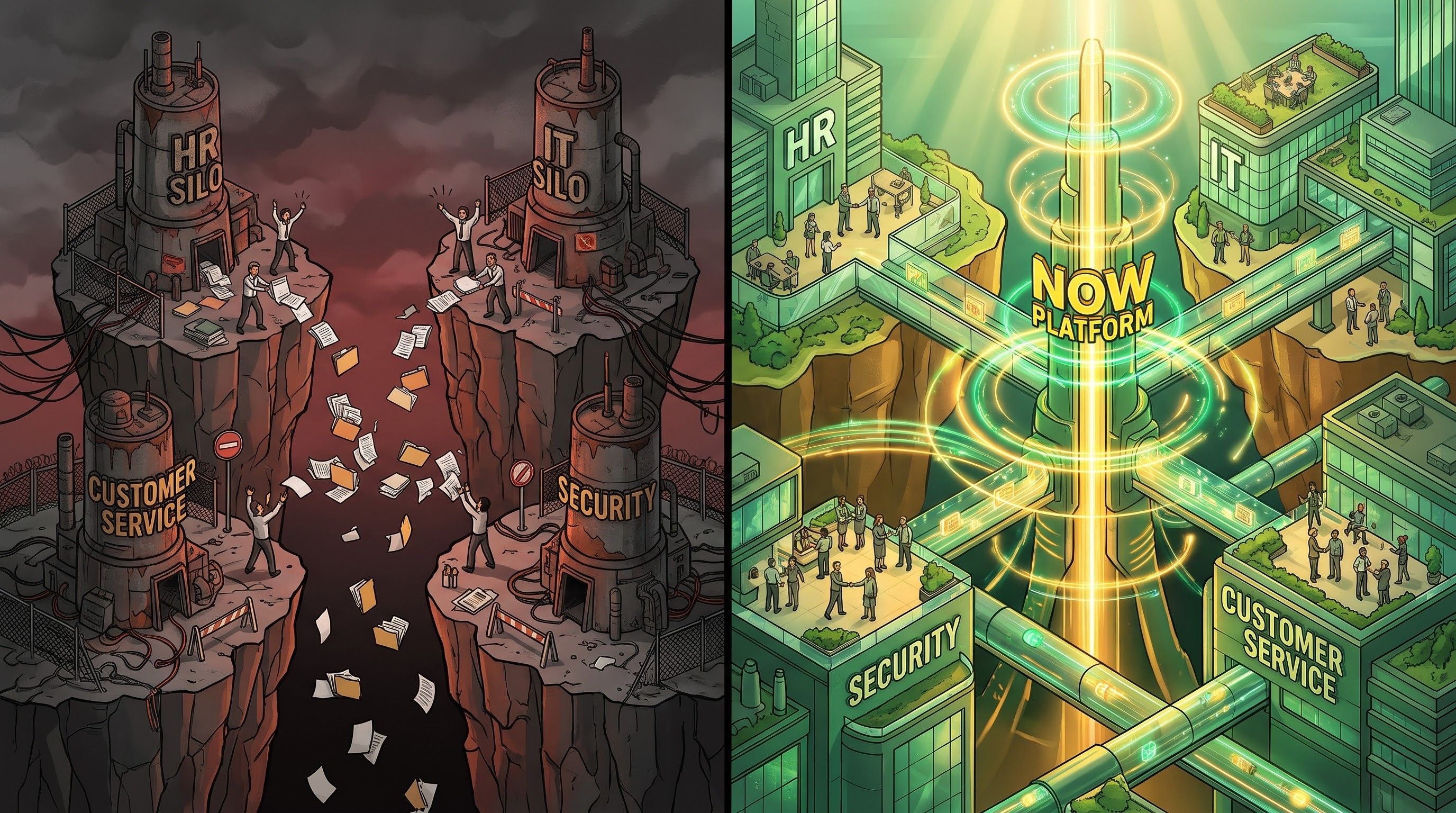
Today, the enterprise ecosystem is rapidly evolving to a digital enterprise ecosystem across multi-cloud architectures and requiring cross-functional alignment at each step. Traditionally organisations have had to deal with fractured silos where human resources, information technology, customer service and security operations have all been working on different software stacks that were not integrated. This fragmentation resulted in operational bottlenecks, communication gaps, decreased productivity, and a lack of visibility into enterprise performance.
This is exactly the kind of structural problem the ServiceNow Cloud Platform, or Now Platform, was designed to solve. ServiceNow is a smart, unified cloud platform that pulls together disparate systems, people, data sources and operational processes into a digital thread to establish a single source of truth. ServiceNow has come from a ticketing system or an IT service management tool. It’s become a massive enterprise cloud platform that can orchestrate complex workflows across any department, application and cloud environment.
You have to study how the platform brings together disparate operating elements to appreciate it. With ServiceNow’s robust workflow engine, sophisticated AI, common data models and wide integration frameworks, organisations can shift from innovating to maintaining and fire-fighting. The platform provides a scalable, secure foundation that enables digital agility, reduces operational overhead and optimises user experiences for employees, customers and business partners.
Structure of Base and Platform
The ServiceNow Cloud Platform is a multi-tenant cloud architecture that offers high availability, security and scalability. The platform infrastructure is designed to handle massive volumes of transactional data with stringent data segregation and compliance requirements for global enterprises and public sector organisations.
The unified architecture and single data model
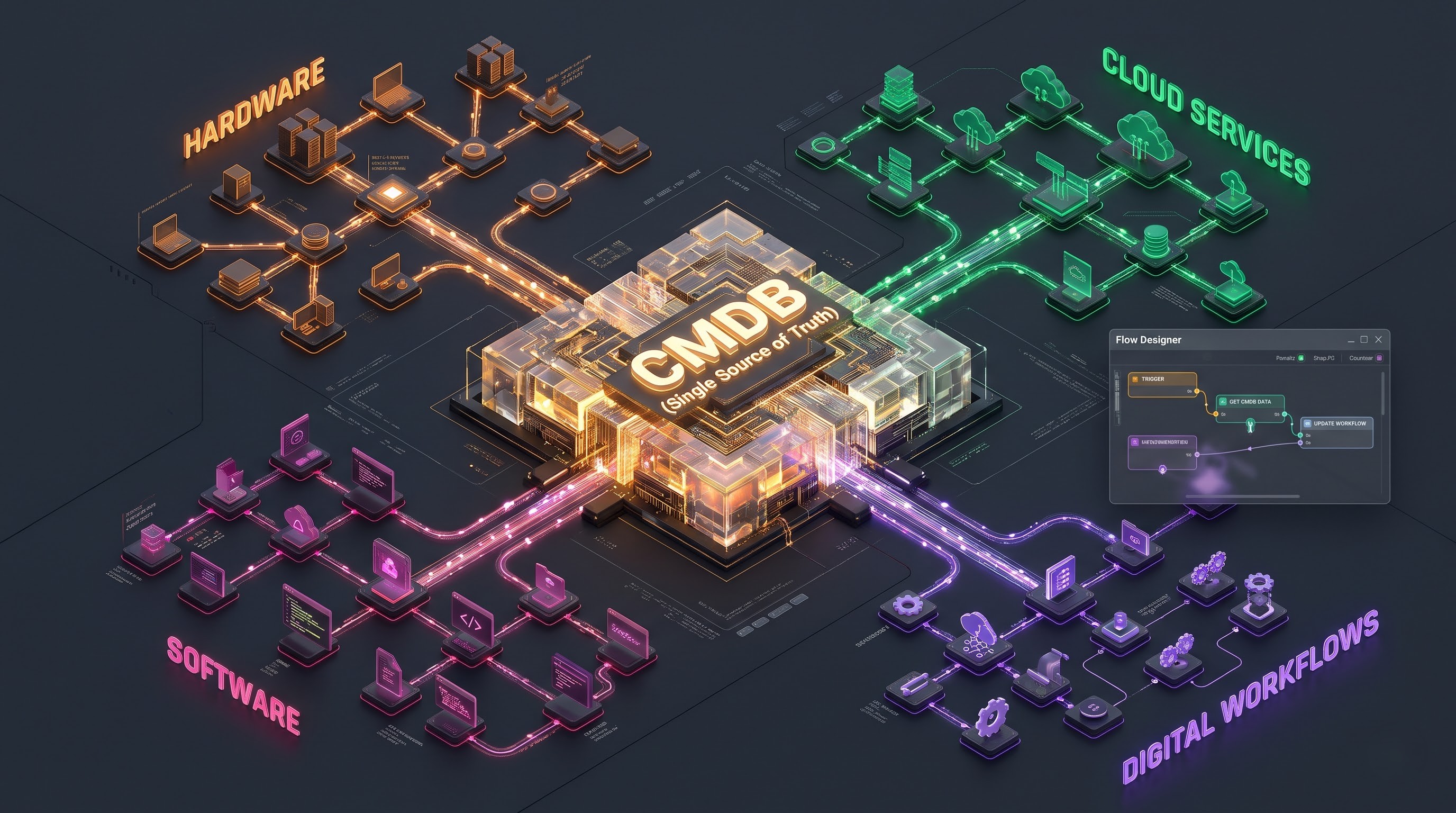
In traditional software applications each function has its own database. However, ServiceNow has one common data model. All applications, modules and workflows built on or integrated with the platform communicate with a unified data structure. This removes duplication of data and makes sure that any change (an employee changes their address, a server fails in a datacenter etc) is propagated immediately to all subsequent workflows.
Its architecture allows a central Configuration Management Database (CMDB) to act as the master for all of an organization’s hardware, software, cloud and digital services. The platform can map the relationships between these configuration items, giving IT and business leaders full visibility into how a technical change could impact a business service or how a business process depends on underlying cloud infrastructure.
Workflow Engine & Flow Designer
At the core of automation on the ServiceNow Cloud Platform is a robust workflow and process automation framework. Businesses are many step complex processes with multiple departments. Flow Designer is a low-code drag-and-drop interface, allowing administrators and citizen developers to build complex automated routines without extensive custom code.
This engine also enables instant operations that used to be done manually such as multi-level management approvals, automated notifications to relevant departments, account provisioning, and compliance checks. The engine processes conditional logic, assigns tasks to the appropriate human or digital agent, monitors service level agreements and records every transaction for full audit readiness.
Center for Integrated Connectivity
It’s rare to find a single-vendor enterprise software environment. Organisations have a mix of on-premises and SaaS applications, in-house software and multi-cloud infrastructure. The ServiceNow Integration Hub is the glue that allows the platform to talk to external systems through APIs, out-of-the-box spokes and robotic process automation.
The integration layer lets ServiceNow be an enterprise orchestrator. For example, a customer request on an e-commerce platform can trigger inventory checks in an enterprise resource planning system, provision cloud computing resources in an external hosting environment and update customer service records — all orchestrated through ServiceNow without forcing users to jump between disparate applications.
ServiceNow Cloud Platform Features
The ServiceNow Cloud Platform offers an extensive set of capabilities in each functional area, tailored to the business needs of that area, but with a consistent user experience and data model.
Artificial Intelligence and Smart Automation
The Now Platform is powered by AI that transforms how work gets done and managed. AI is embedded in workflows, not bolted on, to predict problems, automate solutions and amplify human capabilities.
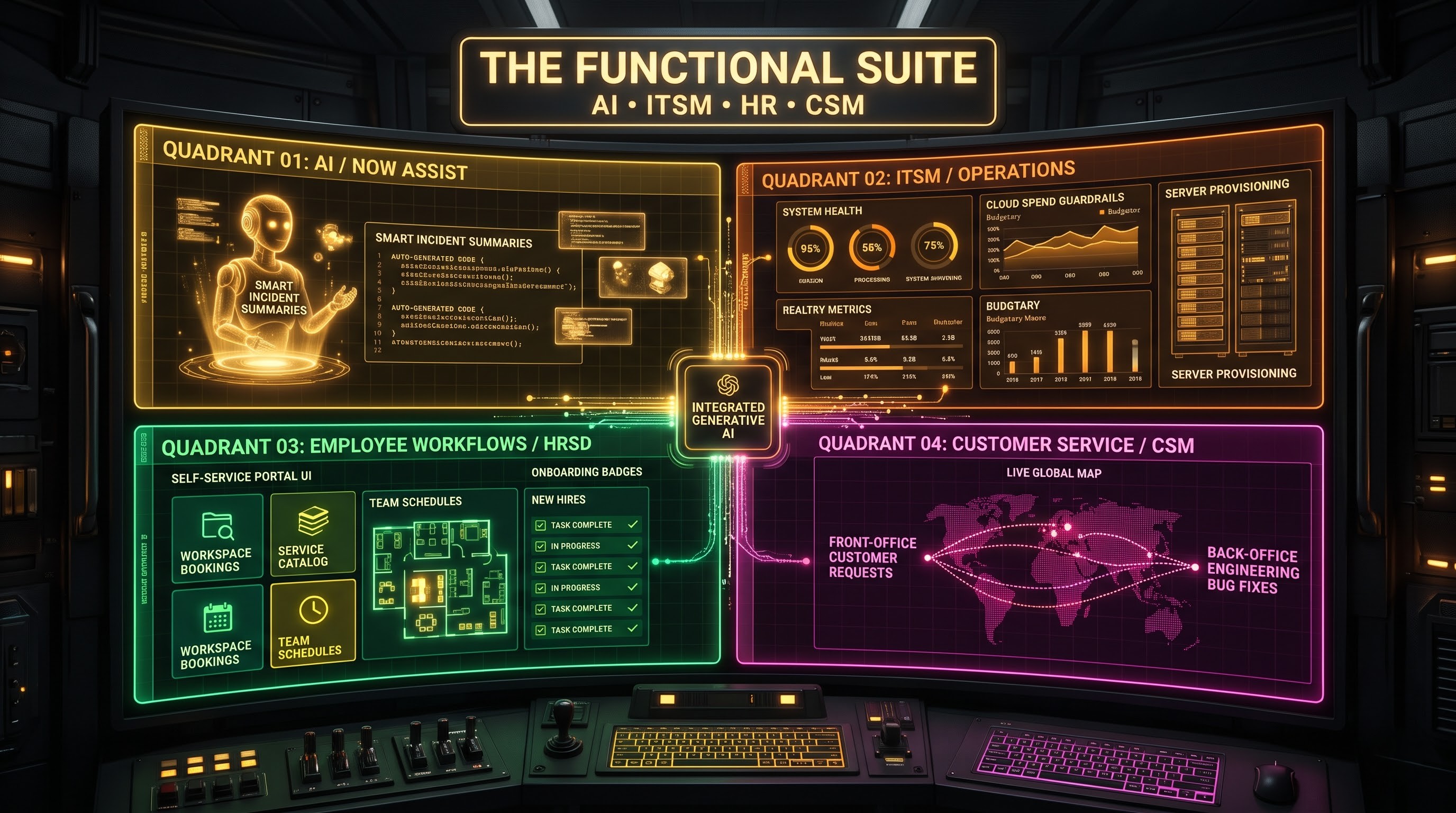
Now Assist and Generative AI: ServiceNow has powerful generative AI capabilities such as Now Assist that enable users to generate concise summaries of long incident logs, automatically create self-service knowledge articles, compose responses for communications, and speed up application development by helping with code generation.
AI Agents and Virtual Assistants Smart virtual agents are available 24/7 to directly engage with employees or customers to answer questions, resolve common issues, handle routine requests and only escalate complex problems to human specialists when needed.
Process Mining The platform offers advanced process mining capabilities to analyse historical data of workflow executions, pinpointing bottlenecks, inefficiencies, and deviations from standard operating procedures, thus empowering organisations to continuously enhance and streamline their operations.
IT Operations Management Workflows and Technology
It leverages its heritage of IT service management leadership to provide a complete set of capabilities to manage technology infrastructure, services and operations.
IT Service Management (ITSM): The ability to manage incidents, problems, changes and requests to ensure that disruptions to technology are resolved quickly and with minimal impact on business continuity.
Cloud provisioning and governance: Organisations can create standardised multi-cloud service catalogues, impose non-intrusive policy guardrails, optimise cloud spend and automate provisioning of cloud resources across cloud providers such as AWS, Microsoft Azure and Google Cloud.
Security Operations: Converges threat intelligence, security incident response and vulnerability management to enable security teams to prioritise and remediate threats by actual business impact.
Employee Workflows and HR Service Delivery
Employee experience is a key driver of an organization’s success. “ServiceNow has dedicated tools to support employees during their life at the company.
HR Service Delivery (HRSD) centralises HR requests and simplifies the onboarding/offboarding processes and offers a self-service portal where employees can check benefits, submit requests and find answers without the administrative red tape.
Workplace Service Delivery: Manage physical and hybrid work environments to enable modern flexible work arrangements, including desk booking, conference room reservations, facility maintenance requests and space utilisation analytics.
Customer Workflow and Front Office Processes
To remain competitive, organisations must deliver exceptional customer experiences. ServiceNow allows customer service and field service teams to connect front office engagement to back office operations.
Customer Service Management (CSM): Customer service agents are armed with proactive issue resolution, automatic case routing and deep integration into backend engineering and product teams to address root causes, not symptoms.
Field Service Management: Helps to optimise scheduling and dispatching of field technicians ensuring the right person with the right parts and skills is sent to the right place at the right time.
Build an App - Low-Code Development
ServiceNow understands that it is impossible for the IT to develop every single application that is needed from scratch and hence offers very efficient and effective low-code development tools such as Creator Studio and UI Builder. Analysts and Subject Matter Experts in various departments may take advantage of drag and drop user interface and reusable components to build custom applications, forms, and workflows according to the guidelines set by the IT. For people who wish to gain proficiency in this area, enrolling for a servicenow course will be extremely beneficial.
ServiceNow Cloud Platform: Strategic Benefits
You are unlocking deep operational and financial value across your enterprise, changing the way your organization operates and competes in the digital economy, as you build out the ServiceNow Cloud Platform.
Establish a Single Source of Truth and Break Down Silos
In traditional enterprises, each department is already an island of information. Sales has one tool, HR has another tool, Finance has another tool, and IT has another tool. This fragmentation means employees have to fill in gaps themselves, by emailing, copying data between spreadsheets or long status meetings.
ServiceNow connects the dots between disparate data sources and workflows, breaking down those departmental silos into one cloud environment. Cross-functional collaboration works best when everyone is on the same platform and can see the same customer, employee and asset data. It breaks down communication barriers, removes handoff delays and provides management with an uncompromising 360 degree view of business operations.
Radical Productivity Improvement & Automation of Routine Tasks
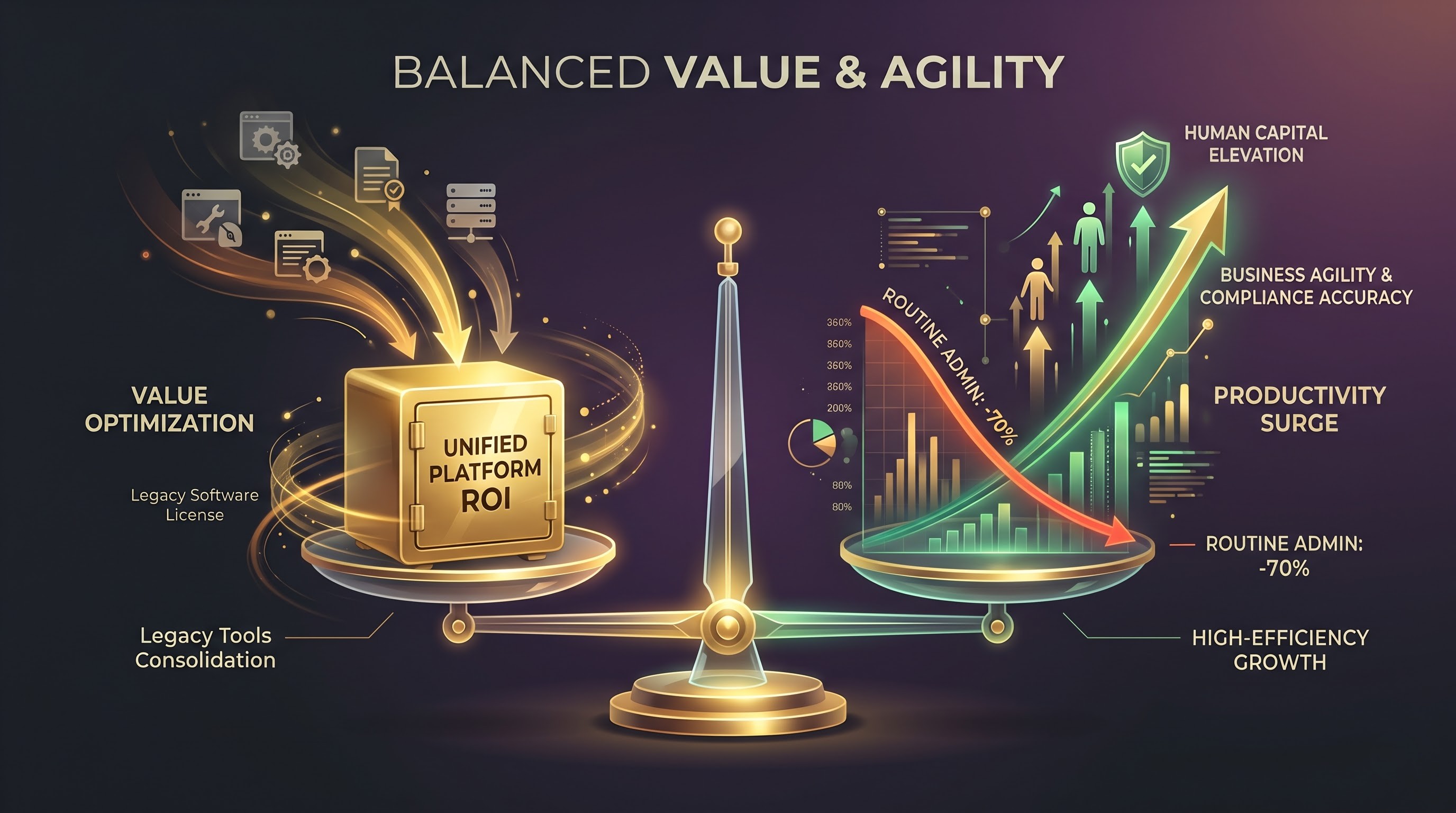
The most valuable asset in an organization is its human capital, yet skilled professionals spend a good part of the day on repetitive, low-value administrative tasks such as status updates, data entry, password resets and manual routing of documents.
These processes are automatically performed by ServiceNow Cloud Platform with the help of workflow engines and artificial intelligence software. In this way, the employees get an opportunity to focus on other more innovative and creative work, since the tedious processes can be automated through digital agents and background workflow processing. Organizations or people who wish to lead this digital transformation generally go for a certain servicenow training.
More agility and more scalability for your business
Markets move quickly and organisations need to be able to pivot strategies, launch new services or scale operations on demand. With its native cloud capabilities ServiceNow provides companies the elasticity and scalability to expand into new global markets, onboard thousands of remote employees or respond to sudden spikes in customer demand.
The low-code development environment allows companies to quickly prototype, test and launch new digital workflows in days, not months. That agility gives business leaders confidence to chase new market opportunities or regulatory changes knowing the underlying platform can scale up easily.
Save money and optimize your investments
It is undoubtedly true that ServiceNow needs an investment as far as enterprise cloud platforms are concerned, but in the end, you will save a lot of money. The reason behind this is that all the various solutions and existing software licenses are brought together on one platform.
The automation of manual activities not only saves a lot of time and reduces the number of friction and errors but can be a reason for expensive rework or even penalties due to lack of compliance. Besides, this platform will allow for more efficient use of cloud services, compliance checks of the software licenses and vendor management, resulting in a significant ROI from technology implementation.
Improved Governance, Risk and Compliance (GRC) Management
Governance plays an extremely important role in the era of constant regulatory changes and high-tech cybersecurity risks. Governance, risk and compliance management have been incorporated into the business process using the ServiceNow platform.
All transactions, all change requests and data modification are immutable and stored in the audit trail within the platform. Automated continuous compliance check of the configuration of the cloud services and the internal processes makes sure that all regulation is followed. Being proactive helps you protect sensitive enterprise data, safeguard your brand’s reputation and stay compliant across global jurisdictions.
Better experiences for customers and for employees
And the efficiencies that ServiceNow drives internally translate directly to better external outcomes. When your internal workflows are running smoothly, you can respond to customer questions faster, proactively solve product issues, and deliver reliable and predictable service.
And by providing your employees consumer-grade digital self-service experiences for HR, IT and workplace requests, you eliminate the frustration that’s been a constant element of internal corporate administration. When employees are happy and empowered, they provide better customer service, which creates a virtuous cycle of growth, loyalty and profitability.
Use Cases for Enterprise Anywhere
To understand the full scope of the ServiceNow Cloud Platform, one can look at how organisations are using its capabilities for a variety of operational use cases.
Digital Transformation & Enterprise Service Management
IT Service Management is often the starting point for large enterprises on their ServiceNow journey, but they quickly expand the platform to Enterprise Service Management (ESM). ServiceNow has this role of being the single enterprise-wide service portal.
Incoming requests – whether it’s a facilities request to fix an office HVAC system, a legal request to review a vendor contract, a marketing request for design assets or an IT request for a laptop – all come through the same intuitive interface. Requests automatically route to the appropriate department, are tracked against pre-determined service level agreements and quality checked. This standardisation renders internal service delivery an efficient, transparent and measurable corporate function, rather than a chaotic mess of emails and phone calls.
Multi-Cloud Governance and Operations
As organisations embrace multi-cloud strategies that include AWS, Microsoft Azure and private cloud environments, managing cloud spend and governance is extremely complex. Companies use ServiceNow as a single cloud broker.
Engineering and development teams consume cloud environments or resources in a self-service fashion via the ServiceNow service catalogue. In the background, the platform checks the request against the organisation’s policy guardrails, checks the budget allocation, provisions the resources via integration with tools such as Terraform and updates the CMDB with configuration and ownership data. This gives IT leadership full visibility into cloud consumption, stops unauthorised spend and guarantees security compliance without slowing down software development.
Automated Security Response & Incident Management
The longer you wait to respond to a cyber attack or major technology outage, the greater the financial losses and reputational damage you’ll suffer. Alongside ITSM, organisations use ServiceNow Security Operations to help coordinate rapid response efforts.
When an external monitoring tool fires a security alert, ServiceNow consumes the alert, enriches it with asset data from the CMDB, and automatically creates a security incident ticket. The playbooks on the platform are automated to quarantine the affected network segments, alert the appropriate response teams through collaboration channels like Microsoft Teams or Slack, and monitor the remediation activities in real time. Unified logging and automated reporting also enable post-incident analysis, allowing the organization to learn from events and continuously improve its defences.
Employee onboarding and lifecycle management made seamless
Employee onboarding is a critical touchpoint that sets the tone for an employee’s time. A fragmented onboarding process, late delivery of equipment, lack of system access credentials and incomplete HR paperwork create a disorganised impression.
ServiceNow helps enterprises orchestrate end-to-end employee lifecycle workflows. When a candidate accepts an offer in the applicant tracking system, ServiceNow automatically kicks off an onboarding workflow. At the same time, HR tasks, payroll setup, IT asset provisioning, facility badge creation and training assignments are created and assigned to the respective departments with strict deadlines. This way, all pre-employment activities will be completed prior to an employee joining work, which means that the new employee will be welcomed properly and all his records will be recorded appropriately.
A new path, a new horizon

ServiceNow Cloud Platform: leading the way in digital innovation as enterprise technology advances. As advanced AI, hyper-automation and pervasive cloud connectivity come together, organisations are changing what they can do on a single platform.
The next frontier is shifting from reactive ticketing to predictive autonomous operations. Using machine learning algorithms trained on massive amounts of operational data, ServiceNow is becoming better at predicting system failures, customer churn and operational bottlenecks before they impact the business and automatically initiating corrective actions in the background.
“In addition, in a challenging macroeconomic environment, the need to drive operational efficiency, reduce software redundancy and optimise automation has never been greater. The ServiceNow Cloud Platform is the end-to-end platform for this mandate, bringing together people, processes and technology into a seamless, intelligent digital ecosystem.
Conclusion
Today’s enterprises are increasingly relying on the ServiceNow Cloud Platform as a critical foundational technology. The platform breaks down siloed departments, automates complex multi-step workflows, embeds practical artificial intelligence and ensures strict security and governance, so organisations can run with never before seen agility and precision.
It offers flexibility to tackle challenges across any industry, with capabilities ranging from ITSM and customer service management to low-code app development and multi-cloud governance. The platform is a powerful growth engine for business sustainability. Benefits strategically include radical productivity improvement, reduced operational costs, improved compliance and enhanced employee and customer experiences.
In an age where technology works as fast as human thought processes, ServiceNow Cloud Platform offers you a structured solution that will help you not only cope up with change but make changes happen. In order to keep abreast of the continuously changing needs of the enterprises in this modern world, it is not surprising that many of the young tech experts prefer serviced servicenow online training.