
The Employee Center Hub: ServiceNow’s Unified Portal for Modern Enterprises
Last updated on Sep 21, 2026
Introduction: The Structural Transformation of the Workplace
The workplace has seen a significant structural metamorphosis. The rapid growth of hybrid working solutions, geographically dispersed teams and the burgeoning network of enterprise cloud applications, have made the business environment extremely complicated. The process of digital transition has provided various opportunities for the companies to improve efficiency at work and be extremely flexible, but on the other hand, it has created a hidden productivity tax.
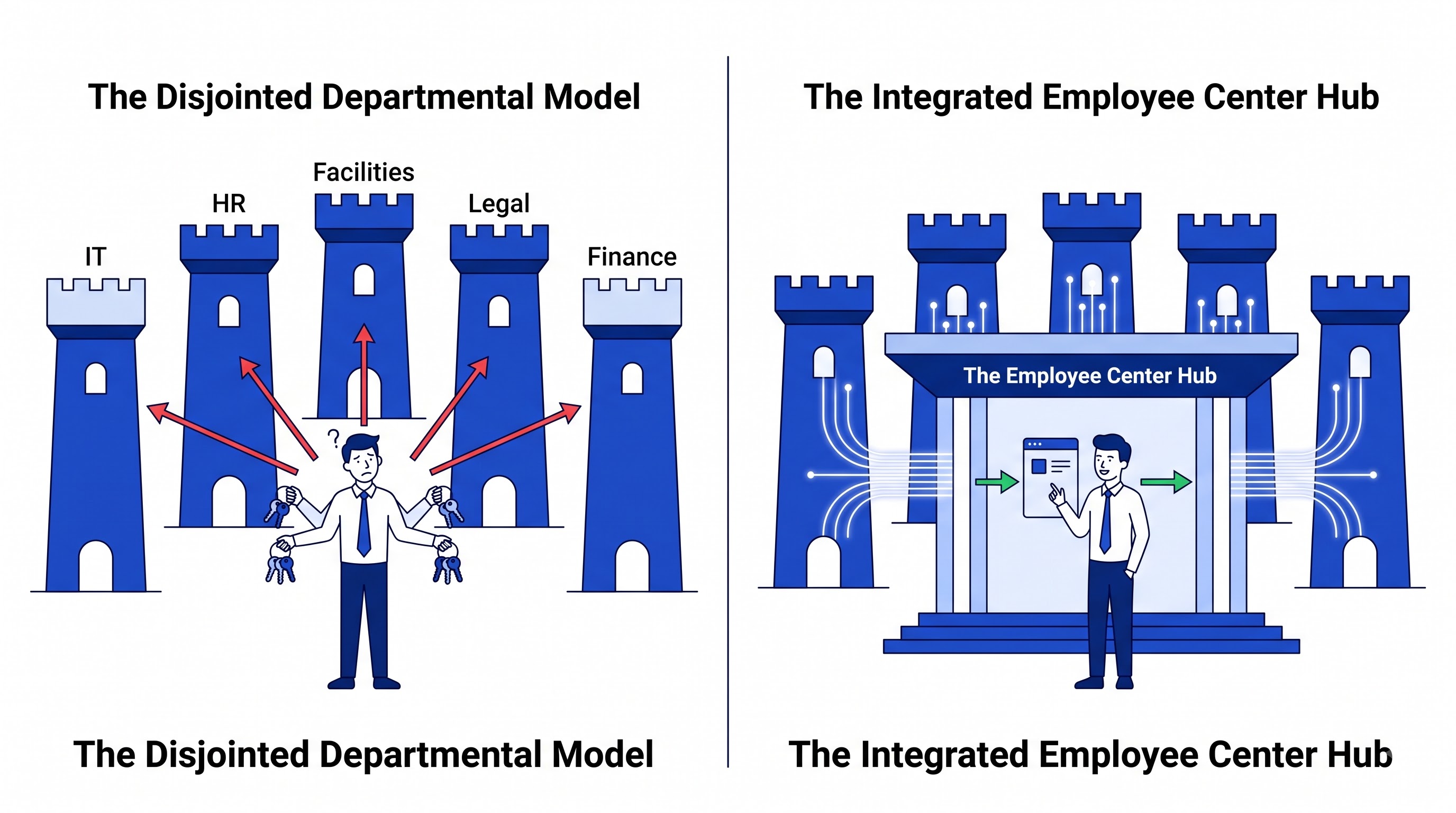
Today, people have to deal with numerous disconnected applications, portals, and communication channels. For instance, in order to request a vacation, one has to log into one system, get the necessary IT equipment – in another one, get the updated company policy – in yet another one – which may be stored on some outdated shared drive, and get familiar with all company news – by going through many emails and messages. The presence of operational friction causes a cognitive overload, lowers productivity at work, and makes the overall employee experience worse.
Enterprise Silos' Costs
In the past decade, companies have hurriedly adopted best-in-class software solutions for different departments. Human Resources used one cloud platform, Information Technology another, Facilities yet another, while legal, finance and procurement departments each got their own set of tools.
While these departmental systems addressed local operational issues, they have formed huge silos from the perspective of the end user. Employees do not perceive their organizations through departmental silos when they show up for their jobs in the morning. They do not go about thinking "Human Resources," or "IT Service Management." They simply have some needs like onboarding the new hire, or getting the home office stipend, or changing the tax withholding information and assume that the organization will provide help as a unified whole.
If the organization cannot present a unified front, the responsibility of integration is left to the employee. Employees have to act as a human glue: they work out how to bridge different systems, keep multiple logins in mind, and figure out which department is responsible for a certain process.
Welcome to an Amazing Employee Center Hub
Welcome to the world of the Employee Center Hub—a contemporary online platform created to transform the functioning of the modern business in many ways. More than a typical Internet-based staff platform, the Employee Center Hub serves as a multifunctional platform where processes such as administration, maintenance, knowledge sharing, and relationship-building can converge.
The functionality of a good employee hub is to obscure complexities of back end systems whilst employees utilize a friendly interface like the web to engage with the organization. For example, through the employee hub, personnel can change passwords, apply for parental leave, purchase a comfortable chair and read the latest news from management at the same time. It makes sense that those wishing to learn how to do it properly can attend available servicenow training classes.
The Structure of Workplace Fragmentation
To comprehend why the Employee Center Hub has become a must-have for modern companies, one first has to analyze the systemic issues surrounding today’s digital workplace. In the last ten years, businesses rushed to utilize the latest-and-greatest software solutions for any possible department. For example, Human Resources adopted one cloud solution; IT chose a different one; Facilities worked with a third; and every other department, including legal, finance, and procurement, applied various specialized tools.
Siloed Company vs. Unified User
Though these departmental applications helped tackle individual challenges, they also built impressive silos from the end-user’s perspective. Employees don’t see their organization through the prism of departmental silos. They do not think about “HR procedures” or “IM processes.” They just have a need—like onboarding the new employee, arranging home office allowance, or changing withholding—and expect the organization to react properly.
Whenever the different divisions of an organization do not coordinate actions, the responsibility of integration is shifted to the employee. Employees are forced to connect various systems, keeping track of necessary login credentials and figuring out in what division the necessary procedure lies.
The Actual Impact of Operational Friction
This disunity results in:
Lost Productivity. When switching between tabs, reentering information, or searching for information, employees waste a lot of time, which consequently affects their productivity.
Employee Discontent. Dealing with bureaucracy demotivates employees and makes them wary of the corporate organization.
Cultural Disassociation. Important information gets overlooked.
Administrative Burden. Support teams often receive irrelevant inquiries from employees who don't know where to refer to for the necessary information.
Introduction to the Employee Center Hub
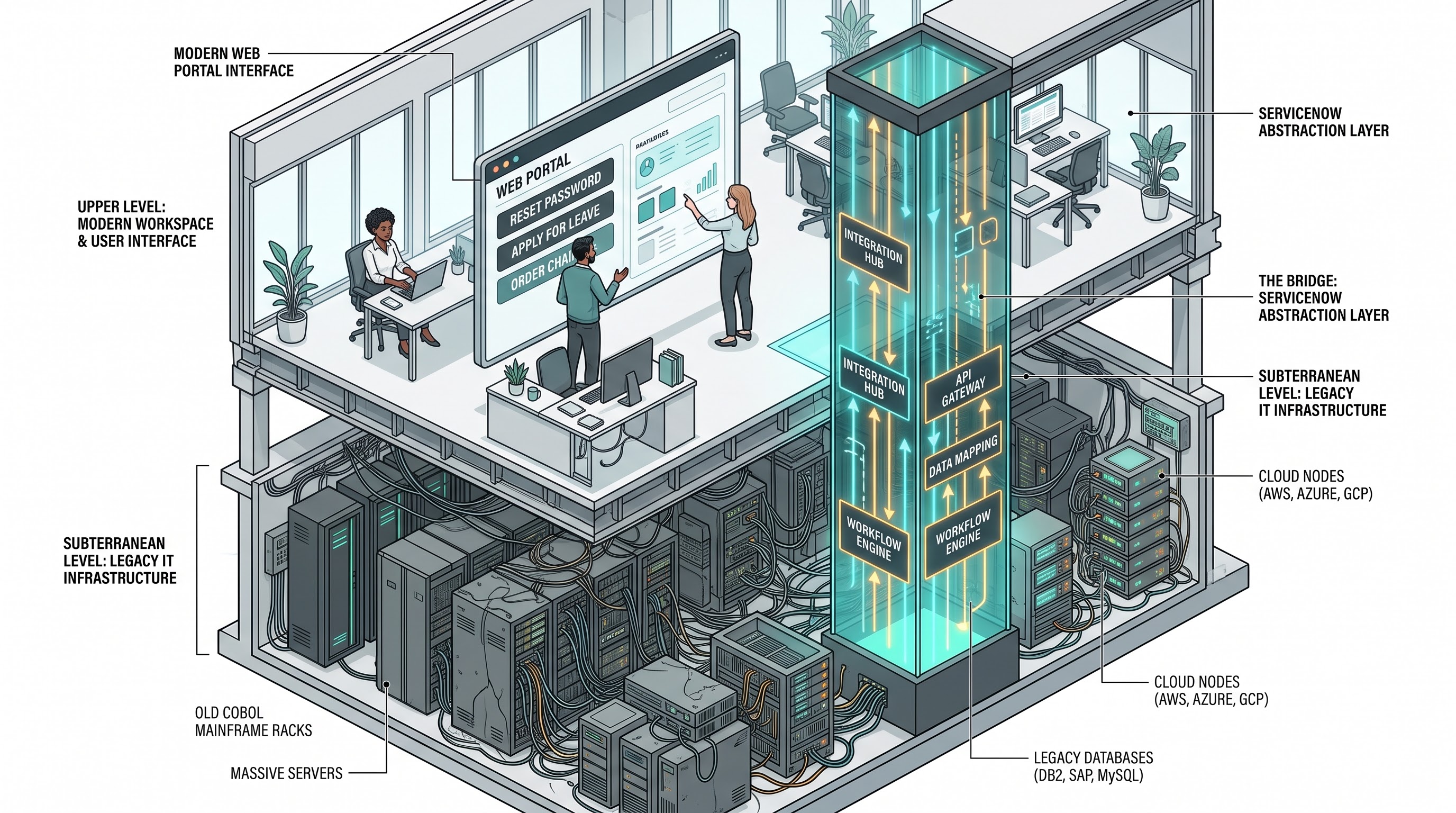
A contemporary Employee Center Hub eliminates this loss of control by acting as the organization's single gateway. This is an all-in-one digital work environment that integrates all service delivery from different areas of the organization, all communication channels, activities targeting employees, and content management systems into one platform.
The Abstraction Layer
The core function of the hub is its being an abstraction layer. Underneath the modern UI design is a cluster of complicated corporate processes with outdated information systems and different clouds connected. All of that doesn't concern the end-user anyway. Whether the employee needs to reset the password, apply for parental leave, buy ergonomic furniture, or find out important information from the CEO, they do that on the same screen.
Personalization and Contextual Relevance
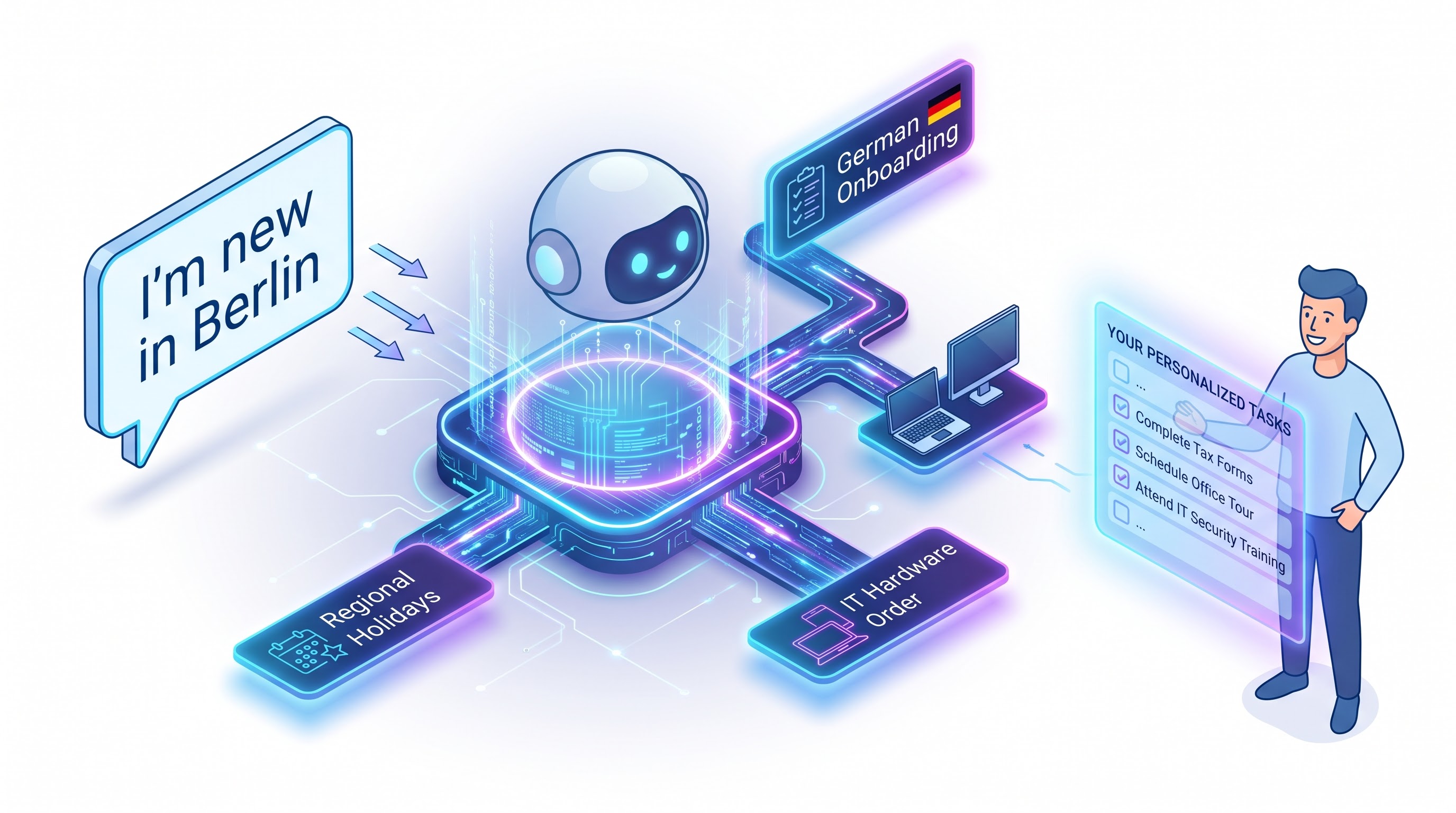
However, what totally distinguishes the contemporary employee hub is the principle of personalization and contextual relevance. Knowing that a software engineer working in London and a retail manager based in Chicago, as well as a customer support employee based in Manila, face totally different realities each day, the smart hub adapts its presentation based on:
Geographical and Location Factors: Emphasizing regional holidays, amenities available in the area, or compliance policies in different countries.
Position and Division: Providing engineers with documents, and providing account managers with client-administrative documents.
Job Situation: Differentiating the onboarding programs for fresh hires from the management tools for experienced managers.
This kind of active filtering enables all workers to access the information, tools and services relevant to the specific employee while eliminating all irrelevant information and thus achieving a high level of engagement. Moreover, the process of upskilling the administrators through structured service now training classes helps administrators configure these contextual access controls in an efficient way.
Core Dimensions of a Unified Digital Portal
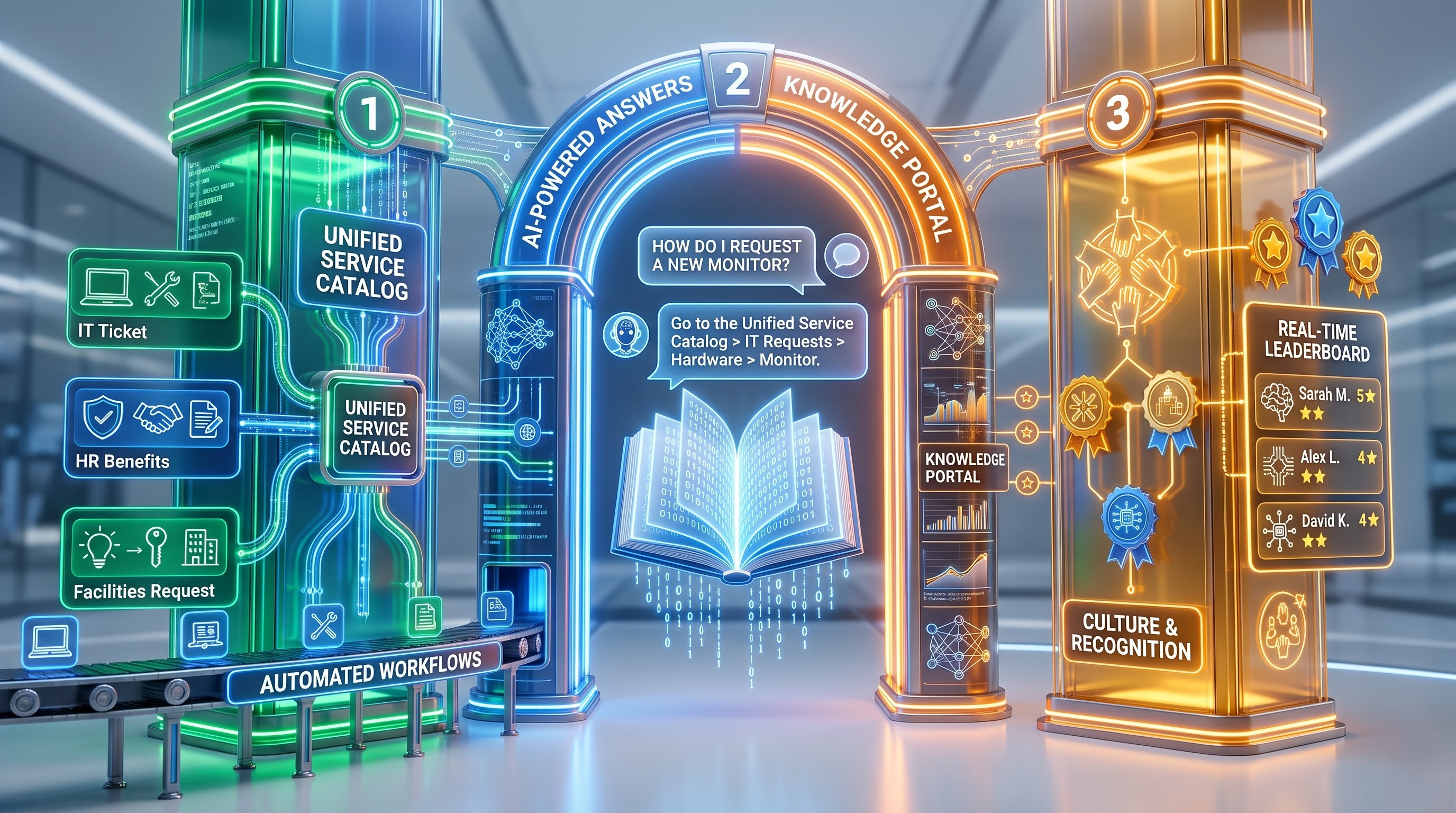
In order to achieve employee experience transformation via a unified portal, all its essential abilities should be interlinked while these functions used to exist in isolation.
1. Multi-Department Service Delivery
The basis of an effective employee hub is powerful service provision, joined together from several functions. Although IT service management was the first to use an electronic ticketing system, the modern enterprise hub applies these technologies across all functions including HR, legal, finance, security, etc. The employee browses through various service catalogs, makes requests and gets them fulfilled without knowing which department is responsible for that.
2. Informed Knowledge Management
Information is useful only if it can be accessed. New employee platforms have advanced search technologies using AI. For instance, the new technology has enabled employees to refer to many different resources where they can get the information needed. Natural language processing allows employees to ask questions providing specific answers such as "How do I claim my wellness benefit?" This makes it possible to save on routine tickets while improving the quality of employee self-service.
3. Internal Communication and Targeted Operations
In contemporary business, communications cannot rely on the "spray and pray" method of sending emails since they often remain unread and buried under the pile of letters. The new platform has redefined the process of communication by making it possible for communication members to deliver targeted messages through multiple channels. Communications specialists can create their own websites, blogs, and news feeds. By segmenting the target audience, the company's employees can send the messages to the relevant audience such as guidelines for the front-line employees, tips for a new manager, and open registration reminders for various locations.
4. Community along with Engagement Tools
The work is by its very nature a social and human activity. Maintaining a rich organizational culture in a hybrid or distributed working setting is always difficult. One way of approaching this task is by implementing community functionalities into the employee hubs, such as the peer recognition space, social boards, feedback loops, and ERGs. Sharing the news of one’s accomplishments in relation to both career milestones and anniversaries in terms of work through the employee portal gives a sense of community and belonging in its integral form.
The Strategic Importance of Having a Hub
Transition to the unified employee portal is not only an aesthetic upgrade or IT project. It is a key business initiative that directly influences organizational health, efficiency, and profitability.
Achieving Increased Productivity
The time spent in searching documents, switching between browser pages and figuring out internal processes involves waste. When an organization consolidates tools, resources and processes into a single platform the company wins back a significant amount of lost productivity time. Employees find it easier to work and spend less time navigating bureaucracy.
Optimizing Employment Cycle and Employee Retention
In a competitive labor market the employee experience is one of the key factors. The impression that a company creates about itself during onboarding greatly affects the whole employment period. An advanced and easy-to-use employee portal allows new employees to feel welcome, confident and comfortable since their first workday. The more the company takes care of the employees the happier and more connected they feel with their employer.
The Difficulties of Scaling Operations
As companies begin to evolve through acquisitions, mergers, and other forms of growth, it is understandable that internal structure becomes increasingly complicated. Introducing new departments, offices, and subsidiaries to an already existing structure creates more problems and complicates the whole. The idea of having one central hub helps create a system that can connect new branches, policies and service catalogs while still providing a familiar way to work with the new organization.
The strategies for successful deployment
Creating an Employee Service Center Hub is an impressive undertaking that requires thorough preparation, communication, and focus on the needs of end-users. It is important to follow certain practices and habits in order to achieve high success in this endeavor.
Embrace an Outside-In, Employee-First Perspective
The main mistake in portal deployment is obtaining information from inside the company hierarchy, rather than focusing on people's requirements while developing navigation menus, service listing, and information bases. It is necessary to conduct research on how users think before launching their portals.
Obtain Executive Sponsorship and Cooperation of Professionals
An employee that the hub cannot be controlled solely by IT and HR and has to be treated as a shared tool. The need to involve executives in project development has proved that an ever-evolving interdisciplinary team is needed to make sure the service continues to provide up-to-date content and complies with all service guarantees.
Give Priority to Inclusivity and Mobile Accessibility
Today’s workforce is no longer tied to conventional office spaces. From the ordinary mall workers and fieldstads to the travelers and knowledge workers, people now use various devices in office operations. An effective workplace portal should be able to provide a mobile and integrated experience so it is possible to receive necessary notifications, approvals, and perform self-service operations anywhere with the help of any type of device.
Analyze, Improve and Update Constantly
Launching a portal does not mark the end of the road; it only means that the work will continue from now on. Organizations must use the built-in feedback and analytics tools to track the performance of the portal in terms of visits, successful searches, and content and ticket usage statistics. This analysis can help understand what challenges are faced by users during their work and what information they still need.
The Future of Digital Employment
The advent of AI and machine learning technologies has resulted in significant progress towards the functions of the Employee Center Hub. The previous stage of needing users to seek out information has been replaced with assisting users in a more effective way. To keep up with modern trends, developers and IT leaders often take servicenow training online to become proficient in AI integrations such as Virtual Agent and predictive workflows.
The Advancement of Proactive Intelligence
Think of a smart ecosystem, which will be able to understand its needs without the users needing to mention anything. Instead of waiting for a request, the hub can carry out actions such as notifying a manager in advance about a team’s upcoming milestone review process or informing the relevant team members about their training.
The Digital Pulse of Business
In the end, the Employee Center Hub symbolizes the digital pulse of modern organizations. By breaking down departmental blocks, reducing bureaucratic barriers, and promoting true interpersonal connections, an integrated system helps people perform their jobs more effectively.
In an era when the agility of the organization and employee involvement have become a must, investing in a state-of-the-art employee hub is no longer a nice-to-have; it is a basic need on which the future of work rests.
Implementing Digital Transformation: Determining ROI and Change Management
Structurally and technically, the foundational framework of the Employee Center Hub facilitates modern work transformations. However, long-term success in this regard largely depends on two main factors which are effective change management and determining ROI. A highly functional portal with an AI component will yield no benefits if it does not gain acceptance from employees or if its results cannot be evaluated by top management.
Tackling Resistance: The Human Factor in Change
When companies implement a unified digital portal, they change their corporate culture rather than simply introduce new software. People tend to resist a new digital interface; thus, at the beginning, the reaction to it is likely to be negative due to being used to the old system.
Champion Networks: For organizations to generate true momentum for their plans, they need a trusted network of internal digital advocates. The early adopters will come from various departments, hierarchies and even regions and will be able to act as peer-to-peer consultants in the use of the platform in day-to-day activities.
Manual > Target Training Today, successful organisations are opting for measures like microlearning, orientation exercises, and games-based learning instead of long instruction manuals to help the employees get used to the interface. But there is an option to get faster learning with the help of servicenow online course.
Feedback loops: The implementation of clear feedback systems such as channels through which one can provide feedback on the portal and periodical pulse surveys helps in ensuring that the employees are engaged and thus the administrators can solve pain points and improve features accordingly.
Evaluating the Results: Understanding Portal ROI
To ensure that digital workplace leaders continue to receive executive sponsorship and budget allocation, they must go beyond telling stories about success. A mature Employee Center Hub affects various key performance indicators of the organization.
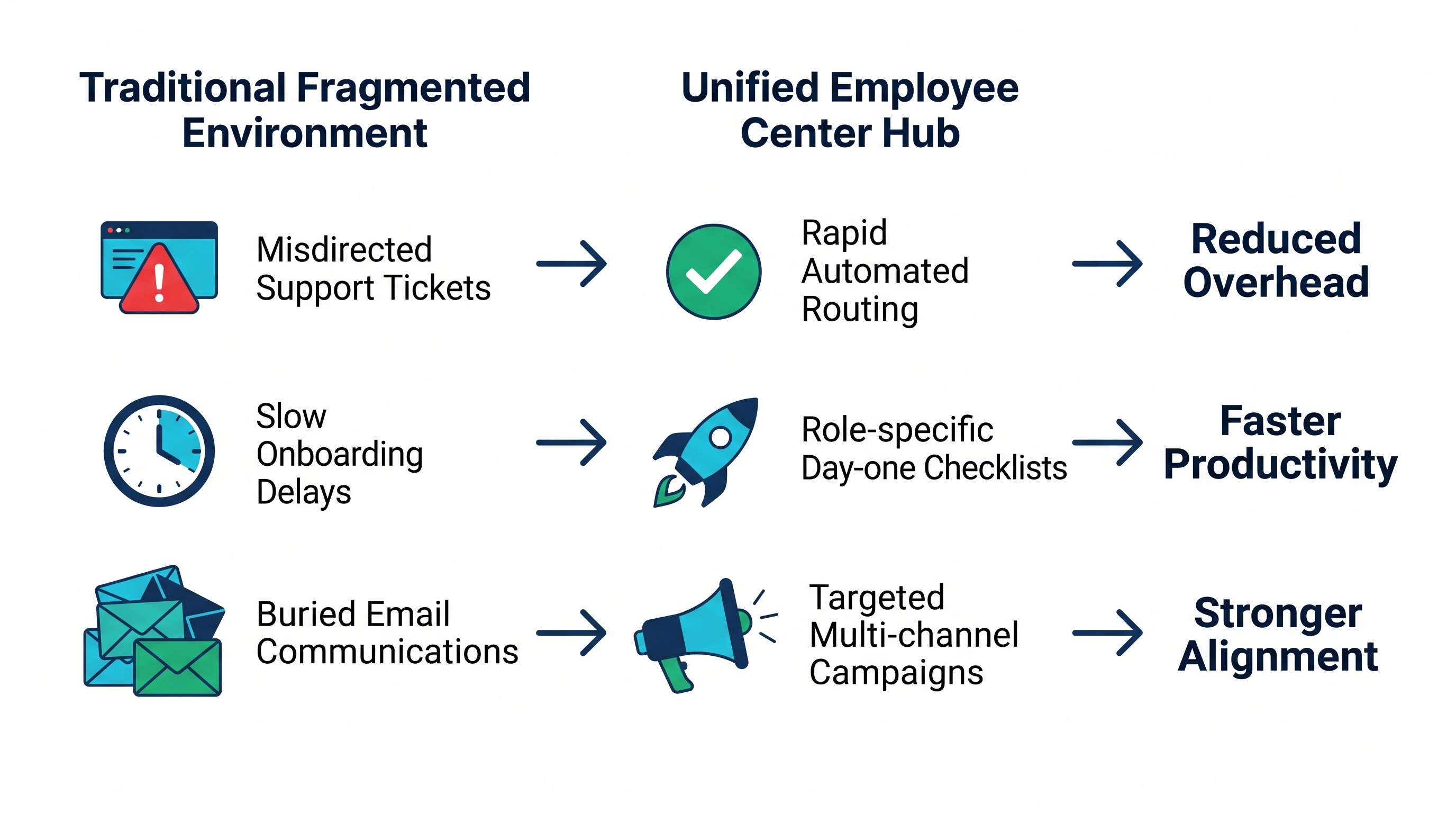
Organizations track search success rates, daily active users (DAU), average time taken to fulfill requests, and percentage of tickets redirected, so that they can determine how the hub helps improve productivity while saving precious hours for employees.
Summary: The Digital Heartbeat of Today's Business
Today's business world has changed irresistibly, moving away from an integrated structure toward one characterized by a range of varying forms of hybrid cooperation and technical developments. But while the rapid rise of cloud computing and working from home have given businesses a lot of flexibility, they've also brought a lot of bureaucracy. Workers are now the human glue that makes sense of the various applications and complex intranets and departmental silos in order to satisfy their simplest requirements. The fragmentation leads to productivity loss, cognitive pressure, and disruption of the connection between company employees and the corporate culture.
As discussed in the article, Employee Center Hub is not just an additional piece of software or an insignificant IT project, but a critical business strategy and infrastructure. Well-constructed hubs serve as a gateway to the business for users by concealing all the complicated back-end processes and multiple cloud systems. It allows us to replace operational difficulties with a consumer-like experience, where all stages of service delivery, knowledge management, perfect communication, and community development mingle perfectly.
Key Insights for Tomorrow
Combined Service Delivery: By integrating requests across HR, IT, Facilities, Finance, and other departments, the process becomes much simpler and more effective.
Contextual Relevance: Users receive customized information by being presented with data that is relevant to their location, position, and department.
Proactive Intelligence: New developments in AI and machine learning technologies are actively transforming portals from object-like spaces to digital assistants, who can foresee users’ needs.
Hence, the introduction of a unified employee hub will allow companies to regain lost efficiency, enhance the experience of the employees from the very first day, and help them grow as a business whether through expansion or mergers. In the modern world, where companies need to be flexible, as well as able to retain their employees, the employee hub represents the pulse of the organization.